投资者情绪

Search documents
Vertiv Holdings Co. (NYSE: VRT) Faces Analyst Downgrade Amid Varied Investor Sentiment
Financial Modeling Prep· 2025-12-09 15:04
Core Insights - Wolfe Research downgraded Vertiv from "Outperform" to "Peer Perform," indicating a shift in analyst sentiment and reflecting recent market activities [2][6] - Baker Avenue Asset Management LP reduced its stake in Vertiv by 11.4%, while Avion Wealth and DiNuzzo Private Wealth Inc. increased their holdings significantly, showcasing varied investor confidence [3][4][6] - Vertiv's market capitalization is approximately $70.96 billion, with a trading volume of 4,880,797 shares, highlighting ongoing investor interest despite recent fluctuations [5][6] Company Overview - Vertiv Holdings Co. specializes in providing critical digital infrastructure and continuity solutions across various industries, ensuring uninterrupted digital operations [1] - The company competes with major firms in the technology sector, striving to maintain its position in a rapidly evolving market [1] Stock Performance - As of December 9, 2025, Vertiv's stock was priced at $185.61, experiencing a decrease of 1.80%, dropping $3.41, with a trading range between $182 and $188.50 [2] - Over the past year, Vertiv's stock has fluctuated between a high of $202.45 and a low of $53.60, indicating significant market volatility [5]



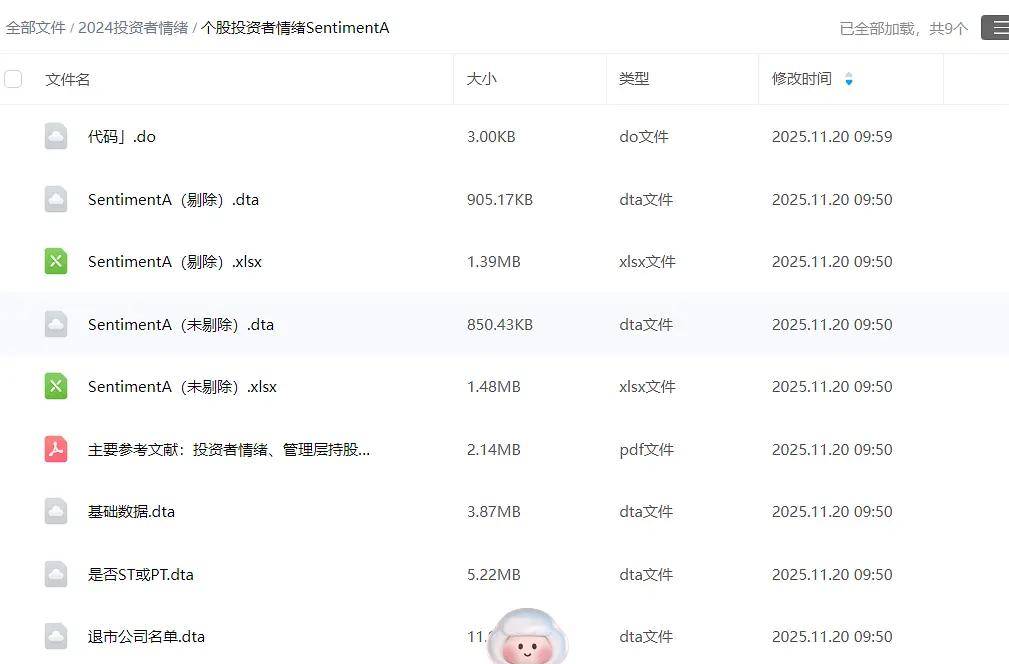
两种方法!上市公司投资者情绪数据+代码(2000-2024年)
Sou Hu Cai Jing· 2025-12-01 10:53
Group 1 - The core concept of the analysis is the development of two sentiment indicators, SentimentA and SentimentB, which are used to measure investor sentiment based on different methodologies [1][3]. - SentimentA is derived from a regression model that separates a company's market valuation into its intrinsic value and market mispricing, using factors such as size, leverage, and return on assets (ROA) [1]. - SentimentB utilizes discretionary accruals as a proxy for investor sentiment, focusing on the subjective components of accruals while measuring non-subjective accruals against revenue [3]. Group 2 - The data spans from 2000 to 2024, with a sample size of over 61,000 for SentimentA and over 42,000 for SentimentB, indicating a comprehensive dataset for analysis [1][2]. - The methodology for SentimentA involves cross-sectional regression for each industry and year, allowing for a nuanced understanding of sentiment across different sectors [1]. - For SentimentB, the analysis focuses on the manipulation of accruals, providing insights into how companies may influence their financial statements to reflect investor sentiment [3].
调整观望?
Di Yi Cai Jing· 2025-11-19 11:04
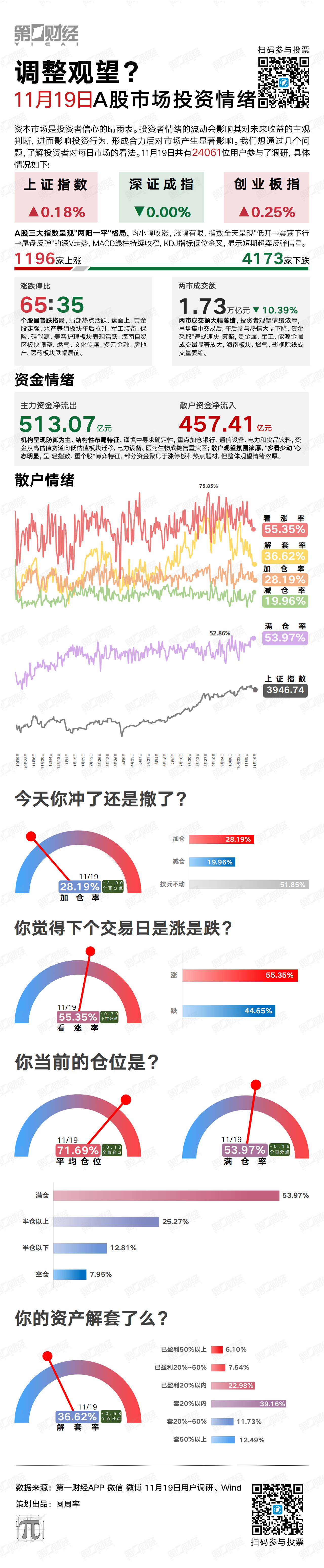
Market Overview - The A-share market showed a "two up, one flat" pattern with slight gains, indicating limited upward movement. The indices experienced a "low open to late rebound" deep V-shaped trend, with MACD green bars continuously narrowing and KDJ indicators showing a low-level golden cross, suggesting short-term oversold conditions [3][4]. Investor Sentiment - A total of 24,061 users participated in the sentiment survey on November 19, reflecting the market's investment mood. The overall sentiment indicates a cautious approach among investors, with a significant number adopting a "wait-and-see" strategy [1][19]. Trading Activity - The trading volume in both markets significantly shrank, with investors showing reduced enthusiasm in the afternoon session after concentrated trading in the morning. The overall market participation was characterized by a "quick battle" strategy, particularly in precious metals and military industries, while other sectors like gas, cultural media, and real estate saw declines [4][5]. Sector Performance - Specific sectors showed varied performance: gold stocks strengthened, aquaculture stocks surged in the afternoon, and military equipment, insurance, silicon energy, and beauty care sectors were active. Conversely, the Hainan Free Trade Zone sector adjusted, while gas, cultural media, diversified finance, real estate, and pharmaceuticals faced notable declines [3][4]. Fund Flow - There was a net outflow of main funds, while retail investors exhibited a strong wait-and-see attitude. Institutional investors focused on defensive strategies, seeking certainty by increasing positions in banks, communication equipment, electricity, and food sectors. High-valuation sectors like electric equipment and biomedicine faced significant sell-offs [5][6]. Positioning and Profitability - As of November 19, 28.19% of investors increased their positions, while 19.96% reduced their holdings. The average position was reported at 71.69%, indicating a majority of investors were fully invested [9][14]. Additionally, 39.16% of investors reported being within a 20% loss range, while 6.10% had profits exceeding 50% [18].
积极看涨?
第一财经· 2025-11-10 10:20
Market Overview - The A-share market shows a mixed and volatile pattern, with the Shanghai Composite Index recovering gradually due to support from the consumer and cyclical sectors [4] - On November 10, the Shanghai Composite Index closed at 4018.60, while the Shenzhen Component Index fluctuated around 13400 points, supported by the consumer sector [6][13] Investor Sentiment - Investor sentiment is a crucial indicator of market performance, with 10,819 users participating in a sentiment survey on November 10 [2] - The overall market sentiment has improved, as evidenced by a significant increase in trading volume, with a total turnover of over 1 trillion, up 8.50% [9] Sector Performance - The market exhibited a "broad rise with differentiation" characteristic, with major consumer and cyclical stocks leading the gains. Notable sectors include liquor, food and beverage, and duty-free shops [8] - The technology sector, particularly electronics, communications, and high-end manufacturing, experienced notable adjustments [8] Fund Flows - There is a clear "high-low switch" in fund flows, with retail investors showing a net inflow while institutional investors are reallocating their portfolios, focusing on sectors with policy and earnings certainty [10][11] - Institutional investors are increasing their positions in consumer sectors such as liquor, cultural media, and food and beverage, while reducing exposure to consumer electronics, semiconductors, and communication equipment [11] Retail Investor Behavior - Retail investors are actively chasing stocks, particularly in consumer sectors related to the upcoming Double Eleven shopping festival, with significant interest in dairy and community group buying [11] - As of November 10, 30.65% of retail investors reported increasing their positions, while 12.55% reduced their holdings [15]

三菱日联:美国政府结束停摆将降低数据不确定性和提振投资者情绪
Ge Long Hui A P P· 2025-11-10 07:00
Core Insights - The agreement to end the government shutdown may trigger significant market reactions, primarily by reducing data uncertainty and boosting investor sentiment [1] - Recent rebounds in the U.S. stock market appear to be driven by a combination of technical recovery and optimistic sentiment regarding the imminent end of the government shutdown [1]
侃股:理性看待重组终止
Bei Jing Shang Bao· 2025-11-04 12:12
Core Viewpoint - The termination of restructuring plans generally does not affect the intrinsic investment value of listed companies, and short-term negative impacts will not determine the long-term value of the company [1][3]. Group 1: Impact of Restructuring Termination - The termination of restructuring is often perceived as a significant negative by investors, leading to short-term stock price pressure due to changes in investor sentiment [1][2]. - Stock price fluctuations during restructuring announcements may reflect overvaluation based on optimistic expectations, and the subsequent decline is a market re-evaluation rather than a fundamental change in company value [1][2]. - Companies may choose to terminate restructuring due to uncertainties, but this does not diminish their growth potential or operational capabilities [2][3]. Group 2: Investment Strategies - Long-term investors should focus on the intrinsic value and profit growth potential of companies, rather than being swayed by short-term stock price movements [2][3]. - Investors should prepare strategies for potential stock price declines, such as setting stop-loss orders and managing positions effectively [2]. - It is advisable for investors to avoid impulsive buying during price corrections and to wait for stabilization before making investment decisions [2][3].
What to Expect as the SPX Enters a Historically Bullish Period
Yahoo Finance· 2025-10-29 12:17
Core Insights - The S&P 500 Index (SPX) has historically shown a seasonal trend where the period from May to October is weaker compared to the November to April period, with average returns of 1.95% and 6.5% respectively since 1964 [1][3] - This year, the SPX has experienced a remarkable performance from May to October, gaining over 20%, marking the best performance in this timeframe since 1938 [3][4] - The upcoming November to April period is expected to yield stronger returns based on historical data, particularly following a significant May-October performance [4] Performance Analysis - Historical data indicates that in years where the SPX gained at least 10% from May to October, the subsequent November-April period averaged a return of 10.7% with 78% of the returns positive [4] - The latest Investors Intelligence sentiment survey shows that 52.8% of market newsletters are bullish on stocks, which could influence future performance [5] - When investor expectations are high, the SPX has historically returned about 3.2% over the next six months, which is lower than periods of less optimism [6] Market Sentiment - The sentiment survey by Investors Intelligence reflects a bullish outlook among investors, which may impact the SPX's performance in the upcoming months [5] - Historical performance data suggests that when the SPX is near an all-time high at the start of November, it tends to struggle, averaging a return of just 1.4% over the following six months [7]
高盛:若经济和基本面持续改善,投资者情绪仍有上行空间
Huan Qiu Wang· 2025-09-26 00:44
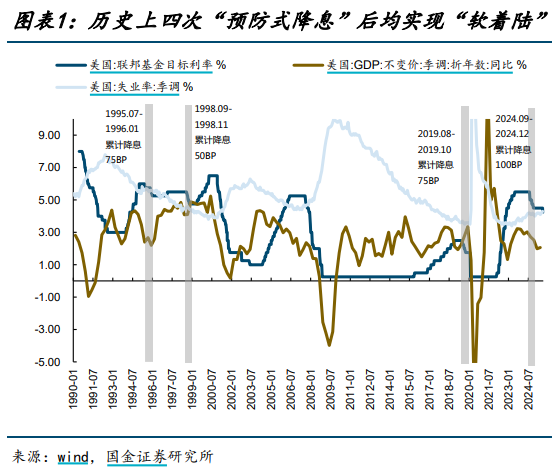
Group 1 - Goldman Sachs maintains an overweight view on China, indicating that the A-share market does not show signs of overheating [1] - The sentiment indicator for Chinese retail investors suggests that there is room for further improvement in investor sentiment if economic fundamentals continue to improve [1] - Guotai Junan Securities believes that contrary to market perceptions, a recovery in China's earnings fundamentals may be in the making, with opportunities arising from the recent interest rate cuts [1] Group 2 - Guotai Junan Securities highlights that the current preventive interest rate cuts could benefit export-oriented companies, which can avoid domestic price pressures while capitalizing on increased demand from overseas markets [4] - The firm anticipates that the realization of fundamental improvements will be a key driver for market upward movement, supported by historical experiences and the Federal Reserve's economic forecasts [4] - Positive factors are emerging in the domestic market, including a reduction in the drag from PPI and CPI tail effects, as well as inventory replenishment behaviors among domestic companies, reminiscent of the experiences from 2006 to 2007 [4]


报告:投资者对股票市场情绪有所回暖
Zhong Guo Xin Wen Wang· 2025-09-23 14:00
Group 1 - The core viewpoint of the report indicates that investor sentiment towards the stock market has improved, as reflected in the findings of the 2025 Q3 Investor Sentiment Survey released by Changjiang Business School [1][3] - Since Q4 2024, various measures have been implemented to boost the stock market, contributing to a rising trend in A-shares [3] - The report identifies three main factors driving the recent A-share market uptrend: 1. Policy support, including multiple liquidity releases by the central bank and increased public investment in infrastructure [3] 2. Breakthroughs in technology innovation leading to the emergence of globally influential companies, particularly in sectors like semiconductors and automation equipment, which have shown significant year-on-year price increases [3] 3. Proactive and systematic strategies in response to trade frictions, enhancing market confidence in China's economic and technological self-reliance [3] Group 2 - Liu Jin, a professor at Changjiang Business School, noted that the A-share market's rise over the past year reflects a partial recovery in investor confidence, but a long-term bull market requires strong fundamental support [4] - Key aspects of fundamental development include the transition of the economic structure from investment to consumption, technological innovation, industrial upgrading, and the active participation of private enterprises [4]