投资者权益保护

Search documents
证监会:巩固市场稳中向好势头
Xin Lang Cai Jing· 2026-01-18 04:04
Core Viewpoint - The China Securities Regulatory Commission (CSRC) emphasizes the need for risk prevention, strong regulation, and promotion of high-quality development in the capital market, while addressing the challenges posed by internal and external risks [2][3]. Group 1: 2025 Achievements - The CSRC successfully implemented the central government's decisions, enhancing market resilience and vitality despite multiple risks, with significant breakthroughs in attracting medium- and long-term capital [2]. - A total of 701 cases of securities and futures violations were investigated, resulting in fines totaling 15.47 billion yuan, indicating improved regulatory enforcement [2]. - The total cash dividends and buybacks from listed companies reached 2.68 trillion yuan, reflecting a gathering momentum for high-quality development [2]. - The total amount of IPOs and refinancing reached 1.26 trillion yuan, while the bond market issued various bonds totaling 16.3 trillion yuan [2]. Group 2: Future Directions - The CSRC aims to maintain market stability and enhance monitoring and regulatory measures to prevent excessive market fluctuations, promoting long-term and value-based investments [3][4]. - Reforms will focus on improving the adaptability and inclusiveness of the multi-tiered equity market, with specific initiatives for the ChiNext and STAR Market [4]. - The regulatory framework will be strengthened to combat financial fraud, price manipulation, and insider trading, enhancing the effectiveness of enforcement actions [4]. - The CSRC plans to promote the growth and governance of listed companies, including the introduction of new regulations and guidelines to improve operational standards [4]. - Efforts will be made to deepen the opening of the capital market, facilitating cross-border investment and optimizing regulations for foreign investors [5][6].
证监会:巩固市场稳中向好势头 坚决防止市场大起大落
Zheng Quan Shi Bao· 2026-01-17 09:32
Core Viewpoint - The China Securities Regulatory Commission (CSRC) emphasizes the need to consolidate the market's stable upward trend while addressing illegal activities such as excessive speculation and market manipulation, aiming to prevent significant market fluctuations [1][3]. Group 1: Market Stability and Regulation - The CSRC aims to strengthen market monitoring and risk prevention, ensuring fair trading and timely counter-cyclical adjustments to maintain market stability [3]. - In 2025, the CSRC handled 701 cases of securities and futures violations, imposing fines totaling 15.47 billion yuan, enhancing the effectiveness of regulatory enforcement [2]. - The market showed signs of recovery, with significant breakthroughs in attracting medium- and long-term capital, as evidenced by a total of 2.68 trillion yuan in cash dividends and buybacks from listed companies [2]. Group 2: Reform and Development - The CSRC is committed to deepening reforms in the capital market, including the implementation of the Growth Enterprise Market reform and enhancing the adaptability and competitiveness of the multi-tiered equity market [4]. - The bond market saw a total issuance of various bonds amounting to 16.3 trillion yuan, indicating a focus on improving quality and expanding the market [2]. - The CSRC plans to promote the integration and high-quality development of the Beijing Stock Exchange and the New Third Board [4]. Group 3: Legal and Governance Enhancements - The CSRC emphasizes strict legal enforcement to combat financial fraud, price manipulation, and insider trading, while improving the regulatory framework for private equity funds [5]. - There is a focus on enhancing corporate governance and operational standards for listed companies, including the introduction of new regulations and guidelines [4][6]. - The CSRC aims to strengthen the supervision of major shareholders and actual controllers to ensure compliance and protect investor rights [4]. Group 4: International Cooperation and Open Market - The CSRC is working to enhance the openness of the capital market, including optimizing the Qualified Foreign Institutional Investor (QFII) program and expanding the range of futures products available for foreign investment [5]. - Efforts are being made to improve the regulatory framework for overseas listings, ensuring transparency and standardization [5]. - The CSRC is committed to participating in international financial governance and enhancing its ability to manage risks in an open environment [5].
证监会最新部署!
Zheng Quan Ri Bao Wang· 2026-01-16 10:18
Core Viewpoint - The China Securities Regulatory Commission (CSRC) emphasizes the need to consolidate the positive momentum in the capital market while addressing complex challenges posed by intertwined internal and external risks [2][5]. Group 1: Market Stability and Development - The CSRC aims to strengthen market monitoring and regulation to maintain fairness and prevent excessive speculation, ensuring a stable market environment [2][5]. - The focus is on deepening public fund reforms and expanding long-term investment channels to foster a "long money, long investment" market ecosystem [2][5]. Group 2: Reform and High-Quality Development - The CSRC plans to enhance the inclusiveness and adaptability of the multi-tiered equity market, implementing reforms in the ChiNext and STAR Market to facilitate high-quality development [3]. - Efforts will be made to improve the quality and structure of the bond market, including the smooth rollout of REITs in commercial real estate [3]. Group 3: Regulatory Enforcement - The CSRC is committed to strict enforcement against financial fraud, price manipulation, and insider trading, enhancing the effectiveness of regulatory measures [3][7]. - A comprehensive punishment and prevention system for financial fraud will be established, with a focus on increasing the number of cases handled and penalties imposed [5][6]. Group 4: Capital Market Opening - The CSRC aims to deepen and elevate the two-way opening of the capital market, optimizing the Qualified Foreign Institutional Investor (QFII) scheme and expanding the range of futures products available for foreign investment [4]. Group 5: Governance and Party Leadership - The CSRC emphasizes the importance of strengthening the Party's leadership in the capital market, enhancing accountability, and combating corruption within the regulatory framework [7]. - Continuous improvement of the regulatory team’s capabilities and integrity is prioritized to ensure effective market supervision [7].
上证观察家 | 践行以投资者为本 完善资本市场投资功能
Sou Hu Cai Jing· 2026-01-08 00:21
Group 1 - The core viewpoint of the article emphasizes the necessity of enhancing the investment function of the capital market to promote coordinated development of investment and financing, which is crucial for addressing existing challenges in market structure and functionality [4][6][19] - The capital market in China has grown to be the second-largest in the world by market capitalization, but it still faces challenges in optimizing structure and balancing functions, particularly in enhancing the synergy between investment and financing [4][6] - The article outlines three essential characteristics of a well-functioning capital market: pricing efficiency and value creation, market stability, and robust investor rights protection and return mechanisms [4][9][11] Group 2 - The implementation path for improving the investment function of the capital market is summarized as "one foundation and two pillars," where the foundation is the quality of listed companies, and the pillars are long-term capital supply and investor service ecology [12][19] - The necessity and urgency of enhancing the investment function are highlighted, focusing on the need for better coordination between investment and financing, improved pricing efficiency, and increased participation of long-term capital [6][8][19] - The article discusses the importance of aligning the capital market with the economic development goals set by the government, emphasizing the need for reforms to enhance the market's inclusiveness and adaptability [4][8][19] Group 3 - The article identifies specific measures to enhance the asset side, including improving the governance mechanisms of listed companies and optimizing the listing and pricing processes to ensure high-quality asset supply [13][14] - On the funding side, it suggests breaking down barriers for long-term capital to enter the market and reforming asset management institutions' assessment and incentive mechanisms to promote long-term investment [15][16] - The service side focuses on reshaping the wealth management industry to prioritize investor interests and enhance investor education and behavior guidance to support rational long-term investment [17][18]

工行上调准入门槛 1月12日起买积存金需C3级以上
Xin Lang Cai Jing· 2026-01-06 07:18
Core Viewpoint - Industrial and Commercial Bank of China (ICBC) has announced adjustments to the risk assessment requirements for personal clients' accumulation gold business, aiming to enhance the protection of individual investors' rights amid recent market instability [1] Group 1: Risk Assessment Changes - The risk tolerance level for personal clients' accumulation gold business has been raised from C1 (conservative) to C3 [1] - Previously, clients were required to pass a risk assessment and sign a risk disclosure statement to engage in the accumulation gold business [1]

工行上调准入门槛!1月12日起买积存金需C3级以上
Bei Jing Shang Bao· 2026-01-06 07:17
Core Viewpoint - Industrial and Commercial Bank of China (ICBC) has announced adjustments to the risk assessment requirements for personal clients engaging in accumulation gold business, aiming to enhance the protection of individual investors' rights amid recent market instability [1] Summary by Categories Risk Assessment Changes - Starting from January 12, 2026, personal clients must complete a risk assessment questionnaire through ICBC's various channels and achieve a C3-balanced rating or higher to engage in accumulation gold business [1] - Previously, clients were required to obtain a C1-conservative rating or higher to participate in the accumulation gold business [1] Client Operations - Existing clients with accumulation gold accounts can perform operations such as redemption, exchange, and modification of investment plans without being subject to the new risk assessment requirements [1] - Clients who have already signed the risk disclosure document are not required to re-sign it [1]
2026年监管重拳来袭!证监会回应维权痛点
Xin Lang Cai Jing· 2026-01-05 03:52
Core Viewpoint - The year 2025 marks a significant shift in the A-share capital market towards enhanced regulatory logic and stronger enforcement, with a focus on investor protection and accountability for violations [3][16]. Regulatory Environment - The China Securities Regulatory Commission (CSRC) emphasizes the importance of collaborative governance between regulation and judiciary to protect investors, particularly small and medium-sized investors, and to promote a healthy market ecosystem [4][19]. - The CSRC's commitment to a "zero tolerance" approach will be closely linked to civil compensation, expediting the initiation of representative litigation once administrative penalties are imposed [17][26]. Investor Compensation Mechanisms - Recent court rulings, such as the one involving Jintongling, demonstrate the effectiveness of the representative litigation system in protecting investor rights and addressing disputes collectively [5][18]. - The establishment of a special compensation fund for cases like Guandao Digital's false statements indicates a proactive approach to resolving market conflicts and safeguarding investor interests [6][19]. Enforcement of Disclosure Regulations - In 2025, a total of 264 listed companies were investigated for information disclosure violations, reflecting a sustained high-pressure stance from regulatory authorities [8][20]. - The types of violations predominantly include systematic financial fraud, undisclosed related party transactions, and significant omissions in disclosures regarding major events [22][23]. Market Reactions and Trends - The trend of companies facing severe penalties for financial misconduct, including forced delisting, indicates a shift in regulatory practices, with a growing consensus that delisting does not exempt companies from civil liability [10][23]. - The year 2025 saw 31 investor compensation cases resulting in favorable judgments, highlighting an increasing clarity in judicial standards for securities fraud [24][26]. Future Outlook - The year 2026 is anticipated to further mature the investor protection framework, with potential reforms including lower thresholds for collective lawsuits and mandatory dividend policies for profitable companies [26][27]. - The introduction of a whistleblower reward system and a compensation fund for defrauded investors aims to enhance accountability and deter fraudulent activities in the market [27].

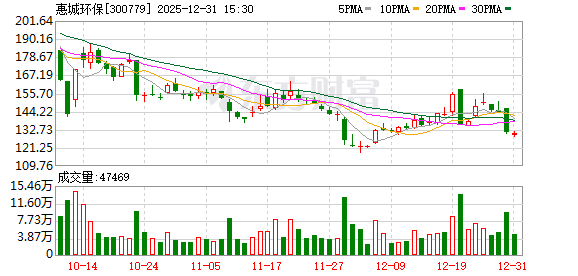
惠城环保:公司始终将投资者权益保护置于首位
Zheng Quan Ri Bao· 2025-12-31 08:39
Group 1 - The company emphasizes the importance of investor communication and adheres to information disclosure regulations [2] - The company has established a dedicated team to respond to investor inquiries through various channels, ensuring timely responses [2] - Legal measures will be taken against malicious rumors and market manipulation, with clarifications provided through official disclosure channels [2] Group 2 - The company strictly implements the "Insider Information Knowledge Management System" and enhances information control through confidentiality agreements and compliance training [2] - To ensure equal access to information for retail investors, the company has developed an "Investor Relations Management System" that utilizes multiple channels for communication [2] - The protection of investor rights is a top priority for the company, which will continue to optimize its information disclosure mechanisms to maintain market fairness [2]
保护投资者合法权益 北交所发布交易与关联交易指引
Sou Hu Cai Jing· 2025-12-28 02:23
Core Viewpoint - The newly released "Guidelines for Continuous Supervision of Listed Companies No. 15 - Transactions and Related Transactions" aims to standardize transaction behaviors and enhance information disclosure quality for listed companies, thereby protecting investors' rights [1][2]. Group 1: Regulatory Focus - The guidelines cover various transaction scenarios including financial company related transactions, entrusted wealth management, securities investment, futures, and derivatives trading [1]. - It emphasizes the need for clear review procedures, strengthened internal control management, and improved disclosure content to promote transparent and high-quality development of listed companies [1][2]. Group 2: Related Transactions - The guidelines specifically regulate four types of related transactions: financial company related transactions, joint investments, daily related transactions, and related asset purchases and sales [1]. - Financial company related transactions must involve signing financial service agreements, developing risk contingency plans, and continuously assessing fund safety [1]. Group 3: Major Transaction Supervision - The guidelines strengthen supervision of major transactions, focusing on securities investment, entrusted wealth management, joint investments with professional investment institutions, and futures and derivatives trading [2]. - It requires companies to clarify trading purposes in futures and derivatives trading to prevent speculative trading under the guise of hedging [2]. Group 4: Operational Guidance - The guidelines provide practical operational instructions for listed companies, detailing information disclosure requirements and establishing an authorization management mechanism [2]. - Companies are allowed to reasonably estimate and conduct one-time reviews of transaction limits for securities investment, entrusted wealth management, and futures derivatives trading over the next 12 months, balancing operational efficiency with decision-making standards [2]. Group 5: Implementation and Training - The release of the guidelines is part of the North Exchange's ongoing efforts to improve the regulatory framework for listed companies [2]. - The North Exchange plans to conduct rule interpretations and business training to help listed companies enhance their internal control mechanisms and maintain investor rights [2].
四次公开提名独董征集投票权 投保机构从“外围支持”走向“前台参与”
Zhong Guo Jing Ying Bao· 2025-12-26 18:51
Core Viewpoint - The article discusses the increasing role of the Investor Protection Center in nominating independent directors for listed companies, enhancing the voice of small and medium shareholders in corporate governance [1][4][8]. Group 1: Independent Director Nomination - The Investor Protection Center has publicly nominated independent director candidates and collected voting rights for four companies: First Pharmaceutical, Shangfeng Cement, South Network Energy, and Xinbo Co., indicating a shift towards active participation in corporate governance [1][3][8]. - The nomination of Zhang Lizhi as an independent director for South Network Energy was successfully approved, with 9 valid shareholders authorizing the center to exercise voting rights, representing approximately 0.0422% of the total voting shares [3][8]. - The center's approach allows for a more diverse selection of independent directors, enhancing their independence and professionalism, which is crucial for representing the interests of small shareholders [5][6]. Group 2: Enhancing Shareholder Rights - The initiative aims to strengthen the voice of small shareholders, who traditionally have low participation in corporate governance, often resorting to "voting with their feet" [4][6]. - By publicly nominating independent directors and collecting voting rights, the center facilitates small investors in exercising their voting rights, creating a positive example for active participation in corporate governance [4][5]. - The center's actions are seen as a beneficial attempt to address the weak voice of small shareholders and improve the overall effectiveness of investor rights protection [5][6]. Group 3: Full Chain Rights Protection Mechanism - The nomination process contributes to a comprehensive rights protection mechanism, addressing preemptive measures in addition to existing shareholder rights and securities litigation [6][8]. - The center's involvement allows independent directors to participate directly in major corporate decisions, enhancing preventive measures against potential governance issues [6][7]. - The initiative reflects a broader trend of investor protection agencies transitioning from peripheral supporters to active participants in corporate governance structures [6][7]. Group 4: Challenges and Recommendations - Despite the positive developments, the current mechanism faces challenges, including limited case studies and low shareholder participation rates [8][9]. - Experts suggest improving awareness among small shareholders regarding the nomination process and simplifying the authorization procedures to encourage greater participation [9][10]. - There is a need for ongoing efforts to establish a replicable framework across various industries and companies to enhance market recognition and gradually increase the influence of this mechanism [9][10].