指数调样

Search documents
寒武纪权重为啥要下调,会引发资金砸盘吗?权威解答来了
Di Yi Cai Jing· 2025-09-07 05:13
Core Viewpoint - The adjustment of the STAR Market 50 Index sample stocks is a routine action aimed at maintaining the index's representativeness and enhancing the investability of index products, with specific rules established in advance [2][3]. Group 1: Index Adjustment and Rules - The STAR Market 50 Index undergoes quarterly adjustments, with the latest one scheduled for September 12, which is a standard procedure to ensure the index reflects current market conditions [2]. - The individual stock weight in the index is capped at 10% to reduce concentration risk, a practice common in both domestic and international indices [2][3]. - The adjustment aims to prevent the index from being overly influenced by a few stocks, which could lead to significant volatility in index performance [2][3]. Group 2: Impact on ETFs and Market Dynamics - Concerns about large-scale ETF sell-offs due to weight reductions are addressed, indicating that fund managers typically adjust their holdings gradually and consider market liquidity [3]. - The funds that are redistributed from the stock experiencing a weight reduction will remain within the index, ensuring that the overall capital remains unchanged, described as "肥水不流外人田" [4]. - Investors are encouraged to focus on the long-term benefits of index tracking rather than short-term fluctuations caused by periodic adjustments [5].

寒武纪权重为啥要下调 会引发资金砸盘吗?权威解答来了
Di Yi Cai Jing· 2025-09-07 05:12
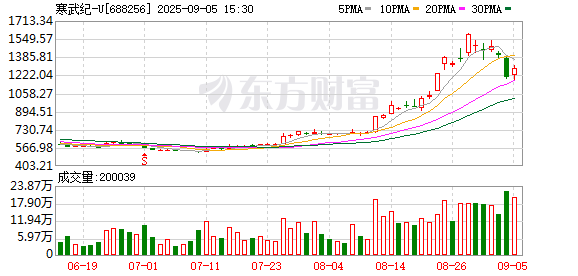
Group 1 - The adjustment of the STAR Market 50 Index sample stocks will take place after the market closes on September 12, which includes the popular stock Cambricon [2] - Cambricon's recent significant stock price decline is perceived to be related to its weight exceeding 10% in the STAR 50 Index, potentially forcing passive funds to reduce their holdings [2][3] - The Shanghai Stock Exchange's educational video addresses investor concerns regarding the index weight adjustment and its implications for stock prices [3] Group 2 - The STAR Market Index undergoes quarterly adjustments to ensure its representativeness and enhance the investability of index products, with rules published in advance [3] - The individual stock weight limit of 10% is a common practice both domestically and internationally, aimed at reducing concentration and preventing the index from being overly influenced by a few stocks [3] - Concerns about large-scale ETF sell-offs due to weight reductions are addressed, indicating that fund companies typically adjust their holdings gradually and consider market liquidity [4] Group 3 - The funds that flow out from a stock due to weight reduction will be redistributed among other index samples, maintaining the overall fund scale [5] - Investors are advised not to overly worry about short-term volatility, as the core value of index funds lies in tracking long-term returns rather than reacting to short-term adjustments [6]

A股重大调整,今日生效!
第一财经· 2025-06-16 00:22
Core Viewpoint - The periodic adjustment of A-share indices took effect on June 16, 2025, impacting various indices including the Shanghai Stock Exchange 50, 180, 380, and the ChiNext indices, among others [1][3]. Group 1: Index Adjustments - A total of 187 sample stocks were replaced across six major cross-market indices, with the CSI 300 index changing 7 stocks, the CSI 500 changing 50 stocks, and the CSI 1000 changing 100 stocks [3][16]. - The newly added stocks include notable companies such as Softcom Power and AVIC Chengfei [3][20]. Group 2: Sector Representation - The adjustments reflect a shift towards enhancing representation in sectors like information technology, communication services, and industrials, with the CSI 500 index seeing a 1.82% increase in the weight of the information technology sector [16][19]. - The manufacturing sector remains dominant in the Shenzhen Component Index, accounting for 73% of the sample companies, while the ChiNext index emphasizes strategic emerging industries with a weight of 92% [19][20]. Group 3: New Index Launch - The newly launched SSE 580 index focuses on smaller-cap stocks within the Shanghai market, comprising 580 securities that reflect the performance of smaller listed companies [20].

银行股重构股市投资逻辑
第一财经· 2025-06-04 02:53
Core Viewpoint - The banking sector has become a strong performer in the stock market post-Dragon Boat Festival, driven by high dividend yields, increased allocations from insurance funds, and public fund reforms, leading to a market capitalization exceeding 10 trillion yuan [1][7]. Group 1: Market Performance - On June 3, the banking sector saw a significant rise, with the Shanghai Rural Commercial Bank hitting its daily limit, leading to a collective increase in bank stocks, with many reaching new highs [3][4]. - The banking index rose by 2.5% on that day, closing with a 1.98% increase, making it the fourth-best performing sector among 31 industries [3][4]. - Year-to-date, the banking sector's market capitalization increased by approximately 630 billion yuan, with an overall rise of nearly 10% despite the broader market declining over 1% [7]. Group 2: Index Inclusion Impact - The strong performance of certain bank stocks is attributed to the inclusion of Shanghai Rural Commercial Bank and Chongqing Rural Commercial Bank in major market indices, which has sparked speculative trading [4][5]. - The adjustment of indices, effective June 16, is expected to attract significant passive fund inflows due to the large scale of ETFs linked to these indices [5][6]. Group 3: Long-term Trends and Investment Sentiment - The banking sector has been favored by investors due to its low valuations and high dividend yields, with many banks offering yields above 4% [11][12]. - The trend of insurance funds increasing their holdings in bank stocks is seen as a response to the "asset shortage" environment, with significant investments in H-shares of major banks [9][11]. - Analysts suggest that the current interest rate environment and asset scarcity will likely lead to a recovery in the price-to-book (PB) ratios of quality banks, potentially exceeding 1 [12][13]. Group 4: Caution Against Speculation - Despite the positive sentiment, analysts warn that the recent price increases may not be sustainable and emphasize the importance of returning to fundamental analysis for bank stock investments [1][12]. - The market's focus on index adjustments and speculative trading may not align with long-term investment strategies, highlighting the need for caution among individual investors [12].




低利率及资产荒背景下,银行股重构股市投资逻辑
Di Yi Cai Jing· 2025-06-03 14:33
Core Viewpoint - The banking sector has shown strong performance post the Dragon Boat Festival, with significant gains in both A-shares and H-shares, driven by the inclusion of certain banks in core market indices and a favorable low-interest-rate environment [1][2][3]. Group 1: Market Performance - On June 3, the banking sector saw a collective rise, with the A-share market capitalization of banks exceeding 10 trillion yuan, marking a 630 billion yuan increase from the beginning of the year [6][8]. - The banking index rose by 2.5% on June 3, closing with a 1.98% increase, ranking fourth among 31 Shenwan primary industries [2][3]. - Individual stocks such as Shanghai Rural Commercial Bank and Chongqing Rural Commercial Bank reached new highs, with the former hitting the daily limit up [2][3]. Group 2: Index Inclusion Impact - The strong performance of the banking sector is attributed to the inclusion of Shanghai Rural Commercial Bank and Chongqing Rural Commercial Bank in major indices like the CSI 300 and SSE 180 [3][4]. - The adjustment of index samples is expected to attract significant passive fund inflows, as these indices are closely linked to large-scale ETF products [4][6]. Group 3: Investment Trends - The banking sector has become a favored choice for risk-averse investors, with discussions around the attractiveness of bank stocks compared to traditional savings and investment products intensifying [1][9]. - The sector has seen a nearly 10% increase year-to-date, contrasting with a decline in the broader market [6][9]. - Analysts suggest that the current investment trend is supported by a combination of high dividend yields and a shift in institutional investment strategies towards banking stocks [8][11]. Group 4: Future Outlook - The low-interest-rate environment and ongoing asset scarcity are expected to sustain the appeal of bank stocks, with analysts predicting a potential recovery in price-to-book ratios for quality banks [10][11]. - The anticipated reforms in public funds are likely to further enhance the allocation towards banking stocks, contributing to continued price increases [8][9].
金融工程:2025年6月重点指数调样会带来哪些投资机会
Tianfeng Securities· 2025-05-31 07:28
Quantitative Models and Construction Methods 1. Model Name: Comprehensive Impact Coefficient - **Model Construction Idea**: The model aims to quantify the combined impact of multiple index adjustments on individual stocks, considering the overlap and exchange of sample stocks across different indices[23][24] - **Model Construction Process**: The comprehensive impact coefficient is defined as follows: $$ effect_{\_}total_{s} = \sum_{i=1}^{n} \frac{wt_{\_}chg_{s\_i} \times fund_{\_}size_{i}}{amount_{\_}avg_{s,20}} $$ - \( wt_{\_}chg_{s\_i} \): Weight change of stock \( s \) in index \( i \) - \( fund_{\_}size_{i} \): Fund size tracking index \( i \) - \( amount_{\_}avg_{s,20} \): 20-day average trading volume of stock \( s \)[23][24] - **Model Evaluation**: The model effectively captures the correlation between the comprehensive impact coefficient and the adjustment effect, making it a valuable tool for identifying stocks with significant adjustment impacts[29] --- Model Backtesting Results 1. Comprehensive Impact Coefficient - **Key Metrics**: - Stocks with a coefficient above 1: Average excess return per period = 3.82% - Stocks with a coefficient above 2: Average excess return per period = 5.13%[2][16] - **Historical Performance**: - December 2020: Coefficient > 2, average absolute return = 13.75%, excess return = 14.64% - June 2021: Coefficient > 2, average absolute return = 10.67%, excess return = 11.33% - December 2021: Coefficient > 2, average absolute return = 6.64%, excess return = 2.83% - June 2022: Coefficient > 2, average absolute return = 10.29%, excess return = 5.02% - December 2022: Coefficient > 2, average absolute return = 8.33%, excess return = 3.40% - June 2023: Coefficient > 2, average absolute return = 0.99%, excess return = 0.90% - December 2023: Coefficient > 2, average absolute return = 4.96%, excess return = 6.55% - June 2024: Coefficient > 2, average absolute return = -1.45%, excess return = 0.57% - December 2024: Coefficient > 2, average absolute return = 2.28%, excess return = 0.96%[13][14][15] --- Quantitative Factors and Construction Methods 1. Factor Name: Weight Rules - **Factor Construction Idea**: Weight rules are applied to ensure that the influence of individual stocks or sectors within an index remains balanced and aligned with the index's design objectives[25][26] - **Factor Construction Process**: - Different indices impose specific constraints on individual stock weights, such as: - Maximum weight for a single stock (e.g., 10%, 15%) - Combined weight limits for the top N stocks (e.g., top 5 stocks ≤ 40%) - Sector weight alignment with free-float market capitalization[26][27] --- Factor Backtesting Results 1. Comprehensive Impact Coefficient (Factor-Level Results) - **Top Stocks by Impact Coefficient (as of May 30, 2025)**: - **Stock: 601825 (沪农商行)** - Net Impact: 28.98 billion - Daily Average Turnover: 2.07 billion - Free-Float Market Cap: 493.66 billion - Impact Coefficient: 13.98 - **Stock: 601077 (渝农商行)** - Net Impact: 25.08 billion - Daily Average Turnover: 4.15 billion - Free-Float Market Cap: 427.52 billion - Impact Coefficient: 6.04 - **Stock: 601211 (国泰海通)** - Net Impact: 42.66 billion - Daily Average Turnover: 7.71 billion - Free-Float Market Cap: 1874.48 billion - Impact Coefficient: 5.53 - **Stock: 688608 (恒玄科技)** - Net Impact: 31.45 billion - Daily Average Turnover: 8.42 billion - Free-Float Market Cap: 283.59 billion - Impact Coefficient: 3.74[30]



2025年6月沪深指数调样预测:中证500或大量纳入信息技术板块
Guo Tai Jun An Qi Huo· 2025-05-08 12:31
1. Report Investment Rating - No investment rating information is provided in the report. 2. Core Viewpoints - After market fluctuations in April, the national team entered the market through index ETFs to maintain stability. Alongside the continuous entry of long - term funds like social security and insurance funds, the scale of ETF products linked to core broad - based indices expanded again. As of May 2025, the total scale of products linked to the Shanghai 50, CSI 300, CSI 500, and CSI 1000 indices reached approximately 1.7 trillion yuan [3][4]. - The adjustment of the four indices' components will take effect on June 16, 2025. Due to significant recent market fluctuations, the final results may involve subjective adjustments, and the official announcements should be referred to [3][6]. - Each of the Shanghai 50, CSI 300, CSI 500, and CSI 1000 indices adjusts its components semi - annually, with a buffer principle in place and an adjustment ratio controlled within 10% to ensure index stability [6]. 3. Summary by Index Shanghai 50 Index - **Selection Criteria**: Selects stocks from the Shanghai 180 index constituents, considering factors such as listing time, business performance, and market performance [7]. - **Predicted Adjustments**: Two component stocks are predicted to be adjusted. Jiangsu Bank and Industrial and Commercial Bank of China may be included, while Haitian Flavoring and Food and China Railway Group may be removed. After the adjustment, the PE of the Shanghai 50 will remain at 10.8 times [7]. - **Industry Distribution**: The included stocks belong to the financial and information technology sectors, while the removed stocks belong to the primary consumer and industrial sectors. The predicted included stocks have an average monthly increase of 8.88%, and the predicted removed stocks have an average monthly increase of 7.6% [7]. CSI 300 Index - **Selection Criteria**: Selects stocks from the A - share market, considering listing time, business conditions, and market capitalization and trading volume rankings [11]. - **Predicted Adjustments**: Seven component stocks are predicted to be adjusted. Guangqi Technology, Shanghai Rural Commercial Bank, and Sanan Optoelectronics may be included, while Tianci Materials, 37 Interactive Entertainment, and Oriental Yuhong may be removed. After the adjustment, the PE of the CSI 300 will be slightly revised up to 12.5 [11]. - **Industry Distribution**: The number of information technology stocks increases by 2, and the number of industrial stocks decreases by 2, with no significant change in the overall industry style. The predicted included stocks have an average monthly increase of 15.69%, and the predicted removed stocks have an average monthly increase of 6.32% [11]. CSI 500 Index - **Selection Criteria**: Selects stocks from the sample space of the CSI 300 index, excluding the CSI 300 constituents and stocks with high market capitalization and low trading volume [16]. - **Predicted Adjustments**: Forty - nine component stocks are predicted to be adjusted. Hengxuan Technology, BeiGene, and Shenhuo Co., Ltd. may be included, while Guangqi Technology, Jianghuai Automobile, and Dongshan Precision may be removed. After the adjustment, the PE of the CSI 500 will increase from 28.9 to 29.6 [16]. - **Industry Distribution**: The number of information technology stocks increases significantly, while the number of raw material and medical and health stocks decreases. The index style further leans towards the information technology sector. The predicted included stocks have an average monthly increase of 10.68%, and the predicted removed stocks have an average monthly increase of 9.31% [16]. CSI 1000 Index - **Selection Criteria**: Selects 1000 small - cap and liquid stocks outside the CSI 800 index constituents, excluding stocks with low market capitalization and trading volume [20]. - **Predicted Adjustments**: One hundred component stocks are predicted to be adjusted. Julun Intelligent, Shuanglin Co., Ltd., and Changshan Pharmaceutical may be included, while Hengxuan Technology, BeiGene, and Allwinner Technology may be removed. After the adjustment, the PE of the CSI 1000 will rise from 40.7 to 43.3 [20]. - **Industry Distribution**: Many components are exchanged with the CSI 500 index. The style change is opposite to that of the CSI 500, with a significant decrease in information technology stocks and an obvious increase in industrial and raw material stocks. The predicted included stocks have an average monthly increase of 13.58%, and the predicted removed stocks have an average monthly increase of 13.36% [20][22].