
政策独立性

Search documents
高福利拖垮欧洲?总理辞职、债市抛售,美联储降息再补“一刀”
Sou Hu Cai Jing· 2025-09-29 14:27
Group 1: US Economic Situation - The US is experiencing a significant economic crisis despite being the world's largest economy, leading to the Federal Reserve's decision to cut interest rates for the first time this year [2][4] - The current economic environment in the US is characterized by "stagflation," with rising inflation and a cooling economy, raising doubts about the rationale for continued rate cuts [5] - The internal division within the Federal Reserve is increasing, with interest rate decisions becoming more influenced by political considerations rather than economic fundamentals [5][8] Group 2: Federal Reserve's Interest Rate Decisions - The Federal Reserve's dot plot indicates a high probability of two more rate cuts in November and December, totaling 75 basis points, but the path remains uncertain [8] - There are concerns about the erosion of the Federal Reserve's "policy independence" due to political pressures, particularly with the upcoming departure of Powell and the ongoing influence of Trump [8] Group 3: US-China Relations - The ongoing US-China competition is marked by threats of increased tariffs and sanctions, with both sides engaging in strategic maneuvers [10] - China's strategy focuses on maintaining communication to avoid misjudgments while not being swayed by the fluctuating policies of the Trump administration [10] Group 4: European Debt Crisis - The UK is facing a severe bond sell-off, with long-term bond yields reaching 5.7%, indicating a crisis of confidence in the sustainability of European debt [12][14] - The European Union is struggling with a fiscal crisis, where the choice between cutting public welfare or increasing debt leads to a political deadlock [14][16] - The European Central Bank's rate cuts are unlikely to resolve the fundamental issues, potentially exacerbating market concerns and leading to higher bond yields [18] Group 5: Comparative Analysis of US and European Debt - The credit foundations of US and European debt are fundamentally different, with US debt supported by its reserve currency status and military strength, while European debt lacks a unified fiscal structure [18] - The outflow of "low-risk funds" from European debt is currently flowing back into US debt as a safe haven, indicating a divergence in market behavior [18] Group 6: Future Outlook - The upcoming months will focus on the Federal Reserve's interest rate trajectory and the potential spread of European debt risks [20] - A rational public response and personal asset planning are essential in navigating the current macroeconomic landscape [20]


美联储上演鹰鸽大战!帮主郑重:9月降息别指望“大礼包”
Sou Hu Cai Jing· 2025-08-16 17:47
Core Viewpoint - The internal debate within the Federal Reserve regarding the extent of interest rate cuts is intensifying, with contrasting views from officials on the necessity and magnitude of potential cuts [1][4]. Group 1: Interest Rate Cut Perspectives - San Francisco Fed President Daly opposes a drastic 50 basis point cut in September, advocating for a gradual approach to avoid market misinterpretation of economic distress [3]. - Daly highlights the labor market's weakening, noting a significant drop in July's non-farm payrolls, which has shifted her view from "stable" to "weakening" [3]. - Concerns about inflation persist, as July's CPI was moderate, but the PPI saw its largest increase in three years, indicating potential inflationary pressures that could complicate aggressive rate cuts [3]. Group 2: Political and Market Dynamics - The Trump administration is pressuring for substantial rate cuts, with Treasury Secretary Mnuchin suggesting a reduction of 150-175 basis points, while Fed officials maintain their policy independence [4]. - Market expectations are heavily leaning towards a 98% probability of a 50 basis point cut in September, which could lead to volatility if the Fed does not meet these expectations [5]. - A potential reluctance from the Fed to cut rates could lead to a decline in the dollar index and a rebound in currencies like the euro and pound, as well as increased capital flows into emerging markets [6]. Group 3: Investment Implications - Investors are advised against betting on a significant rate cut, as the likelihood of a 50 basis point reduction is low, which could result in market turbulence if expectations are unmet [7]. - Focus should be on "policy divergence stocks," with bank stocks benefiting from a neutral rate environment and defensive sectors like gold and utilities gaining traction if the economy weakens [7]. - Long-term investment strategies should be data-driven, with upcoming non-farm payroll and CPI data serving as critical indicators before any rate decisions [7].

美联储9月会降息吗?这是中金的判断
Hua Er Jie Jian Wen· 2025-07-31 14:18
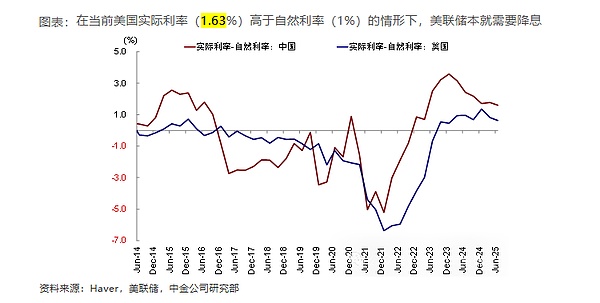
Group 1 - The debate on whether the Federal Reserve will cut interest rates in September is intensifying after maintaining the status quo in July [1] - CICC's macroeconomic analysts suggest that the Fed is inclined to remain patient and will not lower rates due to pressure from Trump [1][6] - The chief overseas strategy analyst at CICC indicates that the market may misunderstand the Fed's decision-making prerequisites, as a rate cut does not necessarily have to wait for inflation to decline [2][4] Group 2 - The internal need for the Fed to cut rates is evident, with the current real interest rate at 1.63%, significantly higher than the natural rate of about 1% [2][4] - Economic growth and the job market are showing signs of moderate weakening, with the average growth rate over the past two quarters at approximately 1.5% when excluding tariff impacts [2][4] - The impact of tariffs on inflation is becoming clearer, with effective tax rates expected to stabilize between 15%-16% after August 1, making the inflation transmission path more predictable [4] Group 3 - The Fed's independence is a critical factor, as it will not adjust rates due to political pressure, maintaining its focus on full employment and stable inflation [6][7][8] - The Fed's recent decision to hold rates steady aligns with market expectations, despite some dissenting opinions among board members [6] - Future months will see the inflation effects of tariffs become more pronounced, potentially delaying rate cuts if Trump escalates tariffs further [7]
特朗普再怼“太迟先生”:我当联储更好
Sou Hu Cai Jing· 2025-06-21 23:01
Core Viewpoint - The ongoing public confrontation between President Trump and Federal Reserve Chairman Powell highlights a clash between short-term political demands and long-term economic stability, with implications for monetary policy independence and market confidence [1][2][3]. Group 1: Trump's Criticism - President Trump has consistently criticized Powell, labeling him as "Mr. Too Late" and suggesting he could perform better as Fed Chairman, emphasizing the need for a 1% interest rate cut to reduce U.S. debt costs [1]. - Trump's remarks have escalated from calling Powell "foolish" and "clueless" to "stupid" and "politicized," reflecting his frustration with the Fed's reluctance to lower rates compared to Europe [1]. Group 2: Powell's Stance - Powell maintains a calm demeanor in response to Trump's pressure, asserting the Fed's independence in setting monetary policy and the necessity to evaluate economic trends and inflation risks before making adjustments [2]. - His term, nominated by Trump and renewed under Biden, is set to last until May 2026, and he emphasizes that the President lacks the legal authority to remove him from office [2]. Group 3: Market and Expert Concerns - The public dispute has led to market volatility, with concerns that political pressures may undermine the Fed's independence, potentially increasing market instability [3]. - Experts warn that the Fed faces a dilemma: cutting rates could heighten inflation, while not cutting may slow economic growth, yet maintaining independent decision-making is crucial for market confidence [3]. - The situation underscores the tension between immediate political interests and the need for a stable economic environment, with Trump's announcement of a forthcoming Fed Chair nominee adding to the uncertainty [3].
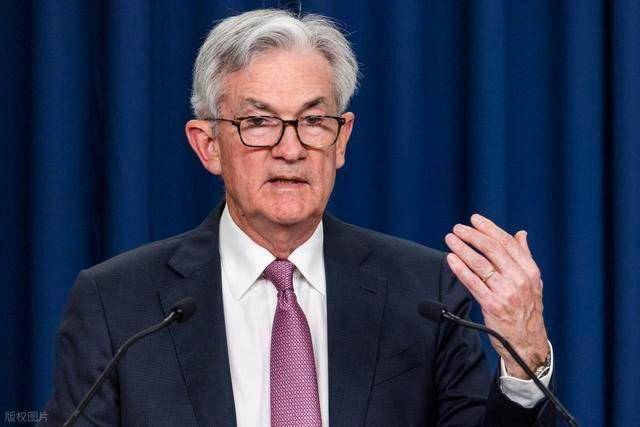
分析师:美联储必须表明它不会被迫降息
news flash· 2025-05-08 14:13
Core Viewpoint - The Federal Reserve must demonstrate its independence and commitment to not being pressured into lowering interest rates, especially in light of political challenges [1] Summary by Relevant Sections - **Federal Reserve's Decision**: The decision to maintain the policy interest rate was expected, indicating the Fed's need to show it is not influenced by political pressures [1] - **Economic Concerns**: The Fed highlighted uncertainties regarding tariffs that could potentially increase inflation and unemployment rates [1] - **Political Pressure**: Recent criticisms from President Trump towards the Fed and its Chairman Powell regarding the reluctance to lower borrowing costs add to the challenges faced by the Fed [1] - **Independence at Risk**: The independence of the Fed's policy-making is perceived to be at risk due to external political pressures [1]