数字员工

Search documents
AI智能体如何重构B2B电商客服?数商云智能客服系统实战解析
Sou Hu Cai Jing· 2026-01-12 01:55
Group 1 - The article discusses the challenges and advancements in B2B service delivery, highlighting the need for both standardized processes and personalized services [2] - AI agents utilize user profiling and dynamic decision trees to provide tailored services, resulting in an 18% increase in repurchase rates for an electronic components platform [2] - The implementation of a decision tree model has improved the prioritization of urgent work orders by 30% for an MRO platform [2] Group 2 - Knowledge extraction from product manuals and technical documents has enabled a steel e-commerce platform to convert 200,000 documents into searchable knowledge nodes [3] - Knowledge reasoning using Graph Neural Networks (GNN) has increased the technical consultation resolution rate from 65% to 85% for a semiconductor platform [3] Group 3 - The transition from manual responses to AI collaboration in technical consulting has been exemplified by an MRO platform's supply chain optimization [4] - Digital employees utilizing RPA (Robotic Process Automation) have automated end-to-end processes such as work order handling and contract generation [4] Group 4 - Smart quoting integrated with ERP systems has reduced the quoting cycle from 2 days to 10 minutes for an electronic components platform [5] - Demand forecasting has improved cross-selling success rates by 22% for a chemical platform through analysis of inquiry content and historical transaction data [5] - Multi-turn dialogue capabilities have increased the technical consultation resolution rate from 70% to 88% for a robotics platform [5] - Remote assistance using AR technology has decreased on-site service visits by 40% for a medical device manufacturer [5] - Knowledge base linkage has reduced the average time for technical consultations from 25 minutes to 8 minutes for an aerospace components platform [5] Group 5 - Smart work order allocation has improved processing efficiency by 35% for a logistics equipment platform by matching service resources based on various criteria [5] - Predictive maintenance has halved equipment downtime for an energy equipment manufacturer by providing early warnings and maintenance recommendations [5] - Customer satisfaction has risen to 88 points, with response times reduced from 2 hours to 15 minutes and problem resolution rates increased from 72% to 89% [5] - The annual procurement frequency has increased by 1.5 times, leading to a 12% rise in repurchase rates through personalized recommendations and demand forecasting [5] - Work order processing time has been shortened to 8 hours, with AI improving manual processing efficiency by three times [5] - Customer churn rate has decreased to 8%, with a 40% increase in customer retention through predictive maintenance and proactive services [5] - Supply chain costs have been reduced by 20 million yuan per year by minimizing emergency stock and on-site service visits [5] Group 6 - The integration of large models with hundreds of billions of parameters has enhanced the understanding and generation capabilities for complex issues [5]


浩瀚深度:公司与燧原科技共同打造的智能体服务一体机的核心应用场景是金融垂类智能客服
Zheng Quan Ri Bao Zhi Sheng· 2025-12-24 13:45
Core Viewpoint - The company collaborates with Suiyuan Technology to develop an intelligent service all-in-one machine, primarily targeting the financial sector for smart customer service, replacing human agents with digital employees [1] Group 1: Market Expansion - Customer expansion will leverage UnionPay's channel advantages to penetrate over a hundred banks, gradually extending to insurance, brokerage, and large-scale outbound calling sectors [1] - The technology and ecosystem expansion involves continuous iteration of the all-in-one machine and models through a joint laboratory, focusing on computational power investments in intelligent computing switches and optical switches to ensure service performance and cost advantages [1] - The company is also advancing terminal chip layouts to support future consumer-oriented intelligent terminal scenarios [1]


180万数字员工“打工”,金智维为何三年半倒亏8个亿?
凤凰网财经· 2025-12-21 12:43
Core Viewpoint - The article discusses the challenges faced by Jinzhihui, a leading AI digital employee solution provider in China, as it prepares for its IPO, highlighting significant revenue decline and increasing losses despite a strong market position [1][9][24]. Group 1: Company Overview - Jinzhihui, founded in 2016, has become the top player in the AI digital employee solution market for three consecutive years, deploying over 1.8 million digital employees across more than 1,300 enterprises [1][8]. - The founder, Liao Wanli, transitioned from a stable banking career to entrepreneurship, focusing on automating repetitive tasks in the financial sector [2][7]. Group 2: Financial Performance - From 2022 to 2024, Jinzhihui's revenue grew from 203.1 million RMB to 243.5 million RMB, with a compound annual growth rate of 9.5%, but net losses increased significantly, reaching 1.22 billion RMB in 2024 [9][10]. - In the first half of 2025, revenue dropped by 17.1% year-on-year to 45.98 million RMB, while net losses surged to 1.17 billion RMB, nearing the total loss for 2024 [9][11]. Group 3: Cash Flow and Efficiency - The company has consistently reported negative cash flow from operating activities, with net cash used amounting to -75.02 million RMB in the first half of 2025 [11][12]. - The average turnover days for accounts receivable increased from 137 days in 2022 to 446 days in the first half of 2025, indicating worsening cash collection efficiency [14]. Group 4: Revenue Structure - Jinzhihui's revenue heavily relies on the financial services sector, with contributions of 84.8% in 2022, gradually decreasing to 76.8% in the first half of 2025 [15][17]. - Project-based revenue constituted 70% of total revenue in the first half of 2025, while subscription-based revenue was only 16.7%, highlighting a lack of revenue stability [17][18]. Group 5: Risks and Challenges - The company faces potential risks from its relationship with Jinzhen Co., a major shareholder and client, which raises concerns about business independence and pricing fairness [20]. - Increased competition from both specialized RPA vendors and traditional IT giants poses a significant threat to Jinzhihui's market share and technological edge [22].

爱分析:2026年企业AI落地趋势研究报告
Sou Hu Cai Jing· 2025-12-19 01:47
Core Insights - The report emphasizes the transition of AI from a system tool to a digital employee, with 76% of global executives recognizing AI as capable of independently creating business value [1][12][14] - The evolution of digital employees is categorized into three levels: assistant, collaborator, and autonomous employee, with increasing decision-making capabilities and task complexity at each level [1][15][19] - The assessment framework for AI is shifting from technical metrics to business value indicators, focusing on per capita productivity as a core measure of AI's value [1][19][20] Group 1: Cognitive Shift - The recognition of AI as a digital employee rather than a mere tool is crucial for unlocking large-scale applications [12][14] - This cognitive shift influences technology development trends, application scenarios, and budget allocation priorities [21][22] - The report outlines a complete implementation framework for integrating digital employees into business processes, aiming for a significant productivity leap by 2026 [12][22] Group 2: Technological Trends - Digital employees are expected to achieve breakthroughs in three key capabilities: general capabilities for complex tasks, specialized capabilities for specific problems, and organizational capabilities for team collaboration [23][24] - By the end of 2026, foundational models will be able to complete complex tasks equivalent to an 8-hour workday, significantly enhancing productivity [24][26] - The multi-modal understanding ability of digital employees is projected to improve, enabling them to process longer video content and complex multimedia information [29][32] Group 3: Application Scenarios - Digital employees are increasingly embedded in core business functions, moving beyond simple data analysis to more complex operational tasks [42][43] - The methodology for identifying AI application scenarios has evolved from a focus on process optimization to task decomposition, allowing for greater efficiency and productivity [43][45] - A case study in aluminum production illustrates how digital employees can assist in optimizing production processes, enhancing overall quality and efficiency [48][49] Group 4: Budget Allocation - The overall IT budget for enterprises is expected to remain stable, while the proportion of AI budgets is significantly increasing, indicating a shift towards comprehensive AI deployment [50][51] - Approximately 80% of enterprises plan to allocate at least 10% of their IT budget to AI, with nearly half expecting AI budgets to account for 20-30% of total IT spending [52][53] - This budgetary shift reflects growing confidence in AI's potential to drive business value and efficiency [50][52]

百度沈抖:AI“超级周期”启动,10万亿产业从里到外被彻底重塑
混沌学园· 2025-12-10 11:58
"AI超级周期启动,智能经济机会无限。" 正当我们讨论 AI浪潮时,一个被忽视的宏大背景正在展开:AI不仅是一个独立的技术赛道,它正站在一个高达10万亿的基础产业之上。这意味着,我们今 天所见的AI趋势,将是下一轮对现有工种和组织形态进行 "彻底改变"的巨大力量。 百度集团执行副总裁、百度智能云事业群总裁沈抖博士在江阴飞马水城带来了《智能,生成无限可能》的分享,从趋势、原理、场景、基建、变革五方面 带领我们透视智能经济的整个面貌,包括 深入浅出的技术解析与 丰富生动 落地实践分享。 此次分享是一份面向未来的生存指南,帮助创业者抓住这波以大模型为核心的技术浪潮,实现企业的高效、变革与增长。 本文仅为部分内容,打开混沌APP,观看完整版课程《智能,生成无限可能》。 AI 的价值会远超互联网 我们正在 AI超级周期的起点,智能经济带来的机会是无限的。 等 AI进一步发展的时候,不但会使得自身的规模变得更大,而且会把整个产业做得更大。所以,尽管今天AI可触达的市场虽然只有200 亿,但它实际上改 造的会是10万亿的市场。——从注册护士、软件开发师到销售、教师,今天的人工智能会彻底地改变每一个工种,包括为其赋能,或者帮 ...


别再浪费私域数据了!“企业大脑”正让数据真正“值钱”
2 1 Shi Ji Jing Ji Bao Dao· 2025-11-28 01:47
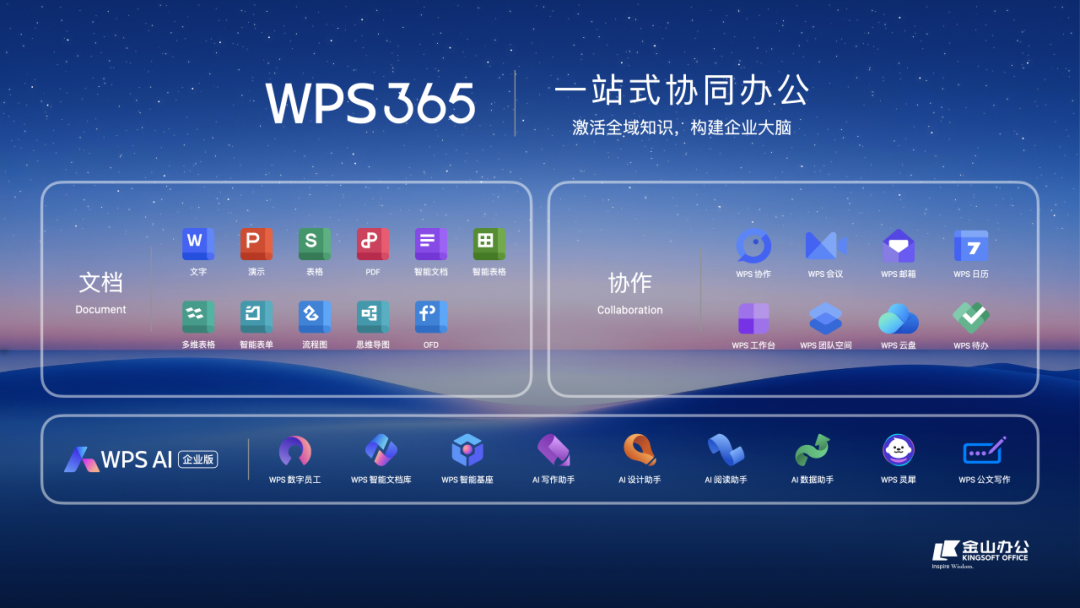
Core Insights - The rapid development of AI large models has effectively utilized public domain information, but the value of private domain data remains largely untapped [1] - The CEO of Kingsoft Office, Zhang Qingyuan, emphasized that in the AI era, collaborative office software will transform into a "knowledge container" and a "carrier of digital employees," aiming to help organizations build their unique "enterprise brain" [2][8] - The activation of private domain data is crucial for enterprises to unlock their intelligent potential, as this data embodies the company's experience, logic, and secrets [3][5] Private Domain Data Activation - Many enterprises have their private domain data scattered across employee computers and different systems, often becoming "sleeping assets" due to security concerns [4] - The activation of this private data pool is essential for enhancing business intelligence [5] - Kingsoft Office aims to assist enterprises in establishing private domain knowledge to facilitate decision-making [8] WPS 365 Upgrades - Kingsoft Office announced the upgrade of WPS 365 to a one-stop AI collaborative office platform, enhancing features like intelligent document libraries and digital employees [8][10] - The integration of multi-modal document recognition, large language models, and natural language processing allows for seamless unification of various organizational data [10] - WPS 365's cost-effectiveness is highlighted, as it integrates multiple tools while maintaining costs below one-third of the industry average [12] Enterprise Brain Development - The construction of the "enterprise brain" involves three steps: understanding data, understanding organization, and understanding business [13] - The platform will unify structured and unstructured data, enabling task allocation and timely progress [13] - The future of collaborative office software is envisioned as a "carrier of digital employees," creating a positive feedback loop between employees and digital assistants [13][17] Market Position and Growth - Kingsoft Office's WPS 365 has shown significant revenue growth, achieving over 60% year-on-year growth for three consecutive quarters, with the third quarter reaching a 71.61% increase [17] - The company's approach is not merely about providing tools but about constructing intelligence rooted in its business logic and data assets [17] - Kingsoft Office's strategy is characterized by a deep understanding of "knowledge as an asset" and a commitment to data sovereignty [17]

最先吃透AI红利的赛道出现了
Feng Huang Wang· 2025-11-26 12:04
Core Insights - The article emphasizes that in the AI era, office software transcends being mere tools, evolving into "containers of knowledge," "carriers of digital employees," and "providers of capabilities and services" [1][5][12] AI Integration in Office Software - Since the release of ChatGPT in late 2022 and the rise of DeepSeek in early 2025, AI has been systematically integrated into work and life, with collaborative office software being a key area of penetration [2] - Current large language models have shown significant advantages in content creation and task processing, impacting at least 10% of work tasks for 80% of the U.S. workforce, particularly affecting high-education and knowledge-intensive professions [3] Challenges in AI Adoption - Despite advancements, the penetration of large models in online office settings remains limited due to the complexity of office scenarios and barriers to private knowledge [4] - The difficulty in acquiring private knowledge is a major pain point, as existing barriers include format isolation, platform ecosystems, and the challenge of utilizing unstructured data effectively [4] WPS 365 Upgrade - On November 25, the company announced the upgrade of WPS 365 to a global one-stop AI collaborative office platform, introducing new products like WPS Lingxi Enterprise Edition and the "Qingzhou" engine [5] - The updated WPS 365 focuses on addressing challenges in AI office tasks, integrating various communication and document management tools to maximize organizational efficiency [7] Cost Efficiency - The WPS 365 platform offers a cost-effective solution, integrating functionalities of multiple tools like Microsoft Office, Zoom, and Adobe PDF, at one-third of the industry average cost [7] Future of AI in Office Work - The vision for WPS 365 is to help organizations build unique "enterprise brains," with knowledge as the core driving force for AI engines [5][12] - The integration of vast amounts of unstructured data into large models is seen as crucial for enhancing AI capabilities, enabling better decision-making and coding assistance [8] Digital Employee Development - The company is advancing its digital employee capabilities, aiming to create efficient assistants for tasks like code review by inputting governance standards into large models [11] - This shift signifies a transformation in human-machine relationships, where digital employees will participate in the entire digital operation process, fostering a positive feedback loop for knowledge creation [11] Market Demand and Security - The demand for AI solutions is growing among large enterprises, with 90% of the 133 Chinese companies listed in the Fortune Global 500 using WPS 365 for efficiency improvements [12] - The platform supports various deployment options, including private, public, and hybrid clouds, addressing high data security and sovereignty requirements [15] Customizable AI Solutions - WPS 365 aims to be a customizable, integrative, and scalable AI productivity platform, catering to both large enterprises and small businesses with tailored office solutions [15] - The future vision includes AI becoming an integral part of every online office process, fundamentally reshaping work dynamics and freeing employees from repetitive tasks [16]
从工具到智能体 WPS 365公布AI协同平台路线图
Huan Qiu Wang· 2025-11-26 06:30
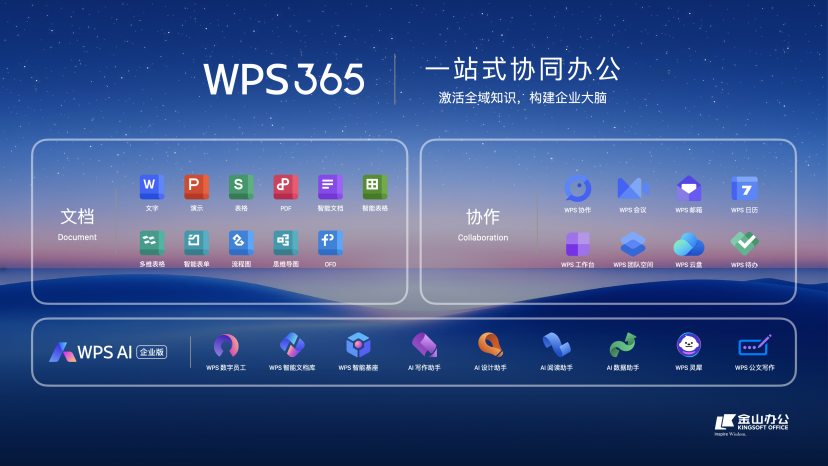
Core Viewpoint - Kingsoft Office is transitioning WPS 365 from a tool provider to a global AI collaborative office platform, focusing on enhancing employee efficiency by reducing work time by two minutes in specific scenarios [1] Group 1: Strategic Transition - WPS 365 has been upgraded to a "global one-stop AI collaborative office platform," introducing core products like the self-developed "Light Boat" engine and AI middle platform [1] - The concept of "enterprise brain" has been introduced, indicating a strategic shift towards AI-driven collaboration [1] Group 2: Technical Differentiation - WPS 365 aims to build a differentiated barrier through "document parsing" and "system architecture," addressing the pain points of enterprise knowledge management [2] - The "Light Boat" engine is designed specifically for organizations ranging from thousands to hundreds of thousands, ensuring data security and operational efficiency [4] Group 3: AI Implementation - WPS 365 has created a complete data loop through "team space + private knowledge base," significantly reducing project review time from two days to 30 minutes [5] - The AI application has evolved from a "chat assistant" to a "business partner," actively participating in workflows [5] Group 4: Market Positioning - WPS 365 focuses on high-knowledge-density organizations, avoiding competition with platforms like DingTalk and Feishu by not engaging in organizational management for small and medium enterprises [6][8] - The platform has accumulated 260 billion cloud documents, emphasizing the importance of well-thought-out text content in business quality [6] Group 5: Future Vision - The company envisions a future where collaborative office software becomes a "container of knowledge" and a "carrier of digital employees," with a clear roadmap from business efficiency to decision-making participation [8][9] - WPS 365's international version is compatible with Microsoft 365, targeting emerging markets while following a "customer-following" strategy rather than aggressive market capture [9]
金山办公章庆元谈WPS 365升级,企业级一站式AI协同办公进入新时代
Ge Long Hui· 2025-11-26 03:10
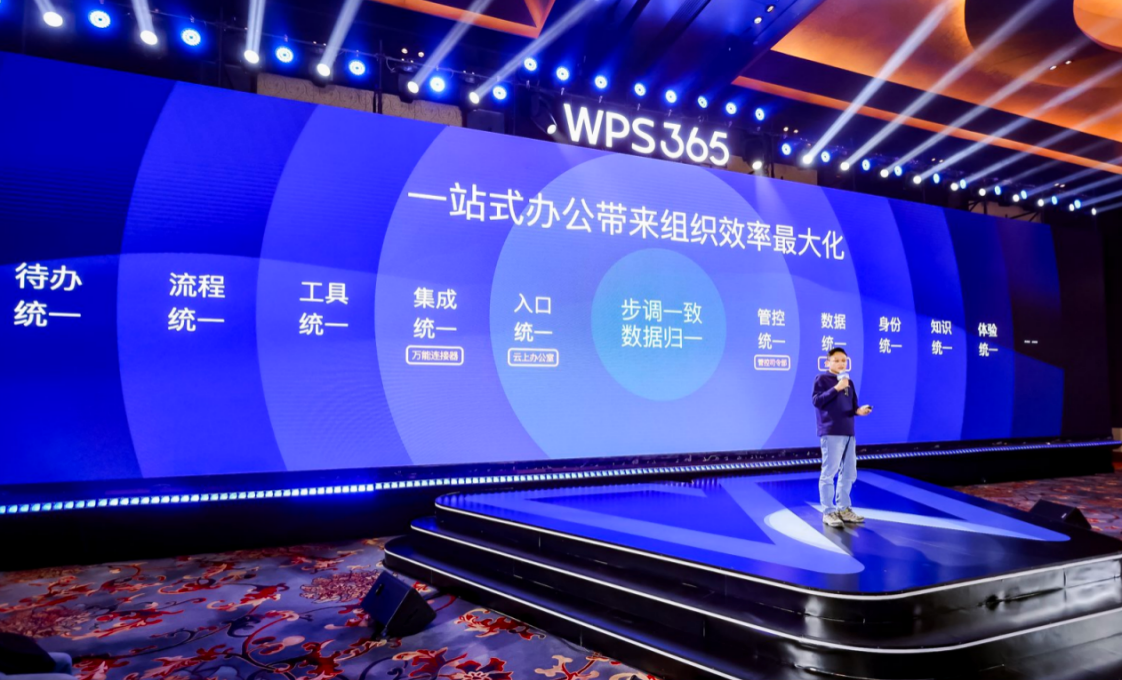
Core Viewpoint - Kingsoft Office announced the upgrade of WPS 365 to a global one-stop AI collaborative office platform, aiming to help enterprises build a unique "enterprise brain" in the AI era [1][6]. Group 1: AI Collaborative Office Software - The CEO of Kingsoft Office, Zhang Qingyuan, views AI collaborative office software as a "container of knowledge," where unstructured data can be transformed into meaningful enterprise knowledge, enabling better decision-making and coding capabilities [3][6]. - WPS 365 will create a new "human-machine collaboration" model, where employees generate valuable knowledge that feeds into digital employees, creating a positive feedback loop [6][8]. - The upgrade reflects a shift from "providing functions" to "outputting capabilities," with features like the Knowledge Enhanced Generation architecture (KAG) and Knowledge Data Center (KDC) designed to optimize AI utilization of enterprise knowledge [6][7]. Group 2: Building the "Enterprise Brain" - The "enterprise brain" requires a large model engine and task execution capabilities, which Kingsoft Office can provide by activating dormant organizational knowledge [7][8]. - The platform aims to unify structured and unstructured data, understand organizational structures, and ultimately comprehend business goals, making it a central tool for operations and decision-making [8][9]. - Kingsoft Office has a competitive edge with over 260 billion cloud documents accumulated on WPS, and its compatibility with Microsoft 365 enhances its market position [7][9]. Group 3: Evolution of Collaborative Office - The evolution of collaborative office software has three phases: traditional Office era, collaborative office era with integrated communication tools, and the new AI-restructured collaborative era [9]. - The current industry challenge is to move beyond mere connectivity to address the complexities introduced by AI [9].

AI医生等“数字员工”迎来首个京东11.11,用户好评率超98%
Sou Hu Cai Jing· 2025-11-12 14:14
Core Insights - JD Health achieved record-breaking sales during the 2025 11.11 shopping festival, with over 7,000 brands doubling their transaction volume year-on-year, driven by a surge in health consumption and services [1][2] - The integration of a "super pharmaceutical supply chain" and advanced digital technologies, including medical AI models, has positioned JD Health as a powerful engine for the health industry, enhancing sales across various categories and solidifying its leading position in online health consumption [1][6] Health Consumption Trends - The overall health consumption awareness among consumers has significantly increased, leading to a diverse, refined, and intelligent consumption trend [2] - Over 2,500 pharmaceutical brands saw their transaction volumes double year-on-year, with original innovative drugs also experiencing similar growth, highlighting JD Health's role in improving accessibility to these products [2] Nutritional and Medical Device Sales - Nutritional consumption is undergoing a transformation towards scientific nutrition, with over 2,500 health supplement brands doubling their sales, and nearly 100 subcategories seeing over 100% growth [4] - Medical devices also saw substantial growth, with over 2,000 brands achieving over 100% year-on-year sales increase, and specific categories like dynamic blood glucose meters and respiratory machines also experiencing significant sales growth [4] Professional Health Services - The demand for professional health services is rising, with JD Health leveraging its "medical testing, diagnosis, and treatment" service model to meet diverse consumer needs [5] - The JD Internet Hospital has enhanced its online consultation services, achieving rapid response times and high user satisfaction rates, with over 90% of nutrition consultations handled by AI nutritionists [5] Expansion of Health Services - JD Health opened its first self-operated medical beauty store during the 11.11 event, attracting over 11,000 participants, and also expanded its health check centers and orthopedic clinics, with overall order volumes increasing significantly [6] - The company continues to link global health brands with Chinese consumers, aiming to make high-quality medical and health products more accessible [6]