数据要素市场化改革

Search documents
强化江苏在长三角一体化中的辐射带动功能
Xin Hua Ri Bao· 2025-12-26 00:22
Group 1: Core Perspectives - The emphasis on promoting the integrated development of the Yangtze River Delta to achieve significant breakthroughs and lead in Chinese modernization [1] - Jiangsu's strategic focus on breaking down administrative barriers and facilitating the deep integration of innovation, industry, data, capital, and talent chains [1][2] Group 2: Responsibilities and Governance - Jiangsu's need to understand its significant responsibilities and demonstrate a new model of effective government-market integration [2] - Promotion of cooperation pilot experiences such as "Suzhou-Singapore" and "Wuxi-Greater Bay Area" through policy guidance and collaborative platforms [2] Group 3: Industrial Development - The focus on core functional agglomeration to build an original innovation system and achieve disruptive breakthroughs in strategic sectors like integrated circuits, biomedicine, and new energy [3] - The establishment of collaborative platforms for innovation ecosystems in the Yangtze River Delta, including technology transaction hubs and talent mobility networks [3] Group 4: Data and AI Development - The need for market-oriented reforms in data elements to create a new intelligent economic ecosystem centered on "computing power-data-algorithm" [4] - Development of AI-enabled service platforms and smart agriculture solutions to enhance the region's industrial capabilities [4] Group 5: Education and Talent Integration - The proposal for a comprehensive reform pilot in education, science, and talent to eliminate barriers between disciplines and industries [5] - Support for dynamic adjustment of academic disciplines based on industry needs and the establishment of cross-disciplinary supercomputing centers [5] Group 6: Regional Collaboration - The integration of collaborative networks into national strategic layouts to enhance regional coordinated development [6] - Promotion of industrial cooperation between different regions, focusing on strategic emerging industries like integrated circuits and biomedicine [6] Group 7: Open Systems and Trade - Strengthening Jiangsu's role as a dual-directional open hub and advancing institutional openness through innovative practices in trade and data flow [7] - Development of new energy equipment and high-end textiles as part of the export base, alongside the establishment of a digital trade international hub in the Yangtze River Delta [7]
广州大数据行业协会十周年,政企学共议要素市场化改革与湾区实践
Zhong Guo Fa Zhan Wang· 2025-12-24 08:09
Core Viewpoint - The Guangzhou Big Data Industry Association is evolving from a service-oriented role to becoming an ecosystem builder, focusing on data as a new productive force and promoting collaboration among members to enhance talent development and market opportunities [2][3]. Group 1: Association's Evolution - The association has transformed over ten years from a communication platform to a key hub linking thousands of enterprises and over 300 experts, establishing collaborative nodes in cities like Foshan, Dongguan, and Zhuhai [3]. - Future initiatives will focus on accelerating the development of new productive forces and promoting the deep integration of digital technology with the real economy, aligning with national strategies [3]. Group 2: National Strategy and Data Market - The marketization of data elements has become a national strategy, emphasizing the establishment of a property rights system that separates ownership, usage, and operational rights, and fostering a unified national data market [4]. - The development and utilization of public data will be a key focus, with a new "1+3" system being constructed to address challenges in data openness, aiming to create significant industrial scale from demonstration scenarios [4]. Group 3: Computing Power and Accessibility - The concept of a "computing power bank" is proposed to facilitate the sharing of idle computing resources from large state-owned enterprises to small and medium-sized enterprises, enhancing the accessibility of computing power [5]. Group 4: Regional Collaboration and Ecosystem Development - The establishment of ten professional committees marks an upgrade in the association's services, with a focus on multi-faceted collaboration and regional synergy [6]. - The experience shared by Jiaxing City highlights the importance of cross-regional cooperation in computing power and industry complementarity, aiming to explore new opportunities in data elements [6]. Group 5: Future Outlook - The association aims to continue its journey as a co-builder and definitional leader of the ecosystem, leveraging data to support national strategies and improve public welfare in the Guangdong-Hong Kong-Macao Greater Bay Area [8].
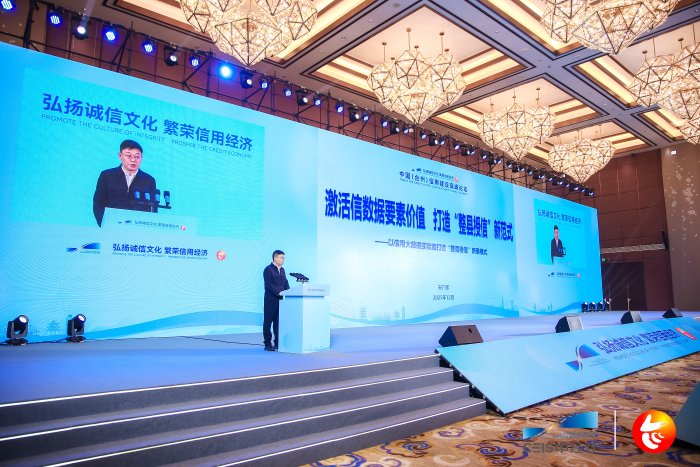
山东新泰:激活数据要素价值 打造“整县授信”新范式
Zhong Guo Jin Rong Xin Xi Wang· 2025-12-13 12:37
Core Viewpoint - The article discusses the innovative "whole county credit granting" model implemented by Xintai City, which aims to activate the value of credit data to address financing difficulties and costs in traditional lending practices [2][5]. Group 1: Credit Data Activation - Xintai City focuses on activating the value of credit data to transform it from a "sleeping resource" into a "development momentum" [2]. - The city has identified key tasks for credit data application, including "precise profiling, marketing customer acquisition, and batch credit granting" to support scientific decision-making for whole county credit granting [2]. Group 2: Technological Integration - The city employs advanced technologies such as privacy-preserving computation, artificial intelligence, and machine learning to innovate the integration of the banking credit system with the public credit information platform [2]. - A credit big data innovation laboratory was established in collaboration with China Construction Bank, marking a significant achievement in utilizing privacy computing for credit assessment [3]. Group 3: Financial Impact - The "Yunong Quick Loan" product has facilitated significant financial interactions, with 1.4 billion yuan in loans granted to 169 trustworthy farmers through 15,500 interactions with the public credit information platform [3]. - The local credit system has evaluated 589 credit villages and provided credit to 116,000 households, with a total credit amount nearing 1 billion yuan [5]. Group 4: Future Development - Xintai City plans to further expand credit application scenarios and deepen market-oriented reforms of data elements, aiming to provide a replicable model for national social credit system construction and digital financial development [5].

2025年中国城市可信数据空间行业研究报告
艾瑞咨询· 2025-12-13 00:07
Core Insights - The urban trusted data space is a government-led data infrastructure that promotes the development and utilization of urban data resources, serving as a key carrier for trusted data space [1][2] Development Drivers - **Policy**: The establishment of a trusted data space is encouraged through a series of top-level designs and strategic plans aimed at facilitating the compliant and efficient circulation of data. The "Trusted Data Space Development Action Plan (2024-2028)" supports the creation of urban trusted data spaces, with 13 pilot cities already announced [4][5] - **Technology**: Privacy computing and blockchain technology are introduced to address the challenges of trusted data circulation, enabling data sharing while ensuring compliance and security [5][6] - **Demand**: With China's data production expected to exceed 40ZB by 2024, the urban trusted data space is essential for enhancing urban governance efficiency by integrating and utilizing public data resources [8] Value Proposition - The urban trusted data space aims to resolve issues such as the lack of trust mechanisms and inefficient circulation in urban governance, thereby enhancing the efficiency of public data utilization and supporting modern urban governance [11] Overall Framework - The urban trusted data space is built around a foundational infrastructure, two major platforms, and capabilities for secure data circulation, including secure storage, encrypted transmission, and identity management [13] Core Capabilities - The core capabilities of the urban trusted data space include trusted control, resource interaction, and value co-creation, which are essential for establishing a reliable data circulation infrastructure [16] Industry Chain and Players - The urban trusted data space involves five main entities: operators, data providers, data users, data service providers, and regulatory bodies, each playing a crucial role in the ecosystem [21] Competitive Landscape - In the technology service sector, comprehensive and specialized firms compete, with ICT background cloud service providers leading the market due to their integrated capabilities [24] Application Scenarios - **Government Services**: The urban trusted data space facilitates inter-departmental data sharing, enhancing government services and decision-making processes [27] - **Inclusive Finance**: By integrating public and financial data, the urban trusted data space supports the development of dynamic risk assessment models, promoting inclusive financial services [30] Case Studies - **Zhangjiakou Trusted Data Space**: This platform employs a "one space, four platforms, one system" architecture to support secure data circulation and enhance public data utilization [33][35] - **Shanghai Trusted Data Space**: Leveraging blockchain technology, this space addresses the complex data needs of a megacity, facilitating the secure and efficient flow of data across various sectors [37][39] Trends and Future Directions - The integration of AI in data governance is expected to enhance the efficiency of data management, transitioning from manual to automated processes [42] - The urban trusted data space is currently in a pilot phase, with plans for nationwide promotion and the establishment of a cohesive ecosystem across regions [45]

数字营商环境建设:激发企业活力的新引擎
Sou Hu Cai Jing· 2025-12-11 01:38
Group 1 - The core viewpoint emphasizes the importance of a digital business environment in stimulating innovation and supporting high-quality development in the current economic landscape [2] Group 2 - The current status and effectiveness of the digital business environment in China show significant optimization, particularly in three areas: digital upgrade of government services, with a nationwide integrated platform covering all provincial units and millions of service items, facilitating "one-stop" and "cross-province" services [3] - The market for data elements has been opened, with high-quality data set transactions nearing 4 billion yuan and a data resource scale of 246 petabytes, providing crucial support for enterprise R&D [3] - The digital regulatory system has been improved, with local innovations such as Beijing's "data zone" for public data access, Chongqing's "E Enterprise Office" mini-program for streamlined business processes, and Zhejiang's "Zheli Ban" ecosystem achieving a 98% rate of integrated government services [3] Group 3 - Future directions include strengthening technological empowerment by accelerating the construction of digital government, transitioning government services from basic functions to intelligent and convenient services, and enhancing data sharing through a unified electronic certificate database [5] - Deepening the market-oriented reform of data elements is essential, breaking down data barriers, establishing clear data property rights, and encouraging enterprise participation in data development [5] - The government should set unified open standards and build data trading platforms oriented towards enterprise needs, with reliable information support being crucial for efficient data resource utilization [5]

乘数而上激活潜能 “2025中国数据要素高质量发展论坛”12月10日将在京举办
Zhong Guo Jing Ying Bao· 2025-12-02 13:29
Core Insights - Data is identified as the core engine of the digital economy, crucial for driving industrial upgrades and technological revolutions, as well as for building national competitive advantages and leading high-quality economic development [1][2] Group 1: Forum Overview - The "2025 China Data Element High-Quality Development Forum" will be held on December 10 in Beijing, focusing on the theme "Multiplying Potential" and discussing the value realization path of data from resources to assets to capital [1] - The forum aims to analyze cutting-edge policies, explore governance paradigms, and address practical challenges in the data industry [1][2] Group 2: Market Growth and Policy Support - In 2024, China's data element market is projected to exceed 160 billion yuan, with an annual growth rate of over 30%, supported by policies such as the "Opinions on Building a Data Basic System" and the "Three-Year Action Plan for Data Elements (2024-2026)" [2] - The number of national data exchanges has increased to 33, with on-site trading volume surpassing 30 billion yuan [2] Group 3: Case Selection and Recognition - A "2025 China Data Element High-Quality Development Case Selection" initiative has been launched to identify innovative and valuable benchmark cases in the data element field, including categories like industrial digital transformation and market practice leadership [3] - The results of the case selection will be announced during the forum, along with the release of the "Blue Book on Real-World Token Industry Applications (2025)" [3] Group 4: Media Engagement and Coverage - The forum has attracted over a hundred professional attendees from the data element field, with comprehensive media coverage planned across various platforms including Weibo, Douyin, and Bilibili [3]
产业观察 | 大模型爆发带来新风险 AI安全博弈白热化:如何重构数字信任?
Mei Ri Jing Ji Xin Wen· 2025-11-28 11:53
Core Insights - The integration of AI and data security has reached a critical stage, with major tech companies releasing core solutions to shift the industry from passive defense to proactive governance [1][2] - High-quality data is essential for the effective functioning of AI models, as poor data leads to suboptimal outcomes [1][2] - The relationship between large models and data is likened to "rocket engines and fuel," emphasizing the need for deep collaboration [2] Industry Trends - By 2027, 60% of large enterprises in China are expected to adopt exposure management technology in their security operations centers to enhance incident response efficiency [1] - Currently, only 5% of Chinese enterprises deploying AI technologies are using collaborative AI defense strategies, but this is projected to rise significantly by 2028 [1] Technological Advancements - AI technology has improved the efficiency of data classification and grading by over three times, achieving an accuracy rate of over 95% [2] - In the API security domain, AI agents can filter non-API assets and create high-purity asset lists through advanced analysis techniques [2][3] Practical Applications - The advancements in AI and data security are not just theoretical; they have been transformed into mature solutions for industries such as finance and government [4] - AI's role in data security is twofold: enhancing security intelligence and ensuring the safety of intelligent systems [2] Regulatory Landscape - The balance between security and data utilization is a key focus, with industry leaders advocating for robust security measures to facilitate data flow [6] - Recent global regulatory changes, such as the relaxation of GDPR for AI training data, reflect a shift towards balancing technological competition and regulatory oversight [8] Collaborative Ecosystem - The establishment of a collaborative ecosystem involving government, enterprises, and research institutions is crucial for effective security measures [9] - The concentration of numerous small security firms in specific regions creates a unique competitive advantage, fostering a complete ecosystem of "security services + digital applications" [9]
2025年中国城市可信数据空间行业研究报告
艾瑞咨询· 2025-11-28 00:05
Core Insights - The urban trusted data space is a government-led data infrastructure that facilitates the development and utilization of urban data resources, serving as a key carrier for trusted data space [1][2] Development Drivers - **Policy**: The establishment of a trusted data space is encouraged through a series of top-level designs and strategic plans aimed at promoting the compliant and efficient circulation of data. The "Trusted Data Space Development Action Plan (2024-2028)" supports the creation of urban trusted data spaces, with 13 pilot cities already announced [4][5] - **Technology**: Privacy computing and blockchain technology are introduced to address the challenges of trusted data circulation, enabling data owners to share data more confidently and willingly [5][6] - **Demand**: With China's data production expected to exceed 40ZB by 2024, the underutilization of data resources in urban governance highlights the need for trusted data spaces to enhance governance efficiency [8] Value Proposition - The urban trusted data space aims to break down data circulation barriers, activate the potential of data elements, and promote the modernization of urban governance. It enhances public service accessibility and refines urban governance through effective data utilization [11] Overall Framework - The urban trusted data space is built around a foundational infrastructure, two major platforms, and aims to empower urban digital transformation by ensuring secure data access and management [13] Core Capabilities - The core capabilities of the urban trusted data space include trusted control, resource interaction, and value co-creation, which are essential for establishing a reliable data circulation infrastructure [16] Industry Chain and Players - The urban trusted data space involves five main entities: operators, data providers, data users, data service providers, and regulatory bodies, each playing a crucial role in the ecosystem [21] Competitive Landscape - In the technical service sector, comprehensive and specialized service providers compete, with ICT background cloud service providers like Inspur Cloud leading the market due to their integrated capabilities [24] Application Scenarios - **Government Services**: The urban trusted data space facilitates inter-departmental data sharing, enhancing government efficiency through initiatives like "one network for all services" [27] - **Inclusive Finance**: By integrating government and financial data, the urban trusted data space supports the development of dynamic risk assessment models, promoting inclusive financial services [30] Case Studies - **Zhangjiakou Trusted Data Space**: This platform exemplifies a city-level data circulation infrastructure, supporting public and social data flow through a structured framework [33][35] - **Shanghai Trusted Data Space**: This initiative addresses the complexities of data circulation in a mega-city, utilizing blockchain technology to ensure secure and efficient data use [37][39] Technical Trends - AI technologies are becoming pivotal in enhancing data governance efficiency, transitioning from manual to automated and intelligent governance strategies [42] Future Trends - The urban trusted data space is expected to evolve from pilot projects to a collaborative ecosystem, attracting industry and enterprise participation to explore vertical applications [44][45]

全市首例国有企业公共数据授权运营
Nan Jing Ri Bao· 2025-11-24 02:37
Core Insights - The successful registration of public data by Nanjing Chunka Bus Co., a subsidiary of Jianfa Group, marks a significant achievement as it becomes the first state-owned enterprise in Nanjing to implement "resource registration + asset inclusion + authorized operation" for public data [1][2] Group 1: Public Data Registration - Chunka Bus has registered public data resources, specifically bus operation trajectory data, which includes information on 441 buses, 58 bus routes, and real-time tracking data, evaluated at a data asset scale of 3.37 million yuan [1] - The public data authorization operation aims to activate public data resources and promote market-oriented reforms in data elements [1] Group 2: Economic Implications - The transformation of data resources into data assets allows the company to gain economic benefits from future data operations and serves as a valid credential for financing and credit services [2] - The development and utilization of public data are seen as a strategic resource, influencing the marketization of data elements and encouraging active participation from data holders [2]
2025年中国城市可信数据空间行业研究报告
艾瑞咨询· 2025-11-12 00:06
Core Insights - The urban trusted data space is a government-led data infrastructure that facilitates the development and utilization of urban data resources, serving as a key carrier for trusted data space [1][2] Development Drivers - **Policy**: The establishment of urban trusted data spaces is encouraged through a series of top-level designs and strategic plans aimed at promoting the compliant and efficient circulation of data [4][5] - **Technology**: Privacy computing and blockchain technology are introduced to address the challenges of trusted data circulation, enabling data sharing while ensuring compliance and security [5][6] - **Demand**: Urban areas face challenges in data resource development and utilization, which the trusted data space aims to address by providing a secure and compliant environment for data circulation [8] Value Proposition - The urban trusted data space aims to break down data circulation barriers, activate the potential of data elements, and promote the modernization of urban governance [11] Overall Framework - The urban trusted data space is built around a foundational infrastructure, two major platforms, and aims to empower urban digital transformation [13] Core Capabilities - The core capabilities of the urban trusted data space include trusted control, resource interaction, and value co-creation, which are essential for establishing a trusted data circulation infrastructure [16] Industry Chain and Ecosystem - The urban trusted data space involves five main entities: operators, data providers, data users, data service providers, and regulatory bodies, each playing a crucial role in the ecosystem [21] Competitive Landscape - In the technical service sector, comprehensive and specialized service providers compete, with ICT background cloud service providers leading the market [24] Application Scenarios - **Government Services**: The urban trusted data space facilitates inter-departmental data connectivity, enhancing government services and decision-making [27] - **Inclusive Finance**: By integrating government and financial data, the urban trusted data space supports the development of dynamic risk assessment models for inclusive finance [30] Case Studies - **Zhangjiakou Trusted Data Space**: This initiative employs a "one space, four platforms, one system" architecture to support the secure circulation of public and social data [33][35] - **Shanghai Trusted Data Space**: This project leverages blockchain technology to meet the complex data needs of a megacity, facilitating the secure and efficient use of data [37][39] Technical Trends - AI technology is becoming a key driver in enhancing data governance efficiency within urban trusted data spaces, transitioning from manual to automated governance strategies [42] Future Trends - The urban trusted data space is expected to evolve from pilot projects to a collaborative ecosystem, attracting industry and enterprise participation to explore vertical applications [44][45]