
文化遗产传承

Search documents
文化传承与保护需要大文化观指引(博古知今)
Ren Min Ri Bao· 2025-06-06 21:34
Group 1 - The article emphasizes the importance of cultural heritage preservation and its connection to historical literary figures like Du Fu, Su Dongpo, and Lu You, highlighting their contributions to cultural memory and tourism integration [1][2] - It raises concerns about the authenticity of reconstructed historical sites, questioning whether modern builders have adequately engaged with historical texts to ensure cultural accuracy [2][3] - The need for a broader cultural perspective in observing and presenting cultural heritage is stressed, suggesting that cultural phenomena should not be viewed in isolation but rather in the context of their historical and cultural significance [3] Group 2 - The article calls for a flexible mechanism to transform social science research outcomes into practical applications for cultural heritage preservation and tourism development, advocating for collaborative efforts to explore and document local cultures [3] - It warns against the homogenization and commercialization of cultural heritage, which can lead to a loss of authenticity and the creation of superficial representations of genuine cultural elements [3]
上海已拥有171座博物馆,全年文创收入4.9亿元
Di Yi Cai Jing· 2025-05-17 09:09
Core Insights - Shanghai has registered 171 museums by the end of 2024, with a ratio of one museum for every 145,000 residents, significantly higher than the national average [1][3] - The city is hosting a series of cultural heritage events from May to June 2024, themed "Preserving Shanghai's Cultural Heritage, Creating a Future," which includes exhibitions, performances, and interactive activities [1][3] - The "Great Museum Plan" is driving Shanghai's ambition to become a world-class "Museum Capital," with a focus on integrating cultural heritage into modern life [3][4] Summary by Sections Museum Development - By the end of 2024, Shanghai will have 171 registered museums, serving a population of 24.8 million, resulting in a museum density of one for every 145,000 people, which is well above the national average [3] - In 2024, museums in Shanghai hosted 949 exhibitions and welcomed 40.86 million visitors, marking a 31.9% increase from 2023, achieving a historical high [3] Cultural Heritage Events - The cultural heritage season will feature 80 themed exhibitions and over 100 online and offline activities, including knowledge competitions, interactive experiences, and music performances [4] - The first "Shenhuoji" cultural and creative market will take place from May 16 to May 18, 2024, with participation from key museums, art galleries, and cultural enterprises [4] Digital Integration - The Shanghai Cultural Tourism Bureau is collaborating with Dazhong Dianping to launch an online and offline campaign, including a cultural heritage-themed travel map and eight exploration routes [3][4] - A selection of 30 smart exhibition projects utilizing cutting-edge technologies like digital exhibitions, AR interactions, and metaverse experiences has been recommended to enhance visitor engagement [4]

1:10复原齐化门!紫檀雕刻朝阳门惊艳亮相
Bei Jing Ri Bao Ke Hu Duan· 2025-05-15 13:25
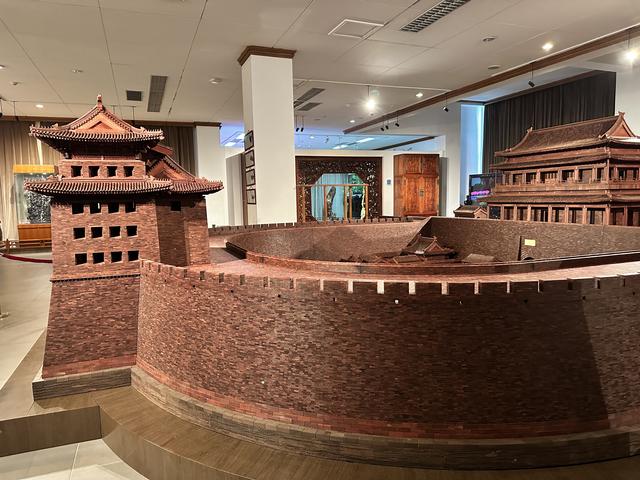
Core Viewpoint - The China Zitan Museum has unveiled a significant zitan wood sculpture of the Chaoyangmen city gate, showcasing the cultural heritage of old Beijing and the craftsmanship of zitan carving, coinciding with the upcoming International Museum Day [1][3][5]. Group 1: Museum and Exhibit Highlights - The newly displayed zitan sculpture, weighing several tons, is a 1:10 scale replica of the Chaoyangmen city gate, constructed without nails using traditional mortise and tenon techniques [1][3]. - The museum has recreated 16 city gates of old Beijing at a 1:10 scale, utilizing zitan and sunk wood, with over 100 craftsmen involved over a decade-long project [3][5]. - The museum also features a 1:5 scale replica of the Forbidden City’s corner tower, enhancing the visitor experience by providing access to significant cultural artifacts [3][5]. Group 2: Cultural Significance and Community Impact - The China Zitan Museum is the first private museum in China dedicated to zitan art and has its zitan carving technique recognized as a national intangible cultural heritage [5]. - There are over 900 cultural organizations, including private museums and art galleries, in Beijing, playing a vital role in preserving and promoting traditional culture [7]. - The museum's activities during International Museum Day, including free public access, aim to enrich the cultural life of Beijing residents and highlight the importance of social organizations in cultural development [7].
莫让“假俗乱”讲解侵蚀“文博热”(人民时评)
Ren Min Ri Bao· 2025-05-11 22:30
Core Perspective - The core value of historical artifacts and cultural heritage lies in their ability to narrate history through tangible evidence, emphasizing the importance of quality interpretation services in preserving historical memory and transmitting excellent culture [1][2][3] Industry Trends - The "cultural heritage boom" has made interpretation services a hot segment in cultural tourism consumption, with many tourists seeking formal interpretation services during peak travel times [1][2] - There is a growing concern over the prevalence of low-quality, sensationalized interpretation content both in physical tourist sites and on online platforms, which misleads the public and undermines the seriousness of history [1][2] Challenges - The industry faces challenges from "fake and vulgar" interpretations that lack historical accuracy and dilute cultural understanding, leading to a superficial grasp of history among the public [2][3] - Some interpreters resort to fabricating unverified historical anecdotes to attract attention and profit, which further disconnects the public from traditional culture [2][3] Regulatory Recommendations - Cultural venues and tourist sites are urged to strengthen their regulatory responsibilities and improve the admission and evaluation systems for interpretation services, creating a dual mechanism of "technical firewall + cultural filter" to ensure historical authenticity [3] Role of Interpreters - Interpreters should evolve into "torchbearers," transforming their role from mere knowledge transmitters to guides that enhance aesthetic appreciation and cultural understanding [4] - The essence of cultural transmission is viewed as a dialogue across time, necessitating a commitment to cultural roots and a rejection of profit-driven superficiality [4] Cultural Confidence - The goal is to let interpretation serve as a voice for culture, allowing visitors to engage meaningfully with civilization, thereby fostering cultural confidence and resilience [5]
月港氤氲
Ren Min Ri Bao· 2025-04-29 22:31
Core Insights - The article highlights the historical significance and cultural heritage of Yuegang Ancient Town, located in Longhai District, Zhangzhou, Fujian Province, emphasizing its unique architecture and customs [1][2][3] - Yuegang was a vital maritime trade hub during the Ming Dynasty, with documented trade routes connecting it to over 47 countries and regions, showcasing its role in global trade [2] Group 1: Historical Significance - Yuegang Ancient Town is named for its crescent-shaped waterway and has a rich history marked by prosperity and struggle [1] - The town was a starting point for 18 maritime trade routes during the Ming Dynasty, with over 300 merchant ships engaging in trade with Southeast Asia, the Middle East, Latin America, and Europe [2] Group 2: Cultural Heritage - The traditional bamboo curtain, known as "Zhuzi Lian," symbolizes the cultural values of the town, allowing privacy while reflecting Confucian ideals [1] - The transformation of the bamboo curtain from a symbol of female restriction to a cultural heritage item illustrates the progress in women's status and the continuity of historical traditions [1] Group 3: Tourism Development - Recent renovations have revitalized Yuegang, with the establishment of the "Yuegang Maritime Silk Road Museum" to educate visitors about its historical evolution [2] - The picturesque environment, including scenic walkways and traditional architecture, enhances the town's appeal as a tourist destination [2][3]