新能源就近消纳

Search documents
多层次立体化新能源消纳体系加速构建 计量从宏观统计转变为微观感知
Zhong Guo Neng Yuan Wang· 2025-09-24 09:47
Core Viewpoint - The recent notice from the National Development and Reform Commission and the National Energy Administration marks a shift from planned consumption to market-driven pricing for renewable energy, emphasizing a dynamic pricing coupling mechanism between "renewable energy + nearby load" [1][5]. Group 1: Policy Implementation - The notice sets a quantifiable threshold for self-consumption of renewable energy projects, requiring at least 60% of annual self-generated electricity to be used on-site and at least 30% of total electricity consumption, with a minimum of 35% for new projects starting in 2030 [1][4]. - The policy introduces technical requirements for metering and comprehensive monitoring, addressing long-standing issues of unclear consumption responsibilities and weak data supervision [2][3]. Group 2: Market Dynamics - The new policy compels renewable energy developers to optimize generation curves and storage configurations, enhancing local green electricity utilization and alleviating grid pressure [3][6]. - It establishes a clear service scope and pricing for public grids regarding nearby consumption projects, guiding power generation companies to optimize capacity allocation and reduce investment costs [3][4]. Group 3: Economic Implications - The policy's pricing mechanism exceeds market expectations by including reductions in system operation fees and cross-subsidies for self-consumed electricity, which may lower transmission and distribution costs for high-utilization projects [5][9]. - The transition to a market-oriented pricing mechanism signifies a systemic restructuring, moving towards efficient utilization and value creation in renewable energy development [5][6]. Group 4: Technological Advancements - The upgrade of metering systems is crucial for the effective implementation of integrated renewable energy projects, shifting from macro-level statistics to micro-level real-time monitoring [8][9]. - The new metering approach aims to provide precise insights into energy flows, enhancing the grid's ability to manage distributed renewable energy and demand-side responses [8][9]. Group 5: Future Development - The policy encourages the establishment of micro, autonomous power balance units, promoting localized energy generation and consumption systems that reduce reliance on the main grid [7][9]. - Renewable energy companies are expected to adjust their project development strategies, focusing on areas with stable and high electricity demand that align with renewable generation patterns [9].
就近消纳新政下,光伏路在何方?
Xin Lang Cai Jing· 2025-09-23 11:10
Core Viewpoint - The recent policy changes in the photovoltaic industry signal a significant transformation, emphasizing the need for localized energy consumption and addressing the challenges of energy absorption in the sector [1][2]. Group 1: Policy Changes and Implications - The National Development and Reform Commission and the National Energy Administration have issued a critical policy document aimed at enhancing the pricing mechanism for renewable energy, set to take effect on October 1 [1]. - The new policy, referred to as Document 1192, addresses the long-standing issue of "who pays" for local energy consumption projects, establishing clear criteria for what constitutes a legitimate local consumption project [2][3]. - The policy aims to eliminate the "free-rider" problem by ensuring that only projects meeting specific conditions regarding energy self-consumption and connection to the public grid will receive reliable power supply services [2]. Group 2: Pricing Mechanism Innovations - The most significant innovation in Document 1192 is the shift from a "per energy unit" fee structure to a "capacity-based" fee structure for local consumption projects [4]. - The new fee calculation method includes a monthly capacity fee based on the project's connection capacity to the public grid, which reflects the project's fixed cost occupation of the grid system [4]. - This new mechanism encourages projects to enhance their efficiency and reduce reliance on the public grid, promoting better resource allocation and utilization [5]. Group 3: Impact on Industry Players - The average load rate becomes a critical factor in determining fees, incentivizing companies to improve their transformer utilization and overall energy management [5]. - Projects that depend on large-scale energy exports may face challenges under the new pricing model, while those that can adapt to local consumption and diversify revenue streams will benefit [5].
多层次立体化新能源消纳体系加速构建
中国能源报· 2025-09-22 01:49
Core Viewpoint - The recent notice from the National Development and Reform Commission and the National Energy Administration marks a shift from "planned consumption" to "active consumption" through market pricing, establishing a dynamic pricing coupling mechanism between "renewable energy + nearby load" [1][3][7] Summary by Sections Policy Implementation - The notice will be implemented starting October 1, requiring that renewable energy projects have a self-consumption ratio of at least 60% of total available generation and 30% of total electricity consumption, with new projects from 2030 needing a minimum of 35% [1][3] Hard Constraints on Nearby Consumption - The policy sets quantifiable thresholds for self-consumption ratios and includes technical requirements for metering and full-cycle supervision, addressing long-standing issues of unclear consumption responsibilities and weak data regulation [3][5] Impact on Power Generation and Grid - The self-consumption policy compels renewable energy developers to optimize generation curves and integrate storage solutions, enhancing local green energy utilization and alleviating grid pressure [4][6] - The notice clarifies the service scope and pricing for public grids, guiding power companies to optimize capacity configurations and defining economic responsibilities in nearby consumption [4][6] Market Participation and Efficiency - The notice activates the potential for nearby balancing by granting clear market identities to nearby consumption projects, enabling them to participate directly in electricity spot markets and enhance demand response capabilities [4][7] Addressing Renewable Energy Challenges - The root of renewable energy consumption challenges lies in the mismatch of time, with renewable generation often falling short of meeting year-round demand, necessitating storage or flexible resources to balance supply and demand [8] - The policy proposes both nearby consumption and large-scale remote generation models to create a distributed consumption system that improves grid flexibility [8] Measurement and Data Management - The transition from macro-level statistics to micro-level sensing in measurement systems is crucial for the intelligent operation of the new power system, requiring real-time and precise information on every key link [10][11] Future Development and Strategy - The quantification of self-consumption ratios will alter project development strategies, emphasizing the need for renewable projects to align closely with stable load users and optimize investment to avoid overcapacity [12]

电价下滑、电量难保,新能源投资如何“转舵”
Di Yi Cai Jing· 2025-09-21 04:03
Core Insights - The recent auction results for renewable energy prices in Shandong Province have raised concerns among investors regarding the profitability of solar and wind projects, with solar prices dropping to 0.225 yuan/kWh and wind prices at 0.319 yuan/kWh, both significantly lower than expected [1][3][4] - The mechanism price is part of a new pricing system aimed at stabilizing revenue for renewable energy projects, but the low auction results indicate a potential shift in investment dynamics within the sector [1][2][3] Group 1: Auction Results and Market Reactions - The auction results revealed a mechanism price of 0.225 yuan/kWh for solar projects, with an 80% mechanism volume ratio, and 0.319 yuan/kWh for wind projects, with a 70% mechanism volume ratio, indicating a significant drop in expected returns [3][4] - Industry reactions to the low prices have been mixed, with some anticipating the price drop due to high competition among bidders, while others express disappointment as they had hoped for prices that would allow for profitability [3][4] - The mechanism price represents a 43% decrease for solar and a 19.2% decrease for wind compared to the benchmark coal price of 0.3949 yuan/kWh, highlighting the impact on new projects' profitability [4] Group 2: Policy Changes and Investment Dynamics - Recent policy changes from the National Development and Reform Commission and the National Energy Administration aim to accelerate the construction of the electricity spot market and promote new energy consumption, indicating a shift in investment models for renewable energy [2][5] - The low mechanism prices signal that the market may not require as many solar investors in the short term, suggesting a strategic shift towards wind energy projects [5] - The competitive landscape is changing, with many investors submitting low bids to secure project approvals, reflecting a challenging environment for maintaining profitability in solar energy investments [4][5] Group 3: Future Outlook and Strategic Adjustments - The current low mechanism prices may not become the norm, as the tight timeline for project approvals and the potential for even lower market prices could lead to greater losses for investors [5][6] - Industry experts suggest that to improve the situation, policies may need to allow for more flexible timelines and encourage companies to withdraw from unprofitable projects, which could fundamentally alter supply and demand dynamics [5][6] - The focus for future market development is expected to shift towards high-quality projects, with cost control becoming increasingly important for profitability in regions with less competitive solar markets [5][6]

解读1192号文的制度创新与价值展现
Zhong Guo Dian Li Bao· 2025-09-19 08:48
Core Viewpoint - The issuance of Document No. 1192 by the National Development and Reform Commission and the National Energy Administration aims to improve the pricing mechanism for nearby consumption of renewable energy, guiding social capital investment in these projects through price signals [1][6]. Group 1: Responsibility Clarification - Document No. 1192 addresses the challenge of defining responsibilities for nearby consumption projects, emphasizing safety as the primary foundation [2]. - The document establishes clear physical and safety responsibility boundaries between renewable energy projects and the public grid, requiring projects to connect with power sources, loads, and storage systems [2]. - A rigid technical standard is set, mandating that the self-generated electricity from renewable sources must account for at least 60% of total available generation and 30% of total consumption, increasing to 35% for new projects starting in 2030 [2]. Group 2: Cost Sharing - The document introduces a "stable supply guarantee fee" system to ensure fair cost sharing, adhering to the principle that "those who benefit should bear the costs" [3]. - A single capacity-based electricity pricing mechanism is established, incentivizing projects to maximize transformer utilization and reduce transmission and distribution costs [3][4]. - The policy allows for temporary exemptions from cross-subsidies for self-generated electricity, balancing existing mechanisms with project burden reduction [4]. Group 3: Market Participation - Document No. 1192 clarifies the market position and participation rules for projects, facilitating their integration into the electricity market system [5]. - Projects are treated as equal market entities, participating directly in electricity trading without being represented by grid companies, thus enhancing market competition [5][6]. - The policy marks a significant shift from pilot programs to a normalized market approach for nearby consumption of renewable energy, promoting quality over mere scale [6].
深度|电价下滑、电量难保,新能源投资如何“转舵”
Di Yi Cai Jing· 2025-09-18 13:15
Core Viewpoint - The recent auction results for renewable energy prices in Shandong Province have raised concerns about the profitability of solar projects, with the mechanism price for solar set at 0.225 yuan/kWh, significantly lower than expected, leading to a potential decline in investment interest in the sector [1][4][5]. Group 1: Mechanism Price and Market Reactions - The mechanism price for solar energy in Shandong is set at 0.225 yuan/kWh, with 80% of the selected projects being distributed solar projects, indicating a significant drop in expected returns for investors [4][5]. - The auction results have led to mixed reactions in the market, with some industry participants anticipating low bids due to high competition, while others express disappointment over the inability to maintain profitability at such low prices [5][6]. - The mechanism price reflects a 43% decrease compared to the benchmark coal price of 0.3949 yuan/kWh, indicating a substantial impact on the revenue of new solar projects [5][6]. Group 2: Policy Changes and Investment Landscape - Recent policy changes from the National Development and Reform Commission and the National Energy Administration aim to accelerate the construction of the electricity spot market and promote new energy consumption, indicating a shift in investment models for renewable energy [2][6]. - The current investment environment is characterized by a cautious approach from investors, with many projects being terminated due to insufficient conditions, such as unmet profitability requirements and limited grid capacity [7][9]. - The focus of future market development is expected to shift towards high-quality projects, with a significant reduction in non-technical costs anticipated in regions with less competitive solar markets [7][9]. Group 3: Storage and New Energy Integration - The introduction of new pricing mechanisms for energy storage and nearby consumption is seen as a positive development, although practical implementation remains challenging due to various concerns, including high costs and operational risks [10][11]. - The recent policy changes have improved the investment landscape for independent energy storage projects, with significant growth in installed capacity reported [13][14]. - Despite the potential for growth in the energy storage sector, not all projects will benefit equally, as performance and operational reliability remain critical factors for success [15][16].
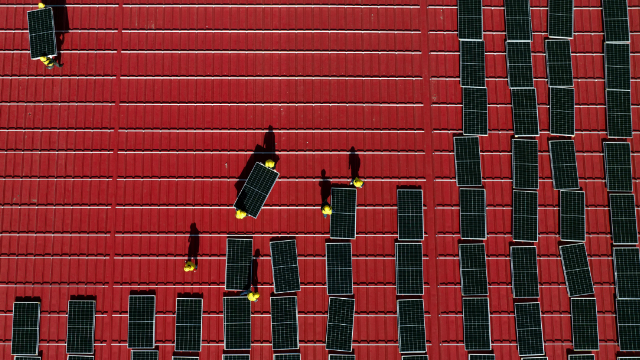
新能源发电就近消纳的成本收益分析
Zhong Guo Dian Li Bao· 2025-09-17 06:20
Core Insights - The article discusses the rapid development of renewable energy in China, highlighting both achievements and challenges, particularly in energy consumption and power system regulation [1] - It emphasizes the introduction of new policies aimed at facilitating the consumption of renewable energy through market-oriented reforms [1] Policy Developments - In February, the National Development and Reform Commission and the National Energy Administration issued a notice to deepen market-oriented reforms for renewable energy grid pricing [1] - In May, a notice was released to promote green electricity direct connection projects, introducing new consumption scenarios [1] - On September 12, a new notice was published to improve pricing mechanisms for local consumption of renewable energy, providing clear guidelines for project investors [1] Project Construction Requirements - The notice outlines specific technical requirements for renewable energy local consumption projects, clarifying the rights and obligations of project participants [2] - It establishes clear physical and safety responsibility boundaries to mitigate operational disputes and safety risks [2] Consumption Ratio and Weighting - The notice mandates that the annual self-consumption of renewable energy projects must be at least 60% of total available generation and 30% of total electricity consumption, with a minimum of 35% for new projects starting in 2030 [3] - This high self-consumption ratio aims to reduce pressure on the public grid and ensure alignment with user electricity demand [3] Economic Feasibility Assessment - The economic viability of projects hinges on reducing electricity costs, with key cost components being energy charges, transmission and distribution fees, and system operation fees [4] - Investors are advised to compare the costs of self-consumption against public grid purchasing costs to determine project feasibility [4] Market Participation Pathways - Renewable energy projects can also generate revenue through excess grid connection, but this is highly dependent on the local electricity market's operational status [6] - In regions with continuous electricity spot markets, projects face both higher revenue opportunities and increased risk management requirements [6] - Conversely, in areas without continuous spot markets, projects are generally not allowed to send electricity back to the grid, limiting revenue potential [7]
完善新能源就近消纳价格机制,助力垃圾发电等绿电直连落地 | 投研报告
Zhong Guo Neng Yuan Wang· 2025-09-16 01:25
Core Viewpoint - The recent notification from the National Development and Reform Commission and the National Energy Administration aims to improve the pricing mechanism for nearby consumption of renewable energy, which is expected to create new opportunities for green electricity direct connection projects starting from October 1, 2025 [1][2][3]. Group 1: Policy and Mechanism - The notification clarifies the economic responsibilities between nearby consumption projects and the public grid, allowing renewable energy projects to pay for supply reliability based on their needs [3][4]. - The new pricing mechanism is designed to enhance the willingness of the grid to provide stable supply services, facilitating the implementation of projects like waste incineration and green electricity direct connections [4][5]. Group 2: Project Requirements - Projects must have a clear interface, with power sources, loads, and storage connected as a whole to the public grid, ensuring safety and responsibility [3][4]. - Projects are required to have a self-consumption ratio of at least 60% of total available generation and 30% of total consumption, with new projects starting from 2030 needing a minimum of 35% [4][5]. Group 3: Economic Advantages - The economic feasibility of projects increases with higher load rates and smaller capacities connected to the public grid, as projects not connected to the grid are exempt from certain fees [4][5]. - For example, in Guangdong Province, the average market transaction price in 2025 is projected to be 0.3910 yuan per kWh, while the costs associated with grid connection and operation total 0.2721 yuan per kWh, leading to a total of 0.6631 yuan per kWh. Direct supply from waste incineration can offer a price advantage of 0.05 to 0.08 yuan per kWh compared to using grid electricity [5]. Group 4: Recommended Companies - The notification is expected to benefit companies involved in green electricity direct supply projects, with specific recommendations including Huanlan Environment, Yongxing Co., Conch Venture, Green Power Environmental Protection, Junxin Co., and Weiming Environmental Protection, while also suggesting attention to Wangneng Environment [5].


环保行业跟踪周报:完善新能源就近消纳价格机制助力绿电直连落地,SAF价格新高利好UCO、SAF生产商-20250915
Soochow Securities· 2025-09-15 14:34
Investment Rating - The report maintains an "Overweight" rating for the environmental protection industry [1] Core Views - The improvement of the near-consumption pricing mechanism for renewable energy will facilitate the direct connection of green electricity, benefiting waste-to-energy projects [9][10] - The price of Sustainable Aviation Fuel (SAF) has reached a new high in Europe, positively impacting UCO and SAF producers in China [11][12] - The solid waste sector has seen significant acceleration in national subsidies for recycling, leading to improved cash flow and dividend payouts [15][16] Summary by Sections Industry Trends - The environmental protection industry is experiencing a positive trend with the implementation of new pricing mechanisms for renewable energy, which will enhance the economic viability of waste-to-energy projects [9][10] - The SAF market in Europe is tightening, leading to increased prices and benefiting UCO and SAF producers in China [11][12] Solid Waste Sector - National subsidies for recycling have accelerated significantly, with a reported 2.064 billion yuan received in July-August 2025, surpassing the previous year's figures [15] - The solid waste sector is seeing improvements in return on equity (ROE) and cash flow, with a focus on operational efficiency and reduced financial costs [15][16] Water Sector - The water sector is poised for growth with expected improvements in cash flow and dividend payouts, similar to trends observed in the waste-to-energy sector [19][20] - Recent water price reforms in cities like Guangzhou and Shenzhen are anticipated to drive further growth in the sector [19] Sanitation Equipment - The sales of sanitation vehicles have increased, with a notable rise in the penetration rate of new energy sanitation vehicles, reaching 16.14% [22][23] - The market for electric sanitation vehicles is expanding rapidly, with sales growth of 77.55% in the first seven months of 2025 [22][23] Biofuel Sector - The average price of waste cooking oil has decreased, leading to an increase in profit margins for biofuel producers [32] - The biofuel market is expected to remain stable, with ongoing demand for waste oils and limited supply growth [32] Lithium Battery Recycling - The profitability of lithium battery recycling is improving as the prices of lithium carbonate and other materials decline [33][34]
国家发改委、能源局发布通知,促进新能源发电就近消纳
中国有色金属工业协会硅业分会· 2025-09-15 05:05
Core Viewpoint - The notification emphasizes the importance of promoting the development and utilization of renewable energy resources, particularly wind and solar energy, to achieve green and low-carbon energy transformation and meet carbon peak and carbon neutrality goals [2]. Group 1: Stable Supply Assurance - The public grid will provide stable supply assurance services for nearby consumption projects, ensuring reliable power supply and safety [2]. - Renewable energy projects must have a self-consumption ratio of at least 60% of total available generation and 30% of total consumption, increasing to 35% for new projects starting in 2030 [2]. Group 2: Cost Sharing for Supply Assurance - Nearby consumption projects will bear the costs of stable supply services based on the principle of "who benefits, who bears" [3]. - Transmission and distribution fees will be calculated based on capacity, with no system standby fees for exported electricity [3]. Group 3: Equal Market Participation - Nearby consumption projects will have equal market status with other power generation companies and users, participating in the electricity market as a unified entity [4]. - Projects must directly engage in market transactions without being represented by grid companies and will bear line loss costs for exported electricity [4]. Group 4: Implementation and Monitoring - Provincial price authorities are tasked with monitoring and summarizing implementation experiences, providing policy interpretations, and responding to social concerns [4]. - Project owners must file with local authorities and apply for grid connection, determining their own capacity and signing contracts with grid companies [4]. Group 5: Implementation Date - The notification will take effect on October 1, 2025, with prior projects needing coordination from local price authorities [5].