
无核三原则

Search documents
图谋让自卫队“入宪”,高市早苗遭猛批
Huan Qiu Shi Bao· 2026-02-03 22:57
Core Viewpoint - Japanese Prime Minister and Liberal Democratic Party President, Suga Yoshihide, has expressed a clear intention to amend the constitution to include the Self-Defense Forces, which has sparked significant criticism due to existing constitutional restrictions on military forces [1] Group 1: Constitutional Amendment Intent - Suga stated the need to amend the constitution to uphold the dignity of the Self-Defense Forces and strengthen their status as a powerful entity [1] - The ruling party aims to increase the number of seats in the House of Representatives to facilitate discussions on constitutional amendments [1] Group 2: Legislative Challenges - The proposal for constitutional amendment faces procedural hurdles, requiring a two-thirds majority support from both houses of the National Diet [1] - Even with support from parties like the Japan Innovation Party and the Democratic Party for the People, the total number of pro-amendment lawmakers does not reach the required two-thirds threshold [1] Group 3: Opposition and Criticism - Opposition leaders, including Noda Yoshihiko from the Democratic Party and members of the Communist Party, have criticized the amendment efforts, emphasizing the need to maintain Japan's pacifist principles and prevent military expansion [1] - Concerns have been raised about the potential for Japan's right-wing factions to exploit constitutional amendments to challenge post-war international order and regional peace [1]
高市“危机动员”能催出自民党选票吗
Xin Lang Cai Jing· 2026-02-01 17:15
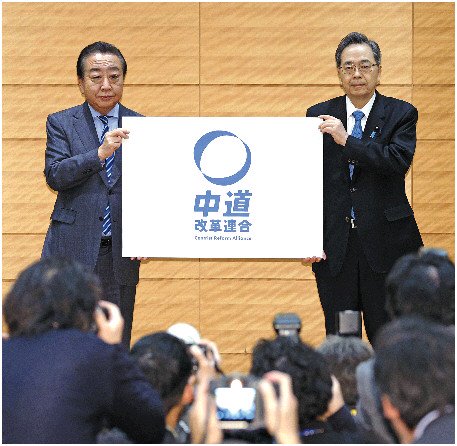
Core Viewpoint - The upcoming Japanese House of Representatives election on February 8, 2024, is critical for Prime Minister Sanna Takichi, who has threatened to resign if her ruling coalition fails to secure a majority. The election is marked by declining public support for her government and the emergence of a new party, the "Center Reform Coalition," which poses a challenge to the ruling alliance [1][2]. Group 1: Public Support and Political Scandals - Prime Minister Takichi's approval ratings have significantly dropped, with a 10% decrease to 57% according to the Mainichi Shimbun, and an 8-point decline to 67% as per the Nikkei [1][2]. - A majority of voters, approximately 41%, disapprove of Takichi's decision to dissolve the House of Representatives, indicating public dissatisfaction with her focus on party interests over citizen welfare [1]. - The Liberal Democratic Party (LDP) has faced backlash due to a political funding scandal, with around 80% of respondents believing the party has not resolved issues related to "politics and money" [2]. Group 2: Election Dynamics and Party Strategies - The newly formed "Center Reform Coalition," comprising the Constitutional Democratic Party and Komeito, aims to challenge the ruling coalition by focusing on rational and realistic policies, contrasting with the conservative stance of Takichi's government [3][4]. - The LDP's campaign includes promises to enhance national defense, with plans to revise security documents and increase defense spending to over 2% of GDP, while the Japan Innovation Party supports even more aggressive defense policies [3]. - The LDP's support rate stands at 42%, which is not sufficient to guarantee a majority in the upcoming election, as historical data suggests that high cabinet approval ratings do not necessarily translate into party support [6][7]. Group 3: Voter Behavior and Election Outcomes - The election landscape shows that 40% of respondents support the ruling coalition, while 22.8% back the opposition, with a significant 34.9% undecided, indicating a competitive electoral environment [7]. - The Constitutional Democratic Party has gained traction among middle voters, increasing its seats from 99 to 148, while the LDP lost 56 seats, marking a significant shift in the political landscape [7]. - Takichi's strategy of threatening resignation in case of electoral failure is seen as an attempt to galvanize support for the LDP amidst rising competition from the opposition [7].
围绕“无核三原则”,日本民间团体再批高市
Zhong Guo Xin Wen Wang· 2026-01-28 08:53
Core Viewpoint - The article discusses the protests from Hiroshima atomic bomb victim groups against Japanese Prime Minister Suga Yoshihide's administration regarding the reconsideration of Japan's "Three Non-Nuclear Principles" and the implications for nuclear disarmament [1] Group 1: Government Actions and Reactions - Prime Minister Suga has indicated a willingness to reassess the "Three Non-Nuclear Principles," which has raised concerns among atomic bomb survivors [1] - The Hiroshima atomic bomb victim group leader, Tomonori Kimimori, emphasized the need for Japan to adhere to the Treaty on the Prohibition of Nuclear Weapons, criticizing Japan's reliance on the U.S. nuclear umbrella [1] - Following Suga's appointment, there have been actions contrary to nuclear disarmament, including statements from government officials suggesting Japan should possess nuclear weapons [1] Group 2: Public Sentiment and Concerns - Concerns have been voiced regarding the potential impact of the upcoming House of Representatives election on Japan's security policy, with fears that it may lead to significant changes [1] - A local resident expressed that visiting the Hiroshima Peace Memorial Museum influenced their perspective against advocating for nuclear weapons [1]
高度警惕日本重拾核武装旧梦(国际论坛)
Ren Min Ri Bao· 2026-01-26 02:04
Core Viewpoint - Japan's intention to modify the "Three Non-Nuclear Principles" poses a significant challenge to global nuclear non-proliferation and could lead to increased nuclear proliferation risks, undermining world peace [1][3]. Group 1: Japan's Nuclear Policy Shift - Japan's historical narrative has often portrayed itself as a "nuclear victim," neglecting its past as a "nuclear aggressor" during World War II, where it pursued atomic bomb research in competition with the US and UK [1]. - Recent statements from Japanese officials about potentially revising the "Three Non-Nuclear Principles" and considering nuclear submarines indicate a shift in Japan's security strategy, moving the nuclear option into public political discourse [1][2]. Group 2: Strategic Objectives Behind the Shift - The push for nuclear policy discussions aims to weaken post-war constraints and accumulate political capital for Japan's ambition to become a "military power" [2]. - By gauging public and international reactions to nuclear armament discussions, Japanese politicians are testing the boundaries of policy changes and preparing for future revisions [2]. - Japan seeks to enhance its autonomous deterrence capabilities and redefine its role within the US-Japan alliance, viewing nuclear armament as a means to reduce dependency on allies [2]. - The intention to strengthen military capabilities in the Taiwan Strait and East China Sea reflects Japan's strategy to exert pressure on neighboring countries and improve its position in regional power dynamics [2]. Group 3: Historical Context and Responsibilities - The "Three Non-Nuclear Principles" were established as a national policy reflecting Japan's remorse for wartime actions and its commitment to peace, rooted in the painful memories of Hiroshima and Nagasaki [3]. - Modifying these principles would undermine Japan's historical responsibilities and commitments to its neighbors, posing a serious threat to regional stability and peace [3]. - The international community must remain vigilant against Japan's potential return to nuclear armament and the resurgence of militarism, which could jeopardize the welfare of the region [3].
图谋修改“无核三原则”,高度警惕日本重拾核武装旧梦
Ren Min Ri Bao· 2026-01-26 00:53
Core Viewpoint - Japan's recent political discourse indicates a potential shift towards nuclear armament, challenging its post-war pacifist stance and raising concerns about regional security and global nuclear non-proliferation efforts [1][3]. Group 1: Japan's Military Aspirations - The right-wing factions in Japan are pushing for a re-evaluation of the post-war military constraints, aiming to accumulate political capital for amending the "Peace Constitution" and establishing Japan as a "military power" [2]. - Discussions surrounding nuclear policy are intended to weaken the post-war system's restrictions, indicating a desire for military expansion [2]. Group 2: Testing Policy Boundaries - Japanese politicians are using provocative statements about nuclear armament to gauge domestic and international reactions, assessing the feasibility and resistance to nuclear armament for future policy adjustments [2]. - This strategy serves as a means to prepare public opinion for potential policy changes regarding nuclear capabilities [2]. Group 3: Enhancing Deterrence and Alliance Dynamics - Japan views "self-reliant nuclear capabilities" as a way to reduce dependence on its alliance with the United States and to enhance its own deterrent power [2]. - There is a desire among Japanese right-wing factions to increase their role in nuclear discussions within the alliance, thereby improving their bargaining power in the nuclear deterrence framework [2]. Group 4: Strategic Pressure on Neighbors - Japan aims to strengthen its military deterrence capabilities in the Taiwan Strait, East China Sea, and surrounding areas to influence the strategic calculations and actions of neighboring countries [2]. - This approach seeks to position Japan more favorably within the regional power dynamics [2]. Group 5: Implications of Revising the "Three Non-Nuclear Principles" - The potential modification of Japan's "Three Non-Nuclear Principles" poses a significant challenge to the global nuclear non-proliferation framework and could destabilize international peace [3]. - Upholding the integrity of these principles is seen as Japan's responsibility towards history, regional stability, and future generations [3].
高市“赌”大选,胜算有几何?
Xin Lang Cai Jing· 2026-01-25 18:14
新党"中道改革联合"主张坚持无核三原则,推行务实的外交与防卫政策。日媒披露,高市正企图在修订 《国家安全保障战略》等"安保三文件"时,修改无核三原则中的不引进核武器原则,引发日本国内强烈担 忧。"中道改革联合"的这一主张,直指高市政权引发最大争议的"爆点"。 日本首相高市早苗23日宣布解散众议院,定于2月8日举行大选。高市表示,若自民党与日本维新会组成的 执政联盟未赢得过半数议席,她将辞去首相职务。分析人士认为,高市这场"豪赌"的主要目的是想借当前 较高支持率重新成为多数派执政党,彻底摆脱在野党在国会的掣肘。表面来看,高市的胜算很大,但立宪民 主党与公明党组建新党"中道改革联合"投入选战,无疑会搅乱既有格局,为选举带来很大变数。 主笔 赵世峰 在野党针锋相对 23日原本是日本国会例会开幕的日子。按照惯例,国会例会的一项重要议程是在4月1日新财年开始前审 议并通过预算案。高市此时解散众议院,审议预算案的正常程序将被大幅拖延,给日本政治和民生带来不 确定性,引发在野党和部分媒体批评,指责其"只顾党派私利、滥用解散权"。就连极右翼的参政党干事长 安藤裕也表示,"此时解散(众议院)极为罕见,政府无视预算与经济风险的做 ...

日本自民党公布竞选承诺
Xin Jing Bao· 2026-01-22 01:30
Group 1 - The ruling Liberal Democratic Party (LDP) of Japan announced its campaign promises for the upcoming House of Representatives election, focusing on five areas: economy, local issues, foreign and security policy, social security, and constitutional amendments [1] - In the area of foreign and security policy, the LDP's commitments include revising the "three security documents," lifting restrictions on five types of weapon exports, establishing a national intelligence agency, and an external intelligence organization [1] - There are concerns regarding the potential modification of Japan's "three non-nuclear principles," particularly the principle against the importation of nuclear weapons, which has sparked strong opposition from various sectors in Japan [1] Group 2 - The mayoral councils of Nagasaki and Hiroshima have passed resolutions urging the Japanese government to adhere to the "three non-nuclear principles" [1] - Prime Minister Sanae Takaichi announced the dissolution of the House of Representatives on the 23rd, with elections scheduled for February 8 [1]
日本自民党公布竞选承诺,包括修订“安保三文件”等内容
Xin Lang Cai Jing· 2026-01-21 23:41
Group 1 - The ruling Liberal Democratic Party (LDP) of Japan announced its campaign promises for the House of Representatives election, focusing on five areas: economy, local issues, foreign and security policy, social security, and constitutional amendments [1] - In the area of foreign and security policy, the LDP's commitments include revising the "three security documents," lifting restrictions on five types of weapon exports, establishing a national intelligence agency, and an external intelligence organization [1] - There are concerns regarding the potential modification of the "three non-nuclear principles," particularly the principle against the importation of nuclear weapons, which has raised alarm among various sectors in Japan [1] Group 2 - Prime Minister Sanae Takaichi announced the dissolution of the House of Representatives on January 23, with elections scheduled for February 8 [2]
日本自民党公布竞选承诺 修订“安保三文件”赫然在列
Xin Hua She· 2026-01-21 22:30
Group 1 - The ruling Liberal Democratic Party (LDP) of Japan announced its campaign promises for the upcoming House of Representatives election, focusing on five areas: economy, local issues, foreign and security policy, social security, and constitutional amendments [1] - In the area of foreign and security policy, the LDP's commitments include revising the "three security documents," easing restrictions on weapon exports, establishing a national intelligence agency, and an external intelligence organization [1] - Reports indicate that the Japanese government aims to amend the "three non-nuclear principles," particularly the principle prohibiting the introduction of nuclear weapons, which has raised significant concerns among various sectors in Japan [1] Group 2 - Prime Minister Sanae Takaichi announced the dissolution of the House of Representatives on January 23, with elections scheduled for February 8 [2]
担忧存在安全隐患 日本民众反对重启老旧核电站
Yang Shi Xin Wen Ke Hu Duan· 2026-01-20 08:10
Group 1 - Local residents in Niigata Prefecture are strongly opposed to Tokyo Electric Power Company's (TEPCO) plan to restart aging nuclear power plants, citing safety concerns due to the company's history of scandals and management issues [1][2] - Concerns were raised about the uncertainty surrounding the operation of the No. 6 reactor, with a member of a local civic group stating that TEPCO's assurances were not definitive, indicating a 99% certainty but leaving 1% unclear [1] - Residents express distrust in TEPCO's ability to manage nuclear safety, referencing the Fukushima disaster and questioning why the company is allowed to continue operations despite its past failures [1] Group 2 - There is significant public concern regarding the Japanese government's attempts to amend the "Three Non-Nuclear Principles," which include not possessing, producing, or allowing nuclear weapons [3] - Local civic group members emphasize the historical context of nuclear weapon use in Japan, arguing that the government should take clear responsibility for nuclear issues and maintain its commitment to the non-nuclear stance [3] - The proposal to potentially possess nuclear weapons has raised serious doubts among residents, who firmly believe that Japan must adhere to the "Three Non-Nuclear Principles" [3]