
智能技术

Search documents
国内首款长续航垂直起降固定翼无人机问世
Xin Lang Cai Jing· 2025-12-22 23:28
Core Insights - The first domestic long-endurance vertical take-off and landing fixed-wing drone, XY-1, has been developed by the Inner Mongolia Grassland Technology Innovation Center in collaboration with Northwest A&F University, and has completed validation tests in various fields such as ecological restoration, agricultural disaster assessment, and smart grazing monitoring [1][2] Group 1: Product Features - The XY-1 drone addresses challenges in the agriculture and forestry sectors, such as complex terrain, weak signals, inefficient monitoring, and delayed responses [1] - It features a vertical take-off and landing design that allows for flexible operation without the need for a professional runway, with wind resistance capability up to level 6 [1] - The drone has a flight endurance of 1 to 6 hours and can cover an area of up to 5,000 acres in a single flight, significantly enhancing field operation mobility and coverage [1] Group 2: Technological Innovations - The system overcomes edge computing deployment limitations and is equipped with a lightweight AI model that achieves real-time inference at 32 frames per second, enabling immediate data processing and decision-making [1] - It integrates visible light and multispectral data, introducing a color-space dual-domain attention mechanism that reduces the false detection rate by over 40% in complex backgrounds [1] Group 3: Operational Efficiency - The drone transforms monitoring from a "human searching for data" approach to a "data finding people" model, enhancing monitoring efficiency by 5 to 8 times compared to traditional methods [2]
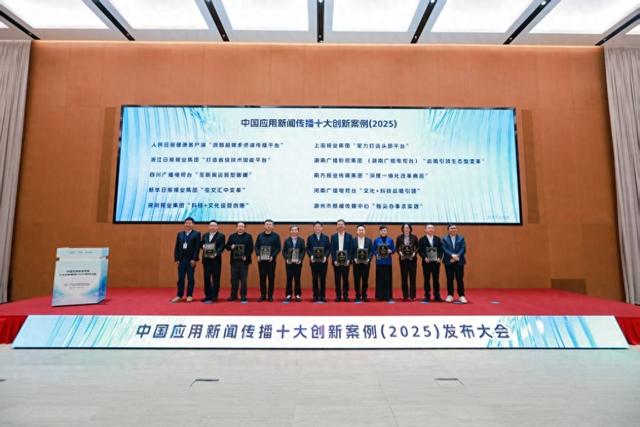
全景式聚焦主流媒体系统性变革,2025中国应用新闻传播十大创新案例在蓉发布
Xin Lang Cai Jing· 2025-12-21 07:20
Core Insights - The 2025 China Application News Communication Top Ten Innovation Cases were announced, showcasing the latest explorations and practices of mainstream media in China regarding deep integration, systematic transformation, and cutting-edge technology application [1][4] - The event reflects a significant trend in the field of application news communication in China, evolving from "point innovations" to "systematic reconstruction" [1] Group 1: Event Overview - The announcement took place in Chengdu on December 21, highlighting ten innovative cases from various media organizations [1] - This is the ninth consecutive year that the China News History Society's Application News Communication Professional Committee has released these cases, emphasizing their leading and exemplary nature [1][4] Group 2: Media Transformation Trends - Media integration has shifted from "addition" to "symbiotic coexistence," characterized by professionalization, platform collaboration, and technology-driven industry trends [3] - The transformation of mainstream media is now focused on systematic restructuring, encompassing content production, organizational structure, and a comprehensive media communication system [4] Group 3: Case Summaries - **Case 1: People's Daily Health Client** - Developed a multi-terminal communication platform integrating authoritative health resources, enhancing health communication efficiency through AI technology [9] - **Case 2: Shanghai Media Group** - Initiated a comprehensive transformation to enhance core competitiveness and sustainability, achieving a unified media platform [10] - **Case 3: Zhejiang Daily Media Group** - Focused on self-integration and platform empowerment, creating a unified new media platform to represent Zhejiang's voice nationally [11] - **Case 4: Hunan Broadcasting Group** - Implemented a "Five New" strategy to drive systemic transformation, achieving significant growth in viewership and international presence [12] - **Case 5: Sichuan Broadcasting Group** - Aimed to become a leading new mainstream media platform through an internet operation model, leveraging a large user base [12] - **Case 6: Southern Media Group** - Achieved deep integration across its media platforms, enhancing operational efficiency and collaborative synergy [13] - **Case 7: Xinhua Media Group** - Focused on technology-driven service enhancement, creating a closed-loop service model in education and governance [14][15] - **Case 8: Henan Broadcasting Group** - Transformed cultural resources into modern communication assets, successfully integrating traditional culture with contemporary media [16] - **Case 9: Shenzhen Media Group** - Integrated technology with media operations, exploring new business models and investment opportunities in high-growth sectors [17] - **Case 10: Huzhou News Media Center** - Demonstrated effective integration of media and city governance, creating a comprehensive service platform for local citizens [18]


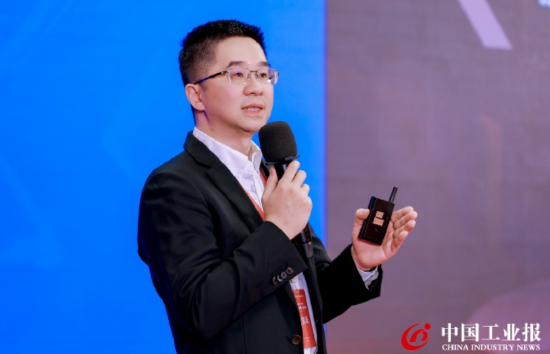
京东工业谷应鲲:智能技术能让工业实现极致运营效率
Xin Lang Cai Jing· 2025-12-16 06:13
Core Insights - The 18th China Industrial Forum was held on December 16 in Beijing, focusing on the theme "Integration and Innovation, Strengthening Industry" [1][4] - JD.com's Industrial CTO, Gu Yingkun, emphasized the need for technology to achieve extreme operational efficiency in the industrial sector, aiming to provide a purchasing experience that is "fast, good, and cheap" similar to the consumer side [1][4] Industry Challenges - The industrial supply chain faces significant challenges, including a vast number of SKUs (over ten million types of industrial products like fasteners) and low standardization, making data processing and standardization a major hurdle [1][4] - Compared to the highly mature consumer supply chain, the industrial supply chain shows notable gaps in efficiency, cost, and experience [1][4] - Industrial applications require high precision and reliability, with low tolerance for errors, and issues such as AI "hallucinations" need to be addressed [1][4] Technological Solutions - JD.com aims to leverage its technological and capability accumulation from the consumer supply chain to tackle the disorder and inefficiency present in the industrial sector [1][4]

青岛港刷新粮食码头行业接卸纪录
Xin Lang Cai Jing· 2025-11-26 11:25
Core Insights - The article highlights a significant achievement by Qingdao Port, where a grain ship carrying 68,250 tons of wheat was unloaded in just 21 hours, setting a new record for grain unloading efficiency in China's port industry [1] Group 1 - Qingdao Port's innovative mechanisms and smart technologies contributed to the efficient and safe unloading of grain [1]

春晖智控(300943.SZ):公司产品目前未应用于机器人领域
Ge Long Hui· 2025-11-26 08:39
Core Viewpoint - The company is currently not applying its products in the robotics field but is actively collaborating with industry partners to explore the application of intelligent technology in industrial scenarios, aiming to enhance factory efficiency [1] Group 1 - The company has stated that its products are not utilized in the robotics sector [1] - The company is engaging with industry partners to explore intelligent technology applications [1] - The goal of these efforts is to improve factory efficiency through the use of intelligent technology [1]


深度|2025“双11”观察:美妆赛道头部平台何以强者恒强?
FBeauty未来迹· 2025-11-12 12:44
Core Insights - The 2025 "Double Eleven" event marked a significant commercial transformation, with a total transaction volume of 1,695 billion yuan, reflecting a year-on-year growth of 14.2% [2] - Tmall maintained its dominance in the e-commerce sector, capturing 50.19% of total transaction volume across five major platforms and 59.8% among three comprehensive platforms [2] E-commerce Performance - Tmall Beauty accounted for 61% of the transaction volume among Tmall, JD, and Douyin, up from 50.9% in 2024, indicating an expanding market share [3] - The 88VIP membership program significantly contributed to Tmall Beauty's growth, with brands like Proya and Estée Lauder achieving over 100 million yuan in sales within minutes of the event [3][4] Membership Growth - The 88VIP program saw a compound annual growth rate (CAGR) of 13% from January 2024 to November 2025, indicating a strong increase in brand engagement [4] - By the second quarter of 2025, the total number of 88VIP members reached 53 million, with a peak increase of 7 million members in a single quarter [6] Consumer Segmentation - The high-value consumer segments, identified as "Beauty Explorers" and "Luxury Care Enthusiasts," spend significantly more on beauty products compared to the average market consumer [10] - 62% of the spending from "Beauty Explorers" comes from online channels, highlighting the importance of digital platforms in reaching this demographic [10] Brand Ecosystem - Tmall has evolved from a channel pioneer to a brand incubator and a partner for guaranteed growth, showcasing its robust ecosystem for beauty brands [12] - The platform hosts over 35,000 active beauty brands, with a survival rate of over 60%, indicating a healthy commercial environment [13][14] Consumer Behavior Trends - In 2025, consumer satisfaction during "Double Eleven" was primarily influenced by product attributes and experiences rather than promotions and pricing, with 43% of consumers prioritizing these factors [17] - This shift in consumer focus aligns with Tmall Beauty's strategy of fostering high-quality user relationships and a strong brand ecosystem [27] New Product Launches - Nearly 40,000 brands launched 245,000 new products on Tmall in the month leading up to "Double Eleven," a 46% increase from the previous year [19] - Tmall's new product promotion ecosystem, enhanced by AI tools, has streamlined the process from market insight to product launch, significantly improving the chances of new product success [23] Strategic Advantages - Tmall Beauty's competitive edge is derived from a combination of deep membership engagement, a broad platform ecosystem, and precise technological innovations [28] - The focus has shifted from price competition to value creation, with Tmall leveraging technology to enhance the shopping experience and meet consumer needs [28][29]

山东新特产“链”上进博会
Da Zhong Ri Bao· 2025-11-06 01:05
Group 1 - The eighth China International Import Expo (CIIE) opened in Shanghai, with over 600 new exhibitors added to last year's 3,496, setting a historical high in exhibition area and total number of companies [2] - Shandong province showcased 43 enterprises in the Shandong Old Brands and Intangible Cultural Heritage Experience Pavilion, focusing on the integration of traditional brands and foreign trade products [2] - The tea beverage market in China is projected to reach 354.72 billion yuan in 2024, with a year-on-year growth rate slowing to 6.4%, indicating a shift from rapid expansion to a more refined competition phase [3] Group 2 - Dong'e Ejiao promoted its "Jinshanghua" tea beverage brand at the expo, which combines traditional Ejiao with tea, appealing to younger consumers and simplifying the consumption process [3] - Su Liu He, another old brand, introduced its health-oriented tea drinks, emphasizing the importance of health and wellness among consumers across various age groups [4] - The intelligent hairdryer developed by Orange Cloud Internet Design Co., a subsidiary of Jerry Group, features AI temperature control and has gained attention in international markets, selling 100,000 units in South Korea last year [5] Group 3 - The previous seven CIIEs organized 50,000 purchasing enterprises and nearly 170,000 attendees, with intended transaction orders exceeding 3,200 and a total intended transaction amount of over 43 billion USD [6] - Shandong will host a dialogue on industry ecosystem cooperation with multinational companies on November 6, aiming to expand international market access for domestic products [6]
(第八届进博会)海关应用智能技术安全高效监管进博会文物艺术展品
Zhong Guo Xin Wen Wang· 2025-11-04 12:05
Core Points - The Shanghai Customs has implemented innovative regulatory measures to ensure the safe and efficient supervision of high-value cultural and artistic exhibits at the 8th China International Import Expo (CIIE) [1] - The customs authority has introduced "authentication and traceability" technology to collect characteristic data of valuable cultural artifacts, creating a unique "identity ID" for each item [1] - Real-time monitoring measures have been established for transportation vehicles, utilizing smart devices to track the location and status of goods, thereby preventing risks during transit [1] Group 1 - The Shanghai Customs has applied intelligent technology to enhance the regulation of cultural and artistic exhibits at the CIIE [1] - The "authentication and traceability" technology allows for the creation of a unique identity for high-value artifacts, aiding in post-exhibition verification [1] - The "in-transit supervision" measures include smart devices that provide real-time alerts for any deviations or unauthorized access during transportation [1] Group 2 - During the CIIE, 49 art pieces from renowned global artists will be showcased under a bonded arrangement [2]
易邮快递超市:智能技术提升用户留存,构筑长久服务关系
Sou Hu Cai Jing· 2025-10-28 06:32
Core Insights - User retention is a key metric for service success in a competitive market, and the company leverages smart technology and partnerships with major e-commerce and courier companies to enhance user attraction and retention [1][4] Group 1: Smart Services and User Experience - The smart self-service terminals at the company allow users to complete the entire parcel sending process in just 3 minutes, saving nearly half the time compared to traditional methods, leading to an 82% retention rate for users who experienced smart sending [1][2] - Personalized shopping recommendations based on user data increase engagement, with a reported 35% rise in repurchase rates as users feel valued and catered to [2] - The real-time tracking feature of the delivery service enhances user dependency, achieving a 98% on-time delivery rate, allowing users to manage their time effectively [2] Group 2: Membership and Feedback Systems - The intelligent membership system incentivizes user retention by converting user activities into points that can be redeemed for discounts, with a 40% higher quarterly retention rate for members compared to non-members [3] - The intelligent feedback system allows users to submit service evaluations, leading to a 15% annual increase in retention rates through continuous service optimization based on user feedback [3] Group 3: Future Outlook - The company aims to evolve its services into a proactive model through the integration of AI and IoT technologies, transitioning from passive user selection to active user reliance, representing the pinnacle of smart service [4]
万吨级纯电动散货船在湖北宜昌下水舾装
Xin Hua Wang· 2025-10-23 08:27
Core Viewpoint - The launch and naming of the "Gezhouba" pure electric bulk carrier marks a significant advancement in China's green and intelligent inland shipping development, showcasing breakthroughs in electric power and smart technology applications [1] Group 1: Vessel Specifications - The "Gezhouba" vessel is nearly 130 meters long and has a maximum carrying capacity of over 13,000 tons [1] - It is equipped with 12 lithium battery boxes, providing a total power capacity of 24,000 kilowatt-hours, enabling quick battery replacement and a range of up to 500 kilometers [1] Group 2: Technological Innovations - The vessel features an advanced intelligent control system that integrates multi-link network communication [1] - It supports remote control and automatic docking functions, successfully validating core technologies such as large-capacity batteries and distributed DC comprehensive power systems [1] Group 3: Environmental Impact - Once operational, the "Gezhouba" is expected to replace approximately 617 tons of fuel annually, leading to a reduction of 2,052 tons of carbon dioxide emissions [1]