
服务保障

Search documents
张玉卓检查国资央企国庆中秋假期值班工作
Xin Lang Cai Jing· 2025-10-01 12:44
Core Viewpoint - The article emphasizes the importance of safety production and operational continuity during the National Day and Mid-Autumn Festival holidays for state-owned enterprises under the supervision of the State-owned Assets Supervision and Administration Commission (SASAC) [1] Group 1: Safety and Operational Management - The SASAC Chairman, Zhang Yuzhuo, conducted inspections to ensure that state-owned enterprises maintain safety and operational standards during the holiday period [1] - Emphasis was placed on the implementation of Xi Jinping's important discussions on safety production, highlighting the need for a strong sense of responsibility among employees [1] - The article mentions the need for strict adherence to duty schedules and leadership presence during the holidays to ensure smooth operations [1] Group 2: Communication and Reporting - Zhang Yuzhuo engaged in video calls with five central enterprises to discuss their holiday work arrangements and production priorities [1] - The importance of effective communication and information reporting was stressed to ensure that all operations run smoothly during the holiday period [1]
把城市安全服务保障抓得更实更细 陈吉宁与龚正分别检查城市安全运行和服务保障工作
Jie Fang Ri Bao· 2025-10-01 01:57
Group 1 - The city leadership emphasizes the importance of ensuring safety and service quality during the upcoming National Day and Mid-Autumn Festival holidays, highlighting the need for vigilance and responsibility in urban management [1][2][3] - A significant increase in passenger and vehicle flow is anticipated during the eight-day holiday, necessitating effective traffic management and real-time monitoring to enhance the travel experience for citizens and tourists [2][3] - The establishment of a comprehensive safety assurance command system ("1+4+17") by the public security bureau aims to coordinate traffic management, large event security, and overall social safety during the holiday period [3] Group 2 - Construction of the Shanghai Grand Opera House is nearing completion, with a focus on safety management and minimizing disruption to the surrounding community during the final stages of construction [4] - The city's emergency medical services are being reinforced for the holiday period, with an emphasis on rapid response and the implementation of advanced medical technologies to ensure public health and safety [4]
让群众安心放心过节!陈吉宁龚正检查国庆期间城市安全运行和服务保障工作
Di Yi Cai Jing· 2025-09-30 13:14
Core Points - The Shanghai government is implementing comprehensive measures to ensure safety and service quality during the upcoming National Day and Mid-Autumn Festival holidays, emphasizing the importance of meticulous planning and execution [1][2][3] Group 1: Transportation and Traffic Management - Shanghai is expecting a significant influx of visitors and vehicles during the eight-day holiday, necessitating effective traffic management to ensure safe and orderly travel for citizens and tourists [2] - The city is enhancing real-time monitoring of traffic conditions and implementing strategies for passenger flow and vehicle flow management, utilizing digital technology to improve service quality [2][3] Group 2: Public Safety and Security - A "1+4+17" safety assurance command system has been established by the Shanghai Public Security Bureau to manage traffic organization, large event security, and overall social safety during the holidays [3] - The city leaders have expressed gratitude to the public safety personnel for their dedication to maintaining order and safety, highlighting the importance of their role in ensuring a peaceful holiday for the public [3] Group 3: Construction and Emergency Services - The Shanghai Grand Opera House project is nearing completion, with a focus on safety management at construction sites to prevent accidents and minimize disturbances to the public [4] - The city's emergency medical services are being reinforced, with a commitment to rapid response and the implementation of advanced medical technologies to ensure public health and safety during the holiday period [4]
从“真房源”到“真保障” 贝壳发布全流程服务保障体系
Zheng Quan Ri Bao Zhi Sheng· 2025-09-22 10:13
Core Viewpoint - Beike has officially launched the "True Guarantee" full-process service guarantee system, which aims to enhance consumer rights protection and reflects the company's commitment to consumer welfare [1] Group 1: Service Commitment - The "True Guarantee" system covers a total of 35 service commitments, including 6 platform-level commitments and 29 brand-level commitments [1] - Since 2001, Beike has cumulatively refunded and compensated consumers a total of 5.56 billion yuan by August 2025 [1] Group 2: Operational Strategy - Beike's Chief Operating Officer, Li Fengyan, emphasized the company's dedication to providing reliable and reassuring services, aiming to push the industry towards a more standardized and secure high-quality development phase [1] - The system is supported by "1 standard + 2 capabilities + 100 million yuan guarantee fund" to ensure effective service delivery [1]
东航浙江分公司:暑运实现“安全零差错、服务零舆情、运行少延误、效益创新高”工作目标
Zhong Guo Min Hang Wang· 2025-09-05 04:51
Core Insights - Eastern Airlines Zhejiang Branch successfully completed the summer transportation season with a total of 13,800 flights executed, representing a 16.5% year-on-year increase, and served 2.021 million passengers, up 15% year-on-year, achieving its operational goals of "zero safety errors, zero public opinion issues, minimal delays, and record high efficiency" during the peak season [1] Safety Management - The company emphasizes "safety first" and implements strict safety measures, adhering to principles of "overall deployment, hierarchical responsibility, and closed-loop checks" to ensure safety during the summer transportation period [2] - A total of 280 pre-flight inspections were conducted, achieving comprehensive coverage of safety checks, and a revised safety production responsibility list was established to ensure accountability [2] Service Quality - To ensure "zero public opinion issues," the company set up dedicated service support positions at the operation command center and handled 132 various incidents during the peak season, enhancing coordination and efficiency [4] - The company provided services for 4,007 unaccompanied minors, achieving zero errors in the "three small and one special" service guarantee, and organized 124 volunteer hours to alleviate frontline staffing shortages [4] Operational Efficiency - The company achieved an 84.58% on-time flight rate, setting a record for civil aviation in the Zhejiang area, with a 16.33% year-on-year improvement in the on-time rate for unmanned stations [6] - A mechanism for regular operational service discussions was established to enhance decision-making and feedback loops, improving flight scheduling and reducing complaints [6] Revenue Generation - During the summer season, the company expanded routes to popular destinations, adding 266 flights from Zhejiang, and achieved an average seat occupancy rate of over 92% on newly opened routes [8] - The introduction of the "E-code upgrade" application generated 2.12 million yuan in revenue, a 27% increase year-on-year, demonstrating a successful balance between revenue and service experience [4] Innovation and Employee Welfare - The company launched an upgraded "international through ticket" service at Hangzhou Airport, achieving a 30.3% year-on-year increase in international transfer passengers, totaling 43,400 [11] - Employee welfare initiatives included adjusting work schedules in high-temperature conditions and providing cooling supplies, enhancing team cohesion and morale [11]



95598电话与在线服务量双双创年内新高
Zhong Guo Neng Yuan Wang· 2025-08-06 08:44
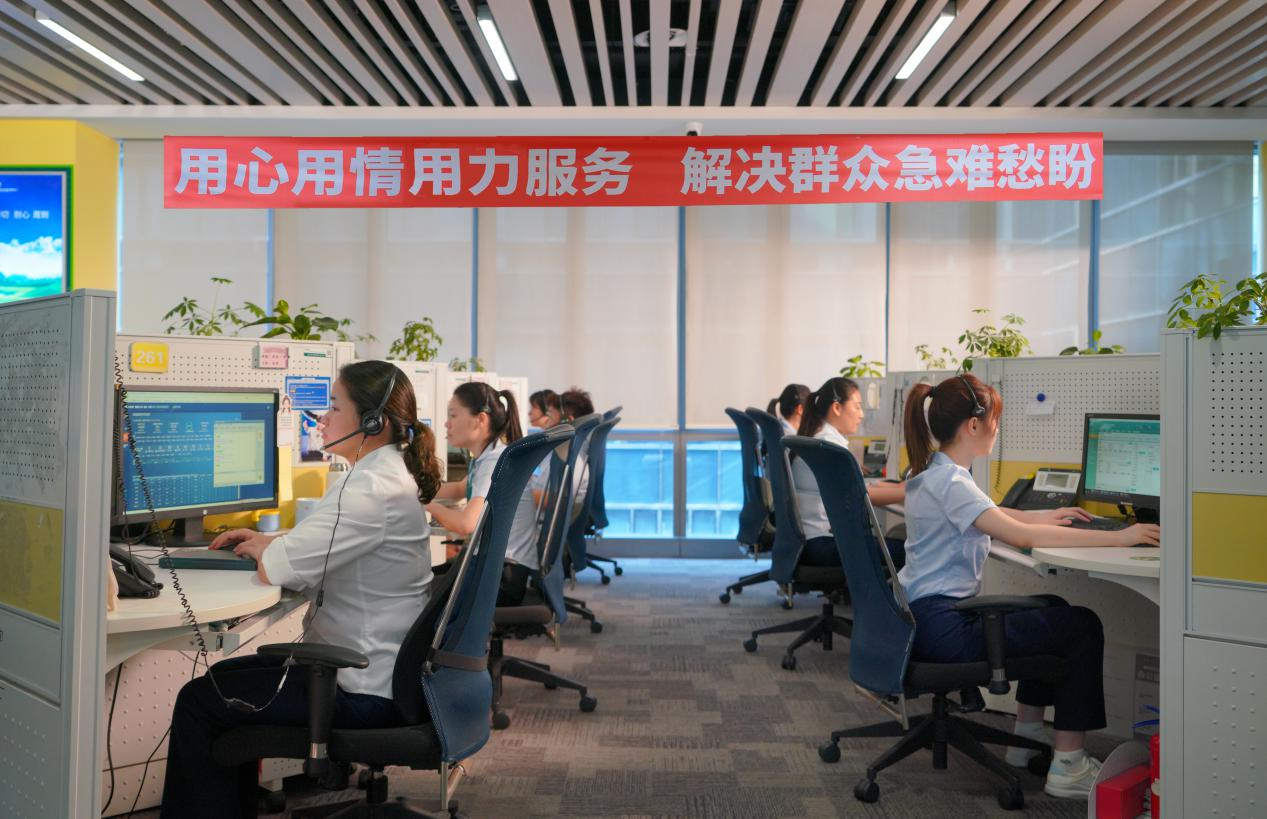
Core Viewpoint - The National Grid Customer Service Center is experiencing record-high service demands due to extreme weather conditions, including heavy rainfall and high temperatures, leading to increased electricity load across multiple regions [1][3]. Group 1: Service Demand and Performance - On August 4, the 95598 hotline received 281,700 calls, with 183,400 requests for human service and 257,200 online service accesses, indicating a significant increase in service volume [1]. - The customer service center has implemented a comprehensive service guarantee plan for the summer peak season, focusing on resource management and timely responses to customer needs, especially in disaster-affected areas [3]. Group 2: Operational Measures - The center has strengthened duty management and organized staff to engage directly with customer calls, ensuring a better understanding of customer needs and operational processes [5]. - Emergency response measures have been activated, with 708 personnel participating in emergency repairs and service adjustments in response to severe weather conditions in northern regions [5][6]. Group 3: Future Plans - The National Grid Customer Service Center will continue to monitor extreme weather developments and enhance coordination with provincial and municipal companies to ensure effective service delivery [6].
交通运输部审议《关于严格规范交通运输涉企行政检查的实施意见》等
news flash· 2025-05-23 13:04
Group 1 - The Ministry of Transport held a meeting to review the "Traffic Transport Safety Production and Service Guarantee Work Mechanism for Short Holidays" and "Implementation Opinions on Strictly Regulating Administrative Inspections Related to Enterprises in Transportation" [1] - The meeting was chaired by Liu Wei, the Secretary of the Party Group and Minister of the Ministry of Transport [1]
中华人民共和国民营经济促进法
蓝色柳林财税室· 2025-05-02 01:00
Core Viewpoint - The law aims to optimize the development environment for the private economy, ensuring fair market competition and promoting the healthy growth of private enterprises, thereby playing a significant role in national economic and social development [1][2]. Chapter Summaries Chapter 1: General Principles - The law establishes a framework for the development of the private economy, emphasizing the importance of private enterprises in achieving high-quality development and modernization [2][3]. - It asserts the equal legal status and market opportunities for private economic organizations compared to other economic entities [3][4]. Chapter 2: Fair Competition - A unified negative list system for market access is implemented, allowing private economic organizations to enter fields outside the list [8][11]. - Governments are required to conduct fair competition reviews for policies affecting business activities and to ensure that private enterprises are treated equally in public resource transactions [11][12]. Chapter 3: Investment and Financing Promotion - The law supports private economic organizations in participating in national strategic projects and encourages investment in emerging industries [14][15]. - It mandates that financial institutions provide equal treatment to private enterprises in credit and financing services [20][22]. Chapter 4: Technological Innovation - The law encourages private economic organizations to engage in technological innovation and participate in national technology projects [21][22]. - It promotes collaboration between private enterprises and educational institutions for research and development [22][26]. Chapter 5: Standardized Operations - Private economic organizations are required to comply with various laws and regulations related to labor, safety, and environmental standards [28][29]. - The law emphasizes the importance of internal governance and risk management within private enterprises [30][31]. Chapter 6: Service Guarantee - Government agencies are tasked with establishing effective communication mechanisms with private enterprises to address their concerns [34][35]. - The law encourages the provision of public services to support entrepreneurship and job creation [36][37]. Chapter 7: Rights Protection - The law protects the legal rights of private economic organizations and their operators, ensuring that their personal and property rights are not infringed upon [42][43]. - It establishes mechanisms for addressing grievances and disputes involving private enterprises [41][46]. Chapter 8: Legal Responsibilities - Violations of the law can result in corrective actions and penalties for responsible individuals [53][54]. - The law outlines the responsibilities of government entities and large enterprises in ensuring timely payments to private economic organizations [67][68]. Chapter 9: Supplementary Provisions - The law defines private economic organizations and specifies its applicability to foreign investment regulations [56][57]. - The law will take effect on May 20, 2025 [58].
民营经济促进法全文公布,5月20日起施行
Bei Jing Ri Bao Ke Hu Duan· 2025-04-30 10:17
Core Points - The law aims to optimize the development environment for the private economy, ensuring fair market competition and promoting healthy growth of private enterprises [1][2] - The private economy is recognized as a vital component of the socialist market economy and a key driver for high-quality development in China [2][3] Chapter Summaries Chapter 1: General Principles - The law emphasizes the importance of the private economy in national economic and social development, adhering to the leadership of the Communist Party and the principles of socialism [1][2] - It supports the coexistence of various ownership forms and the decisive role of the market in resource allocation [1] Chapter 2: Fair Competition - A unified negative list system for market access is established, allowing private enterprises equal entry into various sectors [6] - Governments are required to implement fair competition reviews for policies affecting business operations [11][12] Chapter 3: Investment and Financing Promotion - The law supports private enterprises in participating in national strategic projects and encourages investment in emerging industries [9][10] - It promotes the development of a multi-level capital market to facilitate direct financing for qualified private enterprises [13] Chapter 4: Technological Innovation - The law encourages private enterprises to engage in technological innovation and participate in national technology projects [14][15] - It supports collaboration between private enterprises and educational institutions for technology transfer and innovation [16] Chapter 5: Standardized Operations - Private enterprises are required to comply with laws and regulations in various operational aspects, including labor, safety, and environmental standards [17][18] - The law promotes the establishment of internal governance structures and encourages compliance with legal and ethical standards [18] Chapter 6: Service Guarantee - Government agencies are mandated to provide efficient services to private enterprises, ensuring timely responses to their needs [20][21] - The law emphasizes the importance of transparent communication between government and private enterprises [21] Chapter 7: Rights Protection - The law protects the legal rights of private enterprises and their operators, including personal and property rights [26][27] - It establishes mechanisms for addressing grievances and disputes involving private enterprises [25][26] Chapter 8: Legal Responsibilities - Violations of the law can result in corrective actions and penalties for responsible parties [71][72] - The law outlines the responsibilities of government entities in ensuring compliance and protecting the rights of private enterprises [73][74] Chapter 9: Supplementary Provisions - The law defines private economic organizations and their applicability to foreign investment regulations [34][35] - It will take effect on May 20, 2025 [36]