氢能商业化

Search documents
香港中华煤气(00003.HK)整体售气量持平 增长型业务稳健发展
Ge Long Hui· 2025-08-20 09:12
Core Viewpoint - Hong Kong and China Gas Company Limited reported a stable performance in its mid-term results, with a slight increase in operational profit and a focus on expanding its renewable energy and hydrogen business segments [1][3][4]. Group 1: Financial Performance - The group's revenue reached HKD 27.514 billion, with a 3% increase in post-tax operating profit to HKD 3.996 billion [1]. - Shareholders' profit decreased by 3% to HKD 2.964 billion after accounting for non-operating gains and losses [1]. - Core business profit, excluding foreign exchange losses, increased by 4% [1]. Group 2: Utility Business in Hong Kong - The average temperature in Hong Kong was lower than the previous year, leading to an increase in residential gas sales [3]. - The overall gas sales volume in Hong Kong remained stable, supported by the recovery of the tourism industry and the completion of gas application facilities in various sectors [3]. - The company is advancing its hydrogen commercialization efforts, including hydrogen supply for construction sites and charging projects, which are expected to drive future profit growth [3]. Group 3: Utility Business in Mainland China - Despite challenges such as tariff issues and a warm winter, the urban gas sales volume remained stable [3]. - The gas business profit was stable, with the comprehensive price difference for urban gas increasing by 4 cents RMB per cubic meter to RMB 0.54 per cubic meter [3]. Group 4: Renewable Energy Business - The core profit of Honghua Smart Energy Limited grew by 2% to HKD 719 million, with cumulative photovoltaic grid connection reaching 2.6 GW and commercial energy storage at 260 MWh as of June 30, 2025 [3]. - The company is promoting an integrated decarbonization business model of "photovoltaics + energy storage + electricity sales" to enhance profitability [3]. Group 5: Green Methanol and Sustainable Aviation Fuel - The green methanol business made significant progress with a joint venture established with Fuan Energy to produce 200,000 tons annually, expected to commence production in the second half of 2027 [4]. - The company is collaborating with the Hong Kong government and industry partners to develop a green shipping fuel hub and is expanding into the sustainable aviation fuel market, with a long-term supply agreement with British Airways [4]. Group 6: Business Integration and Innovation - The company successfully merged its Hong Kong and mainland operations and is leveraging its 45 million user base to introduce innovative products and services [4]. - The company secured USD 45 million in financing to support its strategic goals amid ongoing global economic challenges [4]. Group 7: Dividend - The company maintained an interim dividend of HKD 0.12 per share [5].


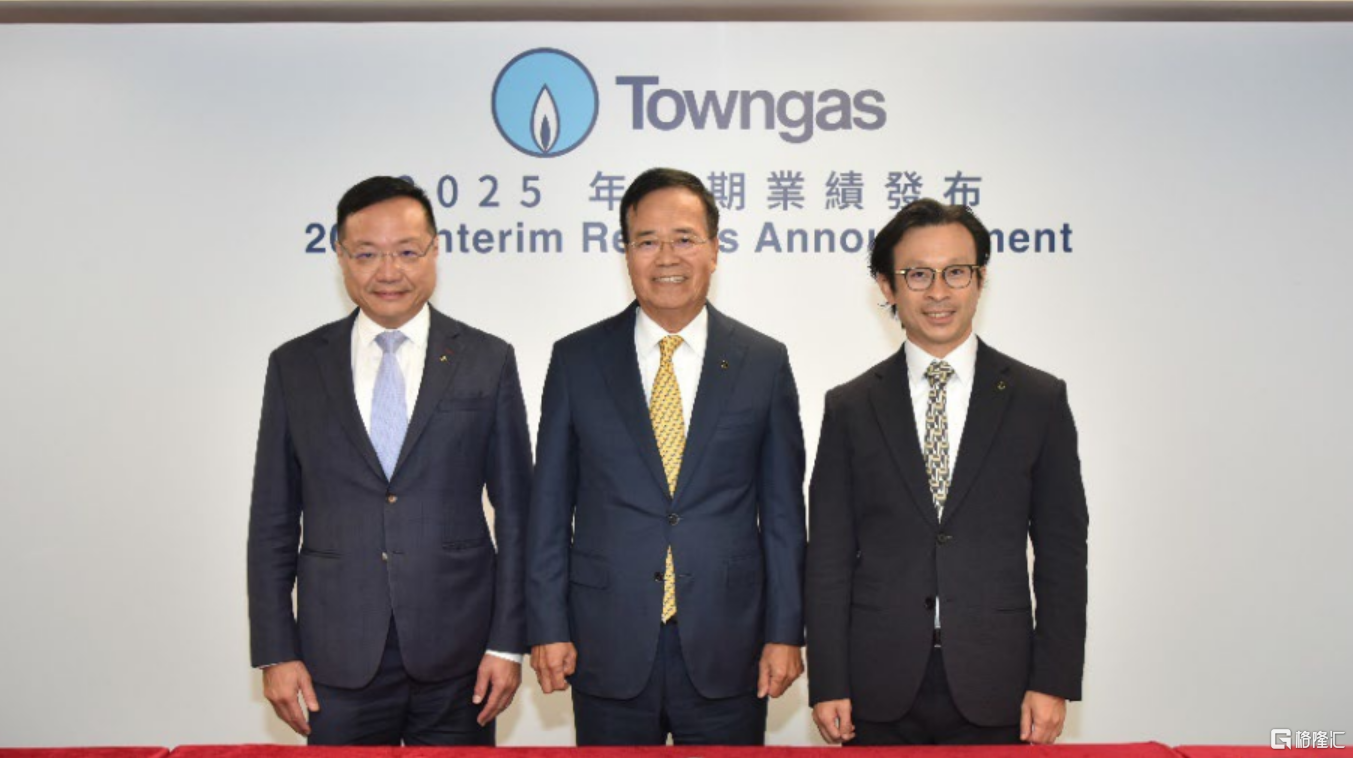
香港中华煤气(00003)公布中期业绩 股东应占溢利29.64亿港元 同比减少2.5%
智通财经网· 2025-08-20 08:46
Group 1: Financial Performance - Hong Kong and China Gas Company reported a revenue of HKD 27.514 billion for the first half of 2025, representing a year-on-year growth of 0.07% [1] - The company's after-tax operating profit increased by 2.86% to HKD 3.996 billion, while the profit attributable to shareholders decreased by 2.5% to HKD 2.964 billion [1] - Basic earnings per share were HKD 0.159, with an interim dividend of HKD 0.12 per share [1] Group 2: Utility Business in Hong Kong - The average temperature in Hong Kong during the first half of the year was lower than the same period last year, leading to an increase in residential gas sales [1] - The overall gas sales volume in Hong Kong remained stable, supported by the completion of gas application facilities in various commercial buildings, sports venues, hotels, and hospitals, as well as the recovery of the tourism industry [1] - The company is advancing its hydrogen commercialization process, including projects for hydrogen supply at construction sites and hydrogen charging, which are expected to drive future profit growth [1] Group 3: Utility Business in Mainland China - Despite challenges from tariff issues and a warm winter in the north, the gas sales volume in urban areas remained stable [1] - The company maintained stable profits in its gas business through price adjustment efforts, refined management, and close cooperation with upstream gas suppliers [1] - The comprehensive price difference for urban gas increased by RMB 0.04 per cubic meter to RMB 0.54 per cubic meter [1] Group 4: Renewable Energy Business - The core profit of Honghua Smart Energy, a subsidiary, grew by 2% to HKD 719 million, with cumulative photovoltaic grid connection reaching 2.6 GW and commercial energy storage reaching 260 MWh as of June 30, 2025 [2] - The company is promoting an integrated decarbonization business model of "photovoltaics + energy storage + electricity sales" to enhance business profitability [2] Group 5: Green Methanol Business - The green methanol business achieved a breakthrough with the establishment of a joint venture, VENEX, with Fuan Energy, planning to set up a factory in Foshan with an initial production capacity of 200,000 tons per year, expected to commence production in the second half of 2027 [2] - The company is collaborating with the Hong Kong SAR government and industry partners to advance the construction of a green shipping fuel hub in Hong Kong, focusing on green methanol production, storage, transportation, and trading [2]
重塑能源2025中期财报,释放了哪些信号?
2 1 Shi Ji Jing Ji Bao Dao· 2025-08-14 11:15
Core Insights - The hydrogen energy industry is transitioning from policy-driven to market-driven, with Reshaping Energy's revenue remaining stable and hydrogen fuel cell system revenue increasing by 141.8% year-on-year, indicating a shift towards market demand-driven products [1][3][4] - Reshaping Energy's overseas revenue surged by 360.3%, increasing its contribution to total revenue from 2% to 10.3%, reflecting the rapid enhancement of global competitiveness among Chinese hydrogen energy companies [4][7] - The company reported a significant reduction in losses and positive cash flow, with a gross loss of approximately 13.5 million yuan, a year-on-year decrease of 22.5%, and a net cash inflow of approximately 95.1 million yuan in operating activities [8][9] - Reshaping Energy is actively building an ecosystem and promoting collaborative development in the hydrogen energy industry, focusing on integrated projects that address high costs and long cycles [10][12] Industry Trends - The fuel cell industry is experiencing a painful transition from policy support to commercial viability, with some companies unable to withstand market pressures likely to be eliminated [4][5] - The global hydrogen energy market is becoming increasingly competitive, with Chinese companies needing to overcome technical standards, geopolitical challenges, and competitive pressures from international giants to succeed abroad [5][7] - The industry is moving towards a "lean survival" and "commercial self-sufficiency" phase, emphasizing the importance of cash flow management and operational efficiency [9][13] Company Strategies - Reshaping Energy's success is attributed to its focus on core business strategies, operational efficiency improvements, and the competitive advantage of its Sirius series systems [3][4] - The company has established a strong foundation over the past decade, leveraging self-researched core capabilities and extensive market validation to build brand recognition and technological leadership [3][7] - The company is expanding its ecosystem by developing a "power-hydrogen-power" business model and participating in various integrated green hydrogen projects [10][12]
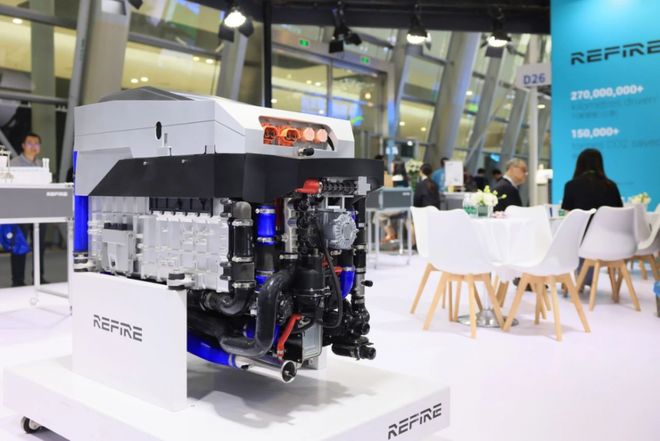
2025上半年持续减亏、现金流充沛,重塑能源构筑产业韧性标杆
势银能链· 2025-08-11 07:19
Core Viewpoint - The article highlights the strong performance of Reshape Energy (02570.HK) in the hydrogen energy sector, showcasing significant revenue growth and improved financial metrics despite challenges in the industry [3][4][7]. Financial Performance - Reshape Energy reported a total revenue increase of approximately 141.8% in hydrogen fuel cell system sales, with overseas revenue soaring by about 360.3% [3]. - The company's gross loss decreased by approximately 22.5% to around RMB 13.5 million, while the loss attributable to shareholders reduced by about 28.7% to RMB 332.7 million [3]. - The net cash inflow from operating activities was approximately RMB 95.1 million, and cash and cash equivalents increased by about 19.0% to RMB 1.0511 billion as of June 30, 2025 [3]. Strategic Developments - Reshape Energy has formed strategic partnerships to enhance its hydrogen ecosystem, including a collaboration with Mingyang Hydrogen Energy to streamline the entire hydrogen supply chain [4][5]. - The company launched 50 hydrogen buses equipped with its self-developed fuel cell system in a public transport project, which has bolstered confidence in hydrogen commercialization [4]. - A significant breakthrough was achieved with the approval of a cross-border hydrogen bus project in Hong Kong, utilizing Reshape's 180kW fuel cell system [5]. Project Initiatives - Reshape Energy's green hydrogen projects, including a 12,000-ton project in Yinchuan and a 16,500-ton project in Sun Mountain, have been recognized by the National Development and Reform Commission [5]. - The company is actively pursuing new applications in the hydrogen market, including a strategic cooperation agreement with Qinshi Group for hydrogen-powered vessels and a memorandum of understanding with Hy24 to expand green hydrogen production and distribution [6][7]. Market Positioning - Reshape Energy's proactive approach in navigating the hydrogen energy landscape, focusing on technological advancements and diverse application scenarios, positions the company favorably for future growth [7]. - The company's ability to maintain financial resilience and positive cash flow amidst industry challenges underscores its strategic foresight and operational efficiency [4][7].

成本每年下降20%,内蒙豪赌下个风口
2 1 Shi Ji Jing Ji Bao Dao· 2025-08-03 14:11
Group 1 - Hydrogen energy vehicles face significant challenges in commercialization, particularly in high-power, high-carbon truck sectors, where hydrogen's advantages include fast refueling, low-temperature loss, strong power, and low carbon emissions [1] - The high costs of hydrogen production and transportation, along with the expensive manufacturing of hydrogen vehicles, create a cycle where high operational costs deter consumer purchases, leading to limited market growth for hydrogen infrastructure [1] - Policy support is crucial in the early market stage to encourage consumer purchases through subsidies and to guide hydrogen companies in building necessary infrastructure and conducting research [1] Group 2 - Inner Mongolia is heavily investing in hydrogen energy, establishing a comprehensive hydrogen industry chain including green hydrogen plants, refueling stations, and hydrogen fuel cell companies [2] - The cost of using hydrogen in Inner Mongolia has been decreasing by approximately 20% annually, with expectations that hydrogen truck costs will soon be lower than those of pure electric trucks within two to three years [2] - Hydrogen energy trucks are seen as a complementary solution to pure electric trucks, with the potential for hydrogen to ultimately replace them as the preferred energy source [2]
豪赌下个风口,内蒙猛踩“氢门”
2 1 Shi Ji Jing Ji Bao Dao· 2025-08-03 04:12
Group 1 - Hydrogen energy vehicles face significant challenges in commercialization, particularly in high-power, high-carbon truck sectors, where hydrogen's advantages include fast refueling, low-temperature loss, strong power, and low carbon emissions [1] - The high costs of hydrogen production and transportation, along with the expensive manufacturing of hydrogen vehicles, create a cycle where high operational costs deter consumer purchases, leading to limited market growth for hydrogen infrastructure [1] - Policy support is crucial in the early market stage to encourage consumer purchases through subsidies and to guide hydrogen companies in infrastructure development and research [1] Group 2 - Inner Mongolia is heavily investing in hydrogen energy, establishing a comprehensive hydrogen industry chain including green hydrogen plants, refueling stations, and hydrogen fuel cell companies [2] - The cost of hydrogen in Inner Mongolia has been decreasing by approximately 20% annually, with expectations that hydrogen truck costs will soon be lower than those of pure electric trucks [2] - Hydrogen trucks are seen as a complementary technology to pure electric trucks, with the potential for hydrogen to ultimately replace them as the preferred energy source [2]
氢燃料电池示范城市群如何破局?
Shang Hai Zheng Quan Bao· 2025-07-02 18:27
Core Insights - The hydrogen fuel cell vehicle demonstration application is reaching its conclusion this year, with multiple demonstration city clusters accelerating their promotion goals, particularly in the Beijing-Tianjin-Hebei region, which has exceeded its targets [1][5][6] - The domestic production rate of key components for hydrogen fuel cell vehicles has surpassed 90%, and the cost of fuel cell systems has decreased by 80%, from 15,000 yuan/kW to 2,500 yuan/kW [2][3] - The expansion of hydrogen energy application scenarios and the establishment of demonstration city clusters are expected to accelerate the commercialization of hydrogen energy [1][3] Industry Developments - The Daxing International Hydrogen Energy Demonstration Zone has become a key hub for the hydrogen energy industry in the Beijing-Tianjin-Hebei region, with the largest hydrogen refueling station in Asia, capable of refueling 4.8 tons of hydrogen daily [4] - The introduction of new demonstration cities, such as Hami in Xinjiang and Lüliang in Shanxi, is anticipated to enhance the promotion of fuel cell vehicles and improve the achievement rate of demonstration city cluster goals [7] - The hydrogen fuel cell vehicles are being widely applied in various sectors, including logistics, public transportation, and municipal services, with significant orders for hydrogen-powered two-wheelers expected in the coming year [8][10] Policy and Financial Support - The Chinese government has implemented policies to support the demonstration application of fuel cell vehicles, with a total of 51 billion yuan in rewards distributed during the demonstration period, and an additional 18.7 billion yuan available for cities meeting their targets [5][6] - The Ministry of Industry and Information Technology has emphasized the need to accelerate the expansion of typical application scenarios for clean hydrogen [9] - Industry experts suggest that future policies should focus on infrastructure development and enhancing the convenience of end-user applications to further promote the hydrogen energy sector [9][10]
解题氢能商业化,还需下一个五年吗
2 1 Shi Ji Jing Ji Bao Dao· 2025-06-23 11:52
21世纪经济报道记者 林典驰 上海报道 "从现在开始到2030年,氢能的制、储、运、加供应链建设和发展,将会反过来带动氢能多领域的应 用。"中国科学院院士,清华大学教授欧阳明高表示。 他表示,2015年~2025年是车用燃料的动力系统作为氢能利用的先导,带动氢能发展,现在已经到这个 时期的末尾,是氢能的一个转折点,也是我们目前的阵痛期。 近日,2025国际氢能与燃料电池汽车大会暨展览会在上海召开。 氢能产业原目标是,到2025年底,初步建立以工业副产氢和可再生能源制氢就近利用为主的氢能供应体 系;燃料电池车辆保有量约5万辆,部署建设一批加氢站。 寻找商业模式闭环度过低谷期 过去5年,氢能一直探索商业化的可行路径,在示范初期,主要集中在商用车领域,特别是公交车和环 卫车等,这类场景通常由政府或者大型国企推动。 随着时间的推移,姚荣华认为,重卡在物流领域的应用将能创造更多的收益和价值,相比柴油机或纯电 动重卡,结合国家在高速费用减免和路权方面的支持,全寿命周期成本优势突出,尤其是对具备资源优 势的大型工业企业,这些车辆将首先实现盈利和商业闭环。 "氢能现在是一个转折点,首批城市示范群支持了该产业在技术和业务模式上 ...
氢能25年中期策略:船舶绿色燃料场景突破,看好绿氢运营及设备商
2025-06-09 15:30
Summary of Hydrogen Energy Industry Conference Call Industry Overview - The hydrogen energy industry is focusing on breakthroughs in downstream applications, particularly in green fuel for shipping, which is expected to accelerate the commercialization of green hydrogen and the development of its supply chain [2][4][9]. Key Points Hydrogen Production Capacity and Projects - As of 2025, electrolysis hydrogen production projects have achieved a capacity of 110,000 tons, meeting the baseline target of 100,000 tons set in the "Hydrogen Energy Industry Medium and Long-term Planning" and aiming for a capacity of 200,000 tons [1][3]. - There are 6 GW of electrolyzer bidding volumes, indicating significant demand potential for hydrogen production equipment, but the project implementation speed needs to be improved [1][6]. Fuel Cell Vehicle Market - As of April 2025, the number of fuel cell vehicles is 29,000, with a target of 50,000 by the end of the year, indicating a shortfall of 21,000 vehicles [5]. - Policies such as highway demonstrations and exemptions from hydrogen highway fees are expected to open up market opportunities for fuel cell vehicles [5][18]. Price Trends and Cost Reductions - The prices of hydrogen production equipment have decreased significantly, with alkaline electrolyzers dropping by 44% and PEM electrolyzers by 29% year-on-year [7]. - The average production cost of green hydrogen is expected to decline further, enhancing the profitability of green hydrogen projects [7]. Green Methanol and Shipping Fuel - Green methanol and shipping fuel are identified as critical areas for the rapid absorption of green hydrogen [1][8]. - Approximately 300 methanol-fueled ships have been ordered, corresponding to a demand of about 6.8 million tons of methanol, which will drive green hydrogen demand [1][8][12]. IMO Sulfur Cap Policy - The IMO's sulfur cap policy, effective from 2027, will impose carbon taxes on large ocean-going vessels, significantly boosting demand for green shipping orders [4][9]. - The policy is expected to lead to a surge in orders from October this year to the first half of next year, benefiting green methanol demand [4][9]. Investment Opportunities - Investment recommendations focus on breakthrough scenarios in the hydrogen industry, particularly in the purification and filter equipment sectors [20]. - Companies such as Goldwind Technology and Jidian Co. are highlighted for their upcoming projects that will contribute to green hydrogen production [20][21]. Fuel Cell System Market - The fuel cell system market is characterized by stable competition, with major players like Yihua Tong and Zhongshun Energy showing strong performance [19]. - The price of fuel cell systems has decreased to around 3 yuan per watt, which is expected to positively impact the industry's growth [19]. Policy Impact - Key policies include exemptions from highway fees and the establishment of hydrogen highways, aimed at addressing downstream demand issues, particularly for long-haul heavy-duty hydrogen vehicles [17][18]. Additional Insights - The current opening of the carbon trading market and the lack of mandatory policies may hinder domestic green fuel consumption, leading to a focus on overseas exports [8]. - The expected increase in the blending ratio of green methanol in ships from 2028 to 2030 could lead to a substantial rise in global green methanol demand, estimated at 40 million tons [12]. This summary encapsulates the critical developments and projections within the hydrogen energy sector, highlighting both opportunities and challenges ahead.
亏损加剧、商业化遇阻,氢燃料电池汽车深陷“政策依赖症”
Sou Hu Cai Jing· 2025-06-08 04:08
Core Viewpoint - The hydrogen fuel cell industry is facing significant challenges, including poor financial performance, reliance on financing, and a lack of stable policy support as existing policies near expiration [2][3][4]. Financial Performance - In 2024, the revenue of Yihuatong, known as the "first stock of hydrogen energy," dropped to 367 million yuan, a year-on-year decline of 54.21%, with net losses expanding to 456 million yuan [2][3]. - Four leading companies in the hydrogen energy sector reported a combined loss exceeding 1.81 billion yuan in 2024, with average losses increasing by over 60% [3][4]. Policy and Market Dynamics - The transition from purchase subsidies to demonstration application support for fuel cell vehicles has created uncertainty, leading to market and capital hesitance [2][4]. - The current policy framework is at risk of a gap as the first round of demonstration applications nears completion, which could hinder financing, especially for private enterprises [2][4]. Industry Challenges - The hydrogen fuel cell companies are grappling with multiple issues, including accounts receivable crises, heavy R&D investments, and declining stack prices [4][5]. - Delays in government subsidies have exacerbated cash flow issues, with companies facing significant financial strain due to late payments [4][5]. Cost and Commercialization Issues - The hydrogen industry has not achieved effective commercialization, primarily due to the disparity between hydrogen production costs and terminal demand, as well as a lack of diverse application scenarios [6][7]. - The cost of gray hydrogen is approximately 10 yuan per kilogram, while green hydrogen costs between 30 to 40 yuan per kilogram, making it economically unfeasible for widespread adoption [6][7]. Transportation and Usage Challenges - Transportation costs for hydrogen are high, with storage and transportation accounting for 30% to 50% of terminal costs, and the current infrastructure is limited [7][8]. - The hydrogen fuel cell vehicle market is overly reliant on the logistics sector, which has shown vulnerability, as evidenced by a 12.6% decline in hydrogen heavy truck sales in 2024 [8]. Industry Demands - Industry stakeholders are calling for continuous policy support, a unified national hydrogen highway network, specialized financing channels, cost reduction for green hydrogen, and diversification of application scenarios [9][10]. - There is a consensus on the need for a long-term mechanism to prevent policy gaps that could stifle capital investment and technological progress [9][10]. Future Outlook - Despite current challenges, there is optimism regarding the potential for hydrogen fuel cell vehicles to achieve cost parity with diesel vehicles within the next 3 to 5 years [11]. - The industry anticipates that the next five years will be critical for policy alignment, cost reduction, and expanding application scenarios to ensure sustainable growth [11].