可持续航空燃料

Search documents
Sora宣布关停;泡泡玛特去年营收首破300亿元丨Going Global
创业邦· 2026-03-29 11:15
Core Insights - The article highlights significant developments in the global expansion of Chinese companies, focusing on partnerships, market entries, and strategic initiatives aimed at enhancing international competitiveness. Group 1: Major Events - DHL and SHEIN signed a "GoGreen Plus" agreement to use sustainable aviation fuel in international express air transport, aiming to reduce carbon emissions in cross-border e-commerce logistics [5][6] - AliExpress and Austrian Post signed a Memorandum of Understanding (MOU) to enhance local fulfillment services in Central and Eastern Europe, focusing on local warehousing and logistics solutions [8][10] - Pinduoduo announced the launch of its "New Pinduoduo" strategy, aiming to invest 100 billion yuan over three years to build a self-operated brand model targeting global markets [12][13] - BYD officially entered the Canadian market, planning to open 20 stores within a year, benefiting from a recent trade agreement that significantly reduced tariffs on Chinese electric vehicles [15][16] - Pony.ai is set to launch Europe’s first commercial Robotaxi service in Zagreb, Croatia, in collaboration with Verne and Uber, marking a significant step towards commercializing autonomous driving [17][18] Group 2: Company Performance - Pop Mart reported a revenue of 37.12 billion yuan for 2025, a year-on-year increase of 184.7%, with a net profit of 13.01 billion yuan, reflecting a growth of 293.3% [20][21] - Geely officially launched its operations in Spain, planning to introduce at least nine models over the next three years, focusing on electric and hybrid vehicles [24][25][26] Group 3: Notable Developments in the Tech Sector - Elon Musk previously invited Mark Zuckerberg to consider bidding for OpenAI's intellectual property, indicating ongoing strategic maneuvers in the tech industry [28][29] - OpenAI announced the shutdown of its Sora video generation service due to high operational costs, as part of a strategy to streamline its product offerings ahead of a potential IPO [30][33]






小小分子筛 出海闯天下(出海企业的财富密码)
He Nan Ri Bao· 2026-02-08 22:35
Core Viewpoint - The article highlights the significant growth and international expansion of Jianlong Micro-Nano, a leading Chinese molecular sieve manufacturer, particularly through its new production base in Thailand, which is set to enhance its global market presence and operational capabilities [3][6]. Company Performance - Jianlong Micro-Nano reported a sales revenue increase of 82.7% and a net profit increase of 129.6% in the first three quarters of the previous year, indicating strong financial performance and confidence in overseas expansion [3]. Production and Technology - The company utilizes advanced technologies such as intelligent ratioing, high-temperature roasting, and micron-level detection to produce molecular sieves, which are essential in medical and industrial applications [3][4]. - The Thailand production facility is designed to meet international standards and aims to fill the gap in the local molecular sieve industry, making Thailand the 13th country capable of producing these products [4]. Strategic Location and Market Potential - Thailand was chosen for its rapid development in refining, natural gas, and clean energy sectors, as well as its favorable investment environment and mature market [5]. - The strategic location of the Thailand base allows Jianlong Micro-Nano to efficiently serve global customers through a robust logistics network [6]. Local Integration and Community Engagement - The company has established a localized team with over 90% foreign employees, fostering a blend of professional expertise and local insight [6]. - Jianlong Micro-Nano engages in community support activities during local festivals, demonstrating its commitment to social responsibility [6]. Global Expansion Strategy - The company is implementing a "produce one generation, reserve one generation, and research one generation" iterative mechanism to enhance its global competitiveness [7]. - Plans are underway to establish an office in India to cover the Indian and Middle Eastern markets, indicating a proactive approach to global market penetration [7]. Future Focus - Jianlong Micro-Nano aims to concentrate on emerging fields such as sustainable aviation fuel and new energy storage, while continuing to promote import substitution and build a globally recognized brand in the molecular sieve industry [7].


Gevo (NasdaqCM:GEVO) Conference Transcript
2026-02-05 18:32
Summary of Gevo's Conference Call Company Overview - **Company Name**: Gevo, Inc. - **Ticker Symbol**: GEVO, traded on Nasdaq - **Business Focus**: Gevo specializes in converting renewable biomass-based carbon resources into fuels and chemicals that are compatible with existing fossil fuel infrastructure, aiming to reduce carbon footprints and promote sustainability [2][3] Core Business Segments 1. **Gevo Fuels**: - Operates an ethanol plant that processes corn into ethanol and co-products, including carbon dioxide [3] - Developing alcohol-to-jet technology to convert ethanol into lower carbon jet fuel, increasing overall jet fuel supply [3][4] 2. **Gevo RNG**: - Involves capturing methane from dairy cow manure to produce renewable natural gas (RNG) for pipeline injection [4] 3. **Verity**: - A software subsidiary focused on creating a cloud-based system for tracking and auditing the carbon footprint of agricultural products throughout the supply chain [5][6] 4. **Gevo Chem**: - Research and development efforts aimed at improving technologies for converting ethanol to jet fuel, with a focus on continuous improvement [8][9] Financial Performance and Projections - **EBITDA**: Reported $6.7 million for the last quarter, with a target of reaching $40 million annually by optimizing existing operations [16] - **Growth Potential**: Aiming for $110 million in EBITDA by fully utilizing carbon capture and optimizing production without significant capital investment [18][40] - **Production Capacity**: The North Dakota facility can produce 67 million gallons of ethanol annually, with potential for significant margin improvements through increased production [32] Strategic Initiatives - **Technology Differentiation**: Gevo's integrated approach to producing sustainable aviation fuel (SAF) from corn allows for lower operational costs compared to other methods [22][23] - **Market Demand**: The U.S. aviation sector is experiencing increasing demand for jet fuel, with Gevo's technology positioned to meet this need efficiently [19][20] - **Expansion Plans**: Plans to build a large-scale alcohol-to-jet plant in North Dakota with an estimated cost of $500 million, targeting a final investment decision (FID) in the second half of 2026 [28][29] Partnerships and Collaborations - **Bushel Partnership**: Collaboration with Bushel to integrate on-farm data with Verity's sustainability model, enhancing the tracking of agricultural products through the supply chain [35][36] Key Challenges and Considerations - **Capital Requirements**: The construction of the large-scale plant will require significant capital investment, with ongoing discussions for a $1.5 billion loan from the U.S. Department of Energy being adjusted to fit the North Dakota site [29][42] - **Market Competition**: Gevo operates in a nascent industry that is still optimizing processes for ethanol-to-jet conversion, facing competition from established fossil fuel industries [26] Conclusion - Gevo is positioned to capitalize on the growing demand for sustainable fuels through innovative technology and strategic partnerships, with a clear roadmap for growth and expansion in the renewable energy sector [40][44]

鹏鹞环保(300664.SZ):目前公司正加紧推进盘锦项目相关技改升级收尾工作
Ge Long Hui· 2026-01-27 13:32
Core Viewpoint - The company is focusing on the development of Sustainable Aviation Fuel (SAF) to replace traditional fossil aviation fuel and reduce carbon emissions, primarily in the commercial aviation sector [1] Group 1: Company Developments - The company is accelerating the completion of technical upgrades for the Panjin project [1] - Future capacity deployment will be cautiously planned based on supply-demand analysis and pricing assessments [1] - The company will initiate operations once both hardware and software conditions are met [1]
道达尔预测:欧盟将放宽SAF强制规定
Zhong Guo Hua Gong Bao· 2026-01-27 01:35
Core Viewpoint - TotalEnergies' CEO anticipates that the EU will relax its requirements for Sustainable Aviation Fuel (SAF), similar to its previous decision to withdraw the proposal to ban the sale of new internal combustion engine vehicles starting in 2035 [1] Group 1: Regulatory Changes - The EU mandated that the proportion of SAF in aviation fuel used at airports must reach 2% last year, increasing to 6% by 2030 and 20% by 2035 [1] - The CEO noted that all airlines oppose the 6% SAF limit, suggesting that EU regulations for SAF will evolve similarly to those for automobiles [1] Group 2: Production and Investment - TotalEnergies is producing SAF at multiple refineries and has plans to expand capacity [1] - However, the company has decided to postpone investments in increasing production capacity due to cautious customer attitudes towards purchasing quantities exceeding the EU regulatory requirements [1]

贵金属延续强势,化工板块集体大涨
Dong Zheng Qi Huo· 2026-01-26 01:31
1. Report Industry Investment Ratings Not provided in the given content. 2. Core Views of the Report - The dollar index is expected to weaken in the short - term due to increased domestic conflicts over illegal immigration in the US [11][12]. - US stocks are expected to maintain high - level volatility during the earnings season, with increased volatility [16][17]. - Precious metals are likely to see increased short - term volatility, and investors should be aware of the risk of a pullback after a continuous sharp rise [20]. - The bond market is experiencing a short - term rebound, and it is more cost - effective to short after the upward momentum fades [21][22]. - The stock index long - position strategy should be continued [23][24]. - Coking coal is expected to be weak and volatile in the short - term as supply is at a high level and downstream restocking has ended [25][26]. - Steel prices are expected to be volatile before the Spring Festival, and it is recommended to hedge inventory at high prices if there is a price rebound [31]. - Palm oil is likely to be easy to rise and difficult to fall in the short - term, and the price of soybean oil is expected to be supported before the US biofuel policy is released [35]. - The outlook for soybean meal exports is not optimistic, and the 5 - month contract is likely to be weak if there are no major abnormalities in South American production [37][38]. - The domestic sugar market is expected to be weakly volatile in the short - term due to seasonal supply pressure and limited demand [42]. - Zhengzhou cotton is expected to be adjusted in a volatile manner before the Spring Festival, with long - term bullish views unchanged [47]. - Copper prices are likely to be volatile in the short - term, and it is recommended to wait and see in the short - term and look for opportunities to go long at low prices in the medium - term [51]. - Lead prices are expected to be in low - level volatility, and it is recommended to wait and see both unilaterally and in arbitrage [53][54]. - Zinc prices are expected to remain in high - level volatility, and it is recommended to wait and see unilaterally, pay attention to long - position opportunities in the far - month contracts for arbitrage, and wait and see in the domestic - foreign arbitrage [57]. - Lithium carbonate prices are likely to be easy to rise and difficult to fall, and a bullish strategy is recommended with attention to position control and risk management [60][61]. - Tin prices are expected to be in wide - range volatility in the short - term, and attention should be paid to the implementation of supply recovery expectations and consumption recovery [65]. - Nickel prices are expected to be easy to rise and difficult to fall, and it is recommended to look for opportunities to go long at low prices [66][67]. - EU carbon prices are expected to be strong in the short - term [68][69]. - Oil prices are expected to be supported by short - term geopolitical conflicts and supply disruptions [71][72]. - The bottle - chip market is expected to see a mild recovery in processing fees around the Spring Festival [76]. - The container shipping index is expected to be weakly volatile in the short - term [78]. 3. Summary by Directory 3.1 Financial News and Comments 3.1.1 Macro Strategy (Foreign Exchange Futures - US Dollar Index) - Europe is estimated to need $1 trillion to restructure its defense industry. The shooting of a US citizen by ICE has intensified domestic conflicts over illegal immigration, causing the dollar index to weaken. The Trump administration is expected to maintain a tough stance on illegal immigration, and market volatility will remain high. The dollar index is expected to weaken in the short - term [9][11][12]. 3.1.2 Macro Strategy (US Stock Index Futures) - The final value of the University of Michigan Consumer Sentiment Index in the US in January was 56.4, reaching a five - month high. The preliminary value of the US S&P Global Manufacturing PMI in January was 51.9. The US economy shows resilience, and the Fed is unlikely to cut interest rates in the short - term. The market is worried about the Fed's independence, and US stocks are expected to maintain high - level volatility during the earnings season [13][14][16]. 3.1.3 Macro Strategy (Gold) - The US is expected to obtain "sovereignty" over the area where the US military base on Greenland is located. The preliminary value of the US S&P Global Manufacturing PMI in January was 51.9. The New York Federal Reserve Bank conducted a "rate check" on the US dollar/yen exchange rate. Precious metals continued to rise strongly on Friday, reaching a new high. The market is trading on the safe - haven and de - dollarization needs caused by the tense situation between the US and Europe. The sharp rise of the yen and the fall of the dollar after the US and Japan jointly signaled to intervene in the foreign exchange market boosted the precious metals. However, the short - term market is dominated by sentiment and funds, and the risk is increasing. Precious metals are likely to see increased short - term volatility, and investors should be aware of the risk of a pullback [18][19][20]. 3.1.4 Macro Strategy (Treasury Bond Futures) - The central bank conducted a 7 - day reverse repurchase operation of 125 billion yuan, with a net investment of 38.3 billion yuan. The bond market continued to strengthen, mainly due to the alleviation of previous concerns. However, there are still long - term negative factors, and it is more cost - effective to short after the upward momentum fades [21][22]. 3.1.5 Macro Strategy (Stock Index Futures) - The CSRC issued a guidance on the performance comparison benchmark for public funds. Due to strong bullish expectations, funds flowed into small - cap stocks, causing market differentiation. The regulatory authorities are expected to take stricter and more precise measures to limit excessive speculation, and the market is likely to remain in high - level volatility. It is recommended to continue to hold the long - position strategy for the stock index [23][24]. 3.2 Commodity News and Comments 3.2.1 Black Metals (Coking Coal/Coke) - The coking coal price in the Changzhi market remained stable. The supply in some areas increased slightly, while the downstream restocking ended, and the market sentiment declined. Coking coal is expected to be weak and volatile in the short - term [25][26]. 3.2.2 Black Metals (Rebar/Hot - Rolled Coil) - The global crude steel output in 2025 was 1.849 billion tons. In mid - January 2026, the daily output of key steel enterprises decreased slightly, and the inventory increased. Before the Spring Festival, steel prices are expected to be volatile and may rebound slightly. It is recommended to hedge inventory at high prices if there is a price rebound [27][29][31]. 3.2.3 Agricultural Products (Soybean Oil/Rapeseed Oil/Palm Oil) - The EU plans to gradually phase out soybean biofuels. The establishment of the Southeast Asian Sustainable Aviation Fuel Council. The actual soybean crushing volume of domestic oil mills increased, and the estimated volume for the next week is higher. The palm oil market is supported by inventory reduction and Ramadan expectations, and the price of soybean oil is expected to be supported before the US biofuel policy is released [32][34][35]. 3.2.4 Agricultural Products (Soybean Meal) - The US weekly soybean export sales reached the highest level of the year. The domestic oil mill soybean crushing volume increased, and it is expected to remain high. The outlook for soybean meal exports is not optimistic, and the 5 - month contract is likely to be weak if there are no major abnormalities in South American production [36][37][38]. 3.2.5 Agricultural Products (Sugar) - The amount of sugar waiting to be shipped at Brazilian ports increased. The sugar production in the central and southern regions of Brazil decreased in the second half of December. The domestic sugar market is under seasonal supply pressure, and the demand is limited. It is expected to be weakly volatile in the short - term [39][41][42]. 3.2.6 Agricultural Products (Cotton) - The import of Indian cotton yarn decreased, while the import of polyester - cotton blended yarn increased. The EU's clothing import rebounded in November 2025, and the import from China increased. The US cotton export signing reached a new high, but the export progress is still behind. Zhengzhou cotton is expected to be adjusted in a volatile manner before the Spring Festival, with long - term bullish views unchanged [43][44][47]. 3.2.7 Non - ferrous Metals (Copper) - Chilean contractor protests blocked access to mines. Tibet Julong Copper's second - phase project was put into operation. The Chilean Mining Association warned that it will take several years for copper supply to increase. The short - term macro factors support copper prices, but the fundamental factors may suppress price increases. Copper prices are likely to be volatile, and it is recommended to wait and see in the short - term and look for opportunities to go long at low prices in the medium - term [48][50][51]. 3.2.8 Non - ferrous Metals (Lead) - The LME lead spread was at a discount. The production of primary lead was stable, the profit of secondary lead refineries narrowed, and the consumption of lead batteries was weak. The social inventory increased, and lead prices are expected to be in low - level volatility. It is recommended to wait and see both unilaterally and in arbitrage [52][53][54]. 3.2.9 Non - ferrous Metals (Zinc) - A gold mine in Mexico was temporarily shut down. The LME zinc spread was at a discount, and MMG's zinc ore output in the fourth quarter of 2025 increased. The zinc concentrate port inventory increased, the smelting profit improved slightly, and the demand was affected by multiple factors. Zinc prices are expected to remain in high - level volatility. It is recommended to wait and see unilaterally, pay attention to long - position opportunities in the far - month contracts for arbitrage, and wait and see in the domestic - foreign arbitrage [55][56][57]. 3.2.10 Non - ferrous Metals (Lithium Carbonate) - The retail and wholesale volume of new - energy passenger vehicles in the first 18 days of January 2026 decreased year - on - year. Lithium carbonate prices rose sharply last week. The demand is strong, and the inventory is low. It is recommended to take a bullish strategy with attention to position control and risk management [58][60][61]. 3.2.11 Non - ferrous Metals (Tin) - The first domestic satellite computing power module was launched. The LME tin spread was at a discount, and the inventory increased. The import of tin concentrate in December increased year - on - year. The supply is expected to increase in 2026, but there are uncertainties. The demand is weak, and tin prices are expected to be in wide - range volatility in the short - term [62][63][65]. 3.2.12 Non - ferrous Metals (Nickel) - The port logistics of the Indonesian Qing Shan Industrial Park was suspected of monopoly. The nickel ore production quota in Indonesia is expected to be adjusted, and the global primary nickel gap is expected to be more than 100,000 metric tons. The raw material price rose, and the demand for nickel salt increased. Nickel prices are expected to be easy to rise and difficult to fall, and it is recommended to look for opportunities to go long at low prices [66][67]. 3.2.13 Energy Chemicals (Carbon Emissions) - The closing price of the EUA main contract decreased. The EU carbon price remained high and volatile last week. The CoT data helped boost the market. The carbon price is expected to be strong in the short - term [68][69]. 3.2.14 Energy Chemicals (Crude Oil) - The production of a Kazakhstani oil field was delayed due to a power failure and export problems. The number of US oil rigs increased. The oil price rose on Friday, supported by the risk of supply disruptions and the increase in diesel cracking spreads [70][71][72]. 3.2.15 Energy Chemicals (Bottle Chips) - The export quotation of bottle - chip factories continued to rise. The polyester raw material price rose strongly, and the bottle - chip factory quotation increased. The market trading atmosphere was fair, and the downstream was cautious. The industry operating rate decreased, and the inventory pressure was transferred smoothly. The processing fee is expected to recover mildly around the Spring Festival [73][75][76]. 3.2.16 Shipping Index (Container Freight Rates) - Wildfires and rough seas restricted the operation of some ports in Chile. The short - term market is weak, and the European - line futures are expected to be weakly volatile. Attention should be paid to whether the index will be higher due to container dumping and late ship departures [77][78].
东兴晨报-20260109
Dongxing Securities· 2026-01-09 12:29
Economic News - The Ministry of Commerce responded to the export control of dual-use items to Japan, stating that China aims to prevent Japan's militarization and nuclear ambitions through legal measures [1] - The Ministry of Foreign Affairs condemned the U.S. for seizing a Russian-flagged oil tanker, emphasizing that such actions violate international law [1] - The Ministry of Commerce commented on Meta's acquisition of Manus, indicating that the government supports lawful international business operations [1] - The Ministry of Commerce discussed South Korean President Lee Jae-myung's visit to China, highlighting agreements to deepen economic cooperation [1] - The State Administration for Market Regulation held discussions with the photovoltaic industry association and leading companies to prevent market manipulation [1] - The Ministry of Industry and Information Technology warned against irrational competition in the lithium battery industry [1] - The Ministry of Finance plans to issue a 1-year fixed-rate bond totaling 135 billion yuan and a 30-year bond totaling 32 billion yuan [1] Company Insights - Sinopec announced a restructuring with China Aviation Oil Group to enhance supply chain efficiency and promote sustainable aviation fuel development [4] - Beifang Changlong plans to acquire 51% of Shunyi Technology, which is expected to constitute a major asset restructuring [4] - Quanxin Co. intends to issue convertible bonds to raise up to 312 million yuan for aviation communication projects and working capital [4] - Yingqu Technology forecasts a net profit of 540 million to 660 million yuan for 2025, driven by stable growth in various business segments [4] - Wens Foodstuff Group expects a net profit of 5 billion to 5.5 billion yuan for 2025, a decline attributed to lower sales prices of pigs and chickens [4] Industry Analysis - The securities industry is expected to see improved performance in 2026 due to supportive policies and accelerated consolidation [6][7] - The average daily trading volume has increased since early 2025, indicating improved market activity [7] - Regulatory support for technology growth companies has led to increased IPO and financing activity, benefiting brokerage revenues [8] - The self-operated investment segment is becoming crucial for brokerage firms' profitability, with a focus on maintaining stability amid market volatility [9] - The securities industry is likely to experience further consolidation, with notable mergers already occurring among leading firms [11]



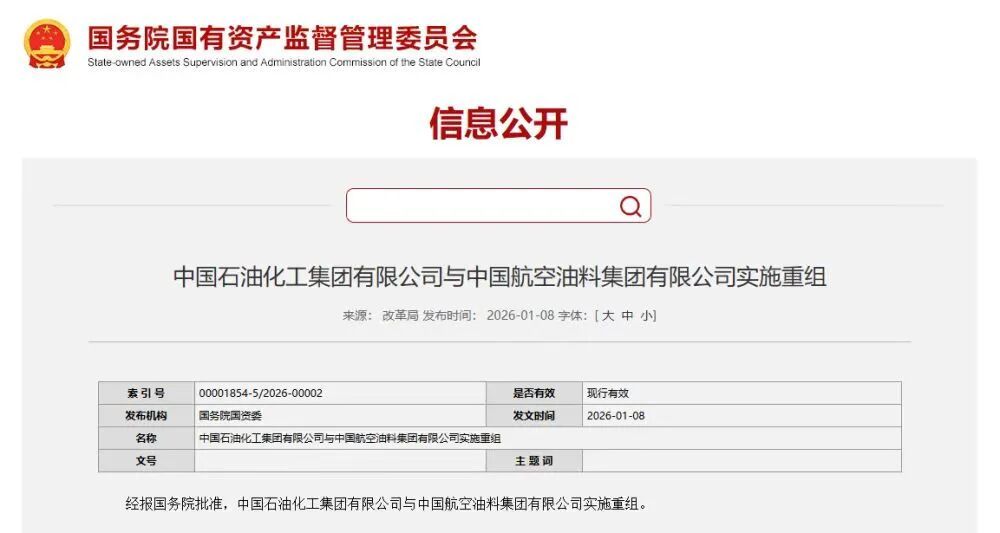
中国石化与中国航油实施重组带来哪些利好?航空业向“新”向“绿”向优发展
Yang Shi Wang· 2026-01-09 01:55
Core Viewpoint - The restructuring of China Petroleum & Chemical Corporation (Sinopec) and China Aviation Oil Group aims to enhance the integration of the aviation fuel industry chain, reduce supply costs, and accelerate the green and low-carbon transformation of aviation energy supply, thereby improving international competitiveness [1][4][8]. Group 1: Industry Growth and Demand - During the 14th Five-Year Plan period, China's aviation fuel demand is expected to grow at an annual rate of approximately 4%, reaching around 50 million tons by 2030 and about 75 million tons by 2040 [3]. Group 2: Innovation and Integration - The merger is expected to facilitate the construction of an innovative system for aviation fuel technology, accelerating the integration of the innovation and industry chains [4][6]. - The restructuring will leverage Sinopec's research and development capabilities in oil products and China Aviation Oil's market supply advantages, promoting the integration of the aviation fuel industry's innovation and supply chains [6]. Group 3: Sustainable Development - The merger will support the high-quality development of sustainable aviation fuel industries and assist the aviation sector in its green and low-carbon transition [8][10]. - Sustainable aviation fuel technology is recognized as a primary route for reducing carbon emissions in the aviation sector, which is one of the most challenging areas for emissions reduction in transportation [8]. - Sinopec is the first company in Asia to have independent research and production capabilities for bio-jet fuel, which will accelerate the research, use, and continuous iteration of sustainable aviation fuel technologies post-restructuring [10][12].

两大能源央企重组 专家看好协同效应
Shang Hai Zheng Quan Bao· 2026-01-08 15:22
Core Viewpoint - The merger between China Petroleum & Chemical Corporation (Sinopec) and China Aviation Oil Group aims to create a comprehensive aviation fuel supply system, enhancing energy security, international competitiveness, and green transformation capabilities while optimizing state-owned capital allocation [1][4]. Group 1: Company Overview - Sinopec is the world's largest refining company and China's largest aviation fuel producer, while China Aviation Oil Group is Asia's largest aviation fuel service provider [1][3]. - Sinopec is a major integrated energy and chemical group, being the largest supplier of refined oil and petrochemical products in China, with the second-largest number of gas stations globally [3]. - China Aviation Oil Group provides fuel supply services to 258 transport airports and 454 general airports in China, serving 585 global airline customers [3]. Group 2: Strategic Significance of the Merger - The merger is seen as a significant step in advancing strategic restructuring and professional integration among central enterprises, enhancing national aviation energy supply security and promoting green low-carbon transformation [4][5]. - The integration is expected to create synergies that will enhance the overall competitiveness of both companies [4]. Group 3: Sustainable Aviation Fuel (SAF) Development - SAF is recognized as a mainstream route for decarbonizing the aviation industry, with the International Air Transport Association (IATA) estimating that SAF will contribute 65% of carbon reductions needed for the aviation sector to achieve carbon neutrality by 2050 [7]. - Sinopec has developed its own bio-jet fuel technology and has established a production facility with an annual capacity of 100,000 tons, which can utilize waste cooking oil, significantly reducing carbon emissions [8][9]. - The merger is expected to enhance the research and development, industrialization capabilities, and international trade advantages in the SAF sector, promoting high-quality development of the industry chain [9].
大消息,两大央企重组
Zhong Guo Zheng Quan Bao· 2026-01-08 11:34
Group 1 - The core viewpoint of the news is the restructuring between China Petroleum & Chemical Corporation (Sinopec) and China Aviation Oil Group, which has been approved by the State Council [1][4] - The restructuring is expected to enhance strategic complementarity and synergy, improving the overall market competitiveness of both companies [5] - China Aviation Oil Group is the largest aviation fuel procurement and service company in Asia, providing fuel supply to 258 transport airports and 454 general airports in China [4][5] Group 2 - The restructuring will allow Sinopec to leverage China Aviation Oil Group's distribution network to expand its market share in aviation fuel and achieve integration of production and sales [5] - China Aviation Oil Group will benefit from more stable upstream resource supply, enhancing its bargaining power in the international aviation fuel market [5] - The restructuring is seen as a step towards supporting the green transition of the aviation industry, which is crucial for achieving China's carbon neutrality goals [6][7] Group 3 - Sinopec has been actively developing renewable energy technologies, with sustainable aviation fuel (SAF) being a key focus area [7] - The collaboration between Sinopec and China Aviation Oil Group is expected to create more opportunities beyond traditional aviation fuel business, potentially reshaping the competitive landscape of the traditional energy market [7]