
注册制

Search documents
路桥信息财务造假!金圆统一证券督导失职遭警示
Guo Ji Jin Rong Bao· 2026-01-21 16:14
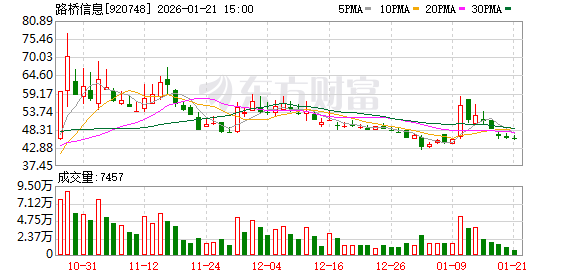
Core Viewpoint - The Xiamen Securities Regulatory Bureau has imposed penalties on Xiamen Road and Bridge Information Co., Ltd. for financial fraud over two consecutive years, highlighting the importance of intermediary institutions as gatekeepers in the registration system [2][4][10]. Group 1: Financial Fraud Details - Xiamen Road and Bridge Information inflated its revenue by 15.836 million yuan in 2023 and 25.764 million yuan in 2024, accounting for 6.66% and 10.71% of the reported revenue, respectively [4]. - The company also inflated its profits by 15.307 million yuan in 2023 and 22.459 million yuan in 2024, representing 73.57% and 103.5% of the reported profit, respectively [4][10]. - The fraudulent activities included signing false contracts, fabricating sales, and prematurely recognizing revenue [4]. Group 2: Regulatory Actions - The Xiamen Securities Regulatory Bureau issued a total fine of 21.5 million yuan against Xiamen Road and Bridge Information and eight responsible individuals, with two key executives facing a three-year ban from the securities market [10]. - The continuous supervisory institution, Jinyuan Tongyi Securities, received a warning for failing to diligently oversee the company's compliance with operational and disclosure obligations [13][15]. - The regulatory actions reflect a broader trend of increasing accountability for intermediary institutions in maintaining the integrity of the registration system [15]. Group 3: Company and Industry Impact - Following the penalties, Xiamen Road and Bridge Information announced that it would enhance its corporate governance and internal controls to improve financial reporting and compliance [10]. - The company reported that its business operations remain normal and that the penalties will not significantly impact its production and operations [10]. - Jinyuan Tongyi Securities has faced ongoing financial pressure since its establishment, with revenues fluctuating and net losses recorded in previous years, indicating challenges in its operational performance [18][20].

IPO月度数据一览-20260113
GUOTAI HAITONG SECURITIES· 2026-01-13 05:17
Fundraising Performance - In December 2025, 18 new stocks were listed on the A-share market, raising a total of 31.41 billion yuan, marking the highest monthly fundraising since September 2023[4] - For the entire year of 2025, a total of 116 new stocks were listed, raising 131.77 billion yuan, which represents increases of 16% and 96% compared to the same period in 2024, respectively[5] - The monthly fundraising amount in December 2025 exceeded 30 billion yuan, driven by several large projects including Moer Thread and Muxi Co., which raised over 4 billion yuan each[3] Initial Performance of New Stocks - In December 2025, 14 out of 15 new stocks listed on the Shanghai and Shenzhen markets adopted offline issuance, with an average first-day increase of 249%, continuing the upward trend from November[11] - The average first-day increase for new stocks on the Sci-Tech Innovation Board exceeded 300%, with Moer Thread and Muxi Co. seeing increases of over 600% and 400%, respectively[14] - The main board saw an average first-day increase of 200% for its four new stocks, with China Uranium Industry leading at 269%[14] Subscription Returns - In December 2025, the estimated returns for A/B class accounts from new stock subscriptions were 5.48 million yuan and 2.87 million yuan, respectively, marking the highest monthly returns of the year[21] - The returns from the Sci-Tech Innovation Board's new stocks contributed significantly, with the average return for A/B class accounts being 4.71 million yuan and 2.13 million yuan, respectively[21] Investment Strategy and Risks - The current optimal strategy is to participate in low-priced, small-cap new stocks with expected first-day increases exceeding expectations, as well as large-cap stocks with significant offline allocation[22] - Risks include an increased rate of new stock price declines and a potential decrease in subscription success rates, which could impact overall returns[3]
2025年A股IPO市场量稳质升,中金公司凭头部项目储备占得2026年发展先机
Cai Jing Wang· 2026-01-09 07:14
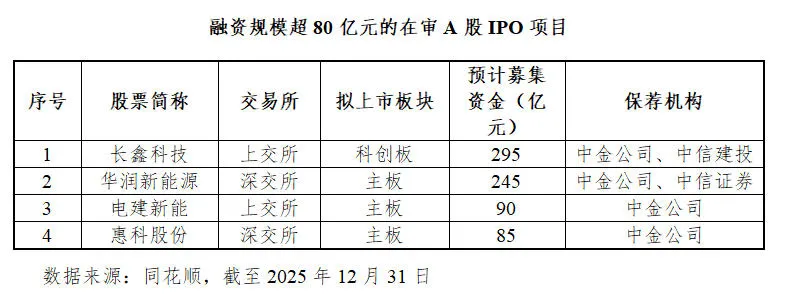
Core Insights - The A-share IPO market is showing signs of recovery in 2025, supported by new policies and improved market confidence, leading to a notable increase in both the number of listings and the total amount of financing [1][2]. Group 1: Market Performance - The number of new A-share listings reached 116 by December 31, 2025, with total financing amounting to 131.8 billion yuan, reflecting a 16% increase in listings and a 96% increase in financing compared to the same period in 2024 [1]. - The average fundraising amount per IPO increased to 113.6 million yuan, indicating heightened market activity and investor confidence [1]. Group 2: IPO Quality - In 2025, no new IPOs experienced a price drop below their issue price, demonstrating the effectiveness of the stringent review process and the high quality of new listings [1]. - The significant reduction in the number of IPOs that were terminated during the review process highlights the improved entry standards [1]. Group 3: Financing Structure - The top ten A-share IPO projects collectively raised 56.3 billion yuan, accounting for 43% of the total market financing, which is a 15 percentage point increase from 2024 [2]. - The successful IPO of Huadian New Energy, which raised 18.171 billion yuan, marked the first IPO exceeding 10 billion yuan under the new registration system, showcasing the leading role of top-tier brokers like CICC [2]. Group 4: Project Pipeline and Competitive Edge - CICC is leading the market with four major IPO projects under review, each exceeding 8 billion yuan, indicating its strong position in the current market landscape [3]. - The firm has established a robust project reserve system with 84 projects in various strategic emerging sectors, providing a solid foundation for future growth [6].

资本市场投融资改革“动刀” | 前瞻2026
Guo Ji Jin Rong Bao· 2025-12-31 10:26
Core Insights - The continuous deepening of capital market investment and financing reform has been a key task in the Central Economic Work Conference for two consecutive years, indicating a significant commitment to advancing the capital market in the new five-year plan [1][3][4] - The A-share market has seen a total market value exceeding 100 trillion yuan, with the technology sector accounting for over 25% of this value, reflecting a historic shift from a "one-way financing channel" to a "coordinated investment and financing ecosystem" [1][3] - The reforms aim to enhance the capital market's role in supporting technological innovation and high-quality economic development, transitioning from a focus on financing to a balanced approach of investment and financing [6][7] Investment and Financing Reform - The reform emphasizes addressing the structural imbalance in investment and financing, with a current dominance of indirect financing through banks, which does not meet the diverse funding needs for technological innovation and industrial upgrades [6][7] - The core of the reform is to break through the entire chain of "financing-investment-exit," shifting from a financing-led approach to a balanced investment and financing model, enhancing the adaptability of the capital market to technological innovation [6][7] Key Areas of Focus - Future reforms should concentrate on three dimensions: the financing end, investment end, and trading end. This includes improving the registration system, enhancing the quality of listed companies, and optimizing trading mechanisms [9][10] - The investment end should focus on building a "long money long investment" ecosystem, increasing the proportion of long-term funds entering the market, and enhancing investor protection to improve market transparency and confidence [9][10] - The financing end should provide comprehensive lifecycle services, streamline financing channels for hard technology and strategic emerging industries, and develop regional equity markets to facilitate mergers and acquisitions [10]
上市公司退市不免责!保荐单位一创投行被罚没1698万,两名责任人均被罚150万
Guan Cha Zhe Wang· 2025-12-29 06:52
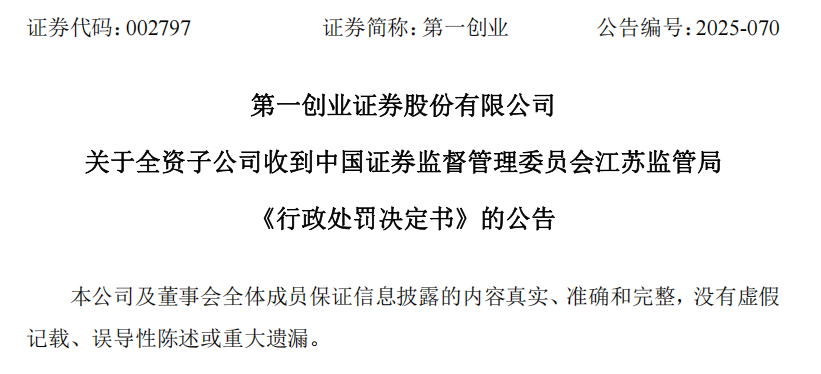
Core Viewpoint - The administrative penalty imposed on First Capital Securities' subsidiary, Yichuang Investment Bank, highlights significant compliance failures in the supervision of a convertible bond project, raising concerns about the responsibilities of underwriting institutions in the capital market [1][10]. Group 1: Incident Overview - On December 26, the Shenzhen Stock Exchange announced that Yichuang Investment Bank received an administrative penalty from the Jiangsu Securities Regulatory Bureau due to supervisory failures in a convertible bond project that began in 2019 [1][6]. - The project involved Hongda Xingye Co., which issued 24.27 billion yuan in convertible bonds, but faced financial difficulties leading to a default on interest payments in December 2020 and subsequent delisting in March 2024 [4][5]. Group 2: Regulatory Findings - Investigations revealed that from the fundraising date in December 2019, Hongda Xingye engaged in serious violations, including unauthorized changes to the use of 16.91 billion yuan of raised funds and failing to disclose significant litigation and guarantees [5][6]. - In June, the Jiangsu Securities Regulatory Bureau penalized Hongda Xingye and eight related individuals, imposing fines totaling 18.5 million yuan on the company and individual fines ranging from 500,000 to 22 million yuan on responsible parties [5][7]. Group 3: Yichuang Investment Bank's Responsibilities - Yichuang Investment Bank was required to continue its supervisory duties beyond the original deadline due to unutilized funds, but failed to adequately verify the actual use of funds and did not provide accurate supervisory opinions, leading to regulatory breaches [5][6]. - The penalties for Yichuang Investment Bank included the confiscation of 4.2453 million yuan in underwriting fees and a fine of 12.7358 million yuan, totaling over 16.98 million yuan [7][10]. Group 4: Company Response and Industry Implications - First Capital Securities stated that it would ensure Yichuang Investment Bank reflects on the situation, accepts the penalties, and implements comprehensive reforms to enhance operational quality and compliance [10][11]. - The incident serves as a warning to the industry about the critical importance of compliance and the responsibilities of underwriting institutions, especially under the new registration system, emphasizing that diligence and adherence to regulations are essential for maintaining market integrity [11].

“一年少了300多人” !
Zhong Guo Ji Jin Bao· 2025-12-28 09:02
Core Insights - The investment banking industry in China is undergoing a significant transformation, with a notable trend of seasoned professionals leaving the brokerage system to join industrial sectors, driven by a reevaluation of career value and the challenges faced in the current market environment [2][3][4] Group 1: Industry Trends - As of December 27, the total number of sponsoring representatives in the industry has decreased to 8,493 from 8,800 at the beginning of the year, indicating a reduction of 307 individuals [1] - The "capacity reduction" process is still in its early stages, with many professionals still observing the market, and structural adjustments may take several more years [3] - The demand for high-end talent capable of understanding client needs from a fundamental perspective is still scarce, despite the ongoing layoffs in the industry [1][3] Group 2: Talent Migration - A significant number of investment bankers are transitioning to real industries, with nearly 100 professionals from various securities firms moving to listed companies since 2025, reflecting a faster migration rate compared to 2024 [3] - The departure of talent is partly attributed to the stagnation of IPO projects, with some professionals citing a decline in project fees and overall compensation as key factors for their exit [2][3] Group 3: Recruitment and Structural Changes - Despite the overall reduction in workforce, a "war for talent" is simultaneously occurring, with firms like Guolian Minsheng Securities launching large-scale recruitment initiatives to attract elite teams [6] - Some firms are focusing on vertical integration within specific regions and industries, aiming to deepen their service capabilities for local enterprises [6][9] Group 4: Market Opportunities - The Hong Kong stock market is emerging as a "second battlefield" for investment banks, with projections indicating that A+H share listings will account for half of the new stock financing in Hong Kong in 2025 [7] - The net income of listed securities firms' investment banking divisions reached 25.2 billion yuan in the first three quarters of 2025, reflecting a year-on-year increase of 23.46%, with IPO volumes in A-shares and H-shares growing by 61% and 237%, respectively [9] Group 5: Future Outlook - The future landscape of investment banking is expected to be characterized by a concentration of leading firms alongside regionally specialized players, with firms needing to adapt quickly to market changes to seize new opportunities [10] - The ongoing policy support for emerging industries is anticipated to create opportunities for smaller firms to leverage their unique industry teams and regional resources for growth [10]
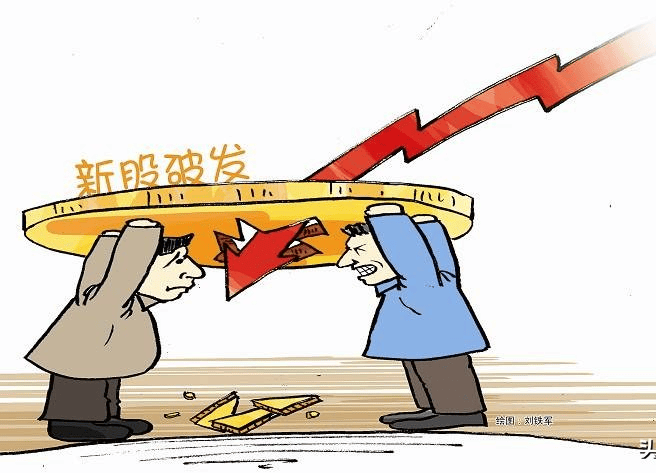
新修订《证券法》出台,会有更多企业IPO, 破发会更多吗?
Sou Hu Cai Jing· 2025-12-13 16:05
Group 1 - The introduction of the new registration system for IPOs is expected to increase the delisting rate in the A-share market, which has historically been low at less than 1%, compared to around 5% in the US [1] - The previous approval system allowed companies to maintain their listings even with significant stock price declines, as long as there was potential for restructuring and recovery [1] - With the new registration system, the barriers to listing are lowered, leading to a more competitive environment where the quality of companies may vary significantly, increasing the risk of delisting for investors [1] Group 2 - Under the new registration system, IPOs are no longer merely a means for companies to raise funds, as market dynamics will dictate valuations rather than management-set price-to-earnings ratios [3] - The scarcity of listing resources has diminished, leading to a more discerning investment landscape where investors are less likely to assign high valuations to companies with limited growth prospects [3]
央广财经年度对话2025解读“十五五”开局之年经济工作重点
Bei Jing Shang Bao· 2025-12-12 16:25
Group 1 - The event "Central Radio and Television Finance Annual Dialogue 2025" focuses on the theme "Setting Sail for the 14th Five-Year Plan with New Momentum" to gather insights and build connections among government, industry, academia, and finance [1][3] - Approximately 300 representatives from various sectors participated, discussing the construction of a modern industrial system and strengthening the foundation of the real economy [1][3] - The dialogue aims to enhance industrial collaboration and address challenges while promoting economic stability and growth [3] Group 2 - Former Vice Chairman of the National Social Security Fund Wang Zhongmin highlighted that the registration system has significantly boosted the prosperity of China's capital market, which will further facilitate the cultivation of new productive forces during the 14th Five-Year Plan [4] - Former Vice Minister of Commerce Wei Jianguo emphasized that service consumption will play a crucial role in expanding domestic demand and will be a key strategy for economic recovery [5] - Tsinghua University’s Professor He Ping stated that a stable and efficient financial system is essential for supporting technological innovation and addressing related challenges [6] Group 3 - Shenyin Wanguo Securities' Chairman Zhou Haichen discussed four new requirements for the capital market during the 14th Five-Year Plan: serving new productive forces, managing household wealth, building a strong financial nation, and achieving high-level financial openness [8] - Former Deputy Secretary-General of the National Development and Reform Commission Fan Hengshan stressed the importance of understanding the relationship between the development of new productive forces and strategic requirements, development measures, and environmental factors [10] - Shenzhen Stock Exchange's Vice General Manager Li Mingzhong expressed the need for a positive interaction among regulation, market, and media to create a conducive environment for capital market development [12] Group 4 - Shanghai Jiao Tong University’s Chairman Tu Guangshao pointed out that financial services must evolve to keep pace with changes in the real economy and new forms of development [14] - The dialogue included discussions on green development, industrial transformation, and health service optimization, emphasizing the importance of these areas for new productive force cultivation [16] - The session on advanced manufacturing transformation focused on digital energy innovation and the integration of intelligent technologies, outlining practical paths and opportunities for development [18] Group 5 - The dialogue on the big health industry innovation highlighted discussions on vaccine research, immune management, and smart health hardware applications, contributing to the construction of a healthy China [20] - A report on county-level credit construction and high-quality development was released, providing theoretical support and practical guidance for local economic development [21] - The collaboration between Shenzhen Stock Exchange and Central Radio and Television Network aims to enhance the multi-layered bond market and support the development of new productive forces [24]
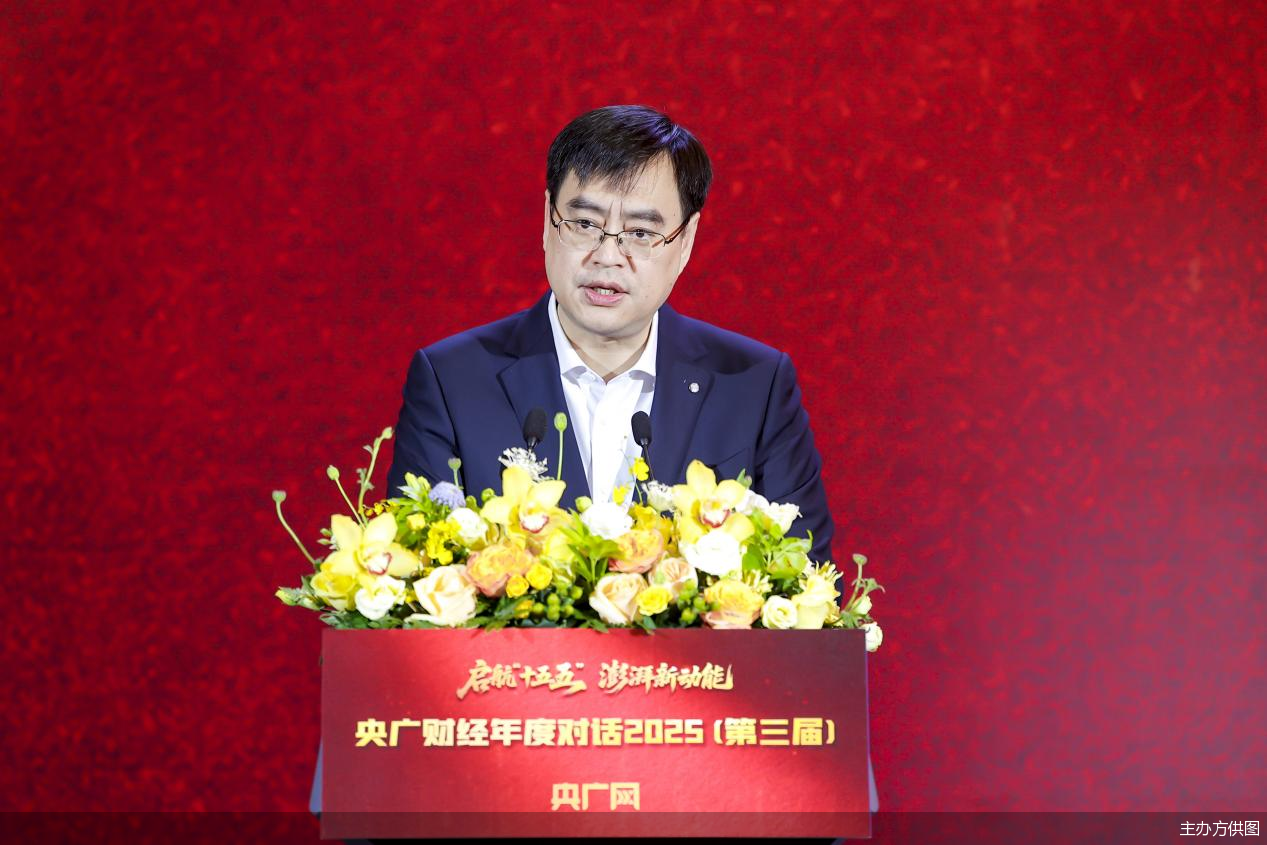
王忠民:四大资本模态为“十五五”新质生产力培育注入动能
Zheng Quan Shi Bao Wang· 2025-12-12 11:50
Core Insights - The event "Central Radio Finance Annual Dialogue 2025 (Third Session)" highlighted the need for capital mobilization and investment momentum to support high-quality economic development during the "14th Five-Year Plan" period [1] - Wang Zhongmin discussed four capital structure models suitable for the "14th Five-Year Plan" development needs, emphasizing the role of the registration system in enhancing capital circulation and application [1] Group 1: Capital Structure Models - The organic combination of limited and unlimited liability capital forms can create more excess returns for investors, as it allows for broader participation from various capital sources like social security funds and private capital [2] - This combination can significantly increase the total scale of mobilized social capital, enhancing the ability to cover the costs of innovation failures, thereby strengthening the capital foundation for new productive forces and high-quality economic development [2] Group 2: Open Source and CVC Investment Logic - The rise of open-source software and services is rapidly increasing product penetration and transforming product users into developers, which lowers development costs and strengthens industry moats [3] - The Corporate Venture Capital (CVC) investment model is crucial in this context, as it allows for precise capital injection based on the industry and development stage of startups, reducing opportunity costs of failure and enhancing cooperation efficiency [3] Group 3: New Voting Rights and Profit Distribution - The shift from "one share, one vote" to "different rights and benefits for the same share" is becoming more prominent, especially during rapid expansion phases when external capital exceeds founder capital [3] - This new logic helps balance decision-making and profit distribution among different shareholders, creating strong incentives for business growth [3] Group 4: Registration System Impact - The implementation of the registration system has significantly promoted the prosperity of China's capital market by enabling standardized trading of previously non-tradable assets and facilitating the "different rights and benefits" structure in secondary markets [4] - The core logic of capital market regulation is shifting towards objective and accurate disclosure of key information, which will support the broader application of new capital models during the "14th Five-Year Plan" [4]
原力数字信披的系列函证存疑,关系到注册制要求的真实、准确、完整的原则问题
Zhong Jin Zai Xian· 2025-12-11 14:28
Core Viewpoint - Yuanli Digital Technology Co., Ltd. is facing significant scrutiny regarding its revenue recognition practices and financial data reliability as it attempts to list on the Beijing Stock Exchange, raising concerns about compliance with the registration system's requirements for truthful and complete information disclosure [1][2][12]. Group 1: Revenue and Financial Data Concerns - The company reported a revenue increase from 502.85 million yuan in 2022 to 544.88 million yuan in 2024, with a net profit growth from 67.99 million yuan to 82.03 million yuan, indicating a seemingly stable growth trend [2]. - However, discrepancies in revenue confirmation processes have raised serious concerns about the accuracy and reliability of the reported financial data, particularly during the revenue verification phase with clients [3][4]. - Significant differences were noted between the amounts confirmed by clients and those reported by the company, with examples showing discrepancies as high as 51.18 million yuan for the first half of 2025 [3][4]. Group 2: Revenue Recognition Practices - The company has utilized non-traditional methods such as emails and instant messaging for revenue recognition, which has led to questions about the compliance and reliability of these practices [6][7]. - The reliance on electronic verification methods has raised concerns about the internal control measures in place to ensure the validity and security of the revenue recognition process [7][9]. - The company's explanations for revenue discrepancies, primarily citing timing differences in revenue recognition, have been deemed insufficient given the scale and persistence of the discrepancies [4][5]. Group 3: Talent Retention Issues - The company has experienced high employee turnover rates, with rates of 25.00%, 22.44%, 21.47%, and 26.69% over the reporting periods, indicating a significant loss of talent [11]. - The loss of mid-level and junior employees poses risks to project quality and operational efficiency, raising concerns about the company's ability to maintain a stable and skilled workforce [11][12]. - The presence of suppliers established by former employees further complicates the situation, suggesting potential issues with talent retention and the integrity of supplier relationships [11][12].