深空探索

Search documents
马斯克旗下SpaceX计划于2026年上市,估值高达8000亿美元
Sou Hu Cai Jing· 2025-12-06 06:12
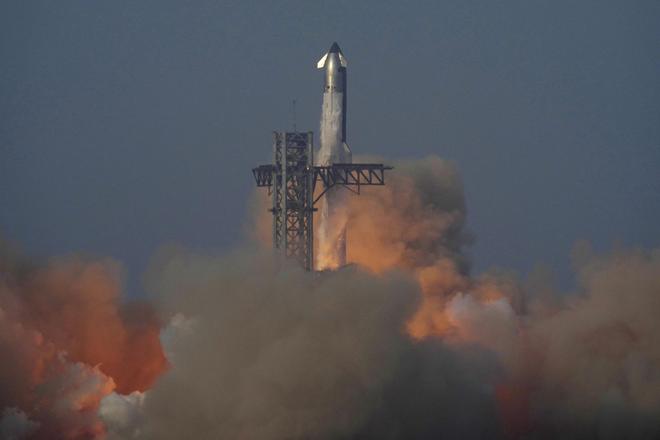
Core Viewpoint - SpaceX is initiating a new round of secondary stock sales, potentially doubling its valuation to $800 billion, driven by strong investor support and performance in key business areas [1][2]. Group 1: Stock Sale and Valuation - SpaceX's valuation is expected to reach $800 billion, up from $400 billion in the previous secondary stock sale [2]. - The company is utilizing a "Tender Offer" model, allowing employees and early investors to liquidate shares while providing entry opportunities for new investors [2]. - The optimistic market sentiment is supported by a group of long-term investors backing SpaceX's high valuation [2]. Group 2: Business Performance - Investors are optimistic about SpaceX's valuation due to its strong performance in satellite internet (Starlink) and government defense collaborations [2]. - SpaceX is a key partner for NASA and the Pentagon, handling numerous launch missions and satellite deployment projects, maintaining industry-leading technology and market share [2]. Group 3: Future Prospects - SpaceX's CFO has communicated the potential for an initial public offering (IPO) in 2026 [2]. - The company anticipates annual revenue of $15.5 billion for the year, as stated by Elon Musk [3]. - Ongoing investments in the development of the Starship heavy-lift rocket are aimed at supporting future crewed lunar missions and enhancing deep space exploration capabilities [3].


NASA准局长称“要在中国前重返月球”?中方多次表态:无意搞太空竞赛
Huan Qiu Shi Bao· 2025-12-03 22:45
Group 1 - Jared Isaacman, nominated by President Trump to lead NASA, will discuss the lunar race with China and deep space exploration plans during his Senate confirmation hearing [1][3] - Isaacman aims to increase investment in nuclear propulsion and commercial efforts to help the U.S. return to the Moon before China [1][3] - Isaacman's prepared remarks indicate a stronger urgency regarding the space competition with China, warning that falling behind could have serious consequences for the U.S. [3] Group 2 - China plans to achieve its first crewed lunar landing by 2030, positioning itself as a significant competitor in space exploration [3] - The Chinese government emphasizes its commitment to the peaceful use of outer space and opposes the militarization of space [3]

太空烧烤你想尝尝吗
Jing Ji Ri Bao· 2025-11-08 22:22
Core Insights - The recent space barbecue conducted by Chinese astronauts has sparked global interest, showcasing advancements in space food technology and human adaptability in space environments [1][4] - This event represents a significant leap from traditional space food, allowing astronauts to cook and enjoy meals in a way that mimics life on Earth, addressing both nutritional and psychological needs during long missions [1][3] Technological Advancements - The development of a hot air roasting machine is a key technological breakthrough for extraterrestrial life support systems, effectively managing heat and smoke in a microgravity environment [2] - The machine incorporates a fan for air circulation, a purification system for smoke, and specialized racks to prevent food from floating away, making it a comprehensive micro-cooking station [2] Future Implications - The space barbecue is a crucial step towards achieving a closed-loop ecological system for future lunar and Martian bases, with potential for recycling waste into usable resources [3] - Techniques developed for space cooking could significantly reduce the weight of supplies transported from Earth, enhancing sustainability for long-term space missions [3] Investment Potential - The commercialization of space technology, particularly related to space cooking, presents a promising investment opportunity with an average return on investment of 1:10 [4] - Technologies such as precise temperature control and efficient energy use have strong market applicability, potentially leading to a market scale in the hundreds of billions, benefiting various sectors including smart home and outdoor equipment [4]
人类最大火箭再突破!星舰第11次试飞成功,马斯克现场见证
Sou Hu Cai Jing· 2025-10-16 04:57
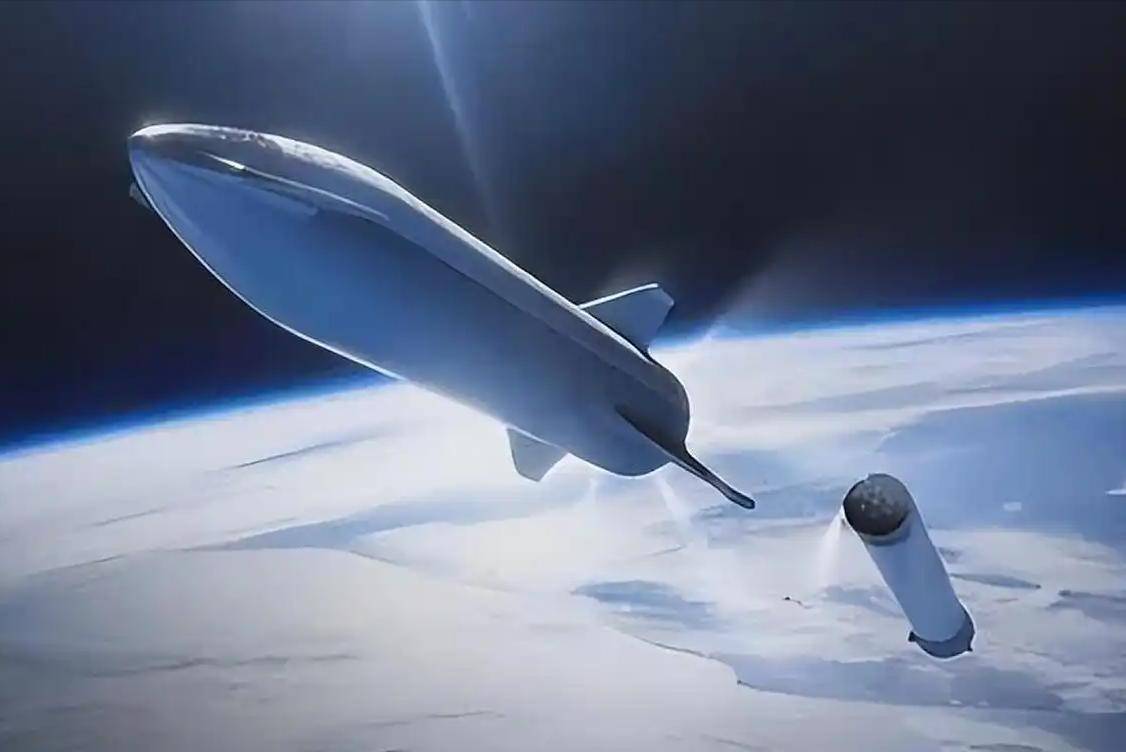
Core Insights - SpaceX's Starship successfully completed its 11th full-scale test flight, marking a significant milestone in its development and demonstrating advancements in technology [1][3][6] Test Flight Details - The flight lasted approximately one hour, during which the rocket circled the Earth and successfully deployed a simulated satellite before both the booster and spacecraft landed safely in the Gulf of Mexico and the Indian Ocean, respectively [1] - This test flight featured new maneuvers aimed at preparing for future vertical landings at the launch site, particularly for crewed spacecraft, indicating SpaceX's progression towards human spaceflight goals [3][5] Elon Musk's Involvement - Elon Musk's presence at the launch site, rather than the control center, reflects his confidence in the mission's success, especially following the previous flight's successful outcome [3] Collaboration with NASA - The test flight is crucial for NASA's plans to return astronauts to the Moon within the next decade, with NASA's acting administrator highlighting its importance for lunar exploration [6] - SpaceX and NASA have an established partnership, with previous collaborations involving the Falcon rocket for transporting personnel and supplies to the International Space Station [7] Starlink Satellite Deployment - The Starship carried eight simulated Starlink satellites, testing its capability as a satellite launch platform, which could significantly reduce launch costs and enhance commercial value [8] Long-term Vision - SpaceX's dual objectives of commercial success through the Starlink program and the ultimate goal of human exploration of Mars are interconnected, emphasizing the need for stable funding to achieve ambitious space exploration goals [9]
一代航天人的担当——嫦娥六号任务团队获颁世界航天奖
Xin Hua Wang· 2025-10-04 02:46
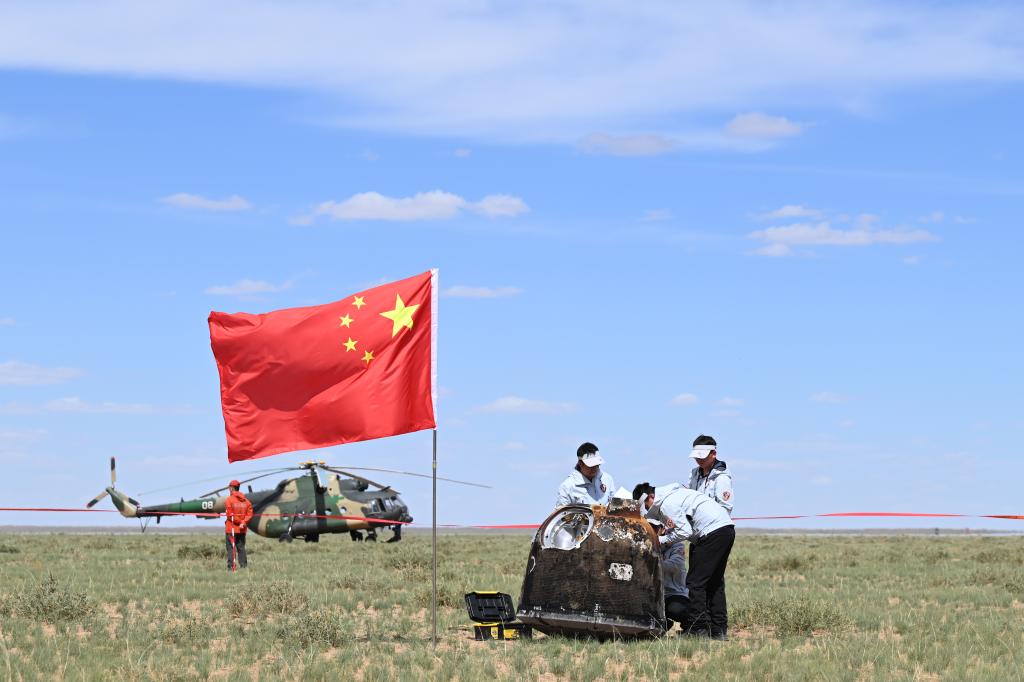
Core Points - The Chang'e 6 mission successfully returned lunar samples from the far side of the moon, marking a historic achievement in human space exploration [2][3] - The mission team received the World Space Award from the International Astronautical Federation, highlighting the global recognition of China's contributions to space science and technology [2][5] Group 1: Mission Achievements - The Chang'e 6 mission is the first to bring back samples from the moon's far side, representing a significant milestone in scientific exploration [3] - The lunar samples collected include lunar rocks, which differ in color from those collected by the Chang'e 5 mission, showcasing the unique characteristics of the far side [5] Group 2: International Recognition - The World Space Award is the highest accolade in the field of space, awarded to teams making significant contributions to space science and engineering [2][5] - This is the third time a Chinese space team has received this award, following the Chang'e 4 and Tianwen-1 missions [2] Group 3: Collaborative Efforts - The mission included four international payloads, emphasizing China's commitment to open collaboration in scientific research [5] - Experts and scholars at the International Astronautical Congress expressed interest in the lunar samples, indicating a growing global focus on China's space endeavors [5][6]
记者手记|一代航天人的担当——嫦娥六号任务团队获颁世界航天奖
Xin Hua She· 2025-10-03 15:16
Core Points - The Chang'e 6 mission team received the World Space Award at the 76th International Astronautical Congress, highlighting China's significant contributions to space exploration [1][2] - This award marks the third time a Chinese space team has won this prestigious accolade, following the Chang'e 4 and Tianwen-1 missions [1] - The Chang'e 6 mission successfully returned samples from the far side of the Moon, a historic first in human space exploration [1][2] Group 1 - The World Space Award is the highest honor in the field of space science and technology, recognizing major contributions from individuals or teams globally [1] - The event attracted over 7,000 participants, including experts, scholars, and industry professionals from around the world [3] - The Chang'e 6 mission showcased its lunar samples at the conference, drawing significant interest from attendees [2] Group 2 - The lunar samples brought back from the far side of the Moon are distinct from those collected from the near side, with differences in color noted by observers [2] - The mission included international payloads, reflecting China's commitment to collaborative scientific exploration [2] - The recognition of the Chang'e 6 mission underscores the growing importance of China's advancements in space engineering on the global stage [3]
美“龙”飞船载4名宇航员启程返回地球
Xin Hua She· 2025-08-09 02:52
Core Points - The SpaceX "Dragon" spacecraft, carrying four astronauts, departed from the International Space Station (ISS) on October 8, 2023, at 18:15 EDT, and is expected to land in the California coast area on October 9, 2023, at 11:33 EDT [1] - The astronauts onboard include American astronauts Anne McClain, Nicole Aunapu Mann, Japanese astronaut Koichi Wakata, and Russian astronaut Kirill Peskov [1] - During their over five-month stay at the ISS, the astronauts conducted numerous experiments and technology demonstrations, including the cultivation of microalgae in microgravity, research on cellular gravity perception mechanisms, and astronaut health monitoring, contributing valuable data and experience for future deep space exploration [1] Summary by Categories Mission Details - The "Dragon" spacecraft's departure and expected landing times are specified, highlighting the mission's timeline [1] - The spacecraft is returning to Earth after a significant duration at the ISS, indicating the importance of the mission [1] Astronauts Involved - The crew consists of four astronauts from different countries, showcasing international collaboration in space exploration [1] Research and Experiments - The astronauts engaged in various scientific experiments during their stay, which are crucial for advancing knowledge in space biology and health [1] - Specific experiments mentioned include microalgae cultivation and studies on gravity perception, emphasizing the mission's scientific contributions [1]
NASA要在月球建核反应堆
Qi Lu Wan Bao· 2025-08-07 01:26
Core Viewpoint - The U.S. is accelerating plans to build a nuclear reactor on the Moon, which is a significant initiative led by the acting NASA administrator Sean Duffy since his appointment this year [1] Group 1: Project Details - The plan aims to establish a specific timeline for the lunar nuclear reactor project, targeting the launch and deployment of a 100-kilowatt reactor by 2030 [1] - NASA is required to consult industry opinions within 60 days and appoint a responsible person to oversee the project [1] - The agency is seeking companies capable of launching the nuclear reactor by 2030 [1] Group 2: Strategic Importance - Nuclear fission technology is deemed crucial for future deep space exploration missions, despite solar energy playing a role in certain lunar locations [1] - The U.S. has invested hundreds of millions of dollars in research and development in this field [1] - The acceleration of the lunar nuclear energy system is intended to lay the energy foundation for long-term crewed lunar and Mars exploration missions, while also gaining a competitive edge in the new space race [1]
NASA宣布:要在月球上建核反应堆!
Mei Ri Jing Ji Xin Wen· 2025-08-06 23:56
Core Viewpoint - The U.S. plans to accelerate the construction of a nuclear reactor on the Moon to support future space exploration missions, with a target to deploy a 100-kilowatt reactor by 2030 [1][3]. Group 1: Project Details - The initiative aims to establish a timeline for the lunar nuclear reactor project, with a directive for NASA to consult industry experts within 60 days and appoint a project leader [1]. - The nuclear reactor is expected to provide a reliable power source for various operations on the Moon, including habitation, life support systems, scientific experiments, and industrial activities [4][6]. Group 2: Technical Considerations - Nuclear fission technology is deemed crucial for deep space exploration, as it can deliver continuous power unaffected by lunar environmental conditions, unlike solar panels [3][4]. - Current designs for small reactors suggest that deploying a reactor on the Moon by 2030 is technically feasible if sufficient funding is allocated [6]. Group 3: Challenges and Concerns - There are significant technical challenges, including the safe transport of radioactive materials and the management of waste heat [7]. - Funding uncertainties exist, as NASA's budget has faced cuts, and there is no clear financial backing for the lunar reactor project [7]. - The reliability of private sector partners for launching the reactor remains questionable, with no U.S. company currently demonstrating the necessary capabilities [7].
NASA要在月球上建核反应堆,靠谱吗?
Xin Hua She· 2025-08-06 12:50
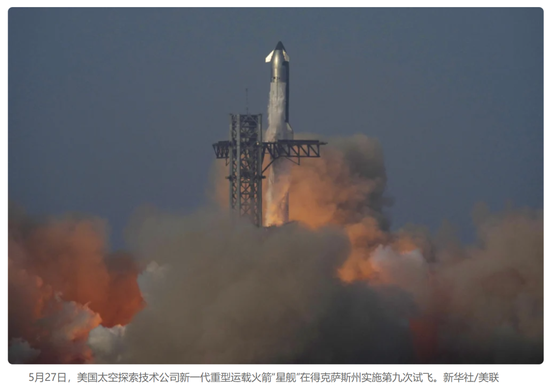
Core Viewpoint - The U.S. plans to accelerate the construction of a nuclear reactor on the Moon, led by NASA's acting administrator Sean Duffy, amidst budget cuts and technical challenges in space exploration [1][3][4]. Group 1: Project Overview - The initiative aims to establish a 100-kilowatt nuclear reactor on the Moon by 2030, with a specific timeline and industry consultation required within 60 days [3][4]. - The project is part of a broader strategy to support long-term human exploration of the Moon and Mars, providing a reliable energy source for various operations [4][5]. Group 2: Technical Considerations - Nuclear fission technology is deemed crucial for deep space missions, as it can provide continuous power regardless of lunar conditions, unlike solar energy which is affected by the Moon's long nights [4][5]. - Current designs for small reactors suggest that deploying a reactor on the Moon by 2030 is technically feasible if sufficient funding is secured [5][7]. Group 3: Challenges and Concerns - There are significant technical challenges, including the safe transport of radioactive materials and the management of waste heat, which must be addressed for the project to succeed [7]. - Funding uncertainties persist, especially with proposed budget cuts to NASA's scientific programs, which could impact the timeline and feasibility of the lunar reactor project [7]. - The lack of reliable private sector partners capable of lunar missions poses additional risks, as current options like SpaceX's Starship have not yet demonstrated the necessary safety standards [7].