港产融合

Search documents
海南洋浦港:从渔村孤港到国际枢纽的逆袭之路
Sou Hu Cai Jing· 2025-12-13 14:03
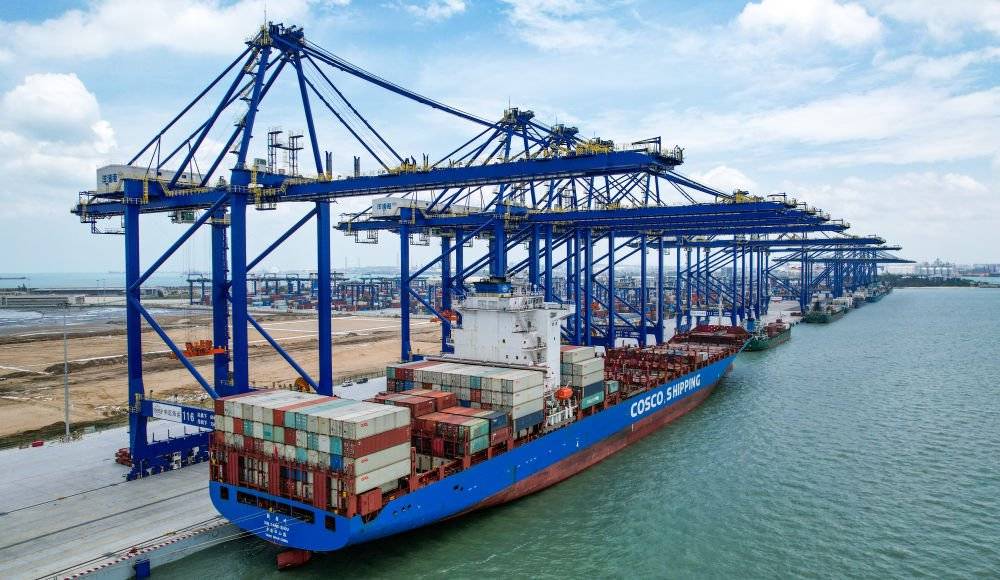
Core Insights - The article highlights the transformation of Yangpu Port from a small fishing village to a significant international port, achieving a record container throughput growth of over 60% annually and processing large cargo ships of 200,000 tons [1][5]. Group 1: Historical Context - Yangpu Port was envisioned as a major port by Sun Yat-sen and included in Premier Zhou Enlai's key port list in the 1970s due to its advantageous deep-water coastline and proximity to major shipping routes [3]. - Initially, the port struggled with limited infrastructure and low throughput, with only 1 million tons annually and just two 10,000-ton berths when the Yangpu Economic Development Zone was established in 1992 [3]. Group 2: Policy and Economic Development - The approval of the Yangpu Free Trade Port Zone in 2007 and the launch of the Hainan Free Trade Port in 2018 marked significant policy shifts that positioned Yangpu as a demonstration zone for reform [3]. - The implementation of "zero tariff" policies and over 40 reform measures, including streamlined customs processes, significantly reduced operational costs and attracted major commodity processing companies from Singapore [3][5]. Group 3: Infrastructure Advancements - Yangpu Port has undergone substantial infrastructure upgrades, transitioning from a 50,000-ton capacity to accommodating 200,000-ton vessels, with the construction of a 300,000-ton crude oil terminal completed in 2006 [5]. - The port now operates 39 shipping routes globally, with 18 dedicated to foreign trade, reducing shipping times from two weeks to just six days for routes previously requiring transit through Singapore [5]. Group 4: Industrial Ecosystem Development - Yangpu Port has evolved beyond a mere cargo transfer point to foster a port-industry integration model, establishing a complete industrial chain with key enterprises in petrochemicals and biomedicine [7]. - The port's policies have led to the registration of 30 international vessels and the growth of shipping services, contributing to a 34% increase in the port's GDP in 2024 and the addition of over 20,000 new market entities [7]. Group 5: Future Prospects - The Yangpu Port's development plan for 2024-2035 includes investments exceeding 60 billion yuan in 27 port and shipping projects, aiming for an annual throughput of 12 million standard containers by 2035 [7]. - The port is set to become a key international hub for bonded oil supply and dual procurement, reflecting China's broader reform and opening-up narrative [7].

优化港口布局 拓展内外航线 壮大临港产业 河北打造向海发展增长极
Ren Min Ri Bao· 2025-08-14 07:02
Core Viewpoint - The article emphasizes the transformation and modernization of Hebei's port industry, focusing on the integration of smart technology and the development of a comprehensive logistics network to enhance efficiency and support regional economic growth [1][4][5]. Group 1: Port Modernization and Efficiency - The Huanghua Port has achieved full automation in coal loading operations, significantly improving loading efficiency [1]. - In 2024, Hebei's ports are expected to handle a total cargo throughput of 1.405 billion tons, with Tangshan Port ranking second among global coastal ports [3]. Group 2: Strategic Development and Integration - Hebei has established 97 inland ports and developed 30 container sea-rail intermodal routes, enhancing connectivity with inland enterprises [4]. - The port group has opened 68 international and domestic container shipping routes, actively aligning with national strategic needs [4]. Group 3: Industrial Synergy and Economic Growth - The integration of port and industrial operations has led to the establishment of a closed-loop logistics system, enhancing economic and environmental efficiency [5]. - The coastal region of Hebei is projected to achieve a GDP of over 1.68 trillion yuan in 2024, with a growth rate of 5.5%, surpassing the provincial average [5].
河北打造向海发展增长极
Ren Min Ri Bao· 2025-08-12 22:29
Core Points - The article emphasizes the transformation and modernization of Hebei's port operations, particularly at Huanghua Port, through automation and intelligent systems to enhance coal loading efficiency [1][4] - It highlights the strategic importance of port development in aligning with national initiatives such as the Beijing-Tianjin-Hebei coordinated development and the Belt and Road Initiative [1][5] - The integration of port resources and the establishment of inland ports are aimed at improving logistics and transportation efficiency, thereby boosting trade and economic activity [3][5] Group 1: Port Modernization and Efficiency - The Huanghua Port has achieved full automation in coal loading operations, significantly increasing loading efficiency [1] - In 2024, Hebei's ports are projected to handle a total cargo throughput of 1.405 billion tons, with Tangshan Port ranking second globally among coastal ports [4] Group 2: Strategic Development and Integration - Hebei has established 97 inland ports and developed 30 container sea-rail intermodal routes, enhancing connectivity with inland enterprises [5] - The port group has opened 68 international and domestic container shipping routes, facilitating trade for enterprises in the Beijing-Tianjin-Hebei region [5] Group 3: Economic Impact and Future Goals - The coastal region of Hebei is expected to achieve a GDP of over 1.68 trillion yuan in 2024, with a growth rate of 5.5%, surpassing the provincial average [6] - The provincial government is committed to expanding high-level openness and promoting the development of modern coastal industries, aligning with national strategic goals [6]
东营市海洋经济高质量发展新闻发布会召开
Qi Lu Wan Bao Wang· 2025-07-31 08:26
Core Viewpoint - Dongying City is committed to high-quality development of the marine economy, aiming to establish itself as a modern marine city while implementing various initiatives to enhance marine industry growth and ecological protection [3][9]. Marine Economic Development - The marine GDP of Dongying is projected to exceed 120 billion yuan in 2024, with a year-on-year growth of 7.1%, leading the province [3]. - In the first half of this year, the marine GDP reached 61.072 billion yuan, with 13 major marine industries contributing 46.2 billion yuan, reflecting a 7.6% increase [3]. - Emerging marine industries such as marine engineering equipment manufacturing and seawater desalination have shown significant growth, with a 9.8% increase in added value [3]. Modern Marine Industry System - Dongying is focusing on building a modern marine industry system by leveraging its marine resources and fostering industry clusters [4]. - Traditional marine industries are undergoing transformation, with a 4.6% increase in total aquatic product output, reaching 243,000 tons [4]. - The marine oil and gas industry is also growing steadily, with offshore crude oil production reaching 1.796 million tons per year [4]. Port and Logistics Development - The port's cargo throughput reached 45.95 million tons in the first half of the year, marking a 17.64% increase [6]. - Dongying Port is enhancing its capabilities with the completion of new berths and the establishment of a multi-modal transport system [6]. Technological Innovation - Dongying is prioritizing technological innovation in the marine sector, with 38 high-tech marine enterprises and several research centers established [7]. - Significant breakthroughs in high-end technology have been achieved, including advancements in underwater oil and gas production systems [7]. Ecological Protection - The city emphasizes ecological protection alongside development, implementing comprehensive marine pollution control measures [8]. - Efforts include the restoration of coastal wetlands and the management of marine biological resources, with 6 billion aquatic seedlings released during the current five-year plan [8]. Future Directions - The Dongying Marine Development and Fisheries Bureau aims to further enhance the marine economy while ensuring ecological protection and developing marine ports [9].
山东重构“海河经济”新版图
Jing Ji Guan Cha Wang· 2025-07-27 06:19
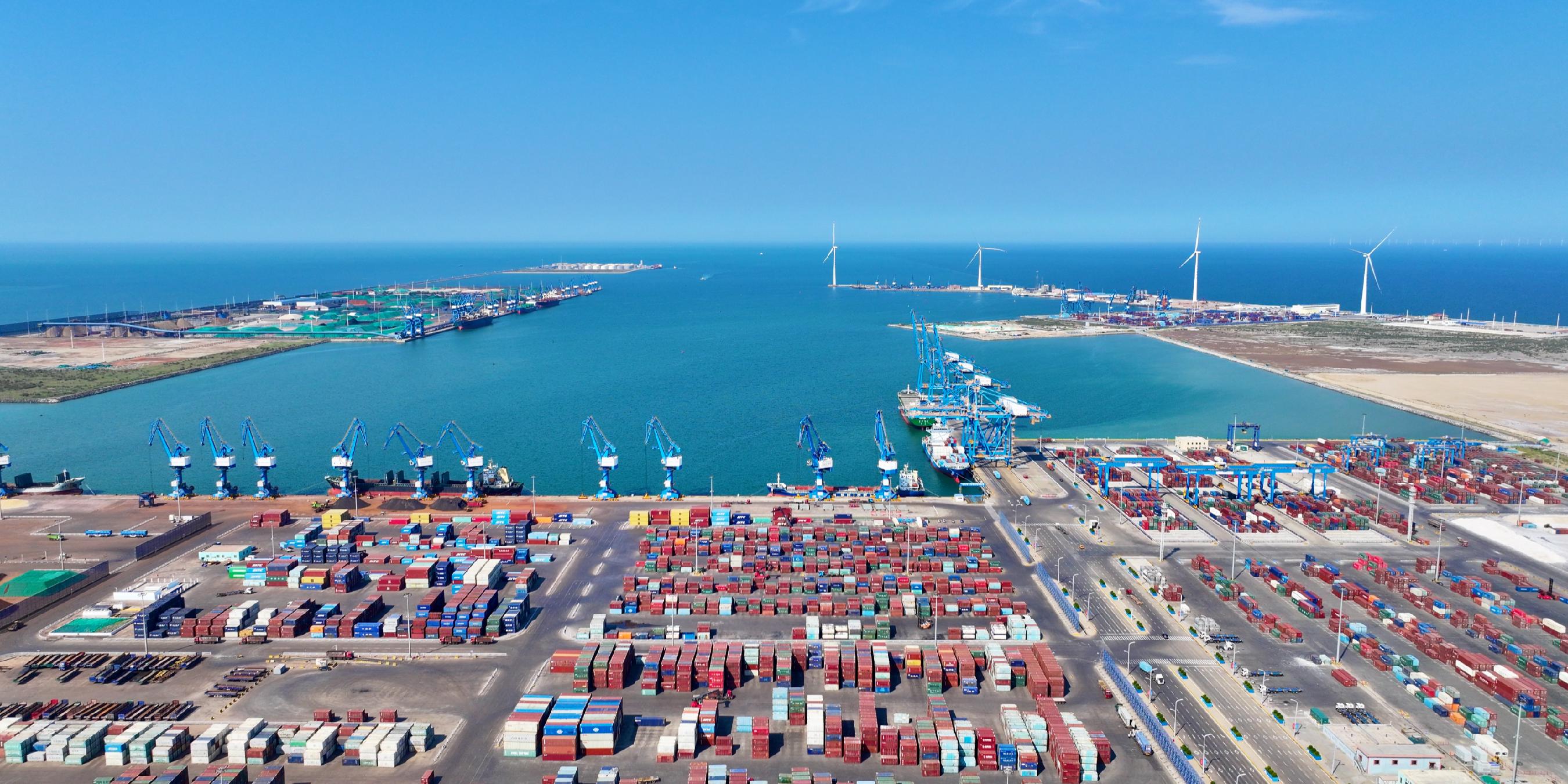
Core Viewpoint - The Shandong Provincial Government has unveiled the "Shandong Port and Waterway Layout Plan (2025-2035)", aiming to enhance the overall layout of coastal and inland ports and waterways over the next decade, addressing existing issues such as uneven distribution and insufficient regional collaboration [2][3]. Group 1: Coastal Port Development - By 2035, Shandong plans to establish a "fully capable, secure, efficient, smart, and green" port and waterway system, forming a world-class marine port cluster and a comprehensive inland waterway network [2][4]. - The plan emphasizes the role of Qingdao Port as an international hub, supported by Yantai and Rizhao ports, and aims to create a "5+5" maritime transport corridor to enhance international shipping capabilities [4][5]. - In 2024, the ports under Shandong Port are expected to achieve a cargo throughput exceeding 1.8 billion tons and container volume surpassing 44 million standard containers, maintaining the top position globally [5]. Group 2: Green and Smart Initiatives - The plan introduces innovative concepts of smart, green, and safe development, with the establishment of the first integrated green hydrogen project at the Bohai Bay Port, showcasing advancements in zero-carbon port construction [6][5]. - The green hydrogen project utilizes wind power to produce hydrogen, significantly reducing production costs and promoting sustainable energy use within the port [6]. Group 3: Inland Waterway Network Enhancement - The layout plan outlines a comprehensive inland waterway network centered around Jining Port, supported by regional ports like Zaozhuang, Heze, and Tai'an, with a total waterway length of approximately 3,100 kilometers [8]. - Jining Port has achieved a throughput of 55.75 million tons in the first half of 2025, marking a year-on-year increase of 10.4%, solidifying its position as a key node in the inland waterway network [8][10]. - The development strategy includes the establishment of logistics centers and multi-modal transport hubs to enhance connectivity and efficiency in the logistics chain [9][10].

未来济宁将打造北方内河航运中心
Qi Lu Wan Bao· 2025-07-25 08:33
Core Insights - The Shandong Provincial Government has introduced the "Shandong Port and Waterway Layout Plan (2025-2035)" to enhance the development of inland shipping and logistics [1][3] - Jining has been recognized as a key logistics hub, achieving significant growth in inland shipping capacity and infrastructure [1][3] Group 1: Strategic Developments - Jining has successfully integrated into the national transportation strategy, becoming a port-type national logistics hub city, with the highest navigation mileage and shipping capacity among 14 cities along the Grand Canal [1] - The plan emphasizes the Grand Canal as a "backbone waterway" and Jining Port as a "core port," providing strategic opportunities for Jining's inland shipping development [3] Group 2: Infrastructure and Capacity Expansion - Jining aims to establish a "Northern Inland Shipping Center," supported by a comprehensive transportation corridor along the Grand Canal and various logistics hubs [3][4] - The city plans to enhance its multi-modal transport logistics channels and modernize its port facilities, targeting a port throughput of over 100 million tons this year [4] Group 3: Economic and Industrial Growth - Jining is focusing on deepening the integration of port and industry, with initiatives to develop a digital platform for port and shipping services and to foster new energy ship manufacturing [4] - The goal is to create seven major industrial parks, contributing to a port and shipping industry output value exceeding 100 billion yuan, thereby driving regional economic growth [4]