电动汽车补贴

Search documents
英国汽车产量为何屡屡刷新“下限”?
Zhong Guo Qi Che Bao Wang· 2025-11-05 00:51
Group 1: Industry Overview - The UK automotive industry is facing significant challenges, with September passenger car production dropping to just over 50,000 units, a year-on-year decline of 27% [2][3] - The overall automotive production in the UK, including commercial vehicles, saw a decline of 36% in September, highlighting the industry's ongoing struggles [2][4] - The production decline is attributed to multiple factors, including a major cyberattack on Jaguar Land Rover, which halted production and affected supply chains [3][4] Group 2: Jaguar Land Rover Impact - Jaguar Land Rover's production was completely halted in September due to a cyberattack, resulting in a loss of approximately 19 billion GBP in economic impact across 5,000 UK businesses [3][4] - The company’s three UK factories were offline for over five weeks, with a daily production capacity of around 1,000 vehicles [3][4] - The attack not only affected domestic production but also had repercussions on exports to key markets such as the EU and the US [3] Group 3: Commercial Vehicle Sector - The commercial vehicle sector is particularly struggling, with September production plummeting by 78% to just 3,229 units, marking the sixth consecutive month of decline [4][5] - Cumulative production for commercial vehicles from January to September was 39,151 units, down 58% year-on-year [4][5] - The closure of Stellantis's Luton plant earlier this year has significantly contributed to the decline in commercial vehicle production [4][5] Group 4: Export Challenges - The UK automotive industry heavily relies on exports, with the EU, US, Turkey, Japan, and South Korea being the top five markets [5][6] - In May, UK car exports to the US dropped by 55.4% year-on-year due to increased tariffs, while exports to the EU fell by 22.5% [6] - A new trade agreement between the UK and the US reduced tariffs on UK car exports, but challenges remain in the EU market due to weak demand and regulatory pressures [6] Group 5: Long-term Industry Outlook - The UK automotive sector is experiencing a "normalization of crisis," with ongoing production declines reflecting a challenging environment [5][6] - Factors such as rising costs, market changes, and the impact of Brexit are contributing to a decrease in the attractiveness of the UK as a manufacturing base [6][7] - The government’s tax policy changes and potential adjustments to employee car purchase schemes could further impact the industry’s competitiveness and employment [7][8] Group 6: Electric Vehicle Potential - Despite challenges, the UK automotive industry remains a significant player in global trade, with expectations of over 110 billion GBP in trade value [9] - The government has announced a strategy to boost electric vehicle production, aiming to return to the top 15 global automotive manufacturers by 2030 [9][10] - Sales of electric vehicles are on the rise, with the UK surpassing Germany in pure electric vehicle sales for the first time in 2024 [10]


US motor vehicle sales drop in October as EV subsidies expire
Reuters· 2025-11-04 16:50
Core Insights - Sales of U.S. light vehicles experienced a decline in October due to the expiration of federal government subsidies, which negatively impacted demand for battery-powered electric cars [1] - The easing labor market and potential price increases from tariffs may further restrict any recovery in vehicle sales for the remainder of the year [1] Industry Summary - The expiration of subsidies has led to a decrease in demand for electric vehicles, indicating a potential shift in consumer purchasing behavior [1] - The labor market conditions are showing signs of easing, which could affect consumer confidence and spending in the automotive sector [1] - Anticipated higher prices resulting from tariffs may pose additional challenges for the automotive industry, limiting sales growth [1]
美国电动车8月销量创纪录,特斯拉却逆势下滑,市场份额八年新低
Feng Huang Wang· 2025-09-11 14:46
Core Insights - Electric vehicle sales in the U.S. reached 146,000 units in August, accounting for 9.9% of the automotive market share, marking a new high [1] - Tesla's sales in the U.S. declined by 6.7% year-over-year in August, with its market share dropping to 38%, the lowest in eight years, despite a 5.5% decrease in vehicle prices [1] - The expiration of electric vehicle tax credits at the end of September has driven consumers to purchase vehicles before the deadline, benefiting competitors like Ford, GM, and Hyundai [1] Group 1 - The Inflation Reduction Act signed by President Biden in 2022 allowed consumers to receive up to $7,500 in tax credits for electric vehicles with certain battery mineral requirements [1] - The "Big and Beautiful" tax and spending bill signed by President Trump in July 2023 ended federal tax credits for electric vehicles starting September 30 [1] - Tesla's global sales fell nearly 14% year-over-year in Q2, with similar declines in Q1, facing increasing competition from brands like Chevrolet, Ford, and Hyundai [2] Group 2 - Tesla launched the Model YL in China, a longer version accommodating six people, while a cheaper version of the Model Y is expected to be released in the U.S. after the government electric vehicle subsidies are eliminated [3] - Tesla's recent introduction of the new Model Y Performance in Europe aims to boost sales in that region, where the decline has been more pronounced [2]

电池巨头利润大增!
起点锂电· 2025-07-25 10:34
Core Viewpoint - LG Energy Solution (LGES) reported a significant turnaround in its financial performance for Q2, achieving a net profit of 91 billion KRW (approximately 470 million RMB) compared to a net loss of 24 billion KRW in the same period last year, driven by increased demand and strategic adjustments in response to U.S. tariffs [2][3]. Financial Performance - In Q2, LGES's operating profit surged by 152% to 492.2 billion KRW (approximately 2.56 billion RMB), marking a return to profitability after five consecutive quarters of losses [2]. - The company's revenue for Q2 decreased by 11.2% quarter-on-quarter to 5.565 trillion KRW (approximately 28.9 billion RMB) and fell by 9.7% year-on-year [6]. Market Dynamics - The ongoing U.S. tariff policies have created favorable conditions for Korean and Japanese battery manufacturers, as they limit the market share of Chinese battery companies in the U.S. [3]. - LGES plans to accelerate the establishment of production bases in North America to meet the anticipated demand for energy storage systems (ESS), with a target to expand annual ESS battery production capacity to 17 GWh by the end of the year [3]. Strategic Developments - LGES has entered into a supply agreement with Chery to provide 8 GWh of cylindrical batteries for European electric vehicle models, marking a significant collaboration between a Korean battery manufacturer and a Chinese automaker [3]. - The company is set to begin production of lithium iron phosphate (LFP) batteries for ESS applications a year earlier than initially planned, starting in 2025 [3]. Challenges and Risks - The electric vehicle market is facing pressures due to the impending termination of a $7,500 tax credit for new vehicles and rising macroeconomic pressures, which may impact sales for LGES's key customers like General Motors and Tesla [4]. - LGES's battery usage has declined by 13.3% year-on-year in the first five months of the year, particularly in the European market, reflecting broader market challenges [5]. - The company's market share has decreased from 13.5% in 2023 to 10.8% in 2024, with further decline to 10% in the first five months of the year, indicating increasing competition from companies like CATL and BYD [5].

据日本共同社:日本将修改电动汽车补贴。
news flash· 2025-07-24 08:09
Group 1 - Japan is set to revise its electric vehicle subsidy program to enhance support for the industry [1] - The changes aim to promote the adoption of electric vehicles and stimulate domestic production [1] - The government is expected to allocate additional funds to the subsidy program to encourage consumers to purchase electric vehicles [1] Group 2 - The revision of the subsidy program reflects Japan's commitment to reducing carbon emissions and transitioning to sustainable energy [1] - The new policy may impact the competitive landscape of the electric vehicle market in Japan, influencing both domestic and foreign manufacturers [1] - Stakeholders in the automotive industry are closely monitoring these developments for potential investment opportunities [1]
国际金融市场早知道:7月16日
Xin Hua Cai Jing· 2025-07-16 01:26
Group 1: Global Trade and Economic Impact - The World Trade Organization predicts that global goods trade will experience strong growth in Q1 due to expectations of increased U.S. tariffs, but growth is expected to slow down as higher tariffs are implemented [1] - The U.S. Consumer Price Index (CPI) rose by 2.7% year-on-year in June, exceeding market expectations, marking the largest increase since February. The core inflation rate, excluding volatile food and energy prices, increased by 2.9% year-on-year [1] - Climate change is causing extreme heat in multiple countries, leading to increased cases of heatstroke, reduced agricultural output, and frequent forest fires, which threaten human health and various socio-economic sectors [1] Group 2: International Relations and Sanctions - The EU foreign ministers' meeting failed to reach an agreement on a new round of sanctions against Russia, focusing on Russian energy revenues [2] - Canadian Prime Minister Carney indicated that there is currently "not much evidence" that the U.S. is willing to reach an agreement without imposing some tariffs, suggesting that most countries may have to accept a baseline tariff from the U.S. [2] - U.S. Secretary of State Rubio agreed with foreign ministers from the UK, France, and Germany to set the end of August as the deadline for reaching a nuclear agreement with Iran, or else sanctions will be reinstated [3] Group 3: Financial Markets and Interest Rates - Japan's 10-year government bond yield reached over 1.59%, the highest since October 2008, driven by expectations of fiscal expansion following the upcoming Senate elections [3] - The U.S. Treasury yields saw increases across various maturities, with the 10-year yield rising by 4.80 basis points to 4.481% [5] Group 4: Commodity Markets - OPEC maintained its global oil demand growth forecast for 2025 at 1.29 million barrels per day and for 2026 at 1.28 million barrels per day [4]
市场消息:英国将重新推出高达3750英镑的补贴,以支持消费者购买电动汽车。
news flash· 2025-07-15 07:02
Core Insights - The UK government is reintroducing a subsidy of up to £3,750 to support consumers in purchasing electric vehicles [1] Group 1 - The subsidy aims to encourage the adoption of electric vehicles among consumers [1] - This initiative reflects the government's commitment to promoting sustainable transportation and reducing carbon emissions [1] - The financial support is expected to stimulate the electric vehicle market in the UK [1]
Trump's Bill Would End EV Subsidies: Could This Kill Tesla?
The Motley Fool· 2025-06-15 16:05
Core Viewpoint - The potential elimination of federal tax incentives for electric vehicles (EVs) could negatively impact Tesla's sales growth, but it may also reduce competition from smaller, unprofitable EV manufacturers, ultimately benefiting Tesla in the long term [1][10]. Group 1: Impact of Tax Incentives - Elon Musk is advocating for the preservation of federal tax incentives for EVs, which are crucial for making EV purchases more affordable [1]. - President Trump's proposed bill aims to eliminate these tax incentives, which are set to remain until 2032 [1]. - The removal of these incentives could lead to a price increase of $4,000 to $7,500 for Tesla vehicles, potentially accelerating sales declines [4]. Group 2: Tesla's Current Situation - Tesla has experienced a 32% decline in deliveries quarter over quarter and a 13% decline year over year, indicating stagnating demand growth [2]. - The company has limited high-visibility milestones for revenue growth in the near term, with no new models expected to significantly boost production in the next 12 to 24 months [3]. - Tesla's existing vehicle lineup is becoming increasingly stale, making it challenging to stimulate demand [4]. Group 3: Financial Resilience - Tesla holds $16 billion in cash and equivalents, providing a significant capital advantage over competitors [5]. - The company has positive profit margins, allowing it to absorb some profit reductions without incurring losses [5]. - Tesla's profitability has also been supported by selling automotive regulatory credits, which may not be affected by changes in U.S. federal incentives [5]. Group 4: Competitive Landscape - The elimination of EV tax credits could disproportionately harm smaller competitors like Rivian and Lucid Group, which are significantly smaller than Tesla [9]. - These smaller companies have limited access to capital and may struggle to survive without the tax incentives, potentially allowing Tesla to capture a larger market share [9]. - While the immediate impact of eliminating tax credits would be negative for Tesla, it could lead to reduced competition in the long term, benefiting the company [10].

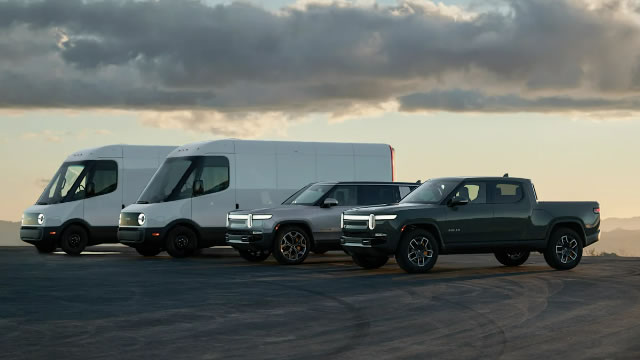
Trump's Bill Would End EV Subsidies: Is Rivian in Trouble?
The Motley Fool· 2025-06-14 20:05
Core Viewpoint - Rivian Automotive is poised for significant growth with plans to produce three new affordable electric vehicles (EVs) starting in early 2026, which could enhance its market position similar to Tesla's success with affordable models [1][4]. Group 1: Growth Potential - The introduction of affordable EVs priced under $50,000 is a crucial milestone that could attract millions of new buyers, similar to the impact seen with Tesla's Model Y and Model 3 [1][3]. - Rivian is on track to begin production of the R2, R3, and R3X models, with full production expected by 2027 or 2028, supported by $4.7 billion in cash and a partnership with Volkswagen [4][5]. Group 2: Impact of EV Tax Credits - A proposed bill by President Trump to cut federal EV tax credits could increase the cost of EVs by $4,000 to $7,500, potentially reducing demand in the short term [2][7]. - Despite the potential elimination of tax credits, Rivian's financial position allows it to reach its growth catalyst, making its vehicles more affordable even without incentives [5][9]. Group 3: Competitive Landscape - Rivian is already profitable on a gross margin basis, unlike competitors such as Lucid Group, which may face financial challenges if tax incentives are removed [9]. - The absence of affordable EVs from most North American automakers could provide Rivian with a competitive advantage, especially if competitors struggle to bring their models to market [8][10].