
科创生态

Search documents
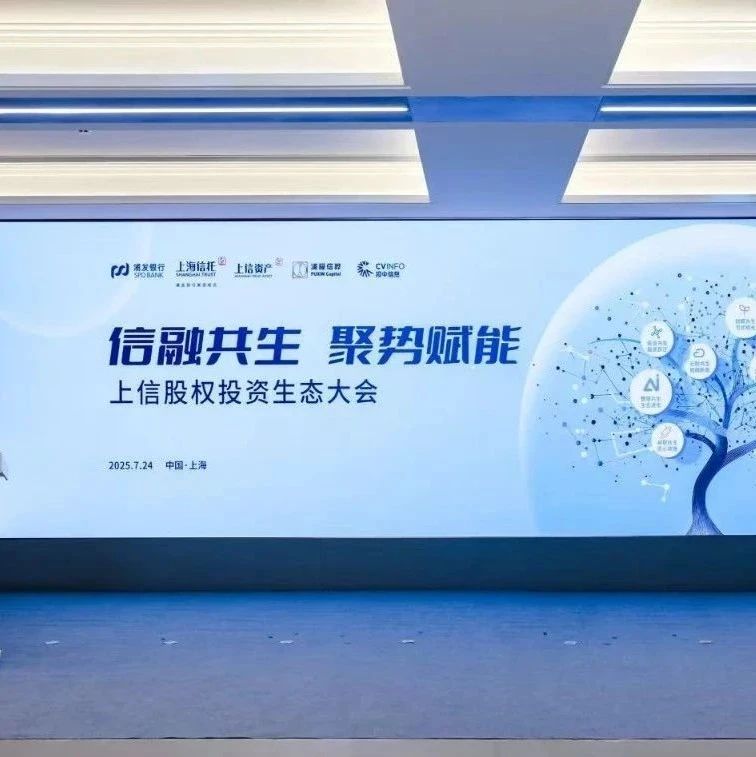
上海信托携手子公司上信资产、浦耀信晔成功举办“信融共生·聚势赋能”上信股权投资生态大会
投中网· 2025-07-25 08:33
Core Viewpoint - The conference aims to explore new paths for financial services in technology innovation, emphasizing the need for an open and collaborative industrial financial ecosystem to empower high-quality development in technology finance [2][4][36]. Strategic Planning - The conference highlighted the importance of technology innovation in reshaping global competition, with Shanghai positioned as a key player in building a globally influential technology innovation center [4]. - The strategy involves a dual approach of "institutional openness" and "scenario-based supply" to enhance Shanghai's international financial center competitiveness [4]. - State-owned capital is emphasized as a crucial element in supporting high-level technological self-reliance and innovation resource integration [6]. Ecosystem Construction - The event showcased a sand painting performance symbolizing the strategic vision of building a collaborative investment ecosystem, highlighting the historical achievements of Shanghai Trust in equity investment [15]. - The establishment of four ecological alliances aims to create a win-win framework by gathering long-term capital partners, expanding value opportunities, and driving industrial upgrades [17]. Brand Launch - Two strategic empowerment brands, "YI Family Wealth Research Institute" and "Puyao Academy," were launched to enhance the service capabilities of Shanghai Trust's ecosystem [21]. - These brands focus on providing comprehensive wealth management solutions and knowledge-sharing platforms for innovation-driven enterprises [21]. Market Insights - The conference included discussions on investment philosophies during asset downturns, emphasizing the importance of long-term capital allocation strategies [26]. - Key topics included the valuation logic of hard technology investments and the challenges of commercializing early-stage projects [28]. Entrepreneurial Perspectives - Founders from leading tech companies shared insights on advancements in AI, GPU technology, and intelligent sensing, highlighting practical applications and innovations in their respective fields [30][32][34]. - The discussions underscored the importance of bridging technology with market needs to drive successful commercialization [30][34]. Conclusion - The conference served as a significant milestone for Shanghai Trust in deepening its technology finance strategy and promoting ecosystem collaboration, aiming to enhance financial support for strategic emerging industries [36].


汇智聚力优化创新生态
Jing Ji Ri Bao· 2025-06-27 22:05
Group 1 - Shanghai is focusing on building an international technology innovation center, emphasizing the enhancement of its technology innovation capabilities through policy empowerment, mechanism breakthroughs, future layout, and ecological collaboration [1][3] - The core of Shanghai's new technology innovation paradigm is the deep integration of "policy precision, ecological openness, and scenario inclusiveness" [1] - A stable support mechanism for high-risk basic research is being established, with a mandate that at least one-third of fiscal science and technology funds be allocated to basic research starting in 2024 [2] Group 2 - Shanghai is promoting collaborative innovation networks, enhancing cooperation between universities and regions to facilitate "zero-distance" transformation [2] - Financial support for technology innovation is being strengthened, with initiatives like the "first investment, then equity" pilot program, which has supported 20 hard technology projects and mobilized 150 million yuan in social funds [2] - Institutional reforms are being implemented to establish a technology innovation guarantee system, including expanding the application of "ranking and appointing" and trialing "competition selection" mechanisms [2][3] Group 3 - The future layout requires dynamic management mechanisms and improved global resource adaptation capabilities to foster emerging industries [3] - The development of comprehensive technology innovation ecological carriers, such as the "Big Zero Bay" technology innovation source function area, will further enhance Shanghai's role as a global technology innovation hub [3]
科创生态优势显著!“下一个中国”依然是中国
证券时报· 2025-06-27 00:22
Group 1 - The core viewpoint of the article emphasizes China's steady economic growth amidst global changes, driven by innovation and consumption [2][3][11] - China's economic growth is attributed to its transition towards innovation-driven and consumption-driven models, with significant increases in high-tech manufacturing and digital product manufacturing [3][4] - In May, the retail sales of consumer goods increased by 6.4% year-on-year, indicating a growing domestic demand supported by government policies [3][4] Group 2 - China's advancements in AI are noteworthy, with over half of the global AI patents originating from the country, showcasing its strong innovation ecosystem [6][7] - The entrepreneurial environment in China, particularly in regions like Zhejiang and Shanghai, is conducive to attracting talent and fostering innovation [8][9] - The collaborative capabilities of China's innovation ecosystem are crucial for driving economic transformation and nurturing high-growth enterprises [9] Group 3 - Geopolitical factors are impacting global economic and trade conditions, leading to uncertainties in supply chains, but China is adapting by transforming its enterprises into multinational companies [11][12] - Despite trade restrictions, China's innovation and manufacturing capabilities position it to navigate challenges effectively, maintaining a significant role in global supply chains [11][12] - The trend of diversifying supply chains is evident, with Chinese companies expanding their operations globally while still holding a critical position in many sectors [12]

科创生态优势显著 “下一个中国”依然是中国
Zheng Quan Shi Bao· 2025-06-26 17:54
Group 1: Economic Growth and Innovation - China's economy is maintaining a stable growth trajectory despite global economic changes, driven by a shift towards innovation and consumption [2] - High-tech manufacturing in China saw an 8.6% year-on-year increase in added value, while digital product manufacturing grew by 9.1%, both outpacing overall industrial growth [2] - The retail sales of consumer goods increased by 6.4% year-on-year, exceeding market expectations, indicating a gradual expansion of domestic demand [2] Group 2: Technological Advancements and Ecosystem - China is a leader in AI, with over half of the global AI patents originating from the country, and is also at the forefront of autonomous driving commercialization [4] - The entrepreneurial ecosystem in China is fostering rapid advancements in AI and green technology, contributing to global development and transformation [4][5] - The collaborative capabilities of the innovation ecosystem are crucial for determining the success of new technologies, driving economic structural changes and social transformation [6] Group 3: Global Trade and Supply Chain Dynamics - Geopolitical factors are significantly impacting China's economy and global trade, leading to uncertainties in global supply chains [7] - Chinese companies are transitioning from being "the world's factory" to becoming multinational corporations with a global perspective, actively engaging in overseas markets [7][8] - Despite challenges from trade restrictions, China's innovation and manufacturing capabilities position it to adapt and find solutions [7][8]

泉州和济南谁潜力大?泉州民营经济占优,济南呢?
Sou Hu Cai Jing· 2025-06-11 14:53
Economic Overview - Quanzhou has a population of 8.914 million and a GDP of 1.31 trillion yuan for 2024, with a year-on-year growth of 6.5% [1] - Jinan has a population of 9.515 million and a GDP of 1.35 trillion yuan for 2024, with a year-on-year growth of 5.4% [1] - Jinan excels in economic total and service industry capabilities, benefiting from provincial resource aggregation [1] Healthcare Resources - Quanzhou has 7 tertiary hospitals with a bed density of 6.8 per thousand people [4] - Jinan has 25 tertiary hospitals with a bed density of 9.3 per thousand people, leading in high-end medical resource concentration [4] Higher Education and Innovation - Quanzhou has 12 universities with a research funding intensity of 2.3%, focusing on digitalization in textiles and semiconductors [6] - Jinan has 52 universities with a research funding intensity of 2.8%, supporting innovation in aerospace information and biomedicine [6] Industrial Competitiveness - Quanzhou's key industries include textiles and new sectors like semiconductors, with a 7.8% increase in industrial added value for 2024 [9] - Jinan is recognized for advanced manufacturing, with significant production in heavy trucks and a 150% increase in new energy vehicle output [9] Transportation Hub Status - Quanzhou relies on the Fuxia high-speed railway and has a port with a cargo throughput of 120 million tons for 2024 [11] - Jinan has a port with a throughput exceeding 10 million tons and a high-speed rail network of 520 kilometers, enhancing its strategic value [11] Tourism and City Branding - Quanzhou attracts over 100 million tourists in 2024, leveraging its maritime trade heritage [13] - Jinan generates over 120 billion yuan in tourism revenue, benefiting from its natural springs and cultural attractions [13] Livelihood and Urban Balance - Quanzhou's per capita disposable income is 52,000 yuan, with a rural-urban income ratio of 2.3:1 [15] - Jinan's per capita disposable income is 54,000 yuan, with a more balanced rural-urban income ratio of 2.0:1 [15] Urban Strength - Quanzhou has an urban area of 230 square kilometers and an urbanization rate of 71.19% [17] - Jinan has a larger urban area of 865.6 square kilometers and a higher urbanization rate of 76.2% [17] Industrial Transformation Potential - Quanzhou focuses on intelligent upgrades in textiles and new energy sectors, with a digital economy growth of 18.3% [19] - Jinan emphasizes aerospace information and biomedicine, with a high-tech manufacturing value increase of 14.4% [19] Summary of Strengths - Quanzhou excels in private economic vitality and maritime economic resilience, leveraging its manufacturing clusters and global trade networks [21] - Jinan leads in economic total, per capita GDP, innovation, transportation, tourism, and public services, showcasing its provincial capital advantages [23] Conclusion - Quanzhou is recognized for its dynamic private sector and maritime industry, while Jinan is noted for its comprehensive urban strength and innovation capabilities [25][27]
127岁顶级985,专业做VC,专心做生态
3 6 Ke· 2025-05-06 03:27
Core Viewpoint - Beijing University, celebrating its 127th anniversary, has played a pivotal role in China's intellectual and technological advancements, producing numerous influential figures in various fields, including technology, medicine, and investment [1][2][4]. Group 1: Historical Contributions - Beijing University has been a beacon of enlightenment and national rejuvenation since its inception, promoting values of patriotism, progress, democracy, and science [1]. - The university has been instrumental in significant historical movements, such as the May Fourth Movement and the development of key technologies like nuclear physics and space exploration [1]. - Notable alumni include pioneers in various fields, such as nuclear physicist Yu Min, and Nobel laureate Tu Youyou, showcasing the university's impact on global scientific advancements [1]. Group 2: Influence in the Digital Age - In the digital era, Beijing University has produced influential entrepreneurs like Baidu's founder Robin Li and NIO's founder Li Bin, who have made significant contributions to their respective industries [2][3]. - The university's alumni are also prominent in the venture capital sector, with figures like Li Wei and Wang Qiang leading investment firms that support innovation and entrepreneurship [2]. Group 3: IPO and Investment Activities - The university's alumni continue to make waves in the stock market, with notable IPOs such as Shengke Nano, led by alumnus Li Xiaomin, marking significant milestones for Jiangsu province [4][6]. - Other alumni-led companies, like Tudatong and Naxin Micro, are also pursuing IPOs, indicating a strong presence of Beijing University graduates in the capital markets [7][8]. Group 4: Venture Capital Initiatives - Beijing University has established various funds and initiatives to support technology transfer and innovation, including the Yuanpei Fund and Yan Yuan Venture Capital, aimed at fostering early-stage startups [15][16][17]. - The university's efforts in creating a robust innovation ecosystem are evident through partnerships with local governments and the establishment of incubators to support tech startups [20][21]. Group 5: Future Directions - The university is focused on enhancing its role in national modernization and innovation, with plans to further integrate research and commercialization efforts [18][22]. - The upcoming Yan Yuan International Innovation Competition and other initiatives aim to strengthen the university's position in the tech innovation landscape [21][22].