
稳定币支付

Search documents
Citadel领衔华尔街财团入股,币圈巨头Ripple估值达400亿美元,超过Circle
Hua Er Jie Jian Wen· 2025-11-06 10:09
Core Insights - Ripple has raised $500 million in a new funding round, achieving a valuation of $40 billion, indicating a significant influx of traditional financial giants into the digital asset space [1][2] - The investment led by Citadel Securities and Fortress Investment Group highlights strong market demand for stablecoin payment solutions and positions Ripple ahead of its main competitor, Circle [1][2] Group 1: Funding and Valuation - The recent funding round attracted notable Wall Street institutions, including Brevan Howard, Marshall Wace, Pantera Capital, and Galaxy Digital, reflecting a growing interest in the stablecoin sector [1] - Ripple's valuation of $40 billion surpasses that of Circle, the issuer of USDC, which is currently valued at $26 billion following its NYSE listing [2] Group 2: Regulatory Environment - The favorable regulatory backdrop in the U.S., including the recent passage of a stablecoin regulatory framework, has reduced investment uncertainty and facilitated traditional financial institutions' entry into the crypto space [3] - The Trump administration's focus on the crypto industry as a national strategic priority has accelerated traditional capital's involvement in the sector [3] Group 3: Business Expansion - Ripple is actively expanding its business through significant acquisitions, including a $1.25 billion purchase of Hidden Road, a $1 billion acquisition of GTreasury, and a $200 million investment in Rail [4] - The company plans to buy back $1 billion worth of shares from employees and early investors at the new $40 billion valuation, indicating confidence in its growth trajectory [4] Group 4: Strategic Focus - Ripple aims to be a major player in the stablecoin and its infrastructure, with stablecoins being viewed as a faster and cheaper alternative to existing payment methods [5] - The company operates its own stablecoin, RLUSD, with a nominal market value of $1 billion, and is closely associated with XRP, which has a circulating market value of $133 billion [5]
Corpay, Inc.(CPAY) - 2025 Q3 - Earnings Call Transcript
2025-11-05 23:30
Financial Data and Key Metrics Changes - The company reported Q3 revenue of $1.172 billion, reflecting a 14% year-over-year growth, driven by 11% organic revenue growth [14][15] - Cash EPS for Q3 was $5.70, also up 14% year-over-year, with adjusted EPS growing 17% on a constant macro basis [15][22] - The full year 2025 revenue guidance was increased to $4.515 billion, representing a 14% growth, and adjusted EPS guidance was raised to $21.24 per share, indicating a 12% growth [22] Business Line Data and Key Metrics Changes - The corporate payments segment achieved 17% organic growth in Q3, despite a 1% drag from float revenue compression due to lower interest rates [15][16] - The vehicle payment segment grew 10% organically, with the US vehicle payment segment accelerating to 5% [3][17] - The lodging business saw a decline of 5% in organic revenue, primarily due to lower emergency revenue [18] Market Data and Key Metrics Changes - Corporate payments revenue per spend volume decreased year-over-year, attributed to new payables and cross-border enterprise clients [16] - Spend volume in corporate payments increased by 57% on a reported basis, reaching over $68 billion in Q3, positioning the company for an annual run-rate exceeding $250 billion [16] Company Strategy and Development Direction - The company is focusing on expanding its corporate payments business, aiming for over $2 billion in revenue next year, which will represent about 40% of total revenue [6][7] - The company is pursuing M&A opportunities, having closed the AvidXchange investment and the Alpha acquisition, which are expected to enhance profitability and growth [10][11] - The company is also exploring stablecoin opportunities to enhance its payment systems and provide new services to clients [12][34] Management's Comments on Operating Environment and Future Outlook - Management expressed optimism about the macroeconomic environment for 2026, anticipating better FX rates and lower interest rates, with expected organic revenue growth in the 9-11% range [5][6] - The company is confident in achieving strong earnings growth next year, driven by synergies from recent acquisitions and productivity improvements [6][30] Other Important Information - The company ended Q3 with liquidity of $3.5 billion and a leverage ratio of 2.4 times, indicating a strong balance sheet [20] - The company plans to continue share repurchases while maintaining leverage within target ranges [21][22] Q&A Session Summary Question: Corporate payments organic growth outlook for Q4 - Management expects core corporate payments growth to be around 16%, with a drag of 100 basis points from float, leading to a mid-teens growth rate overall [24] Question: Confidence in organic growth outlook for next year - Management is confident in achieving 10% organic growth, with expectations for mid-teens growth in corporate payments despite macro challenges [26] Question: Impact of Mastercard investment on revenue growth - The Mastercard investment is expected to add a point or two to revenue growth, with synergies from Alpha contributing around $300 million [28][29] Question: Update on AvidXchange's margin improvement - Management is focused on improving Avid's profitability and growth, with clear actions already taken to enhance performance [46] Question: Progress on divestitures - Management indicated that the divestiture process is underway, with first bids expected soon, and expressed confidence in selling decent businesses [42] Question: Sustainability of US fleet growth - Management noted improved retention and sales in the US vehicle payments segment, indicating a more sustainable growth trajectory [44]

稳定币支付提速,8月份稳定币转账总额超100亿美元
Huan Qiu Wang Zi Xun· 2025-10-27 01:48
Group 1 - The core viewpoint of the article highlights the rapid increase in the use of stablecoins for real-world payments and transactions since the U.S. regulatory framework was introduced in July [1] - Tang Bo, Director of the Financial Research Institute at Hong Kong University of Science and Technology, emphasizes that stablecoins and RWA tokenization involve monetary control, cross-border capital flows, and investor protection [1][3] - Stablecoins are described as a form of "narrow banking," fully backed by safe assets, which may absorb deposits, reshape credit channels, and introduce new systemic risks, thereby putting pressure on traditional financial intermediaries [1] Group 2 - Tang Bo suggests that Hong Kong should focus on institution-led projects, such as the tokenization of government bonds and regulatory stablecoins for trade settlement, leveraging its position as a bridge between East and West [3] - According to a report from blockchain data provider Artemis, the total amount transacted through stablecoins for goods, services, and transfers exceeded $10 billion in August, representing a 70% increase from $6 billion in February and more than double the amount from August of the previous year [3]

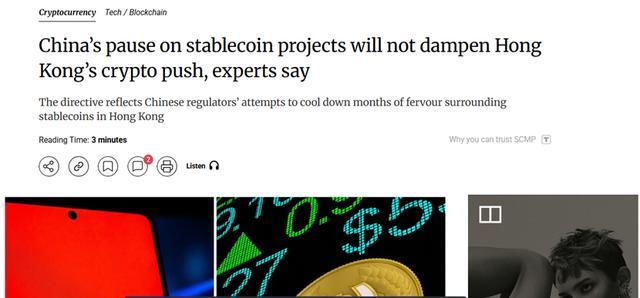
月底降息?比特币、以太坊即将变盘!这些币种将永久归零!山寨新叙事,你上车了吗?
Sou Hu Cai Jing· 2025-10-25 04:17
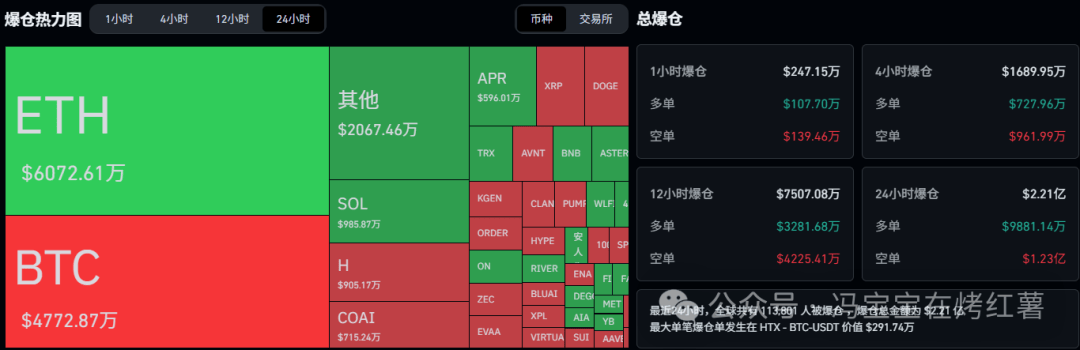
Market Overview - The current market is experiencing a period of consolidation before a potential breakout, with last night's favorable CPI data briefly boosting mainstream assets, but the buying momentum was insufficient to sustain the rally [1] - In the past 24 hours, a total of 113,801 individuals were liquidated, amounting to $221 million, with long positions accounting for $98.81 million and short positions for $123 million [1] Bitcoin Analysis - Bitcoin is currently in a triangular consolidation pattern, having faced resistance at the upper boundary last night. If it can maintain support around $1,093, there is a significant chance for upward movement [2][3] - A breakdown below this support could lead to a decline towards the lower boundary around $1,070, where a rebound may occur. A breakout above $1,130 is necessary to confirm a strong bullish trend and open new upside potential [3] Ethereum Analysis - Ethereum attempted to break through the upper boundary of its channel last night but faced resistance and retreated. The focus is now on the support level around $3,860; if it can consolidate above this level, the outlook remains bullish [4] - If the $3,860 support fails, the price may further decline towards the lower boundary around $3,710, where the rebound strength should be monitored. A significant bullish trend requires a breakout above the upper boundary at $4,050 [4] Altcoin Sentiment - There is a prevailing bearish sentiment towards altcoins, with many considered to be of low quality. However, some altcoins have not been disproven, particularly leading public chains that rely on new asset issuance and future financial asset onboarding [6] - DeFi projects, as foundational infrastructure for on-chain ecosystems, have clear user bases and applications, indicating potential for growth despite the overall negative sentiment [6] Meme Coins and New Narratives - Meme coins, as native assets in the crypto space, still hold value, especially those that are fully circulated on major exchanges. New narratives such as Real World Assets (RWA), stablecoin payments, and AI integration with cryptocurrencies are still being explored and have not been disproven [7] - Projects that do not fall into the aforementioned categories should be avoided, particularly those lacking funding or facing competitive failures. Focus should be on projects with clear user bases and defined growth scenarios [7] Specific Coin Analysis - $ASTER has seen a continuous price decline since its launch on October 6, but a rebound has occurred since the 23rd, indicating a potential reversal. However, long-term performance remains uncertain due to intense competition in the Perpetual DEX space [8] - $ZEC is currently being shorted around the $265 mark, with a short-term target of $190. $SUI has support between $2.30 and $2.35, with resistance at $2.57 to $3.10 [9]
经纬天地:收购TCSP持牌公司及推出FOPAY新功能
Zhi Tong Cai Jing· 2025-10-21 15:18
Group 1 - The company has completed the acquisition of 80% of Hwabao Trust Limited, a company registered under Hong Kong law, which holds a TCSP license, enhancing its service capabilities for Fopay users [1] - Following the acquisition, Fopay will launch two new features: cross-border transfers and QR code payments, aimed at providing a more efficient and cost-effective payment experience for local users in selected markets [1] - The board believes that the acquisition aligns with the overall interests of the company and its shareholders [1] Group 2 - The company will continue to explore new investment and business opportunities for sustainable growth and long-term shareholder returns, including expanding Fopay's service offerings [2] - Compliance with applicable laws and regulations in target jurisdictions is crucial, and the company will ensure that any new investments and service expansions through Fopay adhere to these legal requirements [2] - The company may collaborate with qualified service providers or business partners, or obtain necessary licenses through acquisitions to ensure compliance [2]
2025跨境电商“卖水人”暗战:33起融资背后,谁在收割行业新红利?
3 6 Ke· 2025-10-16 10:03
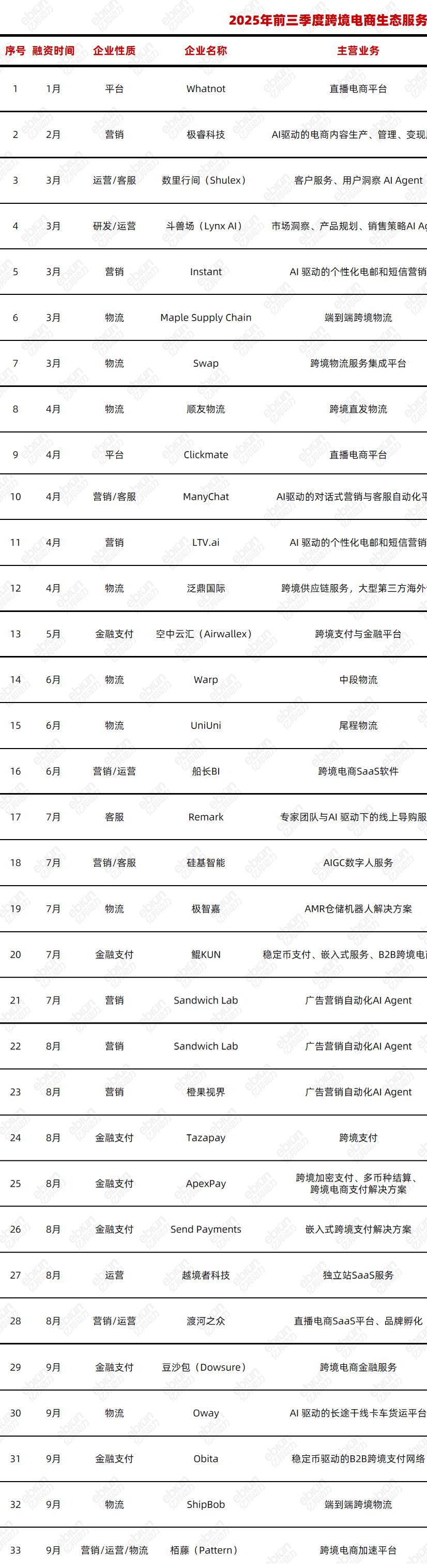
Core Insights - The article highlights the emergence of cross-border e-commerce ecosystem service providers as the new "water sellers" in the current "new gold rush" of overseas expansion, similar to the historical gold rush in the 1850s [1] - By September 2023, there were at least 33 financing events for global cross-border e-commerce ecosystem service providers, marking a 74% year-on-year increase compared to the previous year [1][2] - The investment enthusiasm in the cross-border e-commerce ecosystem service sector remains high, with both AI-driven new service providers and traditional service providers receiving significant capital support [1] Financing Overview - In the first three quarters of 2025, there were at least 33 financing activities in the cross-border e-commerce ecosystem service sector, involving 32 overseas enterprises and two IPO events [2] - Nearly half of the financing projects were billion-level, with growth-stage companies being the most favored [2] Financing Events by Type - The financing events included various service types such as platforms, marketing, operations, logistics, financial payments, and customer service [2] - The financing events were distributed as follows: 7 in Q1, 9 in Q2, and 17 in Q3, indicating a rising trend [8] Financing Scale - The financing in the first three quarters was primarily in the million/multi-million and billion-level categories, with 14 instances of multi-million financing and 11 instances of billion-level financing [10] - The largest financing events included Airwallex at $300 million, Whatnot at $265 million, and ManyChat at $140 million, all exceeding 1 billion RMB [10] Investment Trends - Growth-stage companies (Pre-A, A, B, and C rounds) accounted for over 50% of the financing events, indicating a preference for more established firms over early-stage startups [12][14] - Marketing and logistics service providers were the primary focus of capital investment, with marketing services leading with 11 financing events [16][18] Emerging Concepts - New concepts such as AI Agents and flexible fulfillment are gaining traction in the cross-border e-commerce ecosystem, driving efficiency and innovation [26] - The rise of stablecoin payments is also noted, with companies like KUN and ApexPay developing systems for cross-border e-commerce [29][31]
拉美稳定币支付采用的浪漫与现实
Sou Hu Cai Jing· 2025-09-21 01:01
Core Insights - The cryptocurrency ecosystem in Latin America has evolved from a nascent phenomenon to a significant force reshaping financial rules, driven by economic turmoil, regulatory gaps, and innovative energy [2] - Countries like Argentina, Brazil, Colombia, and Mexico are leading the charge in utilizing stablecoins for capital redistribution, creating new investment opportunities [2] Group 1: Market Dynamics - Latin America is characterized by a fragmented market with distinct economic "islands," where stablecoins serve different purposes: Argentina uses them to hedge against hyperinflation, Mexico is cautious due to geopolitical factors, and Brazil treats on-chain dollars as a digital savings tool [2] - The demand for stablecoins in Latin America is driven by macroeconomic factors such as foreign exchange controls, extreme currency risks, and heavy tax burdens combined with a lack of banking services [8][9][10][11] Group 2: VelaFi's Role - VelaFi is a cross-border financial infrastructure platform focused on stablecoins, providing services to hundreds of businesses across Latin America, the US, and Asia, facilitating cross-border payments, fund management, and settlement [3][51] - The company aims to create a frictionless financial system that supports businesses in emerging markets to integrate into the global digital economy [3][51] Group 3: Stablecoin Demand - The real demand for stablecoins in Latin America is particularly pronounced in countries facing inflation and currency instability, with 70% of the population lacking bank accounts [6] - Stablecoins are increasingly seen as a necessary payment medium, especially in B2B and B2C transactions, due to the macroeconomic environment [8][12] Group 4: Challenges and Opportunities - The last-mile challenge remains significant, as stablecoins primarily serve as a cross-border payment medium rather than a widely accepted currency for everyday transactions [15] - The adoption of stablecoins in consumer scenarios is still limited, requiring improved infrastructure and regulatory support to enhance their acceptance [16] Group 5: Regional Insights - Brazil is viewed as a relatively mature market for stablecoins, with traditional financial players actively developing their own stablecoin ecosystems [30] - Mexico faces unique challenges due to geopolitical tensions, leading to a growing interest in stablecoin solutions to bypass traditional banking delays [34] - Argentina's high inflation and currency devaluation have led to a significant reliance on stablecoins as a means to circumvent foreign exchange controls and multiple exchange rates [35] Group 6: Future Directions - VelaFi plans to expand its offerings to include direct stablecoin payment solutions for e-commerce and gaming sectors, anticipating a shift towards a stablecoin-centric economy [46] - The company is also exploring AI payment interfaces to facilitate seamless transactions across borders, positioning itself for future growth in the stablecoin market [47]

361度探索稳定币支付 以提升跨境结算效率及降低汇率风险
Zhi Tong Cai Jing· 2025-09-12 04:14
Core Viewpoint - The company is exploring the use of stablecoin payment and settlement solutions for product sales outside mainland China, aiming to enhance payment efficiency and reduce costs for cross-border e-commerce clients [1] Group 1: Company Initiatives - The company has opened an account with an independent third-party service provider specializing in digital payment solutions involving fiat currencies and stablecoins [1] - The integration of virtual assets is expected to create significant business opportunities for the company [1] Group 2: Market Context - There is an increasing acceptance of cryptocurrencies in the global business community [1] - The company serves numerous cross-border e-commerce and overseas offline store clients who have ongoing needs for local payments and cross-border settlements [1] Group 3: Benefits of Stablecoin Adoption - Utilizing stablecoin payment methods is anticipated to enhance payment efficiency and lower costs, better meeting the needs of cross-border e-commerce clients [1] - The adoption of stablecoin payments is expected to help mitigate exchange rate risks faced by the company when transacting with clients outside mainland China [1]
361度:正探索使用稳定币支付和结算的解决方案
Ge Long Hui A P P· 2025-09-12 04:12
Group 1 - The company is exploring the use of stablecoin payment and settlement solutions for product sales outside mainland China, including offline stores, e-commerce sales, supply chain services, and digital ecosystem businesses [1] - An account has been opened with an independent third-party service provider specializing in fiat and stablecoin omnichannel digital payment solutions to facilitate efficient and seamless value flow globally [1] - The integration of virtual assets is expected to create significant business opportunities, particularly for cross-border e-commerce and overseas offline store clients who have ongoing needs for local payments and cross-border settlements [1] Group 2 - The adoption of stablecoin payment methods is anticipated to enhance payment efficiency and reduce costs, better meeting the needs of cross-border e-commerce clients [1] - This payment method is also expected to help mitigate exchange rate risks faced by the company when transacting with clients outside mainland China [1]
361度(01361)探索稳定币支付 以提升跨境结算效率及降低汇率风险
智通财经网· 2025-09-12 04:09
Core Viewpoint - The company is exploring the use of stablecoin for payment and settlement solutions to enhance product sales outside mainland China, indicating a strategic shift towards digital payment methods [1] Group 1: Company Initiatives - The company has opened an account with an independent third-party service provider specializing in digital payment solutions involving both fiat currency and stablecoin [1] - The integration of virtual assets is seen as a significant business opportunity, reflecting the growing acceptance of cryptocurrencies in the global business community [1] Group 2: Market Demand - The company serves numerous cross-border e-commerce and overseas offline store clients, who have a continuous demand for local payment and cross-border settlement solutions [1] - The adoption of stablecoin payment methods is expected to enhance payment efficiency and reduce costs, better meeting the needs of cross-border e-commerce clients [1] - This payment method is anticipated to help mitigate exchange rate risks faced by the company when transacting with clients outside mainland China [1]