
经济胁迫

Search documents
48小时风暴升级!欧盟挥出核选项重拳,冯德莱恩表示这只是开始
Sou Hu Cai Jing· 2025-10-24 12:42
Group 1 - The core issue is the EU's escalating tensions with China, driven by internal economic crises in Europe, particularly in Germany and France, leading to potential sanctions against Chinese companies [1][3][5] - The EU's "Anti-Coercion Instrument" (ACI) is seen as a significant measure against perceived economic threats, but it reflects the EU's internal anxieties rather than a position of strength [3][18] - Germany is experiencing a technical recession, while France faces credit rating downgrades due to high debt, impacting the overall stability of the European automotive industry [5][27] Group 2 - The EU's dual approach of seeking cooperation with China while simultaneously preparing for confrontation reveals a contradiction in its strategic objectives [11][12] - The ongoing sanctions against Russian entities have now extended to Chinese companies, indicating a broader geopolitical strategy that may backfire on the EU [14][25] - The reliance of European industries, particularly automotive, on Chinese markets and materials poses a risk of severe economic repercussions if tensions escalate [27][29] Group 3 - The actions taken by the Netherlands against a Chinese semiconductor firm signal a troubling trend of politicizing market rules, which could deter global investment in Europe [16][31] - The EU's inconsistent stance on trade and investment, characterized by accusations against China while simultaneously imposing restrictive measures, undermines its credibility as a stable investment destination [29][33] - The call for a more rational approach to EU-China relations emphasizes the need for pragmatic dialogue to avoid a detrimental trade conflict that could harm Europe's economic future [35]


中国不惧美方施压持续进口俄油,“偏逆着来”
Sou Hu Cai Jing· 2025-10-21 06:57
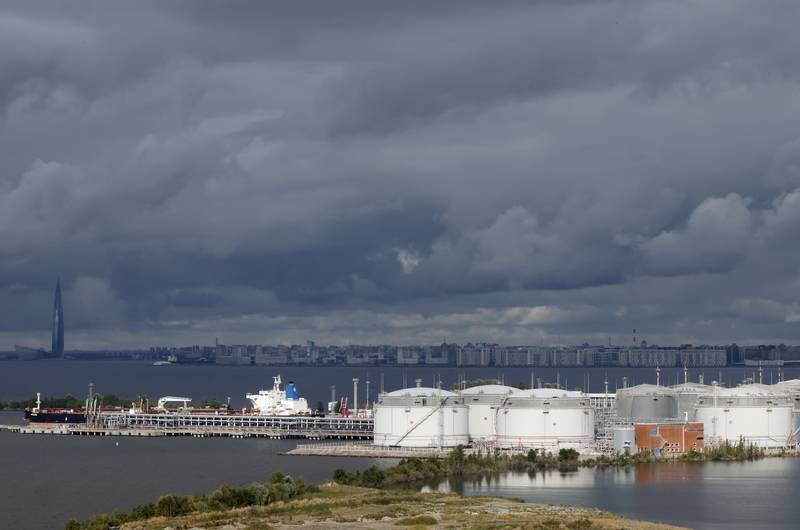
Core Insights - Despite ongoing pressure from the United States, Russia remains China's largest crude oil supplier as of September 2023, with imports increasing by 4.3% month-on-month to 8.287 million tons, valued at $4.066 billion [1] - China has halted crude oil purchases from the U.S. since June, although the U.S. share in China's total imports was already minimal [1] - The progress of the China-Russia cross-border pipeline project is enhancing cooperation between the two nations, with a slight year-on-year increase of 1.9% in liquefied natural gas imports from Russia in September [1] - China's crude oil imports from Indonesia surged approximately 73 times year-on-year in September, while imports from Brazil increased by 156%, diversifying China's energy supply sources [1] Geopolitical Context - The increase in crude oil purchases from Russia is seen as a defiant stance by China ahead of further negotiations with the U.S. [3] - Former U.S. President Trump has intensified efforts to curb Russian energy revenues, urging India to stop purchasing Russian crude and suggesting that China should follow suit [3] - U.S. Treasury Secretary has also warned Japan to terminate energy imports from Russia, indicating a broader strategy to isolate Russian energy sources [3] China's Position - The Chinese Foreign Ministry has reiterated that its energy cooperation with Russia is legitimate and normal, criticizing U.S. actions as unilateral bullying and economic coercion [4] - China maintains a neutral stance on the Ukraine crisis and opposes U.S. sanctions, asserting that it will take necessary measures to protect its legitimate rights and interests if harmed [4]
敢招惹中国试试?中方警告不到24小时,日本拒绝对华加税,用3个字向特朗普解释
Sou Hu Cai Jing· 2025-09-25 00:48
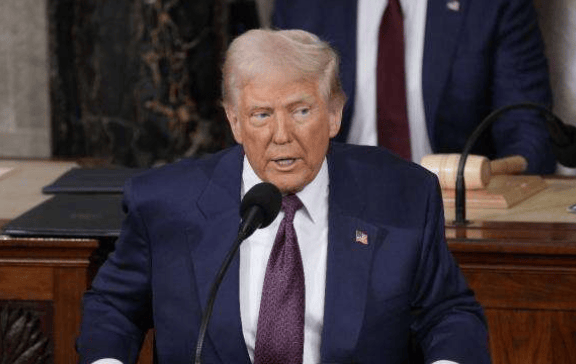
Core Viewpoint - The Trump administration is attempting to pressure China and India to sever energy ties with Russia through trade measures, proposing tariffs of 50%-100% on imports from Russia, which has sparked significant international discussion, particularly from Japan [1][3]. Group 1: Japan's Response - Japan's Finance Minister, Katsunobu Kato, firmly stated that Japan cannot accept the U.S. proposal to impose tariffs on China, highlighting Japan's deep economic ties with Russia and the potential impact on its energy supply and economic interests [1][6]. - Kato's response reflects Japan's strategic choice amid complex international dynamics, indicating a rejection of U.S. unilateralism and showcasing Japan's independence and pragmatism in global economic matters [3][6]. Group 2: Economic Implications - The U.S. strategy aims to leverage economic pressure to compel China and India to cut energy cooperation with Russia, thereby intensifying economic sanctions against Russia in the context of the Ukraine conflict [3][4]. - However, the proposed economic sanctions could inadvertently harm U.S. allies, particularly European nations that maintain energy partnerships with Russia, complicating the global economic landscape [4]. Group 3: Japan's Economic Interests - Japan's significant economic relationship with China, as its largest trading partner, means that supporting U.S. tariffs could severely impact Japanese companies' competitiveness and operational costs [6]. - Japan's energy cooperation with Russia, although limited, remains crucial for its energy security, with key projects like Sakhalin-2 and Arctic LNG 2 being vital for Japan's energy supply stability [6]. Group 4: Broader International Reactions - China's Foreign Ministry has condemned the U.S. pressure tactics, asserting that it will take necessary measures to protect its legitimate economic interests, emphasizing the need for fairness and cooperation in the global economic order [9].
美国要求盟友对中国大幅加征关税,日本拒绝称“难以做到”
Sou Hu Cai Jing· 2025-09-18 14:17
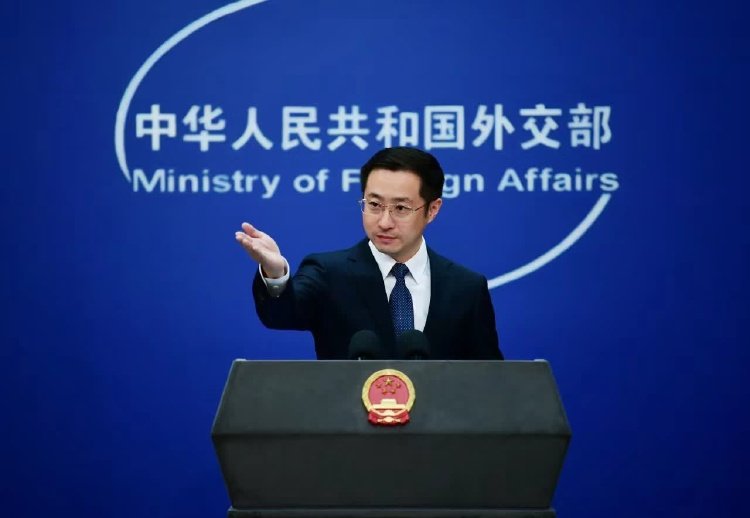
Group 1 - Japan's Finance Minister, Kato Katsunobu, rejected the U.S. request to impose high tariffs on Russian oil imports from China and India, emphasizing Japan's commitment to World Trade Organization (WTO) rules [1] - Kato stated that raising tariffs to levels such as 50% solely based on a country's imports from Russia is not feasible for Japan [1] - The G7 had discussed potential sanctions against China and India for their continued purchase of Russian oil, with the U.S. suggesting tariffs as high as 100% [1] Group 2 - China's Foreign Ministry spokesperson, Lin Jian, defended China's legitimate energy cooperation with Russia and criticized the U.S. for its unilateral and coercive actions, which threaten global supply chain stability [2] - Lin reiterated China's consistent stance on the Ukraine crisis, advocating for dialogue and negotiation as the only viable solution [2] - The Chinese government expressed strong opposition to illegal unilateral sanctions and "long-arm jurisdiction" against China, stating that it would firmly counter any damage to its legitimate rights [2]
美方要求多方对华加征50%-100%关税!中方表态
Nan Fang Du Shi Bao· 2025-09-15 09:51
Core Viewpoint - The Chinese Ministry of Commerce opposes the U.S. request for imposing tariffs on China based on its imports of Russian oil, labeling it as unilateral bullying and economic coercion [1] Group 1: Economic Measures - The U.S. is seeking to impose tariffs ranging from 50% to 100% on China due to its purchase of Russian oil, aiming to pressure China to play a role in ending the Russia-Ukraine conflict [1] - The Chinese government asserts that such measures violate the consensus reached between the leaders of China and the U.S. [1] Group 2: Trade Relations - The Chinese Ministry of Commerce emphasizes the potential severe impact on global trade and supply chain stability if these tariffs are enacted [1] - China expresses a desire for the U.S. to engage in equal dialogue to resolve trade differences amicably [1] Group 3: Global Trade Order - The Chinese government calls for all parties to uphold principles that maintain the stability of the global trade order and supply chains [1] - There is a warning that if China's interests are harmed, it will take necessary measures to protect its legitimate rights [1]
美国要求G7和北约集体对华加关税,外交部回应
Bei Jing Ri Bao Ke Hu Duan· 2025-09-15 07:50
Core Viewpoint - The Chinese government firmly opposes the U.S. request for G7 and NATO members to impose tariffs on China, citing it as unilateral bullying and economic coercion that undermines international trade rules and threatens global supply chain stability [3]. Group 1: China's Position on Trade and Energy Cooperation - China maintains that its trade and energy cooperation with countries, including Russia, is legitimate and justified [3]. - The Chinese government emphasizes that coercive measures from the U.S. are ineffective and do not resolve underlying issues [3]. Group 2: Stance on the Ukraine Crisis - China has a consistent and clear position regarding the Ukraine crisis, advocating for dialogue and negotiation as the only viable solution [3]. - Since the onset of the crisis, China has upheld an objective and fair stance, promoting peace talks [3]. Group 3: Response to Sanctions and Economic Pressure - The Chinese government strongly opposes the imposition of illegal unilateral sanctions and "long-arm jurisdiction" by other parties [3]. - If China's legitimate rights and interests are harmed, the government will take resolute countermeasures to protect its sovereignty, security, and development interests [3].
梁丹媚:遭越南“背刺”,印尼和美国谈判关税时陷入两难
Sou Hu Cai Jing· 2025-07-31 00:16
Core Viewpoint - The article discusses a significant shift in the U.S. geopolitical economic strategy under the Trump administration, characterized by unprecedented tariffs aimed at reshaping global supply chains, curbing China's influence, and re-establishing U.S. economic dominance [1][5]. Tariff Impact - The scale of the tariff measures is alarming, with proposed tariffs of 46% on Vietnamese exports, 49% on Cambodian goods, 36% on Thai products, 32% on Indonesian items, and 24% on Malaysian exports [2][4]. - Following the announcement, Southeast Asian currencies such as the Thai baht and Malaysian ringgit experienced sharp declines, leading to significant market volatility [4]. Trade Balance and Strategy - The U.S. claims these tariffs are a response to "unfair trade practices," yet many ASEAN countries are sources of substantial U.S. trade surpluses, with a total trade volume of $476.8 billion in 2024, including $352.3 billion in exports from ASEAN to the U.S. [4][5]. - Analysts suggest that the true aim of the tariffs is to economically compel Southeast Asian nations to decouple from China, making their ties with China less economically viable [5][6]. Political Leverage - The U.S. strategy is described as using international trade as a tool for political coercion, effectively weaponizing trade to achieve its geopolitical objectives [6]. - The uncertainty surrounding the implementation of these tariffs serves as a strategic weapon, creating confusion and anxiety among targeted nations and businesses, thereby maximizing U.S. leverage in negotiations [7]. ASEAN's Response - ASEAN's collective response to the U.S. tariffs has been weak, with member states unable to form a unified front against U.S. unilateralism, leading to a situation where individual countries seek bilateral negotiations with the U.S. [10][11]. - The establishment of a "Vietnam precedent," where Vietnam negotiated a reduction in tariffs from 46% to 20%, has shifted the focus of other ASEAN countries from collective resistance to individual negotiations, fostering competition among them [13][14].
法国炸锅:不能再当最后一个傻瓜!
Sou Hu Cai Jing· 2025-07-29 04:51
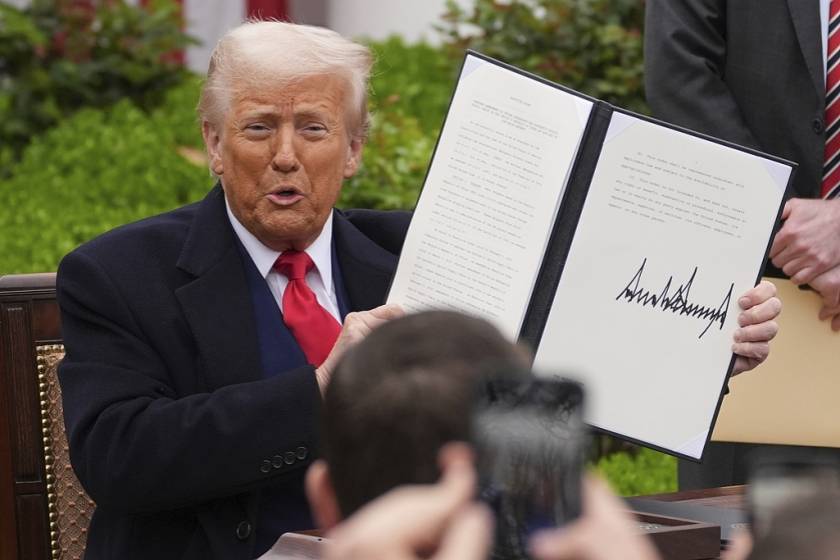
Group 1 - The EU has agreed to a trade deal with the US, accepting a 15% tariff on goods exported to the US, which is seen as a capitulation under the threat of US tariffs [1][2] - The deal includes a commitment from the EU to increase investments in the US by $600 billion and to purchase $750 billion worth of US energy products [1] - French officials have expressed strong criticism of the agreement, labeling it as a "sombre day" and arguing that it undermines European unity and values [2][3] Group 2 - German Chancellor Merz acknowledged that while the agreement avoids a trade conflict that could severely impact Germany's export-driven economy, he expressed dissatisfaction with the 15% tariff [6] - Many EU countries share a similar sentiment, recognizing the deal as imbalanced but supporting it to avoid escalating trade tensions [6][7] - The agreement is expected to be finalized in a joint statement by August 1, with further negotiations to establish a comprehensive deal [7] Group 3 - European stock markets reacted positively to the news, with the Stoxx 600 index reaching a four-month high, indicating a mixed sentiment among European companies regarding the deal [7] - Economists noted that while the 15% tariff is better than expected, there are concerns about the long-term competitiveness of European exports and the costs that US customers will incur due to the tariffs [7]
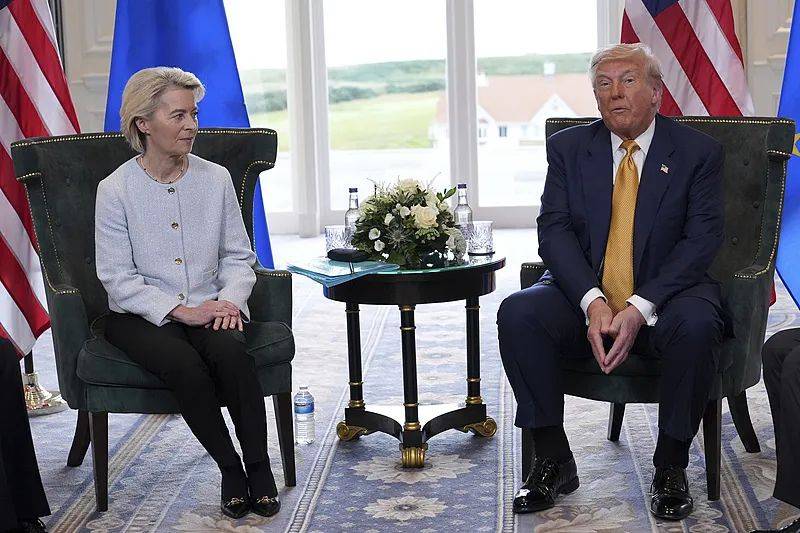
【环球财经】法国总理抨击美欧新贸易协议 多位法国官员称协议“不平衡”
Xin Hua Cai Jing· 2025-07-28 13:10
Core Points - The European Union and the United States have reached a new trade agreement, with the U.S. imposing a 15% tariff on products imported from the EU [1] - French Prime Minister François Bérou criticized the agreement as a "surrender" by the EU, indicating dissatisfaction among French officials regarding the "imbalance" of the deal [1] - French officials express concerns that the current trade situation is unsustainable and highlights a structural change in U.S. trade policy, which they believe disregards World Trade Organization rules [1] Group 1 - The new trade agreement aims to provide temporary stability for economic participants threatened by U.S. tariff escalations [1] - French Minister for European Affairs Benjamin Haddad emphasized the need for a reevaluation of the trade relationship, stating that the current situation is not satisfactory and poses risks of being completely undermined [1] - Minister for Foreign Trade Laurent Saint-Martin pointed out the imbalance in trade, particularly in the digital services sector, and called for efforts to achieve a balance in trade relations [1] Group 2 - Saint-Martin advocates for a stronger and more assertive stance against the U.S., suggesting that the final agreement may differ if the EU demonstrates its counter-capacity [2]
欧盟委员会主席冯德莱恩:欧盟将与日本更加紧密地合作,以应对经济胁迫并解决不公平贸易做法。
news flash· 2025-07-23 09:49
Core Points - The European Commission President Ursula von der Leyen announced that the EU will strengthen cooperation with Japan to address economic coercion and unfair trade practices [1] Group 1 - The EU aims to enhance collaboration with Japan in response to economic pressures [1] - The focus will be on tackling unfair trade practices that affect both regions [1]