
绿水青山就是金山银山理念

Search documents
深入学习贯彻习近平生态文明思想 以法治力量保障森林生态高水平保护和现代林业高质量发展
Ren Min Ri Bao· 2025-09-22 22:40
Core Points - The meeting emphasized the importance of implementing the Forest Law as a key measure to ensure high-level protection of forest ecology and high-quality development of modern forestry [1] - Significant achievements have been made in forest resource protection and ecological restoration since the 18th National Congress, with a positive trend in high-quality forestry development [1] Group 1 - The central government has prioritized ecological civilization construction as a fundamental strategy for sustainable development [1] - The concept of "green mountains and clear waters are as valuable as mountains of gold and silver" should be firmly established and practiced [1] - The implementation of the Forest Law must be comprehensive and effective, ensuring that all legal provisions are enforced [1] Group 2 - There is a need to strengthen legal responsibility, enhance collaboration among legislation, enforcement, and judiciary, and promote legal awareness [1] - A problem-oriented and goal-oriented approach should be adopted, combining reform with the rule of law to address prominent issues in legal implementation [1] - Follow-up work on law enforcement inspections is essential to ensure effective supervision and continuous progress in building a beautiful China [1]
李鸿忠主持森林法执法检查组第二次全体会议并讲话
Xin Hua She· 2025-09-22 11:51
Core Points - The meeting emphasized the importance of implementing Xi Jinping's ecological civilization thought to ensure high-level protection of forest ecology and high-quality development of modern forestry [2] - Significant achievements have been made in forest resource protection and ecological restoration since the 18th National Congress, with a positive trend in high-quality forestry development [2] Group 1 - The implementation of the Forest Law is crucial for ensuring the effectiveness of legal provisions and responsibilities [2] - There is a need to strengthen the coordination of legislation, law enforcement, and judicial processes, as well as enhance legal awareness and education [2] - The approach should combine problem-oriented and goal-oriented strategies, integrating reform with the rule of law to address outstanding issues in legal implementation [2] Group 2 - The meeting called for the acceleration of the formulation and revision of supporting laws and regulations to improve the legal system for forest protection and utilization [2] - Follow-up work on law enforcement inspections is essential to ensure effective supervision and continuous progress in building a beautiful China [2]
李鸿忠在森林法执法检查组会议上强调 深入学习贯彻习近平生态文明思想 以法治力量保障森林生态高水平保护和现代林业高质量发展
Xin Hua She· 2025-09-22 11:39
Core Points - The meeting emphasized the importance of implementing the Forest Law as a key measure to ensure high-level protection of forest ecology and high-quality development of modern forestry [1] - Significant achievements have been made in forest resource protection and ecological restoration since the 18th National Congress, with a positive trend in high-quality forestry development [1] - The meeting highlighted the need to firmly establish the concept that "lucid waters and lush mountains are invaluable assets" and to ensure the effective implementation of the Forest Law [1] Summary by Categories Implementation of Forest Law - The meeting called for comprehensive and effective implementation of the Forest Law, ensuring that all legal provisions are enforced [1] - It stressed the importance of legal responsibility, collaboration in legislation, enforcement, and judicial processes, as well as enhancing legal awareness [1] Ecological Civilization and Forestry Development - The central government has prioritized ecological civilization as a fundamental strategy for sustainable development, making significant progress in building a beautiful China [1] - The meeting underscored the need to address prominent issues in legal implementation through reform and to improve the legal framework for forest protection and high-quality forestry development [1] Future Actions - The meeting outlined the necessity of follow-up work on law enforcement inspections to ensure effective supervision and continuous efforts in promoting the construction of a beautiful China [1]
快来用影像定格绿水青山
Hang Zhou Ri Bao· 2025-09-19 01:45
Group 1 - The article highlights the launch of the Fuchun "Green Scene" ecological photography competition, marking the 20th anniversary of the "Lucid Waters and Lush Mountains are Invaluable Assets" concept, aimed at showcasing the achievements in ecological civilization construction in Fuyang [1] - The competition is divided into three themes: "Fuchun Mountains and Rivers," "Ecological Achievements," and "Dialogue Between Past and Present," encouraging public participation to capture the changes in the environment [1] - Submission deadline for entries is set for October 12 at 24:00, with specific requirements for photo format, resolution, and original information retention [1] Group 2 - Multiple awards are established for each theme, including one first prize of 600 yuan, two second prizes of 400 yuan each, three third prizes of 200 yuan each, and ten excellence awards of 50 yuan each [1] - The judging criteria will include creativity, technical quality, thematic relevance, communicative value, and ecological significance, with results to be announced through various social media platforms [1]
深刻领悟习近平生态文明思想的世界意义
Ren Min Ri Bao· 2025-09-17 04:48
Group 1 - The core idea of Xi Jinping's ecological civilization thought emphasizes the importance of building a beautiful and clean world, contributing Chinese wisdom and solutions to global ecological civilization construction [1][3][11] - Xi Jinping's ecological civilization thought integrates ecological protection with civilization development, proposing a new civilization form that transcends traditional industrial civilization [3][10] - The concept of "green water and lush mountains are invaluable assets" highlights the economic, social, and cultural values of ecological environments, promoting the idea that ecological protection and economic development are not contradictory but rather complementary [8][9][13] Group 2 - Xi Jinping's ecological civilization thought provides a theoretical framework for addressing the global dilemma of sustainable development, breaking the paradox of development versus protection [7][10] - The thought reflects a shift from capital logic to a people-centered approach, emphasizing that a good ecological environment is a fundamental aspect of public welfare [4][10] - The integration of traditional Chinese ecological wisdom with modern ecological governance offers a new path for harmonious coexistence between humans and nature, distinguishing it from both ecocentrism and anthropocentrism [5][10] Group 3 - China's commitment to green development under Xi Jinping's ecological civilization thought has led to significant achievements, such as becoming the world's largest market for electric vehicles and a major player in renewable energy [9][10][13] - The thought encourages international cooperation in ecological governance, positioning China as a key contributor to global sustainable development efforts [12][14] - Xi Jinping's ecological civilization thought aims to provide a new choice for developing countries in achieving modernization without following the traditional path of pollution followed by remediation [10][12]
深刻领悟习近平生态文明思想的世界意义(深入学习贯彻习近平新时代中国特色社会主义思想·学习《习近平生态文明文选》第一卷专家谈)
Ren Min Ri Bao· 2025-09-16 22:10
Group 1 - The core idea of Xi Jinping's ecological civilization thought emphasizes the importance of building a beautiful world and a clean environment, contributing Chinese wisdom and solutions to global ecological civilization construction [1][11] - Xi Jinping's ecological civilization thought integrates ecological protection with civilization development, proposing a new paradigm for human civilization that transcends traditional industrial civilization [3][10] - The concept of "green mountains and clear waters are as valuable as mountains of gold and silver" highlights the economic, social, and ecological value of environmental protection, promoting a harmonious relationship between ecological conservation and economic development [8][9] Group 2 - Xi Jinping's ecological civilization thought advocates for a human-centered approach, prioritizing the well-being of people and recognizing a good ecological environment as a fundamental aspect of public welfare [4][10] - The thought reflects a holistic system thinking that contrasts with the binary thinking of Western civilization, emphasizing the interconnectedness of nature and humanity [5][10] - The approach aims to resolve the paradox of development versus protection, providing theoretical guidance for sustainable global development [7][10] Group 3 - China's commitment to green development under Xi Jinping's ecological civilization thought has led to significant achievements, including becoming the world's largest market for electric vehicles and a leader in renewable energy technology [9][10] - The country actively participates in global environmental governance, providing over 80% of the world's photovoltaic components and 70% of wind power equipment, significantly contributing to global carbon reduction efforts [13][14] - The successful implementation of ecological civilization practices in China serves as a model for developing countries seeking modernization without following the traditional path of pollution followed by remediation [10][12]
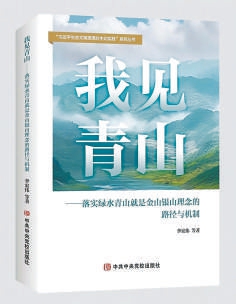
落实绿水青山就是金山银山理念的路径与机制
Bei Jing Ri Bao Ke Hu Duan· 2025-09-15 06:18
Core Viewpoint - The book "I See Green Mountains" systematically discusses the concept of "Lucid Waters and Lush Mountains are Invaluable Assets" and explores diverse pathways for realizing the value of ecological products, serving as both a theoretical work and a practical case study repository [2] Summary by Relevant Sections - The book provides theoretical guidance and practical references for various stakeholders, including leaders, researchers, policymakers, and practitioners [2] - It aims to inspire local explorations of new pathways for transforming the "Two Mountains" concept in accordance with regional realities, enhancing the visibility of ecological assets and the value of economic assets [2]

绿水青山就是金山银山理念的理论价值与实践伟力
Ren Min Ri Bao· 2025-09-05 02:10
Core Concept - The concept of "Green Mountains and Clear Water are as Valuable as Mountains of Gold and Silver" emphasizes the unity of economic development and ecological protection, guiding China's ecological civilization construction towards a historic transformation [1][2][3]. Theoretical Value - The "Two Mountains" theory proposed by Xi Jinping in 2005 has been consistently emphasized by the Chinese leadership, highlighting its importance in ecological civilization construction and sustainable development [2][3]. - The theory integrates Marxist ecological views with traditional Chinese ecological wisdom, forming a unique ecological civilization theory rooted in China [3][4]. Economic and Ecological Relationship - The theory breaks the dichotomy between economic development and ecological protection, establishing a harmonious coexistence perspective that recognizes the intrinsic relationship between ecology and economy [4][5]. - It posits that ecological value is inherently linked to economic and social value, advocating for a system where ecological protection is integrated into economic growth [4][5]. Practical Transformations - The implementation of the theory has led to significant improvements in China's ecological environment, with air quality and water quality showing marked enhancements [7]. - By 2024, the number of cities meeting air quality standards increased to 222, and PM2.5 levels dropped from 46 µg/m³ in 2015 to 29.3 µg/m³ [7]. Modern Economic System - The theory promotes the idea that green ecology is a significant asset, leading to the development of a modern economic system that balances ecological and economic growth [8][9]. - It encourages the integration of ecological industry and industrial ecology, fostering a complete cycle where economic development supports ecological restoration [8]. Governance and Legal Framework - The establishment of strict legal frameworks and governance systems is crucial for ensuring the effective implementation of the ecological civilization principles [9]. - The Chinese government has focused on creating a comprehensive ecological governance system to support the realization of the "Two Mountains" theory [9]. International Influence - The theory has gained international recognition, providing a model for developing countries facing ecological constraints while pursuing economic growth [10][11]. - China's approach to ecological civilization has been highlighted in international forums, showcasing its potential as a global reference for sustainable development [10][12]. Innovative Practices - Various local initiatives have emerged under the guidance of the theory, demonstrating practical applications that balance ecological protection with economic development [13]. - Examples include the transformation of ecological resources into marketable assets, such as carbon credits from bamboo forests, showcasing innovative approaches to sustainable development [13]. New Civilizational Path - The theory guides humanity towards a new form of civilization that prioritizes ecological sustainability over traditional industrial growth models [14]. - It challenges the notion that modernization must follow Western paradigms, advocating for a development path that respects ecological integrity [14].
李宏伟:绿水青山就是金山银山理念的理论价值与实践伟力
Bei Jing Ri Bao Ke Hu Duan· 2025-09-05 00:43
Core Viewpoint - The "Green Mountains and Clear Water are as Valuable as Mountains of Gold and Silver" concept, proposed by Xi Jinping 20 years ago, emphasizes the unity of economic development and ecological protection, guiding China's ecological civilization construction through significant theoretical and practical changes [1][2]. Theoretical Value - The concept has been consistently highlighted by Xi Jinping since its inception in 2005, with its importance reiterated in various national and international speeches, emphasizing the need for harmony between nature and development [2][3]. - It integrates Marxist ecological views with traditional Chinese ecological wisdom, forming a unique ecological civilization theory that promotes high-quality economic development alongside ecological protection [3][4]. Practical Innovations - The concept has led to a shift from short-term growth at the expense of the environment to a focus on ecological priority and green, low-carbon development [7][8]. - China's ecological environment has shown continuous improvement, with significant reductions in PM2.5 levels and increased public satisfaction regarding ecological conditions, demonstrating the practical effectiveness of the concept [8][9]. Economic Transformation - The concept positions natural capital as a fundamental production factor, enhancing Marxist political economy by recognizing the ecological environment's role in sustainable productivity [5][6]. - It promotes a complete cycle where ecological value is transformed into economic value, fostering a system where economic growth supports ecological protection [9][10]. International Influence - The concept serves as a model for developing countries facing ecological constraints, showcasing that high-quality development can be achieved through ecological protection [11][12]. - It encourages a paradigm shift from exploitative development to harmonious coexistence with nature, contributing to global ecological civilization efforts [12][14]. Diverse Practices - Various local initiatives in China exemplify the practical application of the concept, such as transforming ecological resources into marketable assets, providing valuable lessons for other developing nations [13][14]. - The concept has inspired innovative practices that align ecological sustainability with economic growth, offering a reference for achieving sustainable development tailored to local conditions [13][14].
绿水青山就是金山银山理念的理论价值与实践伟力(深入学习贯彻习近平新时代中国特色社会主义思想·学习《习近平生态文明文选》第一卷专家谈)
Ren Min Ri Bao· 2025-09-04 22:57
Core Concept - The "Green Mountains and Clear Water are as Valuable as Mountains of Gold and Silver" concept emphasizes the unity of economic development and ecological protection, guiding China's ecological civilization construction through significant theoretical and practical changes [1][2]. Theoretical Value - The concept, introduced by Xi Jinping in 2005, has been consistently reinforced by the Chinese leadership, highlighting its importance in ecological civilization and sustainable development [2]. - It integrates Marxist ecological views with traditional Chinese ecological wisdom, forming a unique ecological civilization theory that promotes high-quality economic development alongside ecological protection [3][4]. Economic and Ecological Integration - The concept breaks the dichotomy between economic growth and ecological protection, establishing a harmonious development perspective that recognizes the intrinsic relationship between ecology and economy [4][5]. - It positions natural capital as a fundamental production factor, enhancing Marxist political economy by acknowledging the ecological environment's role in sustainable productivity [5]. Practical Transformations - The implementation of this concept has led to significant improvements in China's ecological environment, with air quality and water quality showing marked enhancements, and public satisfaction with the environment reaching 91.24% [7]. - The approach has fostered a complete cycle of ecological and economic benefits, promoting green industries and low-carbon technologies while enhancing traditional industries [8]. Institutional Reforms - Continuous reforms in ecological civilization systems and governance have been emphasized, ensuring that the concept is deeply rooted in legal and institutional frameworks [9]. - The establishment of strict environmental laws and innovative governance models has transformed ecological management from reactive to proactive systems [9]. International Influence - The concept serves as a model for developing countries facing ecological constraints, demonstrating that high-quality development can be achieved alongside ecological protection [10]. - China's ecological strategies have gained international recognition, contributing valuable experiences for global ecological governance [10][12]. Human-Nature Relationship - The concept promotes a shift from anthropocentrism to a view of humans and nature as a unified community, guiding global efforts towards sustainable development [11][12]. - It encourages countries to explore their unique paths to modernization without sacrificing ecological integrity, challenging the notion that Western-style modernization is the only viable option [14].