美国制裁

Search documents
美国宣布:已扣押“贝拉1”号油轮
Xin Lang Cai Jing· 2026-01-07 15:06
Core Viewpoint - The U.S. has seized the oil tanker "Bella 1," now renamed "Mariner," for violating U.S. sanctions, highlighting ongoing tensions regarding oil shipments linked to Russia and Venezuela [1][2]. Group 1: U.S. Actions - The U.S. European Command announced the seizure of the "Bella 1" oil tanker, claiming it violated U.S. sanctions [1]. - U.S. officials revealed that the Coast Guard and military have been tracking the "Mariner" for over two weeks in the Atlantic [1]. - The U.S. Coast Guard intercepted another oil tanker related to Venezuela in Latin American waters, indicating a comprehensive blockade on sanctioned tankers entering or leaving Venezuela [1]. Group 2: Russian Response - Russian media reported that a helicopter was attempting to land personnel believed to be U.S. military on the "Mariner" [1]. - The Russian Foreign Ministry stated that the oil tanker is operating under the Russian flag in international waters and complies with maritime law, despite unusual U.S. and NATO interest [2]. - The "Mariner," previously named "Bella 1," had evaded U.S. personnel attempts to board and changed its name and registration to Russia during the pursuit [1].
雪佛龙公司预订11艘油轮前往委内瑞拉
Di Yi Cai Jing· 2026-01-06 23:16
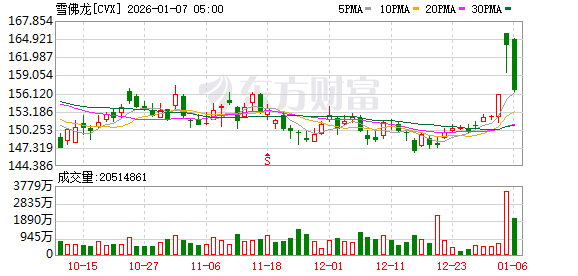
Core Insights - Chevron (CVX.N) has become the sole exporter of oil from Venezuela following the capture of President Maduro by U.S. forces [2] - The company has chartered at least 11 oil tankers, which are scheduled to arrive at government-controlled ports in Venezuela, marking an increase from 9 tankers in December of the previous year and the highest number since October when 12 tankers were loading cargo [2] - Chevron's operations in Venezuela are permitted by a license from the U.S. Treasury, making it the only Western company allowed to extract and export crude oil from the country amid U.S. sanctions [2]


十几艘油轮“突破”美禁令,悄悄离开委水域
Xin Lang Cai Jing· 2026-01-05 14:04
Core Viewpoint - A number of oil tankers loaded with Venezuelan crude oil and fuel have recently left the country's waters, seemingly breaking the strict U.S. blockade, which may provide relief to the state-owned oil company, PDVSA [1][3][4] Group 1: Oil Tankers Movement - Approximately a dozen oil tankers have quietly departed from Venezuela, all of which are under U.S. sanctions [1][3] - At least four supertankers were confirmed to have left Venezuelan waters after briefly staying near the country's maritime border [4] - Another group of sanctioned vessels also left the country in an empty state after unloading imported products or completing domestic transport tasks [1][3] Group 2: Impact on Venezuelan Oil Company - The departure of these vessels may alleviate the situation for PDVSA, which had accumulated a significant amount of floating storage oil during the blockade that began last month [1][3] - Oil exports are a primary source of revenue for Venezuela, and the recent blockade had caused a temporary halt in these exports [4] Group 3: Compliance with Sanctions - It remains unclear whether the departure of these vessels violates U.S. sanctions [2][5]
美国宣布制裁4家涉委内瑞拉石油贸易的公司
Yang Shi Xin Wen· 2025-12-31 20:29
近期,美国对委内瑞拉施压不断升级。自2025年12月10日以来,美国已至少三次在委内瑞拉附近海域对 涉委油轮实施拦截行动,并声称没收船上所载原油。 (文章来源:央视新闻) 当地时间2025年12月31日,美国财政部外国资产控制办公室(OFAC)发布声明,宣布对四家在委内瑞 拉石油领域运营的公司实施制裁,并将四艘相关油轮列为被冻结资产。 ...
美国制裁四艘与委内瑞拉有关的原油油轮
Xin Lang Cai Jing· 2025-12-31 20:24
Core Viewpoint - The U.S. Treasury Department has identified certain oil tankers as part of a "shadow fleet" serving Venezuela, which funds Maduro's "illicit drug terrorism regime" [1][1]. Group 1: Sanctions - The U.S. Treasury's Office of Foreign Assets Control (OFAC) has added the oil tankers Nord Star, Della, Rosalind, and Valiant to the sanctions list related to Venezuela [1][1].
突发:“俄军舰遭击中”
Xin Lang Cai Jing· 2025-12-20 17:01
Group 1 - Ukrainian armed forces reported a drone attack on a Russian warship in the Caspian Sea, approximately 1800 kilometers from Ukraine's coast [1] - The attacked warship was patrolling near an oil and gas production platform, which was also reportedly targeted [1] - The drilling platform is claimed to be associated with Russian oil company Lukoil, which has been sanctioned by the U.S. Treasury Department along with another major Russian oil company [1] Group 2 - Ukraine has developed a combat drone with a range exceeding 2000 kilometers [2]
印俄深化经贸合作应对美国施压
Jing Ji Ri Bao· 2025-12-09 22:44
Core Viewpoint - The visit of Russian President Putin to India marks a significant step in strengthening the "special and privileged strategic partnership" between India and Russia, emphasizing the need for bilateral cooperation in various sectors amidst external pressures, particularly from the United States [1][5]. Economic Cooperation - India and Russia signed the "2030 Economic Cooperation Plan" aimed at enhancing bilateral trade, with a target to increase annual trade to $100 billion by 2030, reaffirmed during the visit [1][2]. - The trade volume between India and Russia has surged from over $10 billion in the 2021 fiscal year to approximately $68.7 billion projected for the 2024-2025 fiscal year, largely driven by India's increased oil imports from Russia [2][3]. Energy Cooperation - Energy cooperation is highlighted as a cornerstone of the India-Russia partnership, with Modi stating it is a priority for both leaders. Russia is positioned as a reliable supplier of oil, gas, and coal to India [2][4]. - The share of Russian oil in India's total oil imports has increased dramatically from about 2% in the 2000-2021 fiscal years to over 37% in the 2024-2025 fiscal year, with imports valued at $52.7 billion [3]. Nuclear Energy Collaboration - Significant progress was made in civil nuclear energy cooperation, with India aiming to increase its nuclear power capacity to 100 GW by 2047, relying on Russian technology and equipment [4]. - Agreements were reached to accelerate the construction of new nuclear units at the Kudankulam Nuclear Power Plant and to explore the development of small modular reactors in India [4]. Trade Facilitation and Security - Multiple agreements were signed to enhance trade security and facilitate smoother logistics, including cooperation on transport corridors, customs, and maritime operations [4]. - A framework for labor mobility was established to support the movement of Indian technical workers to Russia, reflecting a commitment to mutual benefits in personnel exchange [5]. Geopolitical Context - The agreements reached during the visit are expected to face scrutiny and pressure from the United States, particularly regarding oil imports and trade negotiations [5][6]. - Modi's cautious remarks on energy cooperation indicate India's strategic balancing act in response to U.S. pressures while seeking to maintain strong ties with Russia [6].
俄罗斯人被特朗普打醒了:就算是出卖中国,美国也不可能放过他们
Sou Hu Cai Jing· 2025-12-07 11:56
2025年7月中旬,特朗普扔出一句狠话:给俄罗斯50天,赶紧跟乌克兰谈停,不谈就对所有俄罗斯商品收100%关税,顺带把继续买俄油的国家全拉进次级制 裁名单。 这话一出,莫斯科很多人第一反应是懵——前几个月特朗普还放风说要跟普京好好聊聊,怎么说翻脸就翻脸? 很多人这时候才真正明白,美国要的从来不是俄罗斯选边站队,而是俄罗斯彻底跪下、碎掉、再也爬不起来。牺牲中国换美国一笑?做梦。 后来期限从50天缩到10天,再到8月直接对印度开刀,加征25%关税,把印度输美商品总税率干到50%,理由就是"你们买俄油买得太欢了"。 印度一天210万桶,中国一天180万桶,土耳其90万桶,这些数字白宫心里门儿清。特朗普这边边打边说:这不是冲着谁去,就是要让俄罗斯的钱袋子彻底瘪 掉。 俄罗斯国内本来还有一小撮人抱着幻想,觉得只要在对华能源供应上做点让步,暂停几单大合同,或者在联合国投票时别跟中国绑那么死,美国就能松口, 给条活路。 2024年底到2025年初,这种声音在某些智库和杜马走廊里传得挺响,甚至有人私下算过账:把对华石油出口砍个三成,换美国取消几项银行制裁,值不值? 特朗普用行动给了最直接的回答:不值,一点都不值。 8月6日白 ...
俄油暴跌至36美元!印度退缩观望,中国果断抄底,普京开始反击,中亚掀桌
Sou Hu Cai Jing· 2025-11-21 19:39
Core Insights - The global energy market is undergoing a significant structural adjustment, with Russia facing unprecedented challenges as a former energy giant [1] - The International Energy Agency forecasts a surplus of 500,000 barrels per day in the global crude oil market by 2025, potentially rising to 4 million barrels per day by 2026, which is pressuring Russia's pricing power [1] - Russia's oil discount has widened to $23.5 per barrel, the highest since March 2023, while U.S. crude exports have rebounded to summer 2024 levels [1] - Russia's fiscal revenue heavily relies on energy exports, accounting for 55%, but budget revenues have dropped by 20% year-on-year in the first ten months of this year due to falling oil prices [1] Industry Challenges - The congestion at Novorossiysk port reflects the difficulties in Russian energy exports, with nearly one-third of arriving oil tankers unable to offload their cargo due to sanctions, leading to over 30 million barrels in floating storage [3] - The rising extraction costs due to Western technology sanctions are expected to reduce upstream investment in Russia by 4% by 2025, with production capacity from aging oil fields declining over 6% [1] - A report predicts that if current conditions persist, Russia's oil production capacity could decline by 10% by 2030, with its share in the global energy supply chain shrinking from 12% to below 8% [1] Strategic Responses - In response to these challenges, Russia is attempting to persuade countries like India to settle oil trades in yuan to address the issue of ruble convertibility [5] - Russia is coordinating with OPEC allies to adjust production levels, with Saudi Arabia already cutting daily output by 1 million barrels to stabilize the market [5] - Kazakhstan has increased its oil exports to Europe by 18% in November, filling the market gap left by Russian oil, while Uzbekistan is signing energy swap agreements to reduce reliance on Russian electricity [5] Market Dynamics - India, previously a major buyer of Russian oil, has shifted to Middle Eastern suppliers to avoid sanctions, resulting in a 22% month-on-month increase in imports from the Middle East in November [7] - In contrast, China has increased its purchases from Russia, with oil exports to China doubling year-on-year in August, and 95% of trade between China and Russia is now settled in local currencies, effectively bypassing the dollar system [7]
普京即将访印,美加关税企图阻止印俄峰会,印度却在俄开新领事馆
Sou Hu Cai Jing· 2025-11-20 13:34
Core Points - The meeting between Russian Foreign Minister Lavrov and Indian Foreign Minister Jaishankar is significant as it prepares for President Putin's upcoming visit to India in early December, marking his first visit since the Ukraine conflict began [1][3] - The summit is expected to face external pressures, particularly from the U.S., which has been attempting to dissuade India from purchasing Russian oil [3][5] - Both Russia and India have reaffirmed their strategic partnership despite U.S. interventions, with plans to enhance trade and economic relations [3][4] Group 1: Diplomatic Engagements - Jaishankar's visit to Moscow serves dual purposes: attending the Shanghai Cooperation Organization (SCO) meeting and preparing for the upcoming India-Russia summit [1][3] - The Kremlin has indicated that preparations for Putin's visit are underway, with expectations of fruitful discussions on trade and economic cooperation [3][4] - The upcoming "Russia-India Forum" scheduled for December 4-5, 2025, in New Delhi will focus on expanding industrial cooperation and increasing Indian products in the Russian market [4] Group 2: Economic Cooperation - The summit is anticipated to result in an agreement on labor mobility, significantly increasing the number of Indian citizens working in Russia [5][6] - Discussions will include enhancing Russian imports of Indian pharmaceuticals and labor resources, as well as boosting tourism and people-to-people exchanges [4][5] - India is negotiating an immigration agreement to protect the rights of Indian workers in Russia, with a notable increase in the number of Indian students and workers expected to move to Russia in the coming years [13] Group 3: External Pressures and Responses - The U.S. has imposed tariffs and sanctions on Indian imports of Russian oil, creating challenges for Indian refiners and prompting them to seek alternative sources [6][9] - The potential losses for India if it complies with U.S. sanctions could be substantial, estimated between $9 billion to $10 billion [9] - Despite U.S. pressures, India continues to pursue its bilateral relationship with Russia, as evidenced by the establishment of new consulates and ongoing diplomatic engagements [11][13]