自主智能体

Search documents
Agentic AI基金会成立:智能体的“Linux时刻”来了!
Sou Hu Cai Jing· 2025-12-11 22:52
Core Insights - The Linux Foundation has launched the Agentic AI Foundation (AAIF), marking a shift in the AI field towards collaborative autonomous agents, seen as the "Linux moment" for AI [2] - AAIF aims to serve as a neutral hosting platform for open-source projects related to AI agents, with major tech companies like Amazon, Google, and Microsoft joining as members [2] - The foundation's initial technical pillars include three core open-source projects: MCP protocol, AGENTS.md specification, and Goose framework, contributed by Anthropic, OpenAI, and Block [2][3] Group 1 - MCP (Model Context Protocol) is designed to standardize the connection between AI agents and external data sources, likened to a "USB-C interface" for AI [3] - AGENTS.md provides a Markdown-based standard for defining agent behavior in specific projects, while the Goose framework offers a structured workflow for agent development [3] - The AAIF aims to prevent monopolization of AI agent ecosystems by establishing interoperability standards and best practices [3] Group 2 - MCP has already been implemented in over 10,000 servers, with support from major products like ChatGPT and Microsoft Copilot, indicating strong industry recognition of the open protocol [4] - Despite skepticism about the collaboration being merely a "brand alliance," proponents argue that the protocol facilitates collaboration without redundant integration efforts [4] - The AAIF's funding model includes tiered membership fees, but control over project direction is maintained by a technical steering committee, ensuring that no single member can dictate the development path [5] Group 3 - The importance of shared standards is underscored by a UiPath report indicating that 65% of enterprises will initiate agent pilot programs by mid-2025, yet only 5% have seen financial returns [5] - The AAIF aims to promote compatibility among agent development frameworks, cloud service providers, and developer tools, emphasizing that the scale of AI is determined by solution construction rather than model size [6] - Challenges remain, including concerns about the maintenance of protocols and the practical utility of the Goose framework, but the focus is on creating a sustainable ecosystem rather than perfect standards [6]


马斯克对话黄仁勋,“吵起来了”
Sou Hu Cai Jing· 2025-11-21 05:21
Group 1 - The core discussion revolves around the future of money and work in the context of advanced AI and robotics, with Elon Musk suggesting that money may become irrelevant as AI leads to unprecedented material abundance [1][2] - Musk envisions a future where work becomes optional and driven by passion rather than necessity, drawing parallels to hobbies like gardening [2][4] - Jensen Huang offers a more cautious perspective, asserting that while AI will change the nature of work, it will not eliminate the need for work altogether, and people may become busier as AI enhances productivity [3][4] Group 2 - The partnership between HUMAIN and Musk's xAI to build multiple super data centers in Saudi Arabia, including a massive 500 MW facility, highlights the region's ambition to become a global AI infrastructure hub [4][5] - Saudi Arabia's low energy costs, vast land, and capital availability position it as a strategic player in the AI landscape, aiming for a total capacity of 1.9 GW by 2030 [5][6] - Huang describes these super data centers as "AI factories," emphasizing their role in producing AI models and content rather than merely storing data [6][7] Group 3 - Huang identifies three key factors driving the AI boom: the need for processing vast amounts of data, the shift from recommendation algorithms to generative AI, and the rise of autonomous intelligent agents [8][9] - He argues that the current demand for AI computing power is based on real needs and technological evolution, distinguishing it from past tech bubbles [10] - The collaboration between Chinese companies and Saudi Arabia in AI infrastructure development reflects a growing trend of international partnerships in the tech sector [11][12] Group 4 - Geopolitical factors pose challenges to Sino-Saudi AI cooperation, particularly concerning U.S. restrictions on high-end AI technology exports [12][13] - The technological gap in high-performance computing may necessitate a focus on application-level collaborations rather than direct competition with U.S. firms [13][14] - Saudi Arabia aims to balance its partnerships with both U.S. and Chinese companies to maximize its technological and economic benefits [14]
昨晚,马斯克对话黄仁勋,“吵起来了”
Sou Hu Cai Jing· 2025-11-20 02:52
Group 1 - Elon Musk predicts that money will become irrelevant in a future where advanced AI and robots create unprecedented material abundance, suggesting that work will become a choice rather than a necessity [5][6][21] - Jensen Huang offers a more cautious perspective, stating that while AI will change the nature of work, it will not eliminate the need for work, and people may become busier as AI enhances productivity and creativity [7][21] - The dialogue between Musk and Huang reflects contrasting views on the future of work and the economy in the context of AI advancements, highlighting optimism versus caution [20][22] Group 2 - The U.S.-Saudi Investment Forum showcased significant collaboration between Saudi Arabia and AI companies, including plans for large-scale data centers, indicating a strategic move towards establishing a robust AI infrastructure in the region [9][10][12] - HUMAIN, a Saudi AI company, plans to build multiple super data centers in collaboration with Musk's xAI, with a projected capacity of 1.9 gigawatts by 2030, positioning Saudi Arabia as a key player in the global AI landscape [8][9][10] - The emergence of "AI factories" in the Middle East signifies a shift in the role of data centers from mere storage to active production of AI models and content, driven by the demand for generative AI capabilities [11][12] Group 3 - Huang identifies three key factors driving the current AI boom: the need for processing vast amounts of data, the rise of generative AI replacing traditional recommendation systems, and the emergence of autonomous intelligent agents [14][15] - The AI infrastructure development in Saudi Arabia is supported by both local and international players, including partnerships with Chinese companies like Huawei and Alibaba, which are contributing to the digital transformation of the region [17][19] - The geopolitical landscape poses challenges for AI collaboration between China and Saudi Arabia, particularly concerning U.S. restrictions on technology exports, which may impact the pace and nature of technological partnerships [18][19]


谷歌杀疯了!Gemini 3一夜封神,马斯克奥特曼纷纷点赞
Sou Hu Cai Jing· 2025-11-19 02:56
Core Insights - Google has officially launched its next-generation flagship AI model, Gemini 3, which includes the advanced Gemini 3 Pro, marking a significant shift in the AI industry from "chatbot" interactions to "agentic" capabilities [1][2][12] - The release of Gemini 3 is accompanied by a new development platform called Google Antigravity, designed to enhance AI development and support agent-based applications [2][12] Gemini 3 Model Highlights - Gemini 3 is touted as the best multimodal understanding model and the most powerful agent and code generation model available [3][4] - The model has shown significant improvements over its predecessor, Gemini 2.5 Pro, across various benchmarks, indicating its superior performance [5][8] - Key features of Gemini 3 include: - Intelligent model capabilities that lead in various fields [6] - A generative interface that can create sophisticated responses and designs [6] - Gemini Agent, which can autonomously complete complex tasks on behalf of users [7] Benchmark Performance - Gemini 3 Pro outperformed Gemini 2.5 Pro in all major AI benchmark tests, with notable scores such as: - 37.5% in Humanity's Last Exam (no tools) compared to 21.6% for Gemini 2.5 Pro [9] - 91.9% in GPQA Diamond, showcasing its scientific knowledge [9] - 95.0% in AIME 2025 for mathematics [9] - Gemini 3 Deep Think also demonstrated impressive results, scoring 41.0% in Humanity's Last Exam and 93.8% in GPQA Diamond [10] Google Antigravity Platform - Antigravity is a new AI development platform aimed at enhancing agent development, positioning itself as a proactive partner for developers [12][14] - The platform integrates multiple models, including Gemini 3 Pro for advanced reasoning and code generation, enabling it to handle comprehensive development tasks [15] - An example showcased how Antigravity can autonomously plan, code, test, and validate a flight tracking application, allowing developers to focus on higher-level design tasks [18] Investment Insights - Warren Buffett has made a significant investment in Alphabet (Google), purchasing $4.3 billion worth of stock, marking his first large-scale buy into the company [19] - This investment coincides with Alphabet's strong financial performance, including a revenue surpassing $100 billion and a 34% growth in cloud computing [20]


让智能体“规模化”设计新型抗体分子,「寻明生科」获数千万美元A轮融资|36氪首发
3 6 Ke· 2025-11-10 00:01
Core Insights - Aureka Biotechnologies has recently completed a multi-million dollar Series A financing round, led by Five Sources Capital and Qiming Venture Partners, with participation from existing shareholder Newell Capital and others [1] - The funds will be used to advance the company's core pipeline into critical clinical stages and to accelerate the application of its Agentic system technology in antibody design and molecular innovation [1] Company Overview - Aureka Biotechnologies focuses on the development of generative antibody drugs, utilizing three core technology platforms: a generative intelligent platform, a yeast intracellular automated directed evolution platform, and a microfluidic single-cell functional screening platform [1][2] - The company aims to scale its ability to select molecules that traditional methods cannot achieve, marking a significant development direction for the next phase [1][2] Technology and Innovation - The company's model transforms the traditional "human expert-driven" approach into an "autonomous intelligent agent-driven" model, significantly increasing the efficiency of antibody pipeline selection to 10-20 breakthroughs per year [2] - Aureka has established two high-throughput digital biology methods: one for collecting affinity-related data through yeast evolution, and another for functional screening using microfluidics, allowing for the screening of millions of molecules in a single experiment [3][4] Market Position and Collaboration - Aureka has already established collaborations with several European and American pharmaceutical companies, focusing on complex targets and functional mechanisms, generating millions in commercial revenue over the past two years [5] - The ability to create differentiated pipelines and advance them to clinical stages is crucial for biotech companies to gain recognition from investors, as it indicates potential for clear commercial returns [5] Future Directions - The company aims to leverage new technologies to address unresolved issues in the metabolic field, such as designing targets that can regulate multiple pathways simultaneously [6] - Aureka's focus on data-driven approaches and continuous R&D capabilities positions it well for long-term growth in the rapidly evolving digital biotechnology landscape [5][6]
让智能体「规模化」设计新型抗体分子,「寻明生科」获数千万美元A轮融资丨早起看早期
36氪· 2025-11-09 23:55
Core Insights - Aureka Biotechnologies has recently completed a multi-million dollar Series A financing round, led by Five Sources Capital and Qiming Venture Partners, with existing investor Neurali Capital increasing its stake [3] - The funds will be used to advance the company's core research pipeline into critical clinical stages and to expand collaborations with global biopharmaceutical companies [3] Group 1: Company Overview - Aureka Biotechnologies focuses on the development of generative antibody drugs, utilizing proprietary platforms for antibody design and molecular innovation [3][4] - The company has achieved commercial revenue in the millions of dollars over the past two years through collaborations with multiple pharmaceutical companies in Europe and the U.S. [5] Group 2: Technology and Innovation - Aureka has developed a data-driven model that integrates autonomous intelligent systems with scientists and high-throughput experimental platforms, significantly enhancing the efficiency of antibody drug development [4][5] - The company has established two high-throughput digital biology methods: one for collecting affinity-related data through yeast evolution and another for functional screening of antibodies using microfluidics [5] Group 3: Market Position and Future Prospects - The ability to create differentiated pipelines and advance them to clinical stages is crucial for biotech companies to gain recognition from investors, as it indicates potential for clear commercial returns [6] - Aureka aims to leverage new technologies to address unmet needs in the metabolic field, potentially leading to significant market value [6]
CoreWeave:一场价值数万亿美元的盛宴
3 6 Ke· 2025-10-15 00:29
Core Viewpoint - The integration of large language models (LLM) and reinforcement learning (RL) is accelerating the development of autonomous intelligent agents, positioning CoreWeave as a key cloud service provider for the AI infrastructure needed in this new phase [1] Group 1: Business Strategy and Expansion - CoreWeave's acquisition of OpenPipe is a significant move to enhance its capabilities in the reinforcement learning space, allowing it to train intelligent agents and gain developer recognition [2] - The transition from a "hardware + API" model to a comprehensive "intelligent agent support platform" represents a qualitative leap in CoreWeave's offerings [3] - The integration of reinforcement learning services is expected to significantly enhance profit margins, creating a competitive barrier that traditional hardware rental models cannot match [4] Group 2: Infrastructure Requirements - Intelligent agents require a high-performance infrastructure that includes high throughput system interconnects, fast memory, rollback architecture, data monitoring, error recovery, and modular subroutines, which traditional cloud providers cannot adequately supply [5] - The computational demands of intelligent agents are projected to be several orders of magnitude greater than traditional static inference, with the global data center spending on computing expected to rise from hundreds of billions to trillions [6][7] Group 3: Financial Performance and Market Potential - CoreWeave's quarterly sales surged by 200% year-over-year to approximately $1.21 billion, with a backlog of nearly $30 billion, indicating strong future demand [8] - The shift towards intelligent agent models is expected to drive significant growth in the market, with conservative estimates suggesting that by 2030, annual spending on computational resources could reach $1.8 trillion [9] - CoreWeave's ability to capture value from the entire decision-making cycle of intelligent agents positions it favorably against competitors, enhancing its long-term profitability [10] Group 4: Valuation and Future Outlook - CoreWeave's current valuation aligns with GPU-intensive cloud service peers, with an estimated enterprise value (EV) range of $80-100 billion, potentially increasing to $120 billion if the demand for reinforcement learning training accelerates [13] - The company's strategic shift towards becoming a comprehensive provider of reinforcement learning training solutions is expected to expand its valuation range as the revenue structure increasingly leans towards software services [14]

智能体加速进化,“数字员工”成本降至万元级
Bei Jing Ri Bao Ke Hu Duan· 2025-08-06 02:19
Core Insights - Baidu Smart Cloud announced the launch of its first batch of AI digital employees, which integrate large models, digital human technology, and industry experience, aiming to reduce the cost of using digital employees to a level of ten thousand yuan [1] - The evolution of AI is transitioning from a Copilot (assistant) form to an Agent (intelligent agent) form, and further towards Agentic AI (autonomous intelligent agents), which will revolutionize productivity in organizations [1] - Traditional intelligent tools have faced limitations such as mechanical responses and fragmented data, but the new digital employees are designed to meet specialized and personalized needs across various industries [1] Industry Development - The current demand from enterprises is for intelligent agents that can handle KPIs and be accountable for business results, particularly in sectors like recruitment where repetitive tasks are prevalent [2] - The digital employee in recruitment focuses on AI product field job matching, executing a full process from outreach to interview scheduling and result notification, allowing HR to concentrate on core talent assessment [2] - Baidu plans to expand the application of digital employees in four key industries: education, automotive, finance, and fast-moving consumer goods, with the cost of adopting digital employees expected to drop to ten thousand yuan [2]

镁伽科技冲击港股IPO,专注于机器人领域,三年累计亏损近23亿
Ge Long Hui· 2025-07-18 10:21
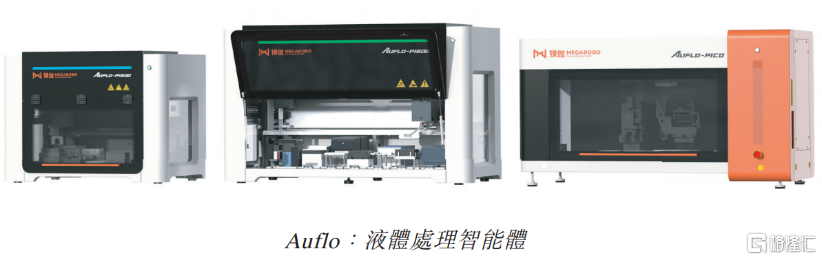
Group 1 - The core viewpoint of the article highlights the increasing interest in the robotics industry, with approximately 10 companies seeking to list on the Hong Kong Stock Exchange this year, including Megatech [1] - Megatech has submitted its IPO application to the Hong Kong Stock Exchange, with a focus on smart laboratories and intelligent manufacturing, achieving a compound annual growth rate (CAGR) of 43% over the past three years [2][12] - The company has incurred significant losses, totaling 2.28 billion yuan over the past three years, primarily due to high research and development expenditures [12][14] Group 2 - Megatech's revenue for 2022, 2023, and 2024 was 455 million yuan, 663 million yuan, and 930 million yuan, respectively, with gross margins of 28.1%, 23.9%, and 29% [13][15] - The company has a diverse client base, serving over 880 customers across various sectors, with a significant portion of revenue coming from its top five clients [18] - The robotics market, particularly in the field of autonomous intelligent agents, is projected to grow significantly, with the global market expected to reach approximately 383.7 billion yuan by 2030 [23][24] Group 3 - Megatech's products are categorized into two main areas: smart laboratories and intelligent manufacturing, with the latter accounting for a larger share of revenue [16][18] - The company faces competition from both international and domestic players, ranking sixth in the smart laboratory autonomous intelligent agent market in China [26][28] - The robotics industry is undergoing a transformation driven by advancements in AI and machine learning, creating substantial opportunities for growth [22][23]

亚马逊新动作!Kiro 入局,AI 编程赛道谁将笑到最后?
Sou Hu Cai Jing· 2025-07-16 16:35
Core Insights - Amazon's AWS has launched a new AI programming tool named Kiro, intensifying competition in the AI programming tool market [1][3] - Kiro adopts a "specification-driven development" approach, focusing on requirement clarification, system design, and task breakdown before coding, which aims to produce higher quality and maintainable applications [3][4] - The global market for generative AI programming assistants is projected to grow from $25.9 million in 2024 to $97.9 million by 2030, with current estimates indicating that companies like Microsoft and Google have achieved 30% of code generation through AI [4][6] Company Developments - Kiro is designed to support systematic project planning and execution, distinguishing itself from Amazon's previous tool, Q Developer, which only provided code snippets [4] - Kiro is available as an independent brand, allowing developers to use it without an AWS account, thus broadening its appeal [4] - The underlying model for Kiro is based on Amazon's investment in Anthropic, with plans to integrate additional models in the future [4] Industry Trends - The AI programming tool sector is highly competitive, with major cloud providers and numerous startups entering the market [4][5] - GitHub and Microsoft are recognized as pioneers in this field, with GitHub Copilot evolving into an intelligent programming partner capable of executing development tasks independently [5] - The rise of multimodal AI and autonomous agents is expected to make programming more natural and automated, potentially increasing the value of AI programming companies [6]