见费出单

Search documents
重磅!非车险“报行合一”最权威解释出炉:松绑“见费出单”,政策性业务满足一定条件可出单,退运险等应实时结算或2日内结算
Sou Hu Cai Jing· 2026-01-08 03:54
Core Viewpoint - The implementation of the "reporting and issuing together" policy for non-auto insurance continues to advance, with the National Financial Regulatory Administration providing detailed answers to various issues arising during the process, aiming to clarify policy implications and unify industry standards [1][2]. Group 1: Regulatory Framework - The core content of the recent notification includes that short-term health insurance is not applicable under the "reporting and issuing together" policy, with some exceptions [2]. - Insurance intermediaries collecting premiums are not considered as "reporting and issuing together" [4]. - Agricultural insurance should follow relevant regulations and execute "reporting and issuing together" [8]. Group 2: Business Scenarios and Requirements - Certain businesses, such as those involving public interest funded by government finances, may not strictly adhere to "reporting and issuing together" [8][10]. - From July 1, 2026, high-frequency, fragmented, and scenario-based internet insurance products like return freight insurance should achieve real-time settlement or periodic settlement within two natural days after issuance [9]. - Policies issued after March 1, 2026, should generally be issued after premium collection and invoicing, with allowances for companies facing difficulties in changing payment methods [12][17]. Group 3: Specific Business Types - For foreign currency or offshore RMB businesses, insurance companies can use bank transfer or other verifiable payment proofs to issue policies [5]. - In the case of RMB business, a bank acceptance bill can be considered as "reporting and issuing together" [6]. - For co-insurance, the main underwriting company can issue policies and invoices after collecting premiums, which will be regarded as "reporting and issuing together" [7]. Group 4: Payment Management - The notification specifies that for public interest businesses using government funds, insurance companies can issue policies based on signed government documents without immediate premium collection [10]. - For businesses where the government subsidizes premiums, the full premium must be collected before issuing policies [10]. - The notification emphasizes that installment payment structures should not be manipulated as competitive leverage, and the last payment should not exceed the average installment amount [12].


非车险报行合一落地 定价能力或成竞争焦点
Zhong Guo Zheng Quan Bao· 2025-11-17 01:56
Core Viewpoint - The implementation of "reporting and execution in unison" for non-auto insurance starting November 1 aims to standardize the market, curb vicious competition, and improve underwriting profitability [1][2]. Group 1: Implementation Details - "Reporting and execution in unison" means that the insurance terms and rates executed by companies must align with the materials submitted to regulatory authorities [2]. - The non-auto insurance sector has seen rapid growth, with premium income reaching 687.8 billion yuan in the first nine months of this year, accounting for a significant portion of property insurance premiums [2]. - Regulatory measures have been introduced to address issues in the non-auto insurance market, including optimizing assessment mechanisms and strengthening rate management [2][4]. Group 2: Industry Impact - Analysts believe that the new regulations will lead to a shift in business models, focusing on service competition rather than price competition, ultimately promoting high-quality development in the non-auto insurance sector [3][5]. - The requirement for "fee upon issuance" will change the operational processes of insurance companies, necessitating communication with clients regarding these changes [4]. Group 3: Future Competitiveness - The competition in the non-auto insurance market is expected to shift from cost-based competition to a focus on pricing capability, risk identification, and service quality [5][6]. - Smaller specialized insurance companies can leverage their strengths by focusing on niche markets and offering customized products and differentiated services [6].
非车险报行合一落地 定价能力或成竞争焦点
Zhong Guo Zheng Quan Bao· 2025-11-11 20:09
Core Viewpoint - The implementation of the unified reporting and pricing system for non-auto insurance starting November 1 aims to standardize the market, curb vicious competition, and improve underwriting profitability [1][2]. Group 1: Implementation of Unified Reporting and Pricing - The unified reporting and pricing system requires insurance companies to align their actual insurance terms and rates with the materials submitted to regulatory authorities [1]. - Non-auto insurance has seen rapid growth, with premium income reaching 687.8 billion yuan in the first nine months of the year, accounting for a significant portion of property insurance premiums [1]. - The previous competitive model based on pricing has led to underwriting losses for many companies, necessitating a shift towards improved pricing capabilities [1][2]. Group 2: Regulatory Guidance and Industry Response - The Financial Regulatory Authority has issued guidelines to enhance the management of non-auto insurance, focusing on optimizing assessment mechanisms and strengthening rate management [2]. - Insurance companies have established special task forces to review existing products and upgrade systems to comply with new regulations [2][3]. - Different non-auto insurance products have specific re-filing deadlines, with commercial property insurance needing to be re-filed by December 1, 2025, and other products by the end of 2026 [2]. Group 3: Changes in Business Operations - The requirement for "fee upon issuance" means that property insurance companies must collect premiums before issuing policies, altering traditional business practices [3]. - Companies are currently informing clients about these changes and coordinating with relevant departments for system upgrades [3]. Group 4: Future Market Dynamics - The competition in the non-auto insurance market is expected to shift from price competition to a focus on pricing capability, risk identification, and service quality [3][4]. - Smaller specialized insurance companies can leverage their strengths by focusing on niche markets and offering customized products and differentiated services [4]. - Companies are encouraged to enhance their cost accounting systems and invest in technology to improve risk pricing and underwriting capabilities [4].
见费出单!非车险迎来新规
券商中国· 2025-11-07 04:36
Core Viewpoint - The implementation of the "reporting and operation integration" requirement for non-auto insurance will begin on November 1, which is seen as a significant regulatory change in the industry [2][9]. Group 1: Reporting and Operation Integration - The "reporting and operation integration" refers to the requirement that property insurance companies must issue policies and invoices only after receiving premiums, a shift from the previous practice of issuing policies before payment [3][4]. - This change aims to address two main issues: the rising accounts receivable due to the previous "non-fee issuance" practice and the potential for fraudulent premium reporting [3][4]. - The industry generally views this shift positively, as it is expected to alleviate the pressure of high accounts receivable and improve cash flow for non-auto insurance [3][5]. Group 2: Implementation Challenges - Insurance companies are currently preparing for the transition, which includes informing clients about the new "fee issuance" requirement and upgrading their systems [5]. - There are concerns regarding the initial difficulties in adapting to this new requirement, particularly for certain non-auto insurance products like cargo insurance, where determining the exact premium can be challenging [5][6]. Group 3: Payment Flexibility - The regulatory body has allowed for installment payments for large projects, with specific guidelines for premium payments exceeding a certain amount [7][8]. - The minimum installment payment is set at 200,000 yuan, and the first payment must be at least 25% of the total premium [8]. Group 4: New Product Reporting - The new regulations also emphasize the need for strict adherence to rate management and the proper use of insurance terms, preventing companies from altering agreed-upon terms through unofficial means [9]. - Companies are required to start reporting new product terms from November 1, with a complete update of all non-auto insurance products expected by the end of 2026 [9][10].





非车险“报行合一”将正式实行 多家险企成立工作专班推进
Zhong Guo Jing Ying Bao· 2025-10-14 08:36
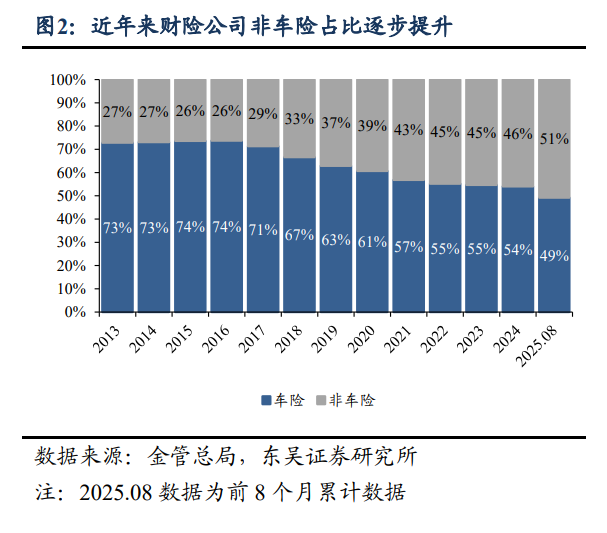
Core Viewpoint - The National Financial Regulatory Administration is set to implement a new regulation for non-auto insurance, focusing on improving the quality of non-auto insurance business and addressing issues such as irregular operations and irrational competition, effective from November 1, 2025 [1][2]. Summary by Sections Regulatory Changes - The new regulation aims to optimize assessment mechanisms, standardize product development and usage, manage premium income, enhance market supervision, improve underwriting and claims services, and leverage industry organizations for support [1][2]. Non-Auto Insurance Market Insights - Non-auto insurance accounted for 50.77% of total premium income in the first eight months of 2025, with health insurance at 14.88%, agricultural insurance at 10.83%, and liability insurance at 8.24% [2]. - The share of non-auto insurance in total premium income has increased from 26%-27% between 2013 and 2016 to over 50% currently, although profitability remains weaker compared to auto insurance [2]. Fee Structure and Management - The regulation mandates that property insurance companies must set insurance rates based on fairness, reasonableness, and adequacy, and establish a mechanism for periodic rate review and dynamic adjustment [3]. - To address premium receivables, the regulation requires a "fee-for-policy" approach, ensuring that policies are issued only after premium payment is received [4]. Industry Response - Several insurance companies, including China Life and Ping An Property & Casualty, have established task forces to implement the new regulation, emphasizing the importance of transitioning from a focus on scale and speed to quality and efficiency [7][8]. - The implementation of "reporting and operation in unison" is expected to curb irrational price competition and promote rational market behavior, enhancing service quality and product competitiveness [5][6].

“见费出单”,非车险“报行合一”落地
Nan Fang Du Shi Bao· 2025-10-12 23:14
Core Viewpoint - The National Financial Regulatory Administration has issued a notice to extend the "reporting and execution" regulatory system from the auto insurance sector to the non-auto insurance market, effective November 1, 2025, while abolishing the old regulations from 2007 [2][3]. Industry Background - Non-auto insurance business has seen rapid growth, with its premium share increasing from 37.1% in 2019 to 47.4% in 2024, according to Guosen Securities [2][3]. - The industry faces challenges such as underwriting losses in key products like liability and corporate property insurance, prompting the need for regulatory changes to curb irrational competition and refocus on product innovation and service enhancement [2][3]. Regulatory Changes - The notice defines non-auto insurance as all property insurance excluding motor vehicle insurance, with specific provisions for agricultural and export credit insurance [3]. - The "reporting and execution" requirement mandates that property insurance companies strengthen premium rate management and adhere to approved product rates, addressing long-standing issues of price distortion due to aggressive competition [3][4]. Implementation of "See Fee Issue Policy" - The notice mandates that insurance companies issue policies only after collecting premiums, addressing the issue of unregulated premium receivables that have led to financial burdens and disputes [5]. - This policy aims to reduce financial risks and bad debt pressures for property insurance companies, promoting a shift from aggressive competition to a focus on service and quality [5]. Collaborative Efforts - The notice emphasizes the need for regulatory bodies to monitor operational indicators of property insurance companies and conduct timely regulatory interviews and inspections for those exceeding approved fee levels [6]. - Industry organizations are tasked with developing industry standard clauses and self-regulatory guidelines to support the implementation of the new regulatory framework [6]. Definition of "Reporting and Execution" - "Reporting and execution" requires insurance companies to align their actual operational behaviors with the core elements declared during product registration, aiming to enhance transparency and curb malicious competition in the industry [7].

非车险正式启动“报行合一”,多家大型险企已成立工作专班推进
Di Yi Cai Jing· 2025-10-12 12:34
Core Viewpoint - The essence of implementing "reporting and operation integration" and "payment upon issuance" is to guide the non-auto insurance industry out of irrational competition and shift from extensive development to value development [1][9]. Group 1: Regulatory Changes - The Financial Regulatory Bureau has issued a notice focusing on the non-auto insurance sector, addressing issues of irregular operations and irrational competition, and promoting high-quality development [1][2]. - The notice will be implemented starting November 1, 2025, and requires insurance companies to adopt "reporting and operation integration" and "payment upon issuance" [1][2]. - "Reporting and operation integration" mandates that insurance companies strictly adhere to approved insurance terms and rates, ensuring consistency between recorded content and actual operations [2][3]. Group 2: Industry Performance - In the first eight months of 2025, total premium income for property insurance companies reached 1.22 trillion yuan, with non-auto insurance accounting for 619.5 billion yuan, representing 50.77% of total premiums [2]. - Non-auto insurance has shown faster growth compared to auto insurance, increasing its share from 26%-27% in 2013-2016 to over 50% currently [4]. - Despite this growth, non-auto insurance profitability remains weaker than auto insurance, with a comprehensive cost ratio of 97.0% for non-auto insurance compared to 94.2% for auto insurance [4][5]. Group 3: Implementation and Industry Response - Major insurance companies like China Life and Ping An Property Insurance have established task forces to implement the requirements of the notice [1][7][10]. - The notice also emphasizes the need for insurance companies to manage premium income more effectively and avoid practices like issuing policies before receiving full payment, which can lead to bad debt risks [6][10]. - Companies are expected to lower the assessment weight on premium scale and market share while increasing the focus on compliance, quality, and consumer rights protection [9][10].
11月起实施,非车险“报行合一”落地:明确“见费出单”
Nan Fang Du Shi Bao· 2025-10-11 08:16
Core Viewpoint - The National Financial Regulatory Administration has issued a notification to extend the "reporting and implementation" regulatory system from the auto insurance sector to the non-auto insurance market, effective November 1, 2025, while abolishing the old regulations from 2007 [2][3]. Industry Background - Non-auto insurance has seen rapid growth, with its premium share increasing from 37.1% in 2019 to 47.4% in 2024, according to Guosen Securities [2][3]. - Major insurance products like liability and corporate property insurance are facing underwriting losses, prompting the need for regulatory changes to curb irrational competition and shift focus towards product innovation and service enhancement [2][3]. Regulatory Changes - The notification defines non-auto insurance as all property insurance excluding vehicle insurance, with specific provisions for agricultural and export credit insurance [3]. - The notification mandates property insurance companies to strengthen premium rate management and adhere to approved insurance products, establishing a "reporting and implementation" requirement for non-auto insurance [3][4]. Financial Management Improvements - The notification addresses the issue of non-standard premium receivable management, emphasizing that insurance companies must issue policies and invoices only after receiving premiums [6]. - It aims to reduce financial risks and bad debt pressure on property insurance companies, promoting a shift from extensive competition to a focus on service and quality [6]. Collaborative Efforts - The notification emphasizes the need for regulatory bodies to monitor operational indicators of property insurance institutions and conduct timely regulatory interviews and inspections for those exceeding approved fee levels [7]. - Industry organizations are required to assist in enhancing non-auto insurance regulation, including developing industry standard clauses and self-regulatory guidelines [8][9].

非车险业务“报行合一”新规落地 财产保险行业“反内卷”再强化
Shang Hai Zheng Quan Bao· 2025-10-10 18:20
Core Viewpoint - The recent notification from the Financial Regulatory Bureau aims to strengthen the regulation of non-auto insurance business, promoting rational competition and enhancing the quality and efficiency of the property insurance industry [1][2]. Group 1: Regulatory Measures - The notification outlines measures to optimize assessment mechanisms, strengthen rate management, and enforce strict usage of terms and rates for non-auto insurance [1][2]. - Property insurance companies are required to set reasonable additional rates and fee levels, ensuring that fees align with the services provided [2][3]. - Companies must establish a mechanism for periodic review and dynamic adjustment of rates, with necessary product suspensions if discrepancies between actuarial assumptions and actual operations are significant [2][3]. Group 2: Addressing Industry Issues - The notification addresses irrational competition in the non-auto insurance market, which has led to high costs and ongoing underwriting losses, negatively impacting cash flow and financial stability [2][3]. - It emphasizes that companies and intermediaries must not alter approved insurance terms through informal agreements or other means, ensuring compliance with established fee limits [3][4]. - The industry is expected to see a reduction in costs and an improvement in operational quality and efficiency as a result of these measures [3][4]. Group 3: Product and Market Adjustments - The notification mandates a phased cleanup of existing products and encourages the standardization of non-auto insurance products [4][5]. - Companies are advised to lower the emphasis on premium scale and growth rates, shifting focus towards compliance, quality, and consumer protection [4][5]. - Regulatory bodies will implement mechanisms for monitoring and reporting, as well as intelligent checks on reported products to ensure adherence to the new regulations [4][5].
两地试水非车险“见费出单”,全行业监管规则酝酿中
Bei Jing Shang Bao· 2025-09-23 12:13
Core Viewpoint - The implementation of "fee-based issuance" in non-auto insurance is a significant measure to comply with regulatory requirements and promote healthy competition within the industry [1][4]. Group 1: Implementation of "Fee-Based Issuance" - Shandong and Yunnan provinces have initiated self-regulatory trials for non-auto insurance "fee-based issuance" this year [1][3]. - In Shandong, as of August 14, all insurance companies (excluding certain types) must collect full or partial premiums before issuing policies [3]. - Yunnan's self-regulatory agreement mandates strict adherence to the "fee-based issuance" system across various non-auto insurance categories [3]. Group 2: Benefits of "Fee-Based Issuance" - "Fee-based issuance" addresses the long-standing issue of irregular premium management in the non-auto insurance sector, reducing financial burdens on companies [4]. - This approach is expected to minimize disputes between insurers and policyholders by ensuring that policies are only issued after premium collection [4]. - The shift towards "fee-based issuance" is anticipated to foster a competitive environment focused on service quality rather than aggressive pricing [4]. Group 3: Industry-Wide Regulations - A nationwide regulatory framework for non-auto "fee-based issuance" is in development, with the Financial Regulatory Bureau proposing guidelines for premium collection before policy issuance [5]. - The implementation of these regulations may lead to short-term challenges for the industry, particularly for smaller insurers who may struggle to adapt [5][6]. - Larger insurance companies are likely to benefit from their financial strength and system capabilities, potentially consolidating their market position [5]. Group 4: Transition Strategies - Experts suggest a gradual implementation of "fee-based issuance," starting with high-frequency or low-value products to mitigate disruption [6]. - Recommendations include establishing a policy buffer period and collaborating with third-party payment platforms to ease the transition for smaller firms [6]. - The long-term outlook indicates that while there may be initial challenges, the policy will ultimately enhance efficiency and quality within the insurance sector [6].