财富管理业务

Search documents
美银证券:中资券商股今年迎来五大核心主题 偏好国泰海通(02611)等
智通财经网· 2026-01-13 07:58
Core Themes - The report identifies five core themes for Chinese brokerage stocks this year, including the initiation of re-leveraging to drive return on equity (ROE) expansion, wealth management benefiting from family asset reallocation, growth in investment banking supported by the recovery of onshore markets and strong offshore momentum, offshore expansion enhancing operational leverage and ROE, and ongoing industry consolidation [1] Industry Performance - The average increase in H-shares for brokerages last year was 33%, outperforming the Chinese market, yet stock prices lagged behind earnings upgrades despite strong trading volumes and market performance [1] - Valuation improved from a price-to-book ratio of 0.74 at the end of the previous year to 0.87 at the end of last year, but remains below historical bull market levels [1] - ROE is expected to be around 9% and 10% for last year and this year, respectively, approaching the 11% level seen in 2021 [1] Earnings Projections - Major listed Chinese brokerages are projected to see earnings rise by 46% last year and 15% this year, with Haitong Securities, CICC, and GF Securities expected to outperform the industry due to favorable industry conditions and re-leveraging support [2] - The average daily trading volume in A-shares is forecasted to be RMB 1.8 trillion this year, indicating a year-on-year increase of 5%, leading to a 5% rise in brokerage revenue [2] - Underwriting fees are expected to increase by 16% supported by both onshore and offshore IPOs, while wealth management revenue is projected to rise by 9% due to the expansion of securities asset management scale [2] Cost and Efficiency - Net interest income is anticipated to rise by 27% due to increased financing balances and lower financing costs, while trading income is expected to increase by 8% despite a high base [2] - Cost-saving potential is considered limited, and cost efficiency is deemed important during bull markets, although regulatory authorities maintain a cautious stance on brokerage equity financing [2] - The report favors brokerages with strong capital positions, particularly Haitong Securities, CICC, and GF Securities H-shares, due to their favorable growth prospects and potential for ROE upside [2]

方正证券 再收警示函
Zhong Guo Zheng Quan Bao· 2026-01-04 13:50
Core Viewpoint - The regulatory scrutiny on Founder Securities has intensified due to its failure to fulfill due diligence obligations as the continuous sponsor for Jingyuan Environmental Protection's 2022 convertible bonds, leading to administrative measures including a warning letter [2][3]. Group 1: Regulatory Issues - Founder Securities was found negligent in its duties as the continuous sponsor for Jingyuan Environmental Protection's 2022 convertible bonds, failing to identify the misuse of raised funds and inaccurate disclosures [3]. - This marks the second regulatory penalty for Founder Securities' investment banking business since 2025, with previous issues related to inadequate due diligence and incomplete disclosures in bond projects [2][3]. Group 2: Business Performance - The number of registered sponsors at Founder Securities has declined from 72 in 2023 to 51 by early 2026, resulting in a drop in industry ranking from 28th to 33rd [4]. - The company's market share in equity underwriting has remained low, with a total equity underwriting amount of 1.103 billion yuan in 2025, representing only 0.11% of the market [4]. - In 2023, the investment banking revenue plummeted by 59.36% to 217 million yuan, and in 2024, the segment reported a loss of 370 million yuan [4][5]. Group 3: Talent and Management Changes - There has been significant talent turnover in Founder Securities, with key analysts leaving for other firms, including the departure of the co-director of the research institute and other prominent analysts [6][7]. - The firm has attempted to strengthen its research team by hiring new leadership, but faced setbacks due to regulatory issues involving the new head of the research institute [6][7]. Group 4: Wealth Management and Financial Performance - Despite challenges in investment banking and research, Founder Securities reported a significant increase in overall revenue, achieving 5.663 billion yuan in the first half of 2025, a 52.14% year-on-year growth, largely driven by its wealth management business [8]. - The company has been actively selling assets to improve cash flow, including the sale of assets related to Zhengzhou Yuda International Trade Building for 730 million yuan [8].


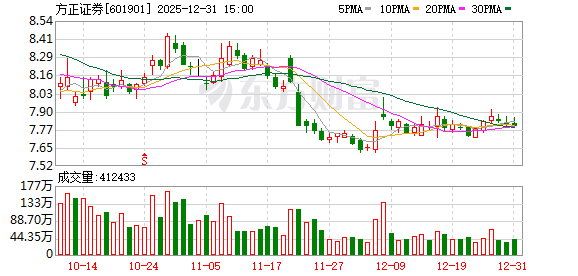
方正证券,再收警示函
Zhong Guo Zheng Quan Bao - Zhong Zheng Wang· 2026-01-04 10:44
Core Viewpoint - The regulatory scrutiny on Founder Securities has intensified due to its failure to fulfill due diligence obligations as the continuous sponsor for Jingyuan Environmental Protection's convertible bonds, leading to administrative penalties and a decline in its investment banking business performance [1][2]. Group 1: Regulatory Issues - Founder Securities received a warning letter from the Jiangsu Securities Regulatory Bureau for not detecting the improper use of raised funds and inaccurate disclosures during its role as the continuous sponsor for Jingyuan Environmental Protection's 2022 convertible bonds [1][2]. - This marks the second regulatory penalty for Founder Securities' investment banking business since 2025, with previous issues including inadequate due diligence and incomplete disclosures in bond projects [2]. Group 2: Business Performance Decline - The number of registered sponsors at Founder Securities decreased from 72 in 2023 to 51 by early 2026, resulting in a drop in industry ranking from 28th to 33rd [3]. - The company's equity underwriting amount was only 1.1 billion in 2025, representing a market share of 0.11%, and further declined to 250 million in 2024 with a market share of 0.07% [3]. - Investment banking revenue plummeted by 59.36% in 2023 to 217 million, and the business line reported a loss of 370 million in 2024 [3]. Group 3: Talent and Revenue Challenges - Founder Securities has experienced significant talent turnover, with key analysts leaving for other firms, impacting its research capabilities [4][5]. - The commission income from brokerage services has consistently declined, dropping from 541 million in 2021 to 307 million in 2023, with a ranking fall from 16th to 24th in the industry [5]. Group 4: Overall Financial Performance - Despite challenges in investment banking and research, Founder Securities reported a significant revenue increase of 52.14% in the first half of 2025, reaching 5.663 billion, with a net profit growth of 76.43% to 2.384 billion [7]. - Wealth management has become a crucial revenue source, generating 3.317 billion in the first half of 2025, although this reliance poses risks if market conditions deteriorate [7]. - The company is actively selling assets to improve cash flow, including a 730 million sale of assets related to Zhengzhou Yuda International Trade Building and plans to divest its stake in Credit Suisse Securities for an expected cash recovery of 857 million [7].
花旗集团(C.US)委任Gonzalo Luchetti为新CFO并调整美国个人银行业务
Zhi Tong Cai Jing· 2025-11-21 06:20
Core Insights - Citigroup announced that Gonzalo Luchetti will become the new Chief Financial Officer (CFO) starting March 2026, succeeding Mark Mason who will transition to Executive Vice Chairman and Senior Executive Advisor to CEO Jane Fraser [1] - The retail banking and Citigold services will be integrated into Citigroup's wealth management division, with daily banking operations managed by the U.S. team under Kate Luft [1] - This restructuring aims to accelerate growth by enhancing synergies across relationship tiers and unifying the management of consumer deposit businesses [1]

南通农商银行:多维攻坚激活财富业务新动能
Jiang Nan Shi Bao· 2025-11-07 15:02
Core Insights - Nantong Rural Commercial Bank has implemented various measures to enhance its wealth management business amid challenges such as narrowing net interest margins, achieving both qualitative and quantitative improvements in the sector [1][2][3] Group 1: Marketing and Responsibility - The bank has adopted a grid-based marketing management approach, segmenting urban markets into defined "responsibility areas" to ensure clear accountability for each financial service touchpoint [1] - A quantitative assessment mechanism has been established, evaluating seven key indicators related to wealth management on a monthly basis, which serves as a basis for training, selection, and recognition [1] - Since the third quarter, the bank has seen a net increase of 180 million yuan in wealth management sales and a growth of 1,500 clients in its wealth management segment [1] Group 2: Training and Professional Development - The bank has conducted 23 specialized training sessions since July to enhance the professional capabilities and compliance awareness of its marketing team [2] - Regular online and weekend training sessions have been established to reinforce ongoing training, alongside targeted training for new employees and those transitioning roles [2] - Training has also focused on compliance sales and product switching, strengthening the risk management framework [2] Group 3: Customer Experience and Digital Marketing - The bank has enhanced customer engagement through diverse activities and digital marketing strategies, resulting in increased customer loyalty and business output [2] - Events such as high-net-worth client appreciation meetings have directly generated sales of 1.5 million yuan, while a new card promotion has doubled the number of new value credit card customers [2] - The bank has implemented tiered subsidies based on customer assets under management (AUM) and has seen significant growth in value credit card and online payment customer numbers since the beginning of the year [2] Group 4: Compliance and Risk Management - The bank has established a comprehensive risk control system covering the entire process from product admission to sales and evaluation, ensuring compliance with regulatory requirements [3] - Regular compliance checks and marketing training are conducted to optimize the structure of sold products and enhance suitability management [3] - The bank's efforts in responsibility assignment, precise empowerment, experience enhancement, and compliance support have laid a solid foundation for high-quality development [3]
地方银行高管频换阵 “80后”逐步崭露头角
Shang Hai Zheng Quan Bao· 2025-11-05 18:41
Core Insights - The article highlights the increasing presence of "post-80s" executives in local banks, particularly in the roles of vice president and above, indicating a generational shift in leadership within the banking sector [3][4][5]. Group 1: Executive Demographics - Among 27 listed city and rural commercial banks, 15 have "post-80s" individuals in senior management positions, accounting for over 50% [4]. - In the 10 listed rural commercial banks, 8 have "post-80s" executives in vice president roles or higher, while only 7 out of 17 listed city commercial banks have such representation [4]. - Only two rural commercial banks, Changshu Bank and Su Nong Bank, have "post-80s" individuals serving as president or acting president [2][4]. Group 2: Challenges and Opportunities - The rise of "post-80s" executives is attributed to performance pressures and strategic adjustments within the banking industry, as traditional banking models face challenges [5][6]. - The average net interest margin for rural commercial banks decreased by approximately 0.14 percentage points year-on-year, while city commercial banks saw a decline of about 0.11 percentage points [6]. - "Post-80s" executives are perceived to possess stronger digital thinking and technical sensitivity, which is crucial for adapting to emerging fields like mobile payments and intelligent risk control [5][6]. Group 3: Perspectives on Young Executives - The younger leadership is seen as beneficial for driving innovation and adapting to the digital transformation of banks, aligning with the needs of younger consumers [7]. - However, there are concerns regarding the frequent turnover of young executives, which may lead to performance volatility and potential deficiencies in risk management and operational resilience [7].

银行25Q3综述:韧性好于预期
HTSC· 2025-11-04 02:19
Investment Rating - The report maintains an "Overweight" rating for the banking sector [2] Core Viewpoints - The banking sector shows resilience better than expected, with a focus on strong fundamentals and quality dividends driving core profit improvement [6][15] - The annualized non-performing loan generation rate for listed banks is 0.55%, down 13 basis points from Q2 2025, indicating a marginal decline in non-performing loan generation across all types of banks [6] - The report suggests focusing on two main directions for investment: high-quality fundamentals that may recover valuation premiums as market risk appetite increases, and stable high-dividend stocks [6][15] Summary by Sections Operating Overview - In the first nine months of 2025, listed banks' revenue and net profit grew by 0.9% and 1.5% year-on-year, respectively, with revenue growth slightly declining due to bond market volatility affecting non-interest income [15][24] - The net interest margin for listed banks was 1.41%, remaining stable compared to the first half of 2025, driven by a continuous decline in funding costs [15][25] Profitability Breakdown - The net interest income of listed banks decreased by 0.6% year-on-year, but various types of banks showed improvement in net interest income, particularly city commercial banks [25] - Non-interest income from wealth management and commission fees increased by 4.6% year-on-year, reflecting a recovery in capital markets [16][25] Asset and Liability Insights - Total assets and liabilities of listed banks grew by 9.3% year-on-year, maintaining steady expansion [17] - Loan growth remained stable, with a year-on-year increase of 7.8%, while deposits grew by 7.8%, indicating a slight decline in deposit growth rate [10][17] Risk Perspective - The overall non-performing loan ratio for listed banks was stable at 1.23%, with a provision coverage ratio of 236%, indicating solid asset quality [11][15] Market Outlook - The report anticipates a gradual recovery in bank performance, with a focus on quality banks that exhibit strong resilience [6][15]



浦发银行三季度净利润增超10%,AUM同比增长近20%
2 1 Shi Ji Jing Ji Bao Dao· 2025-10-31 10:05
Core Insights - Shanghai Pudong Development Bank (SPDB) reported a net profit increase of over 10% in Q3 2025, with total revenue reaching 41.721 billion yuan, a year-on-year growth of 0.31% [1] - The bank's total assets reached 9.89 trillion yuan, reflecting a 4.55% increase from the end of the previous year, while the non-performing loan (NPL) ratio decreased to 1.29% [2] Financial Performance - For the first three quarters, SPDB achieved a total revenue of 132.28 billion yuan, up 1.88% year-on-year, and a net profit of 39.171 billion yuan, an increase of 10.21% [1] - Net interest income for the first three quarters was 89.606 billion yuan, growing by 3.93%, primarily due to optimized funding costs [2] - The bank's net interest margin improved by 6 basis points to 1.44% as the deposit interest rate decreased by 38 basis points year-on-year [2] Asset Quality and Risk Management - The NPL balance decreased to 72.889 billion yuan, with the NPL ratio showing a decline, and the provision coverage ratio increased to 198.04% [4] - The bank's focus on technology finance, supply chain finance, inclusive finance, cross-border finance, and treasury finance has led to an optimized loan structure [2] Customer and Wealth Management - SPDB's retail assets under management (AUM) reached 4.62 trillion yuan, a year-on-year increase of 19.07%, driven by deeper customer engagement [3] - Retail loans (excluding personal business loans) amounted to 1.504721 trillion yuan, with a growth of 2.84% from the end of the previous year [3] - The bank's wealth management business saw a significant increase, with asset management scale reaching 3.19 trillion yuan, a net increase of 503.062 billion yuan [3]

杭州银行(600926):量价提质保持经营韧性
HTSC· 2025-10-31 06:49
Investment Rating - The report maintains an "Overweight" rating for the company [7]. Core Views - The company demonstrated resilience in operations with a year-on-year increase in net profit attributable to shareholders by 14.5% and revenue by 1.4% for the first nine months of 2025 [1]. - The bank's asset quality remains strong, with a non-performing loan ratio of 0.76% and a provision coverage ratio of 514% as of Q3 [4]. - The report anticipates a gradual recovery in the economy, projecting net profits of 194 billion, 218 billion, and 243 billion RMB for 2025 to 2027, respectively [5]. Summary by Sections Financial Performance - For the first nine months of 2025, the company's net profit, revenue, and pre-provision operating profit (PPOP) increased by 14.5%, 1.4%, and 1.6% year-on-year, respectively [1]. - The annualized return on assets (ROA) and return on equity (ROE) were stable at 0.96% and 16.91%, respectively [1]. Credit and Asset Quality - As of Q3 2025, total assets, loans, and deposits grew by 13.8%, 12.7%, and 14.5%, respectively, compared to the previous quarter [2]. - The bank's non-performing loan ratio remained stable at 0.76%, with a slight decrease in provisions but still at a comfortable level [4]. Wealth Management and Non-Interest Income - The bank's net fee and commission income increased by 12.6% year-on-year, driven by strong performance in wealth management [3]. - However, other non-interest income saw a decline of 24.7% year-on-year due to market fluctuations affecting investment income [3]. Profitability and Valuation - The report forecasts net profits of 19.41 billion RMB for 2025, with a projected price-to-book (PB) ratio of 0.74 times for 2026 [5]. - The target price is set at 21.32 RMB, reflecting a PB of 1.0 times [5].

市场交投活跃 上市券商上半年业绩增长
Jing Ji Ri Bao· 2025-09-17 00:44
Overall Performance Growth - The overall performance of listed securities firms in the first half of 2025 showed significant growth, with total revenue reaching 251.87 billion yuan, a year-on-year increase of 30.8%, and net profit attributable to shareholders reaching 104.02 billion yuan, up 65.08% [2] - Leading firms like CITIC Securities, Guotai Junan, Huatai Securities, and GF Securities reported revenues exceeding 10 billion yuan, indicating a strong competitive landscape [2][3] - CITIC Securities maintained its industry leadership with a revenue of 33.04 billion yuan, a growth of 20.44%, and a net profit of 13.72 billion yuan, up 29.8% [2] Small and Medium-sized Firms' Performance - Small and medium-sized securities firms demonstrated impressive growth, with companies like Dongbei Securities and Guojin Securities reporting net profit growth exceeding 100% [3] - Dongbei Securities achieved a revenue of 2.05 billion yuan, a year-on-year increase of 31.66%, and a net profit of 431 million yuan, up 225.9% [3] - The recovery of the market environment was cited as a key factor for this growth, with increased financing activities in both primary and secondary markets [3] Business Segment Performance - Proprietary trading remained the primary growth driver, with total proprietary income for 42 listed firms reaching 112.35 billion yuan, a year-on-year increase of 53% [5] - Brokerage business also contributed significantly, with CITIC Securities leading with brokerage income of 6.40 billion yuan, followed by Guotai Junan and GF Securities [6] - Investment banking revenue for the first half of the year reached 15.53 billion yuan, reflecting an 18% year-on-year growth, driven by improved equity financing conditions [7] Mergers and Acquisitions - The pace of mergers and acquisitions in the securities industry has accelerated, with notable combinations such as Guotai Junan and Haitong Securities [8] - The integration of resources through mergers is becoming a catalyst for transformation and growth among securities firms [8][9] - The regulatory environment is supportive of mergers, which may lead to significant changes in industry dynamics and increased competitiveness [9][10] Future Outlook - The securities industry is expected to maintain a positive growth trajectory, supported by capital market reforms and increased market activity [1][4] - Analysts express optimism regarding the potential for continued improvement in return on equity (ROE) and valuation levels for securities firms [10]