
贸易强国建设

Search documents
全国外贸工作会议在京召开:千方百计稳外贸 全力实现“十五五”贸易强国建设良好开局
Mei Ri Jing Ji Xin Wen· 2026-02-03 10:20
Core Viewpoint - The 2026 National Foreign Trade Work Conference emphasizes the significance of foreign trade work as it marks the beginning of the "14th Five-Year Plan" period, highlighting the complex and severe challenges facing China's foreign trade development, which includes both strategic opportunities and risks [1] Group 1: Policy and Strategic Focus - The conference calls for all levels of business authorities to align their thoughts and actions with the decisions and deployments of the Central Committee [1] - It stresses the importance of a dual approach of "policy + activities" to drive forward the integration of trade and investment, as well as the integration of domestic and foreign trade [1] Group 2: Goals and Development Initiatives - The focus is on stabilizing foreign trade, developing new momentum for foreign trade, and promoting balanced development of imports and exports [1] - The ultimate goal is to achieve a good start for the construction of a trade power during the "14th Five-Year Plan" period [1]
商务部:坚持“政策+活动”双轮驱动 着力推进贸易投资一体化、内外贸一体化发展
智通财经网· 2026-02-03 10:13
Core Viewpoint - The 2026 National Foreign Trade Work Conference emphasizes the importance of foreign trade work as the country enters the "14th Five-Year Plan" period, highlighting the complex and severe challenges faced by China's foreign trade development, while also recognizing the strategic opportunities and risks involved [3]. Group 1: Conference Overview - The conference took place in Beijing from February 2 to 3, 2026, with the participation of Zhang Li, Assistant Minister of Commerce, who delivered a work report [3][4]. - The meeting was guided by Xi Jinping's thoughts on socialism with Chinese characteristics for a new era and aimed to implement the spirit of the Central Economic Work Conference [3]. Group 2: Achievements and Challenges - The conference reviewed the achievements of foreign trade in 2025 and the "13th Five-Year Plan" period, noting that China's foreign trade demonstrated strong resilience and vitality, with record-high import and export volumes and continuous structural optimization [3]. - It was acknowledged that 2026 marks the beginning of the "14th Five-Year Plan," making effective foreign trade work crucial amid a complex and severe environment [3]. Group 3: Strategic Directions - The conference called for all levels of commerce authorities to align their thoughts and actions with the decisions of the Central Committee, focusing on three important positions in commerce work [3]. - A dual approach of "policy + activities" is to be adopted to promote the integration of trade and investment, as well as the integration of domestic and foreign trade [3]. - The goal is to stabilize foreign trade, develop new momentum for foreign trade, and promote balanced development of imports and exports, ensuring a good start for the "14th Five-Year Plan" in building a strong trading nation [3].
全国外贸工作会议召开:千方百计稳外贸 全力实现“十五五”贸易强国建设良好开局
Di Yi Cai Jing· 2026-02-03 09:58
(文章来源:第一财经) 据商务部,2月2日至3日,2026年全国外贸工作会议在京召开。会议强调,2026年是"十五五"开局之 年,做好外贸工作意义重大。我国外贸发展面临的形势依然复杂严峻,战略机遇和风险挑战并存、不确 定难预料因素增多。各级商务主管部门要把思想和行动统一到党中央决策部署上来,立足商务工作"三 个重要"定位,坚持"政策+活动"双轮驱动,着力推进贸易投资一体化、内外贸一体化发展,千方百计稳 外贸,发展外贸新动能,推动进出口平衡发展,全力实现"十五五"贸易强国建设良好开局。 ...
贸易强国建设稳步推进
Xin Lang Cai Jing· 2026-01-18 18:28
Core Insights - In 2025, China's total goods trade import and export value exceeded 45 trillion yuan, marking a historical high with a year-on-year growth of 3.8%, maintaining growth for nine consecutive years since 2017 [1][4] - The "14th Five-Year Plan" period saw China's cumulative import and export scale surpass 200 trillion yuan, a 40% increase compared to the "13th Five-Year Plan" period, with a stable international market share for imports and exports [2][4] - High-tech product imports and exports grew at an average annual rate of 7.9% over five years, with new products like electric vehicles and lithium batteries seeing significant export growth [2][5] Trade Performance - In 2025, the total import and export value reached 45.47 trillion yuan, a 41.1% increase from 2020, with an average annual growth rate of 7.1% [2][4] - December 2025 saw a record monthly import and export value of 4.26 trillion yuan, a year-on-year increase of 4.9% [4] - The number of trading entities exceeded 780,000, and trade relations were maintained with nearly 250 countries and regions [1][4] Challenges and Resilience - The external environment faced challenges such as global economic slowdown, geopolitical divisions, and rising trade costs, yet China achieved a 3.8% growth in imports and exports in 2025 [3][4] - The government implemented a series of policies to stabilize foreign trade, which helped boost enterprise confidence and stabilize market expectations [4][7] Innovation and Market Expansion - The export of self-owned brand products increased by 12.9%, with significant sales of smart watches and toys in over 170 countries [5][6] - Private enterprises accounted for 57.3% of China's total foreign trade value, with a notable presence in emerging markets [6][7] Port Performance and Logistics - Ningbo-Zhoushan Port achieved a cargo throughput of over 1.4 billion tons, maintaining its position as the world's largest port for 17 consecutive years [8] - Shanghai Port's container throughput exceeded 55.06 million TEUs, setting a new historical record [8] Future Outlook - The establishment of the Hainan Free Trade Port has led to a rapid increase in foreign trade enterprises, with a 19.6% year-on-year growth in trade volume since its closure [9] - The focus for 2026 includes promoting high-quality development in foreign trade, enhancing cooperation, and expanding the trade landscape [9][11]
2026义乌电商展 跨境出口:海关总署公布2025年我国进出口数据
Sou Hu Cai Jing· 2026-01-16 03:15
Group 1 - The core viewpoint of the articles highlights the significant achievements of China's foreign trade during the "14th Five-Year Plan" period, with total import and export volume exceeding 200 trillion yuan, marking a 40% increase compared to the "13th Five-Year Plan" [1][2] - In 2025, China's total goods trade reached 45.47 trillion yuan, a year-on-year growth of 3.8%, with exports amounting to 26.99 trillion yuan, up 6.1%, and imports at 18.48 trillion yuan, a historic high with a 0.5% increase [1][3] - High-tech product imports and exports grew at an average annual rate of 7.9% over the past five years, with a further acceleration to 11.4% in 2025, contributing nearly 60% to overall foreign trade growth [1][2] Group 2 - The new export categories, including electric vehicles, photovoltaic products, and lithium batteries, reached an export scale of nearly 1.3 trillion yuan in 2025, representing a 3.5-fold increase since 2020 [1] - Cross-border e-commerce in China saw a significant increase, with imports and exports totaling 2.75 trillion yuan in 2025, a 69.7% growth compared to 2020 [1] - China's trade relationships have diversified, with 249 countries and regions engaging in trade, and the concentration of trade partners has decreased, indicating a more balanced trade landscape [2] Group 3 - In 2025, trade with the United States accounted for 4.01 trillion yuan, or 8.8% of China's total trade, with China being the third-largest export destination and import source for the U.S. [3] - The U.S. and China have seen a temporary easing of trade tensions, with both sides achieving positive outcomes through multiple rounds of negotiations [3] - China's import volume reached a record high in 2025, maintaining its position as the world's second-largest import market for 17 consecutive years [3]

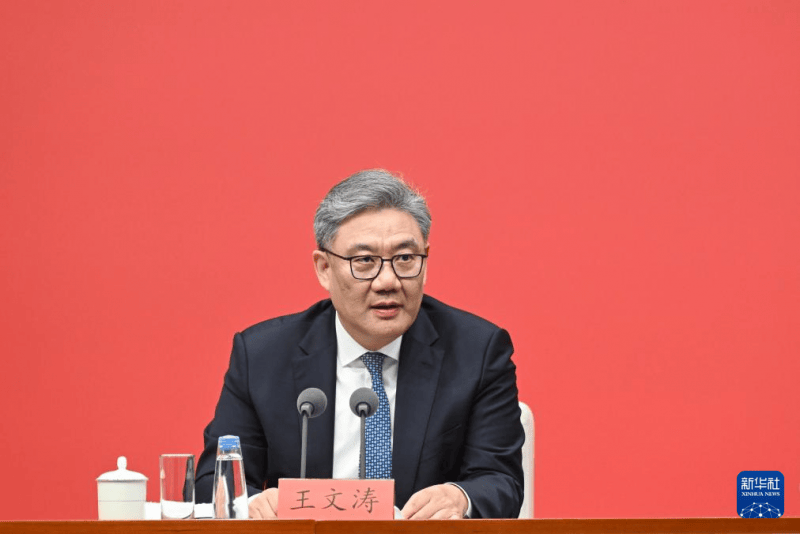
王文涛:将统筹推进贸易强国建设的“三大支柱”,全力稳外贸
Sou Hu Cai Jing· 2026-01-16 02:57
Core Viewpoint - The Ministry of Commerce emphasizes the need to address challenges and uncertainties in foreign trade, focusing on the construction of a trade powerhouse through three pillars: goods trade, service trade, and digital trade [1]. Group 1: Trade Promotion Strategies - The Ministry plans to enhance major trade exhibitions like the Canton Fair to attract more overseas buyers and increase support for companies participating in international exhibitions [3]. - There will be an optimization of public services, including the publication of country-specific trade guides and foreign trade promotion information [3]. - The Ministry aims to guide the healthy and regulated development of new foreign trade models such as cross-border e-commerce [3]. Group 2: Trade Agreements and Market Expansion - China has established 23 free trade agreements with 30 countries and regions, and the Ministry will support companies in utilizing these agreements to expand trade [3]. - The "Export China" initiative, launched during the last China International Import Expo, will continue to enhance brand influence and organize various matching activities to boost imports [3]. Group 3: Import Trade Facilitation - The Ministry will leverage trade promotion platforms like the China International Import Expo to improve the convenience of import trade and optimize the sources and structure of imported goods [3]. - There is a commitment to meet the needs of industrial development and improve the quality of life for citizens through better import strategies [3]. Group 4: Service Trade Development - The Ministry plans to refine the negative list management system for cross-border service trade and gradually relax market access in service sectors [3]. - Policies will be developed based on the "one industry, one policy" principle to promote high-value measures, accelerate the export of productive services, and enhance the international service capabilities of professional service institutions [3]. - The focus will be on leveraging innovations in artificial intelligence, digital economy, and biomedicine to expand exports in emerging services such as R&D, design, consulting, testing, and maintenance [3].
实施扩大内需战略 坚持扩大对外开放——访商务部党组书记、部长王文涛
Ren Min Ri Bao· 2026-01-16 00:59
Core Viewpoint - The implementation of an expanded domestic demand strategy is essential for maintaining long-term healthy economic development and meeting the growing needs of the people for a better life [1] Group 1: Domestic Demand and Consumption - The central economic work conference emphasizes the importance of leading domestic demand and building a strong domestic market as a priority for economic work in 2026 [2] - In the first eleven months, the total retail sales of consumer goods grew by 4.0%, with an expectation to exceed 50 trillion yuan for the first time in 2025 [2] - The service retail growth rate outpaced that of goods retail by 1.3 percentage points, indicating strong vitality and potential in the service sector [2] Group 2: Focus Areas for Consumption Growth - The focus will be on key and potential areas to cultivate new growth points in service consumption, including transportation, housekeeping, online audio-visual, and tourism [3] - The 2026 policy will support green and smart product consumption through a more robust "old-for-new" policy, encouraging the replacement of old appliances with energy-efficient models [3] - Emphasis will be placed on enhancing offline retail experiences and creating diverse consumption scenarios to balance online and offline development [3] Group 3: Downstream Market Potential - The third and fourth-tier cities and counties represent a significant market, accounting for 70% of the population and 60% of retail sales, making them key areas for consumption growth [4] - The "Buy in China" series of activities will be promoted, including special events during the Spring Festival to enhance consumer engagement [4] Group 4: Trade Development Strategies - The foreign trade sector is expected to show resilience, with total goods trade expected to exceed 45 trillion yuan, growing by 3.8% [5] - The focus will be on diversifying markets, promoting balanced trade development, and enhancing service trade through improved policies and support for emerging service exports [6][7] Group 5: High-Level Opening Up - The Ministry of Commerce will expand autonomous opening in various service sectors and promote the implementation of free trade agreements to enhance trade facilitation [8] - Efforts will be made to promote cross-border supply chain cooperation and participate constructively in global economic governance, including APEC and WTO meetings [9]
实施扩大内需战略 坚持扩大对外开放——访商务部党组书记、部长王文涛(权威访谈·开局“十五五”)
Ren Min Ri Bao· 2026-01-15 22:15
Core Viewpoint - The implementation of an expanded domestic demand strategy is essential for maintaining long-term healthy economic development and meeting the growing needs of the people for a better life [1] Group 1: Domestic Demand and Consumption - The central economic work conference emphasizes "domestic demand as the main driver" and aims to build a strong domestic market, with a focus on promoting consumption [2] - In 2025, China's retail sales of consumer goods are expected to exceed 50 trillion yuan for the first time, with a growth rate of 4.0% in the first 11 months [2] - The service retail sector is growing faster than goods retail, indicating strong vitality and potential in the market [2] Group 2: Service Consumption Growth - The focus will be on cultivating new growth points in service consumption, particularly in sectors like transportation, housekeeping, and online entertainment [3] - Policies will be implemented to support the replacement of old consumer goods with new, energy-efficient products, promoting green and intelligent consumption [3] Group 3: Downstream Market Potential - The third and fourth-tier cities and counties represent a significant market, accounting for 70% of the population and 60% of retail sales, and are seen as areas with the highest growth potential [4] - Initiatives like the "Buy in China" series will be promoted to stimulate consumption in these regions, including special events during the Spring Festival [4] Group 4: Trade Development - China's foreign trade is expected to exceed 45 trillion yuan in 2025, with a growth rate of 3.8%, maintaining its position as the world's largest trading nation for nine consecutive years [5] - The focus will be on diversifying markets, promoting balanced trade development, and enhancing service trade [6][7] Group 5: High-Level Opening Up - The Ministry of Commerce will expand autonomous opening in various service sectors and promote the implementation of free trade agreements [8] - Efforts will be made to optimize the cross-border layout of industrial and supply chains, encouraging cooperation in green development and digital economy [9] - Active participation in global economic governance will be prioritized, including engagement in APEC and WTO meetings [9]
贸易强国建设稳步推进——解码“十四五”收官年的外贸答卷
Xin Hua She· 2026-01-15 00:07
Core Insights - In 2025, China's total goods trade import and export value exceeded 45 trillion yuan, marking a historical high with a year-on-year growth of 3.8%, maintaining growth for nine consecutive years since 2017 [1][4] - The "14th Five-Year Plan" period saw China's cumulative import and export scale surpass 200 trillion yuan, a 40% increase compared to the previous five-year period, with a stable international market share for imports and exports [2] - The growth in high-tech product exports averaged 7.9% annually over five years, with new products like electric vehicles and solar products seeing a significant increase in export scale [2][5] Trade Performance - In 2025, the total import and export value reached 45.47 trillion yuan, a 41.1% increase from 2020, with an average annual growth rate of 7.1% [2] - December 2025 saw a record monthly import and export value of 4.26 trillion yuan, a year-on-year increase of 4.9% [4] - The number of trading entities exceeded 780,000, and China maintained trade relations with nearly 250 countries and regions [1] Challenges and Resilience - The external environment remains challenging, with global economic slowdown, geopolitical tensions, and rising trade costs [3] - Despite these challenges, China's imports have shown a steady increase, with a 4.4% growth in December 2025, marking seven consecutive months of year-on-year growth [7] - The government's timely policy responses have helped stabilize trade and boost market confidence [4][7] Innovation and Market Expansion - The export of self-owned brand products increased by 12.9%, with significant sales of smart devices in over 170 countries [5][6] - Private enterprises accounted for 57.3% of China's total foreign trade value, with a notable increase in exports through market procurement methods [6] - China has actively expanded its trade footprint in emerging markets, achieving growth in trade with over 60% of countries and regions across five continents [6] Future Outlook - The establishment of the Hainan Free Trade Port has led to a rapid increase in foreign trade enterprises, with a 19.6% year-on-year growth in trade volume since its closure [9] - The focus for 2026 includes enhancing trade and investment integration, promoting digital and green trade, and expanding the "Export China" brand [9][10] - China's commitment to high-level opening-up and cooperation is expected to inject stability and positive energy into global economic development [10]
新华全媒头条|贸易强国建设稳步推进——解码“十四五”收官年的外贸答卷
Xin Hua She· 2026-01-14 16:19
Core Insights - China's foreign trade achieved a record high in 2025, with total import and export value exceeding 45 trillion yuan, marking a 3.8% year-on-year growth and maintaining growth for nine consecutive years since 2017 [1][2][4]. Group 1: Trade Performance - In the "14th Five-Year Plan" period, China's cumulative import and export scale surpassed 200 trillion yuan, a 40% increase compared to the "13th Five-Year Plan" [2]. - The total import and export value reached 45.47 trillion yuan in 2025, a 41.1% increase from 2020, with an average annual growth rate of 7.1% [2]. - High-tech product exports grew at an average annual rate of 7.9%, with new products like electric vehicles and solar products seeing exports close to 1.3 trillion yuan, a 3.5-fold increase from 2020 [2][6]. Group 2: Market Dynamics - China's foreign trade maintained a strong resilience despite external challenges such as global economic slowdown and geopolitical tensions, achieving a 3.8% growth in 2025 [4][11]. - The number of foreign trade enterprises exceeded 780,000, and China maintained trade relations with nearly 250 countries and regions [1][2]. - The share of private enterprises in China's foreign trade increased to 57.3%, with significant contributions from emerging markets in ASEAN, Latin America, and Africa [6][7]. Group 3: Policy and Support - The Chinese government implemented a series of policies to stabilize foreign trade, which helped businesses maintain orders and expand markets, countering external shocks [4][11]. - The central leadership's unified approach was highlighted as a key factor in overcoming challenges and boosting business confidence [4][11]. Group 4: Future Outlook - The establishment of the China-ASEAN Free Trade Area 3.0 and the promotion of digital and green trade are set as key tasks for 2026, aiming for high-quality development in foreign trade [10][11]. - The rapid growth of Hainan's foreign trade post-free trade port closure indicates significant potential for future trade expansion [9].