
新兴市场开拓

Search documents
风华高科(000636) - 000636风华高科投资者关系管理信息20260306
2026-03-06 11:26
Group 1: Market Development and Product Innovation - The company has prioritized "emerging market development" as a key annual initiative, focusing on accelerating new product research and development, including high-performance products like alloy resistors and multi-layer ceramic capacitors (MLCC) [2][3] - The company has a comprehensive industry layout, integrating materials, products, and equipment, enabling it to respond promptly to customer needs and provide one-stop procurement services for electronic components [3] Group 2: Product Applications and Features - New products are designed to meet higher demands in emerging application areas, including IM and AE series MLCCs for high stability and efficiency in medium to high voltage environments, and MF and MI series alloy resistors for high power and precision applications [3] - The TLVR inductors utilize advanced materials and hot-pressing technology, offering high current capacity, compact size, and low DC resistance to meet high power density requirements [3] Group 3: Pricing and Capacity Utilization - The company adjusted prices for certain products, such as chip resistors and inductors, in response to rising raw material costs, indicating a competitive market environment [3] - The current capacity utilization rate for main products remains high, with ongoing plans to expand production capacity for MLCCs, chip resistors, and inductors to support high-end transformation [3]

欧盟火力全开,刚跟印度签完合约,就对中国征收79%反倾销关税
Sou Hu Cai Jing· 2026-02-10 12:25
Core Viewpoint - The European Union has imposed a significant anti-dumping tariff of 79% on Chinese ceramic tableware and kitchenware, which is seen as a protective measure for its domestic ceramic industry, particularly affecting small and medium-sized enterprises in China [1][3][5]. Group 1: Tariff Impact - The new tariff, termed the "doomsday clause," has increased from a previous range of 13% to 35%, severely impacting the competitiveness of Chinese ceramic products in the EU market [3][5]. - The high tariff means that export costs for Chinese ceramics will double, leading to a loss of market competitiveness [5][9]. - The EU's decision is primarily driven by the need to protect its domestic ceramic industries, particularly in Spain and Italy, which dominate the European market [9][11]. Group 2: Industry Response - Many ceramic industry stakeholders are anxious and are urgently seeking strategies to cope with the new tariff [5][31]. - The complexity of the tariff situation is compounded by the fact that other countries, such as Indonesia, have also imposed high tariffs, with Indonesia's reaching 87% [7][9]. - The EU's anti-dumping measures are not solely targeted at China but also include Turkey and India, indicating a broader protective strategy [9][11]. Group 3: Legal and Compliance Challenges - The EU has classified China as a non-market economy, which complicates the legal landscape for Chinese companies seeking to contest the tariffs [13][15]. - Chinese ceramic enterprises face significant hurdles in submitting appeals due to a lack of unified industry support and resources for legal representation [17][19]. - The appeal process is complicated and costly, with many small enterprises unable to afford the legal fees required to contest the tariffs effectively [19][23]. Group 4: Market Dynamics and Future Strategies - Despite the tariffs, the export volume of Chinese ceramics to Europe has continued to grow, primarily due to their low prices [15][25]. - The industry is characterized by a high level of competition and low profit margins, which makes it vulnerable to external shocks such as tariff increases [25][28]. - The long-term solution for the industry lies in upgrading and transforming production capabilities, moving away from low-end products, and exploring new markets outside the EU [31][37][40]. Group 5: Opportunities for Growth - There is potential for Chinese ceramic companies to expand into emerging markets that do not impose tariffs on Chinese products, such as Southeast Asia, Central Asia, and Africa [37][40]. - Companies are encouraged to adopt modern financial systems and compliance practices to improve their chances of successfully contesting tariffs in the future [33][42]. - The focus should shift towards building strong domestic brands and leveraging e-commerce to reduce dependency on traditional export markets [42][44].


2025杭州外贸进出口总值超9000亿元 出口规模跻身全国第八
Hang Zhou Ri Bao· 2026-01-27 07:04
Core Insights - Hangzhou's export scale reached 646.7 billion yuan in 2025, marking an 8.7% year-on-year increase, ranking eighth among cities in China, up one position from 2024 [1] - The total foreign trade import and export value for Hangzhou in 2025 was 906.95 billion yuan, a growth of 6.1%, accounting for 16.4% of the province's total foreign trade [1] Group 1: Export Growth Drivers - The rise in rankings is attributed to the expansion into emerging markets, optimization of product structure, and strong growth in cross-border e-commerce [2] - Exports to major emerging markets showed consistent growth, with exports to Latin America, the Middle East, and Africa reaching 61.46 billion yuan, 50.73 billion yuan, and 33.92 billion yuan respectively, with growth rates of 11.2%, 15.1%, and 17.9% [2] - Exports to BRICS countries and partner nations totaled 177.73 billion yuan, growing by 9.0%, while exports to Belt and Road Initiative countries reached 320.72 billion yuan, increasing by 14.1% [2] Group 2: High-tech Product Exports - High-tech product exports from Hangzhou amounted to 100.11 billion yuan, growing by 9.9%, which is 1.2 percentage points higher than the overall city export growth rate, representing 15.5% of total exports and 30.7% of the province's high-tech product exports [2] - The "new three items" (electric vehicles, lithium-ion batteries, and photovoltaic products) saw exports of 25.57 billion yuan, a significant increase of 49.9% [2] Group 3: Cross-border E-commerce Growth - In 2025, exports through the cross-border e-commerce platform reached 75.87 billion yuan, a growth of 30.6%, contributing 3.0 percentage points to the city's export growth, exceeding the provincial growth rate by 5.6 percentage points, and accounting for 28.3% of the province's total cross-border exports [3] - The logistics sector reflected this growth, with Hangzhou's air port handling over 20.9 million cross-border e-commerce shipments, with a cargo volume of 154.5 thousand tons, making up 70% of the total export cargo volume [3] Group 4: Increase in Export Enterprises - The number of enterprises engaged in import and export activities in Hangzhou reached 20,425, an increase of 2,276 year-on-year, with 16,417 of these being private enterprises, which exported 497.98 billion yuan, growing by 11.3% [3] - Notably, specialized and innovative enterprises performed exceptionally well, with 271 national-level "little giant" enterprises exporting 32.6 billion yuan, a growth of 26.7% [3]
今年“百展千企 沪连全球”海外展会推荐名单扩容50% 上海外贸企业提前集结出海亮相
Jie Fang Ri Bao· 2026-01-24 01:36
Group 1 - Shanghai Tongxin Trading Co., Ltd. is preparing to participate in the Paris Textile and Fabric Exhibition from February 2 to 4, with support from the Shanghai International Exhibition (Group) Co., Ltd. providing booth fee subsidies and organizing pre-exhibition meetings for 56 participating companies [1] - The Shanghai Municipal Commission of Commerce announced that in the first quarter of this year, 424 companies will participate in 136 overseas exhibitions through a dual-track model of government-led and market-driven organization [2] - The "Hundred Exhibitions, Thousand Enterprises" initiative aims to organize 5,725 enterprises for 1,149 overseas exhibitions in 2025, with a focus on both traditional markets in Europe and the U.S. and emerging markets [2] Group 2 - The recommended list of overseas exhibitions for 2026 has been expanded to 305 events, a 50% increase from the previous year, covering key export industries and regions [3] - The number of overseas exhibitions organized by the Shanghai International Exhibition Group is set to increase from 159 in 2025 to 219 in 2026, representing a 38% growth [5] - The focus for 2026 will include emerging markets in the Middle East, Central and Eastern Europe, and Africa, with new sectors such as energy storage and biomedicine being emphasized [5]
贸易强国建设稳步推进
Xin Lang Cai Jing· 2026-01-18 18:28
Core Insights - In 2025, China's total goods trade import and export value exceeded 45 trillion yuan, marking a historical high with a year-on-year growth of 3.8%, maintaining growth for nine consecutive years since 2017 [1][4] - The "14th Five-Year Plan" period saw China's cumulative import and export scale surpass 200 trillion yuan, a 40% increase compared to the "13th Five-Year Plan" period, with a stable international market share for imports and exports [2][4] - High-tech product imports and exports grew at an average annual rate of 7.9% over five years, with new products like electric vehicles and lithium batteries seeing significant export growth [2][5] Trade Performance - In 2025, the total import and export value reached 45.47 trillion yuan, a 41.1% increase from 2020, with an average annual growth rate of 7.1% [2][4] - December 2025 saw a record monthly import and export value of 4.26 trillion yuan, a year-on-year increase of 4.9% [4] - The number of trading entities exceeded 780,000, and trade relations were maintained with nearly 250 countries and regions [1][4] Challenges and Resilience - The external environment faced challenges such as global economic slowdown, geopolitical divisions, and rising trade costs, yet China achieved a 3.8% growth in imports and exports in 2025 [3][4] - The government implemented a series of policies to stabilize foreign trade, which helped boost enterprise confidence and stabilize market expectations [4][7] Innovation and Market Expansion - The export of self-owned brand products increased by 12.9%, with significant sales of smart watches and toys in over 170 countries [5][6] - Private enterprises accounted for 57.3% of China's total foreign trade value, with a notable presence in emerging markets [6][7] Port Performance and Logistics - Ningbo-Zhoushan Port achieved a cargo throughput of over 1.4 billion tons, maintaining its position as the world's largest port for 17 consecutive years [8] - Shanghai Port's container throughput exceeded 55.06 million TEUs, setting a new historical record [8] Future Outlook - The establishment of the Hainan Free Trade Port has led to a rapid increase in foreign trade enterprises, with a 19.6% year-on-year growth in trade volume since its closure [9] - The focus for 2026 includes promoting high-quality development in foreign trade, enhancing cooperation, and expanding the trade landscape [9][11]
银龙股份:公司产品主要应用于铁路、水利等领域
Zheng Quan Ri Bao Zhi Sheng· 2026-01-14 11:08
Group 1 - The core viewpoint of the article is that Yinlong Co., Ltd. focuses on sectors such as railways, water conservancy, bridges, highways, and new energy, and does not engage in the aerospace sector [1] - Yinlong Co., Ltd. holds a 20% stake in Shaanxi Aviation Hard Alloy Tool Co., Ltd., which specializes in the research, production, and service of hard alloy materials and cutting tools, primarily serving the aerospace, aviation, engine, automotive, high-speed rail, and steam turbine industries [1] - The company emphasizes its commitment to deepening existing business operations and actively exploring emerging markets to lay a solid foundation for achieving better performance [1]

银龙股份(603969.SH):产品未应用于航空航天领域
Ge Long Hui· 2026-01-14 07:37
Core Viewpoint - Silver Dragon Co., Ltd. (603969.SH) focuses on sectors such as railways, water conservancy, bridges, highways, and new energy, and does not operate in the aerospace sector [1] Group 1: Company Overview - Silver Dragon holds a 20% stake in Shaanxi Aviation Hard Alloy Tool Co., Ltd., which specializes in hard alloy materials and tools for various industries including aerospace, automotive, and high-speed rail [1] - The investment in Shaanxi Aviation is classified as a financial investment, with no involvement in its management [1] Group 2: Future Strategy - The company aims to deepen its existing business and actively explore emerging markets by effectively integrating internal and external resources [1] - The goal is to establish a solid foundation for achieving superior performance in the future [1]
三祥新材:预计2025年年度净利润约为1亿元~1.3亿元,同比增长31.99%~71.58%
Mei Ri Jing Ji Xin Wen· 2026-01-12 10:45
Core Viewpoint - The company expects a significant increase in net profit for the year 2025, driven by strategic initiatives in the zircon product industry and market expansion efforts [1] Group 1: Financial Performance - The company forecasts a net profit attributable to shareholders of approximately 100 million to 130 million yuan for 2025, representing a year-on-year increase of 24.2351 million to 54.2351 million yuan [1] - The expected growth rate for net profit is between 31.99% and 71.58% compared to the previous year [1] Group 2: Business Strategy - The primary reason for the performance change is the company's deepening of the zircon product industry chain and continuous optimization of its application scenarios [1] - The company is actively expanding into emerging markets while optimizing its customer structure, which has led to an increase in the proportion of high-end customers [1] - These strategic moves are expected to steadily improve profitability and drive profit growth [1]

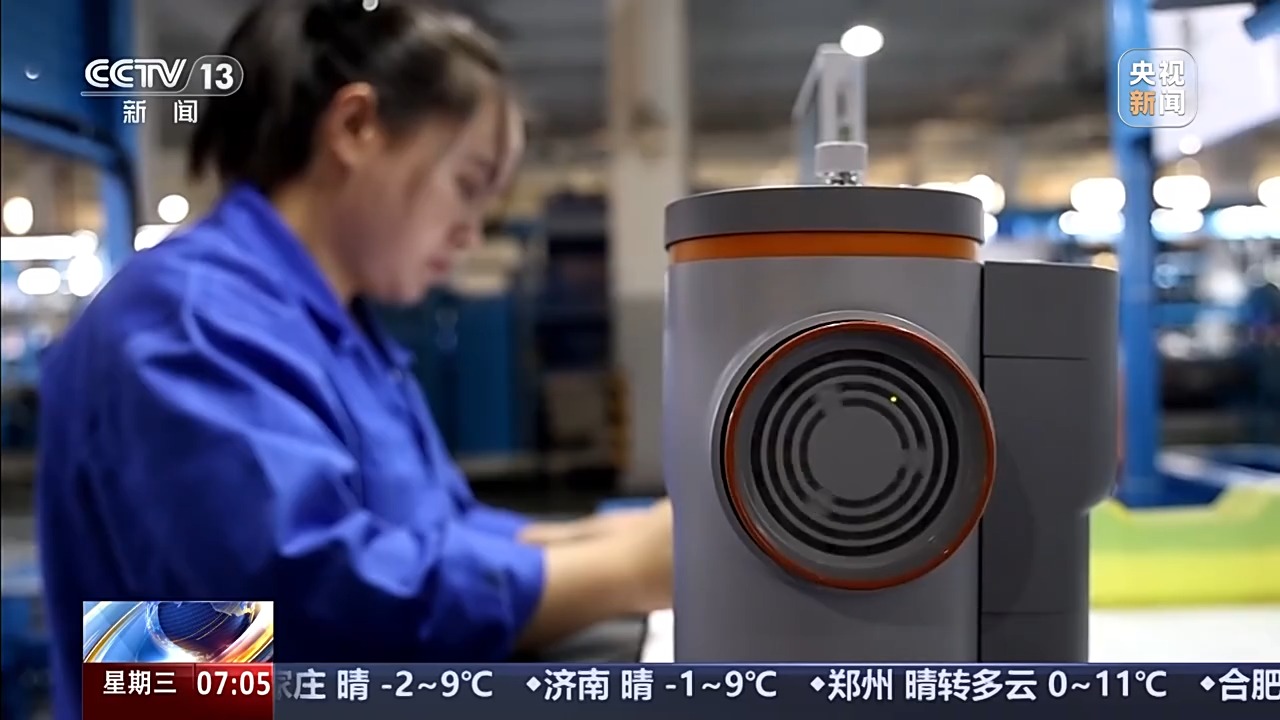
外贸一线观察丨缝制机成爆品 五金开拓非洲市场 “中国制造”走向全球
Yang Shi Xin Wen Ke Hu Duan· 2025-12-17 07:23
Core Insights - China's foreign trade provinces have made significant progress in diversifying trade markets, with notable achievements in regions like Zhejiang, Guangdong, and Sichuan, enhancing the resilience of foreign trade development [1] Group 1: Zhejiang Province - Zhejiang's total import and export value exceeded 5 trillion yuan, reaching 5.06 trillion yuan, marking a historical high for the same period [1] - Taizhou's sewing machinery exports are a key foreign trade industry, with exports surpassing 5 billion yuan, a year-on-year increase of 8.7%, primarily driven by markets in India, Brazil, Vietnam, and Egypt [4] - A Taizhou sewing machinery company reported that foreign trade accounts for 80% of its business, with two products experiencing sales growth exceeding 70% [3][4] Group 2: Yongkang City - Yongkang's exports to Africa have surged, with one electric tool company reporting a 20% increase in exports to the region [6] - The demand for electric tools in Africa is rising due to urbanization and industrialization, prompting Yongkang's foreign trade enterprises to intensify market development efforts [10] - Over 600 companies in Yongkang are engaged in trade with Africa, with exports of hand and machine tools increasing by 24.2% [12] Group 3: Guangdong Province - Guangdong's trade with emerging markets has shown remarkable growth, with exports to ASEAN, Hong Kong, and the EU surpassing 1 trillion yuan each [14] - Dongguan's exports of electromechanical products accounted for nearly 70% of its total exports, with significant growth in markets such as Singapore, Argentina, and Ethiopia [18] - A Dongguan watch company has successfully launched a new product line that incorporates traditional Chinese elements, achieving sales in over 30 countries [15] Group 4: Sichuan Province - Sichuan's export scale exceeded 550 billion yuan, with a significant increase in the volume of goods transported via the Chengdu to Central Asia freight train [19] - The introduction of cross-border cold chain trains has enabled Sichuan apples to enter new markets in Central Asia and Europe, with a 20% increase in household income for local farmers [22][24] - Exports to Central Asia from Sichuan reached over 6 billion yuan, with a year-on-year growth of nearly 30% [25]
前11个月浙江进出口规模突破5万亿元
Mei Ri Shang Bao· 2025-12-14 22:24
Core Insights - Zhejiang Province's total import and export value reached 5.06 trillion yuan from January to November, a year-on-year increase of 5.3%, surpassing the national growth rate by 1.7% [1] - Exports amounted to 3.83 trillion yuan, growing by 7.1%, while imports were 1.23 trillion yuan, with a slight increase of 0.1% [1] - The province ranked third in total trade, second in exports, and sixth in imports nationally, with a steady increase in its share of the national total [1] Group 1: Emerging Markets as Growth Engine - The ASEAN region solidified its position as Zhejiang's largest trading market, with a trade value of 786.81 billion yuan, a year-on-year increase of 15.4%, contributing 40.9% to the province's export growth [2] - The EU ranked as the second-largest trading market, with a trade value of 770.14 billion yuan, growing by 8.3% [2] - Exports to emerging markets in Latin America, the Middle East, and Africa grew by 10.0%, 12.0%, and 15.4% respectively, indicating a diversification of market strategies [2] - Trade with countries involved in the Belt and Road Initiative reached 2.90 trillion yuan, a year-on-year increase of 8.5%, accounting for 57.3% of the province's total trade [2] Group 2: Private and Foreign Enterprises' Collaborative Growth - Private enterprises accounted for 4.16 trillion yuan in imports and exports, growing by 7.0% and representing 82.1% of the province's total trade, an increase of 1.3 percentage points from the previous year [2] - Foreign-invested enterprises had a trade value of 619.78 billion yuan, growing by 2.8%, further solidifying the dual-driven growth model of private and foreign enterprises [2] Group 3: Intelligent Manufacturing Transformation - Many private enterprises in Zhejiang are achieving "intelligent manufacturing" upgrades through technological breakthroughs and actively expanding into global markets [3] - For instance, Xigema Co., Ltd. has seen a projected annual performance growth of over 30% by overcoming technological barriers in air suspension systems [3] - The company reported exports to Latin America and ASEAN of 10 million yuan and 8 million yuan respectively, with year-on-year growth rates of 15% and 18% [3] Group 4: Policy Empowerment for Global Market Expansion - The customs authority has implemented the "Red Boat Enterprise Navigation - Enterprise Service Platform" to enhance support for enterprises, helping them leverage trade agreements like RCEP [4] - A specialized team was formed to assist companies in navigating complex product classifications and maximizing tariff reductions [4] - Zhejiang's export of electromechanical products reached 1.79 trillion yuan, growing by 8.8%, with high-tech product exports increasing by 10.7% [4]