
近场电商

Search documents
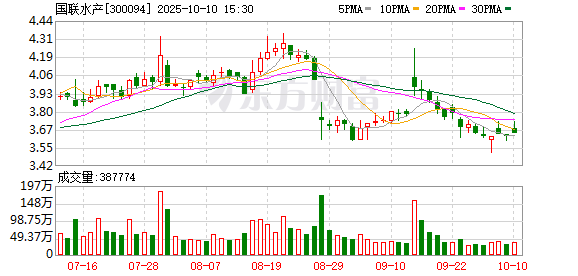
国联水产荣获天猫超市“超级领航奖”
Zheng Quan Ri Bao· 2025-10-12 13:40
Group 1 - The core event is the successful holding of the Tmall Supermarket Food and Fresh Health Industry Quality Summit, marking the official start of preparations for Tmall's "Double 11" and New Year Festival in 2025 [2] - Guolian Aquatic Products Co., Ltd. won the "Super Navigator Award" from Tmall Supermarket, becoming the only company in the seafood industry to receive this honor, reflecting its leading position in the fresh e-commerce sector [2] - The award highlights Tmall Supermarket's recognition of Guolian's brand strength, product quality, and operational capabilities [2] Group 2 - Guolian Aquatic Products has achieved significant growth in e-commerce channels, with sales on Tmall Supermarket expected to increase by nearly 40% year-on-year in 2025, indicating strong growth momentum [2] - The star product "Beautiful Shrimp" is anticipated to become a platform hit through the "Tmall Super Selection of Ten Million Products" project, while "Platinum Shrimp" has become a benchmark product for quality on the platform [2] - Looking ahead, Guolian plans to deepen its strategic cooperation with Tmall Supermarket, leveraging the platform's resources in live streaming, content, and flash sales to expand its reach among younger consumers [2][3]


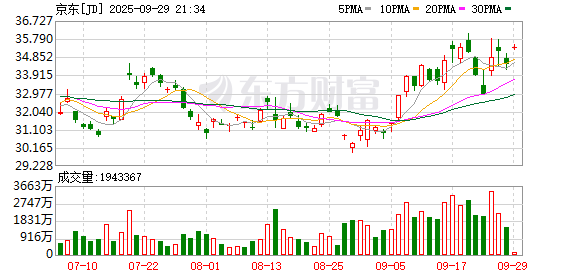
更长的赛程、更急的“抢跑” 第17个“双11”无缝衔接超级黄金周:京东砸20亿元抢商家
Mei Ri Jing Ji Xin Wen· 2025-09-29 13:34
Core Insights - The 2025 "Double 11" shopping festival will start earlier, with JD.com launching sales on October 9, five days ahead of last year, while Douyin e-commerce will begin at midnight on the same day, and Tmall will start pre-sales on October 15 [2][3] - The competition for "Double 11" has evolved into a month-long event, with platforms and merchants gearing up for significant promotional activities despite a trend towards more rational consumer spending [2][4] JD.com Strategies - JD.com has simplified its promotional strategy, offering direct discounts on single items, with prices as low as 10% of the original [3] - The company is investing 2 billion yuan in red envelopes and significant advertising incentives to attract merchants, aiming to recruit small and medium-sized businesses with cash rewards of up to 2 million yuan for service providers [4][6] - JD.com is enhancing its content ecosystem by launching initiatives like the "Super Evaluation Service Provider" incentive plan, which includes 3.5 million yuan in cash support for quality content creators [4] Tmall and Instant Retail - Tmall is expanding its instant retail capabilities, with its supermarket flash purchase service growing from 20 to 31 cities, indicating a focus on near-field e-commerce [2][5] - The competition in instant retail is expected to intensify, with platforms like JD.com and Tmall aiming to capture market share from traditional delivery services [5][6] Market Trends - The overall scale of promotions during "Double 11" is anticipated to grow, with consumers likely to be more sensitive to discounts following government subsidies [6] - Merchants are showing signs of fatigue from previous promotional events, and platforms are increasing incentives to encourage participation in the upcoming sales [6]

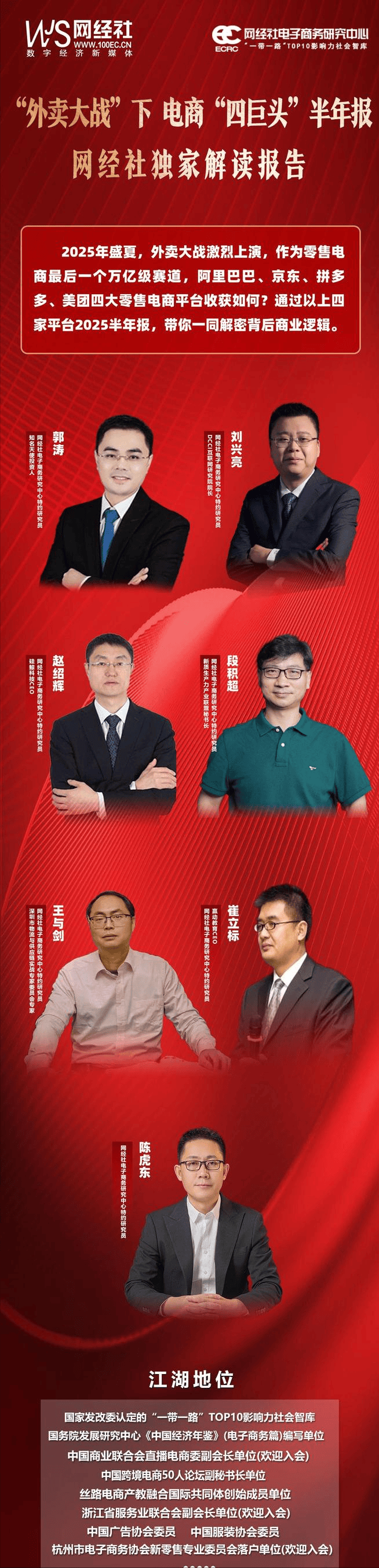
赢动教育CEO崔立标:阿里 美团 京东烧了“400亿”大战即时零售背后商业逻辑
Sou Hu Cai Jing· 2025-09-03 03:46
Core Insights - The article discusses the intense competition in the food delivery sector among major retail e-commerce platforms in China, specifically Alibaba, JD.com, Pinduoduo, and Meituan, as they release their mid-year financial reports for 2025 [10]. Group 1: Financial Performance - JD.com reported a loss of 14.77 billion yuan while generating 13.85 billion yuan in revenue from its new food delivery business, with the CEO stating that the loss was worthwhile [10] - Meituan invested 9.8 billion yuan to maintain 65.3 billion yuan in instant retail revenue [10] - Alibaba spent between 10 billion to 14 billion yuan on marketing, achieving 14.7 billion yuan in instant retail income [10] Group 2: Strategic Insights - The three companies are heavily investing in food delivery to enhance their capabilities in near-field e-commerce, which is seen as a new trillion-yuan market [10] - Near-field e-commerce requires three key capabilities: front warehouses, fulfillment capabilities, and traffic [10] - Meituan, despite having a first-mover advantage, is struggling with strategic depth compared to JD.com and Alibaba, which can leverage their resources more effectively [10] Group 3: Market Dynamics - The competition is expected to lead to a significant shift in market dynamics, with traditional offline retailers likely to suffer as consumer traffic increasingly moves online [11] - Meituan is projected to remain the leader in food delivery, but it will face challenges as it loses some market share to the emerging near-field e-commerce sector [11] - The ultimate losers in this battle are traditional offline retailers who fail to adapt to the digital transformation [11]


阿里蒋凡首谈淘宝闪购:不能离开规模谈效率
Tai Mei Ti A P P· 2025-08-30 07:31
Core Viewpoint - Alibaba is positioning itself in the competitive landscape of instant retail, emphasizing the historical opportunity presented by near-field e-commerce rather than merely focusing on the intense competition in the food delivery sector [2][4]. Group 1: Market Strategy - Alibaba's strategy encompasses a comprehensive layout of "B2C e-commerce + instant retail + food delivery + offline," which is seen as more diversified compared to competitors [2][4]. - The company is not prioritizing the development of offline retail formats, focusing instead on enhancing its existing business models [3][4]. Group 2: Performance Metrics - In August, Taobao Flash Purchase reached a peak daily order volume of 120 million, with a weekly average of 80 million, leading to a 200% increase in monthly active buyers compared to April [5][6]. - The platform's daily active riders exceeded 2 million, marking a threefold increase since April, indicating significant growth in operational capacity [5][6]. Group 3: Economic Impact - The integration of Taobao Flash Purchase with the broader e-commerce business has resulted in a 20% increase in daily active users for the Taobao app, enhancing overall user engagement and advertising revenue [5][6]. - The company anticipates that the Flash Purchase and instant retail segments will generate an additional 1 trillion yuan in transactions over the next three years, driven by the onboarding of one million brand stores [4][12]. Group 4: Operational Efficiency - Alibaba is focusing on improving operational efficiency through user structure optimization, order structure enhancement, and cost reduction in logistics, with expectations of halving losses in unit economics [6][8]. - The company is transitioning Tmall Supermarket from a traditional B2C model to a near-field Flash Purchase model, aiming for faster delivery while maintaining competitive pricing [10][11]. Group 5: Industry Dynamics - The shift from a single dominant player in the food delivery market to multiple platforms is seen as beneficial for both merchants and consumers, fostering competition and innovation [7][12]. - The emergence of instant retail is viewed as an opportunity for B2C e-commerce platforms to adapt and transform in response to changing consumer demands and market dynamics [11][12].
外卖“洪峰过境”:1.2亿 VS 8000万 即时零售的“闪电战”与拉锯战
Mei Ri Jing Ji Xin Wen· 2025-07-08 07:22
Core Insights - The summer surge in food delivery orders has been unexpected, with Meituan reaching a peak of over 120 million daily orders on July 5, while Taobao Flash reported over 80 million orders on the same day [1][5][12] - The competition among major players like Meituan, Alibaba, and JD.com is intensifying, focusing on the "instant retail" market, with significant consumer engagement driven by subsidies [1][5][15] - Despite the surge in order volumes, there is a lack of corresponding increase in physical store activity, indicating a potential disconnect between online and offline demand [1][6][12] Company Strategies - Taobao Flash announced a direct subsidy plan of 50 billion yuan over the next 12 months to boost consumer and merchant engagement [5][12] - JD.com has reported that nearly 200 restaurant brands have surpassed one million orders on its platform within four months of launching its food delivery service [5][12] - The competition is characterized by high subsidy levels, raising questions about the sustainability of such strategies and the true demand for instant retail [5][12][15] Market Dynamics - The increase in order volumes is attributed to consumer behavior changes due to hot weather and ongoing platform subsidies [6][12] - The number of cities with daily orders exceeding one million has doubled in the past week, with some cities experiencing order growth of up to 300% [7][12] - The delivery workforce is expanding, with JD.com planning to recruit an additional 150,000 full-time riders [11][12] Future Outlook - The "flash battle" in food delivery is becoming a regular occurrence, with both Meituan and Taobao Flash achieving their order volume goals [12][15] - Analysts suggest that while the current competition is fierce, the long-term impact of subsidies on market structure may be minimal [12][15] - The ongoing battle for market share in instant retail is expected to continue, with companies leveraging their existing logistics and consumer bases to enhance service offerings [15][17]
33家中国厂商霸榜全球手游收入百强;泡泡玛特再现大宗交易减持|消费早参
Mei Ri Jing Ji Xin Wen· 2025-05-07 23:36
Group 1 - Taobao has entered the food delivery market with a "100 billion subsidy" strategy, upgrading its instant retail service from "Xiaodada" to "Taobao Flash Purchase" [1] - Ele.me announced a "super 10 billion subsidy" promotion in collaboration with "Taobao Flash Purchase," indicating intensified competition in the instant retail sector [1] - The competition reflects a struggle for local life traffic and highlights e-commerce giants' focus on near-field e-commerce amid growth bottlenecks [1] Group 2 - Pop Mart has seen significant block trading reductions, with an investor selling approximately 3.86 million shares at HKD 190.2 each, totaling around HKD 734 million [2] - The previous week, Pop Mart experienced two additional stock reductions, amounting to approximately HKD 1.5 billion [2] - The long-term value of Pop Mart will depend on its ability to increase overseas revenue and the sustainability of its IP matrix [2] Group 3 - In April, Tencent's flagship game "Honor of Kings" returned to the top of the global mobile game revenue chart with a 71% increase in revenue [3] - A total of 33 Chinese companies made it to the global top 100 mobile game revenue list, collectively earning USD 2 billion, accounting for 38.4% of the total [3] - The Chinese mobile gaming industry's revenue share indicates a shift from "scale expansion" to "value cultivation," with future competition focusing on technological originality and sustainable ecosystems [3] Group 4 - Merlin Entertainment announced that the Shanghai Lego Park will open on July 5, 2025, with tickets available for purchase starting May 7 [4] - The park targets families with children aged 2 to 12 and features eight themed areas with over 75 interactive rides and attractions [4] - If managed well, the project could enhance the cultural tourism industry in the Yangtze River Delta and serve as a model for introducing international IP to second- and third-tier cities [4]

