
铁海联运

Search documents
徐连铁海联运班列成为区域开放“黄金通道”双枢纽联动,海港“搬”到家门口
Xin Hua Ri Bao· 2025-12-07 23:05
Core Insights - The article highlights the significant growth and operational efficiency of the Xuzhou-Lianyungang rail-sea intermodal transport service, which has become a vital channel for regional international trade since its inception in late 2021 [1][2] Group 1: Operational Growth - The Xuzhou-Lianyungang rail-sea intermodal service achieved a remarkable increase in operational volume, reaching 5,028 TEUs in 2024, a year-on-year growth of 77.92% [1] - From January to October 2024, the service completed 5,178 TEUs, marking a 27.22% increase compared to the previous year [1] Group 2: Efficiency Improvements - The logistics cost for transporting goods via the Xuzhou-Lianyungang rail-sea service has decreased by 20%, with cargo reaching the port within 8 hours [1] - Innovations such as the ICT box management agreement have streamlined operations, allowing for immediate access to empty containers at the inland port, significantly enhancing efficiency [1] Group 3: Strategic Collaborations - In 2024, Xuzhou Port Group will invest in Xuzhou Luguo Shilian Company, transitioning from mere business cooperation to capital integration [2] - The introduction of the "rail-sea intermodal + direct loading at port" model has expanded the service's reach, covering over 2,700 TEUs [2] Group 4: Regional Development - The establishment of the Lianyungang-Xuzhou China-Europe freight train collection center has elevated Xuzhou's status in international logistics, expanding the international logistics corridor [3] - The collaboration among five cities and seven counties in Jiangsu and Anhui provinces aims to enhance the supply chain for bulk commodities, extending the service's influence beyond provincial borders [3] Group 5: Digital Transformation - Xuzhou Port is developing a digital service platform to enhance the efficiency of the rail-sea intermodal service by integrating logistics systems and regional cargo resources [4] - The platform aims to facilitate real-time data sharing among key logistics nodes, effectively addressing transit time challenges and reducing overall logistics costs [4] Group 6: Future Goals - Xuzhou aims to establish itself as a leading inland international transit hub, with plans to exceed 6,000 TEUs in operational volume by 2025 [4] - The focus is on building premium rail-sea intermodal routes to facilitate the global distribution of high-quality products from the Huaihai region [4]
“铁海联运”“黄金水道”按下秋粮运输“加速键” 为全国粮食安全筑牢坚实屏障
Yang Shi Wang· 2025-11-21 06:44
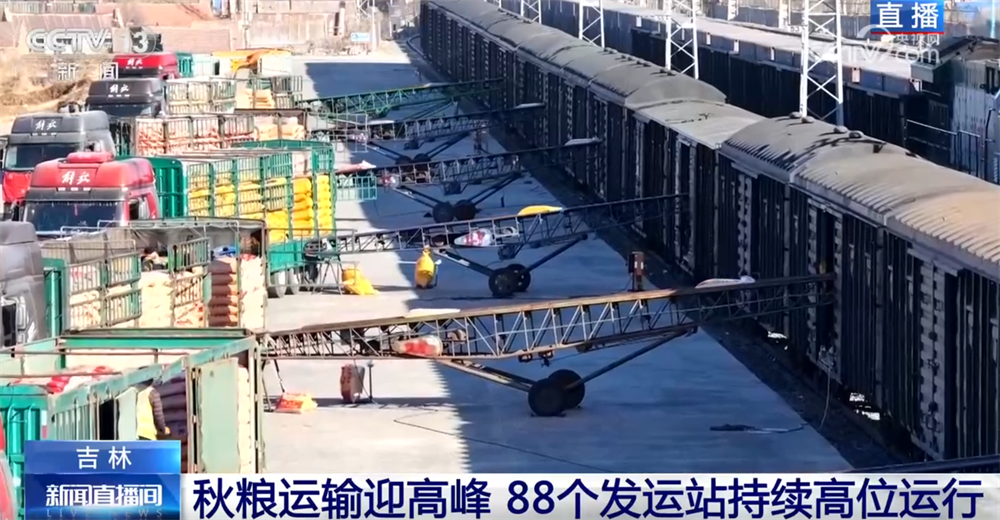
Group 1 - The core point of the article highlights the peak period of autumn grain transportation in Northeast China, particularly in Jilin Province, which has already dispatched nearly 4 million tons of grain since mid-October, marking a nearly 50% year-on-year increase [1][6] - The Changchun Railway Logistics Center in Fuyu is identified as a key hub for autumn grain transportation, facilitating the movement of high-quality grain from production areas to various destinations [3][6] - Jilin Province has maintained a total grain output exceeding 800 billion jin for four consecutive years, with expectations for a new record this year [6] Group 2 - The transportation process involves unloading grain from trucks and efficiently moving it onto trains, with each bag weighing 60 kilograms and a truck carrying approximately 30 tons of grain [4] - The logistics system includes two main transportation methods: pure rail transport and rail-sea intermodal transport, allowing for efficient distribution to major cities across the country [8] - The Yingkou Port in Liaoning serves as a crucial grain transshipment hub, with busy railway lines facilitating the transport of corn and wheat from various regions [9] Group 3 - The article emphasizes the importance of logistics in ensuring the quality of grain, with advanced monitoring and ventilation systems in storage facilities to maintain grain quality [12][14] - The Huangma Port in Jiangsu is highlighted as a new key node for autumn grain transportation, equipped with modern logistics platforms and large storage facilities to enhance efficiency [17][19] - The integration of smart storage systems at Huangma Port allows for seamless transportation of grain to adjacent rice processing enterprises, promoting a "storage-trade integration" model [21]

厦门海事局打“组合拳”:护航首单省外新能源汽车“铁海联运”出海
Ren Min Wang· 2025-11-04 09:20
Core Viewpoint - The successful transportation of 26 Dongfeng brand electric vehicles from Hubei to Xiamen via rail and then by sea to Poland marks the first "New Three Samples" iron-sea intermodal export operation from Xiamen, establishing a new efficient pathway for China's inland new energy industry to access international markets [1][3]. Group 1: Regulatory and Operational Innovations - Xiamen Maritime Department has implemented "on-site teaching" and "cloud auditing" to enhance safety standards for lithium battery vehicles during maritime transport, ensuring compliance with international regulations [2]. - The "cloud auditing" process allows for remote supervision of the loading operations, significantly reducing the time required for the export process by 5-7 days through the establishment of a "green channel" for dangerous goods approval [2]. Group 2: Collaborative Efforts and Infrastructure Development - A collaborative framework has been established between Xiamen and Wuhan maritime authorities to facilitate seamless intermodal transport, enhancing the logistics efficiency of the "New Three Samples" industry [1][2]. - The Xiamen Maritime Department has created a comprehensive service support network by coordinating with shipping companies, railways, and freight forwarders to ensure real-time information sharing and operational efficiency [2][3]. Group 3: Strategic Implications - The successful execution of this operation demonstrates the proactive role of maritime services in supporting national strategies and ensuring the stability of supply chains, with plans to attract more inland cargo for export through Xiamen port [3].
山西开辟铁路35吨宽体集装箱铁海联运“一箱到底”新通道
Zhong Guo Xin Wen Wang· 2025-10-22 07:19
Core Viewpoint - Shanxi has successfully opened a new "one box to the end" rail-sea intermodal transport channel for 35-ton wide-body containers, enhancing logistics efficiency and reducing costs [1][3]. Group 1: Logistics and Transportation - The first train, J80112, departed from the Datong Railway Logistics Center, carrying 98 wide-body containers with a total weight of 3,136 tons of industrial non-stick coal [1][3]. - The 35-ton wide-body containers are advantageous due to their strong loading capacity, low logistics costs, and wide adaptability for transporting bulk goods like coal and minerals [3]. - The new intermodal transport method reduces logistics costs by 13% and nearly eliminates cargo damage, which previously stood at 5‰ [3][4]. Group 2: Operational Efficiency - The new system allows for seamless integration of rail, port, and shipping data, simplifying the logistics process for shippers who now only need to coordinate with the railway department [4]. - The initiative is expected to operate three dedicated trains per month, aiming to ship nearly 1,000 wide-body containers by the end of the year, thereby improving service to downstream enterprises [4].
首趟跨波罗的海铁海联运中欧班列(西安—汉堡)开行
Zhong Guo Xin Wen Wang· 2025-09-26 06:50
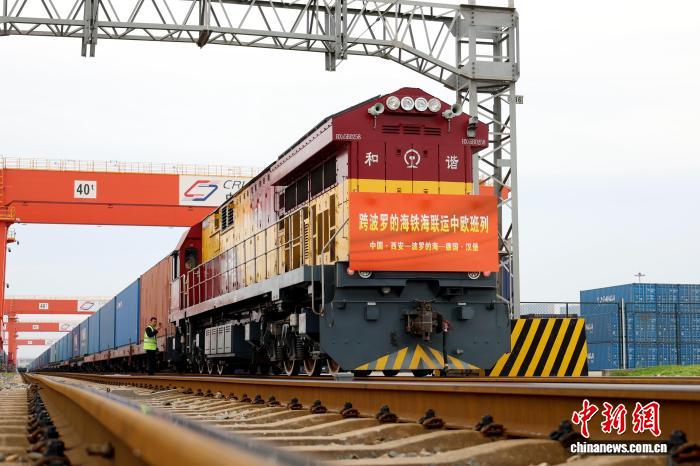
Core Viewpoint - The successful launch of the first cross-Baltic rail-sea intermodal China-Europe freight train (Xi'an-Hamburg) signifies a strategic response to the growing demand for efficient and diverse transportation options in cross-border trade [1][3]. Group 1: Transportation Network - The China-Europe freight train (Xi'an) has established multiple core transportation networks, including traditional routes and the South Corridor through the Caspian Sea, enhancing connectivity between China, Central Asia, and Europe [3]. - The new cross-Baltic rail-sea intermodal service utilizes an innovative "rail-sea intermodal" model, optimizing transport scheduling and customs efficiency to maintain a transit time of approximately 17 days, comparable to traditional routes [3][4]. Group 2: Market Demand and Performance - There is an increasing market demand for stable transport efficiency and diverse route options, driven by the growth of cross-border e-commerce and precision manufacturing industries [3]. - From January to August this year, the Xi'an China-Europe freight train operated 4,069 trains, a year-on-year increase of 12.4%, with a total cargo weight of 4.548 million tons, up 11.9% [3].
陕西开行首趟跨波罗的海铁海联运中欧班列
Yang Shi Xin Wen Ke Hu Duan· 2025-09-26 06:47
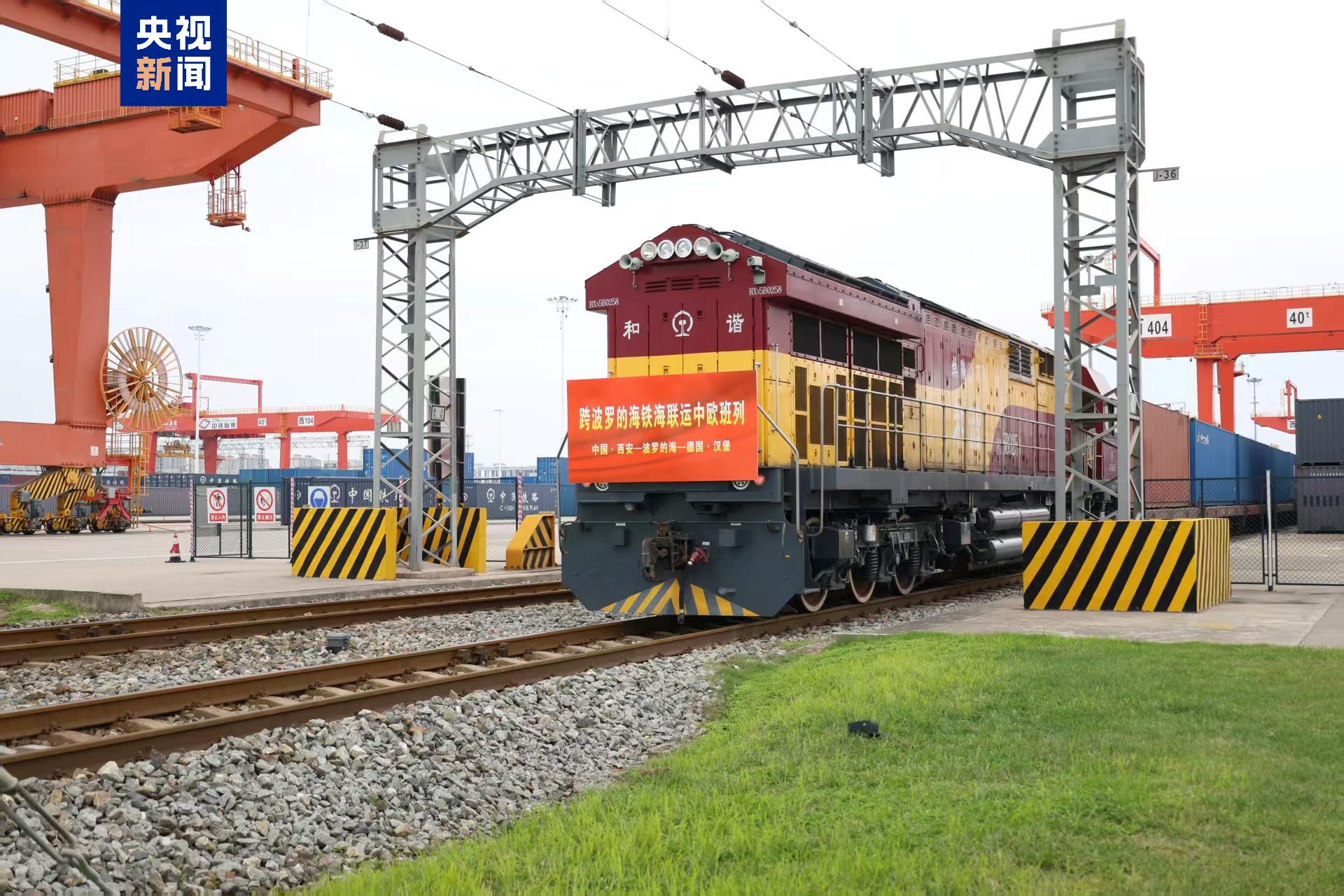
Core Insights - The first cross-Baltic Iron-Sea combined transport China-Europe freight train (Xi'an-Hamburg) successfully departed from Xi'an International Port Station, carrying automotive parts, digital devices, and daily goods [1][3]. Group 1: New Transport Model - The new route employs an innovative "Iron-Sea combined transport" model, traveling through Kazakhstan and Russia, then transferring to sea transport at St. Petersburg, ultimately reaching Hamburg, Germany [3]. - The entire journey is optimized to maintain a transit time of approximately 17 days, matching the efficiency of traditional transport routes while providing additional options [3]. Group 2: Performance Metrics - From January to August this year, the China-Europe freight trains from Xi'an have operated a total of 4,069 trains, marking a year-on-year increase of 12.4%, with key metrics such as operational volume, freight volume, and container utilization rate ranking first nationwide [5]. - Specifically, 3,090 trains were directed towards Europe, while 979 trains headed towards Central Asia, transporting a total weight of 4.548 million tons, which is an 11.9% increase year-on-year [5]. - The number of containers sent reached 411,000 TEUs, reflecting an 8.2% year-on-year growth [5].
永州陆港铁海联运再提速 泰乐潮玩专列直达日本激活湘南外向型经济
Sou Hu Cai Jing· 2025-09-21 14:07
Core Insights - The launch of the "Yongzhou Land Port Iron-Sea Combined Transport Train" marks an upgrade in logistics efficiency for the region, facilitating the export of Hunan Taile潮玩 products and enhancing the high-quality development of the outward-oriented economy in Yongzhou [1][3]. Group 1: Logistics Efficiency - The dedicated train carried 30 40-foot containers, generating nearly $1.5 million in export revenue [3]. - The new transport route significantly shortens delivery times, allowing goods to reach major Japanese ports like Tokyo and Osaka within 5 days, compared to traditional methods [3]. - The integrated service reduces overall transportation costs by 35% to 40% and minimizes carbon emissions, contributing to a greener logistics system [3]. Group 2: Economic Impact - Since 2022, Yongzhou Land Port has launched multiple specialized trains covering various sectors, including light industry, agriculture, and construction materials, with a notable increase in the number of trains this year [5]. - The port serves as a crucial logistics hub connecting the Hunan region to the Guangdong-Hong Kong-Macau Greater Bay Area and the Belt and Road Initiative, breaking the limitations of its inland location [5]. - Future plans include expanding transport routes and offering integrated services such as booking, customs declaration, transportation, and clearance to further support local enterprises in their export endeavors [5].
华中地区新增一条铁海联运国际物流新通道
Xin Hua Wang· 2025-09-01 09:35
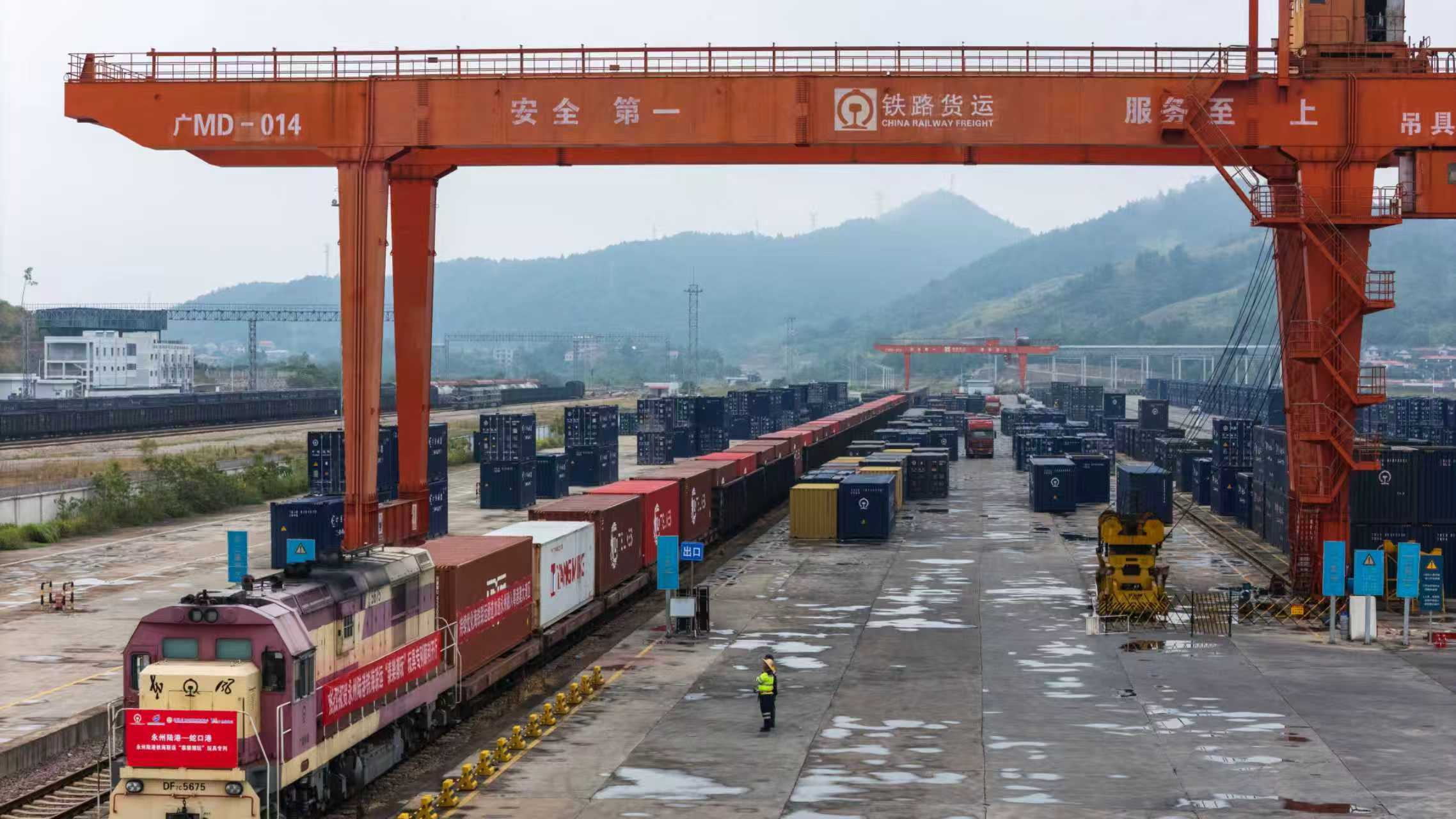
Group 1 - The core point of the article is the launch of the "Xiangyang-Xiamen Port-Southeast Asia" rail-sea intermodal train service on August 31, which adds a new international logistics channel in the central China region [1] Group 2 - The service is operated by China Railway Wuhan Bureau Group Co., Ltd., indicating the company's expansion in international logistics [1] - This new route enhances connectivity between central China and Southeast Asia, potentially benefiting trade and logistics operations in the region [1]
湖北襄阳开辟铁海联运国际物流新通道
Zhong Guo Xin Wen Wang· 2025-08-31 09:48
Core Viewpoint - The launch of the "Xiangyang-Xiamen Port-Southeast Asia" rail-sea intermodal transport service marks the establishment of a new international logistics channel for Xiangyang, facilitating the export of local products to Southeast Asian markets [1][2]. Group 1: Logistics Development - Xiangyang is a significant manufacturing base in China, actively developing rail-sea intermodal transport to enhance its openness and promote local products globally [2]. - The new intermodal service is based on the successful operation of existing routes, with a notable increase in the volume of shipments, reaching 2,164 TEUs in the first half of the year, a 143% year-on-year growth [2]. Group 2: Operational Efficiency - The "Xiangyang-Xiamen Port-Southeast Asia" service employs a "one box" door-to-door seamless connection model, simplifying processes in documentation, short-distance transport, and cargo transfer [2][5]. - The transportation time has been significantly reduced from 6 days to just 2 days to reach the port, achieving a two-thirds reduction in transit time [5]. Group 3: Collaboration and Future Plans - The collaboration between Xiangyang and railway departments aims to expand transport channels, adjust transport structures, and lower overall logistics costs [5]. - Future efforts will focus on optimizing service quality for the rail-sea intermodal transport, ensuring that more "Xiangyang-made" products reach further markets [5].
四川成都直达比利时安特卫普中欧班列正式开通
Zhong Guo Xin Wen Wang· 2025-08-27 23:13
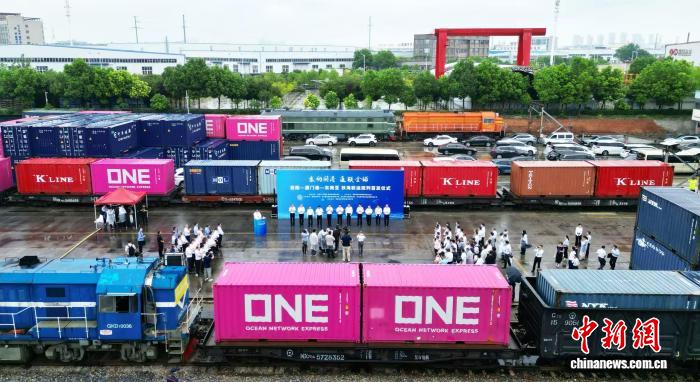
Core Points - The opening of the direct China-Europe freight train from Chengdu, Sichuan to Antwerp, Belgium marks a significant development in international logistics [1] - The train, which departed on August 7, carried 55 containers valued at 35 million RMB, including high-value goods such as cross-border e-commerce products and cold chain food [1] - The freight will be distributed through the European rail network to various Western and Southern European countries, with future plans for "iron-sea intermodal" transport to Africa [1] Industry Overview - The China-Europe freight train service has been operational since March 2011, covering a vast area across Asia and Europe [1] - As of June this year, over 110,000 trains have been dispatched, with a total cargo value exceeding 450 billion USD [1] - The service connects 128 cities within China to 229 cities across 26 European countries and over 100 cities in 11 Asian countries [1]