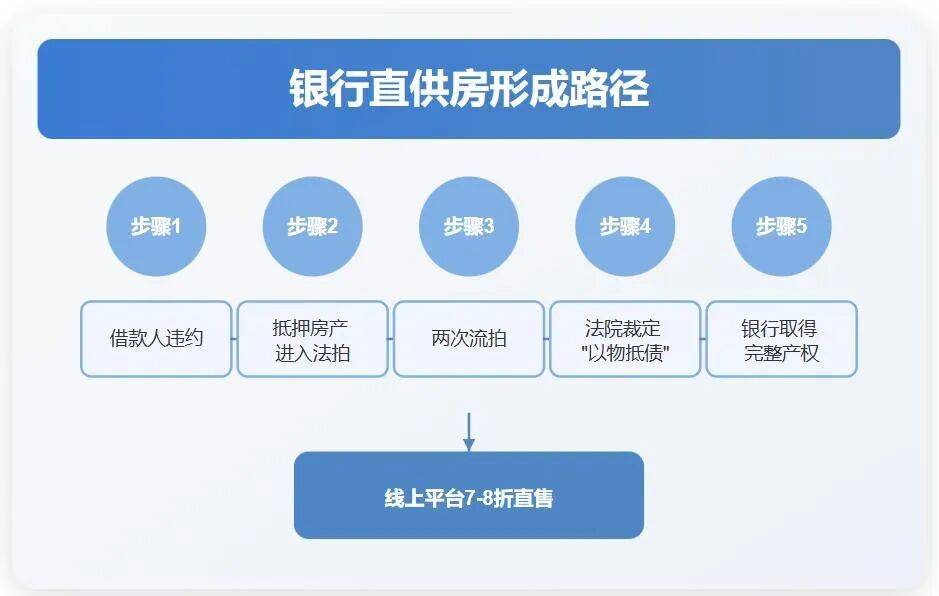
银行不良资产处置

Search documents
不光有低价直供房,11月银行超30亿不良“大甩卖”
Di Yi Cai Jing· 2025-11-13 10:53
Core Insights - Banks are accelerating the disposal of non-performing assets as the year-end approaches, with various asset packages being listed for transfer, indicating a shift from passive recovery to diversified methods of asset management [1][4] Group 1: Non-Performing Asset Disposal - The disposal of non-performing assets is transitioning from passive recovery to a more diversified approach, including online listings, direct sales of properties, and debt transfers, providing new pathways for banks to revitalize assets and recover funds [1] - As of November 13, 20 banks have listed 92 non-performing asset packages, totaling over 3 billion yuan in unpaid principal and interest, with significant contributions from banks like Nanjing Bank and China Bank [4][6] - The trend of accelerating non-performing asset disposal is closely linked to regulatory assessment deadlines, allowing banks to improve their asset structure and enhance their performance metrics ahead of year-end evaluations [5][6] Group 2: Direct Supply Housing - "Bank direct supply housing" has gained attention as a new market focus, where banks sell properties obtained through judicial processes or debt-for-asset swaps directly to the market, offering clearer ownership and reduced risks compared to traditional auctioned properties [2][3] - The pricing of bank direct supply housing is significantly lower than market rates, with examples showing properties listed at approximately 30% of their market value, attracting substantial interest from potential buyers [3] - This model aligns with banks' needs to expedite asset disposal and improve capital turnover efficiency, as it allows for quicker recovery of funds and minimizes transaction complexities [3][7] Group 3: Diversification of Disposal Methods - The methods for disposing of non-performing assets have become increasingly diversified, moving from traditional sales to more flexible and market-oriented approaches, including online listings and direct sales [7] - The trend shows a growing preference for direct sales to consumers via internet platforms, which helps shorten the recovery cycle and reduce transaction risks [7][8] - In addition to direct supply housing, banks are exploring various asset types for disposal, including unique items like liquor and gemstones, indicating a broader strategy for asset management [8]
“银行直供房,不计成本卖”有的半价出售流拍,有的加价100万元抢拍
Mei Ri Jing Ji Xin Wen· 2025-11-13 10:03
Core Viewpoint - The emergence of a "bank direct supply housing" market is noted, where banks are selling properties at significantly lower prices than the market rate, yet many properties are failing to attract bids, indicating a potential mismatch between supply and demand [2][4][20]. Group 1: Market Dynamics - On November 10, the Lanzhou Rural Commercial Bank auctioned over a hundred residential units at prices as low as half the market rate, but all units received zero bids, leading to a failed auction [2][4]. - Major banks, including Agricultural Bank and various city commercial banks, are actively listing thousands of properties for direct sale, with Agricultural Bank listing 3,436 properties and Guangdong Rural Credit System exceeding 12,000 [3][10]. - The properties being sold are primarily non-performing assets, often resulting from loans that borrowers could not repay, and banks are under pressure to liquidate these assets within two years [4][16]. Group 2: Pricing and Demand - The starting prices for bank-supplied properties can be as low as 2,000 yuan per square meter, significantly below the market average of around 5,000 yuan per square meter, yet this has not translated into sales [4][20]. - Despite the attractive pricing, properties like those from the "育才壹品" project have not seen any successful bids, highlighting a potential lack of buyer interest or confidence in these offerings [20]. - In contrast, properties previously used as bank offices are in high demand, with some selling for prices significantly above their starting bids, indicating a differentiated market response based on property type [2][16]. Group 3: Asset Liquidation Process - The increase in bank direct supply housing is closely tied to the disposal of non-performing loans, with banks utilizing both judicial and non-judicial methods to recover debts [16][17]. - The judicial auction process typically starts at 70% of the appraised value, with subsequent rounds reducing the price further, leading to properties being sold at approximately 56% of their original appraised value after multiple rounds [17]. - The case of Lanzhou Rural Commercial Bank illustrates this process, where properties were acquired through court enforcement after the original borrower defaulted on a significant loan [17].








“银行直供房,不计成本卖!”有的半价出售,众多刚需还不知道!银行用过的房很抢手,有人加价100万元抢拍
Mei Ri Jing Ji Xin Wen· 2025-11-13 09:25
Core Insights - The article highlights the emergence of a "bank direct supply housing" market, where banks are selling properties at significantly discounted prices, often around half of the market value, but facing challenges in attracting buyers [2][6][24]. Group 1: Bank Direct Supply Housing - The "Yucai Yipin" residential units listed by Lanzhou Rural Commercial Bank on JD Asset Platform were auctioned at prices as low as 7,000 to 11,000 yuan, translating to approximately 2,000 yuan per square meter, which is significantly lower than the market price of around 5,000 yuan per square meter [6][24]. - Major banks, including state-owned and city commercial banks, are increasingly engaging in direct sales of properties to quickly liquidate non-performing assets, with thousands of properties listed for sale [6][14]. - As of November 10, 2023, JD Asset Platform had 414 residential and 957 commercial properties listed by banks, indicating a substantial increase compared to the previous year [9]. Group 2: Non-Performing Asset Disposal - The rise in bank direct supply housing is closely linked to the disposal of non-performing assets, primarily properties that serve as collateral for loans that borrowers have defaulted on [20][21]. - Traditional methods of disposing of non-performing loans, such as selling debt to third parties or through judicial auctions, have become increasingly slow and inefficient, prompting banks to explore direct sales [33][36]. - The process of judicial auctions often results in properties being sold at a significant discount, with average starting prices around 70% of the appraised value, leading to further price reductions if properties do not sell [21][36]. Group 3: Market Reception and Challenges - Despite the attractive pricing of bank direct supply housing, the sales performance has been disappointing, with many properties, including those at over 50% discounts, failing to attract bids [27][42]. - Certain types of properties, such as former bank office buildings, have seen higher demand and successful sales, indicating a market preference for specific asset types [28]. - The disconnect between the marketing of these properties and the actual demand from potential buyers, particularly in lower-tier cities, poses a significant challenge for banks in effectively liquidating these assets [41][42].


银行掀起房产直售潮,低价背后双重市场逻辑与购房新变
Sou Hu Cai Jing· 2025-11-13 07:01
Core Insights - The banking sector in China is experiencing an unprecedented wave of direct property sales, with institutions like Lanzhou Bank and Agricultural Bank selling properties at prices up to 25% below market value, reflecting a unique financial market ecology and providing rare opportunities for buyers [1][4] Group 1: Scale of Direct Property Sales - Lanzhou Rural Commercial Bank has listed nearly 200 properties in late October, with a total of 720 properties on the JD platform, including 630 newly added this year [3] - Other banks are also participating significantly, with Jilin Bank listing 2,099 properties, Tianjin Bank 1,227, and Zhongyuan Bank 521 [3] - The scale of asset disposal in the rural credit system is even more remarkable, with Guangdong Rural Credit listing 12,386 properties and Sichuan Rural Credit reaching 24,821 [3] Group 2: Source of Properties - Most properties are acquired by banks through "debt-for-assets" arrangements, such as Lanzhou Rural Commercial Bank obtaining over 250 residential units from a developer unable to repay a loan totaling 460 million yuan [3] - Similar cases are reported nationwide, with banks acquiring properties and land in various regions due to borrowers' defaults [3] Group 3: Price Advantages and Market Conditions - Bank direct sales offer significant price advantages, with properties in Lanzhou selling for 151 million yuan, 30-70 million yuan below market prices [4] - Despite attractive pricing, actual transaction rates are low, with some properties experiencing multiple failed sales [4] - The urgency for banks to recover funds quickly and the prolonged traditional asset disposal cycle are driving this trend, as personal loan default rates rise significantly [4] Group 4: Implications for Buyers and Market Dynamics - Buyers should approach bank direct sales with caution, as while properties have clear titles and avoid common issues associated with auctioned properties, some may have location or amenity drawbacks [5] - The ongoing direct sales trend will be influenced by macroeconomic conditions, real estate market regulations, and banks' strategies for handling non-performing assets [5] - This wave of asset disposal represents a significant risk clearing for banks and poses a challenge to their asset management capabilities, while also potentially exerting downward pressure on local property prices [5]


2.4万套银行房产急抛售,楼市要崩盘了吗?
Sou Hu Cai Jing· 2025-11-13 00:21
Core Insights - The article highlights a significant shift in the banking sector, where financial institutions are increasingly acting as real estate agents, leading to a large-scale asset liquidation in the housing market [1][3]. Group 1: Market Dynamics - Banks are listing a substantial number of properties, with Sichuan Rural Credit offering 24,000 units, indicating a systemic issue with non-performing assets [5]. - The trend of banks selling off properties is particularly pronounced in new first-tier cities, which account for 38% of listings, while lower-tier cities primarily feature residential properties with inadequate infrastructure [5]. - The phenomenon of "bank direct supply housing" is characterized by a significant price drop, with some properties being auctioned at 50% of their market value [3][6]. Group 2: Debt and Loan Issues - The article discusses a concerning trend of increasing non-performing loans, with a 217% year-on-year rise in corporate bad loans secured by real estate [6]. - A notable percentage of residential mortgage collateral is now classified as "negative equity," with 19% of properties having a mortgage balance exceeding their market value [8]. - The cycle of falling property prices leading to increased defaults and subsequent bank sell-offs is creating a vicious cycle that challenges the financial system's risk management capabilities [8]. Group 3: Asset Management Strategies - Banks are adopting a strategy of differentiating between low-quality and high-quality assets, with prime properties in core locations being retained while lower-quality assets are liquidated [9]. - The article suggests that banks are using a "price for volume" strategy to prevent a spiral decline in asset prices, as evidenced by a 25% average price drop in bank direct sales compared to a 38% drop in the auction market [9]. - The potential for a new equilibrium in the market is discussed, with possibilities including the securitization of commercial real estate and the establishment of a three-tier housing system [10]. Group 4: Future Scenarios - Three potential scenarios for the market's future are outlined: a soft landing through government collaboration, a liquidity trap leading to price crashes, and a new balanced market structure [10]. - The article emphasizes that the current wave of bank asset sales presents both risks and opportunities for buyers, with some able to purchase properties at significant discounts while others may face long-term vacancies due to poor property conditions [10].
从甩包袱到做买卖 银行不良资产处置生变
Bei Jing Shang Bao· 2025-11-12 15:47
Core Viewpoint - The transformation of banks from passively offloading non-performing assets to actively managing and monetizing them represents a significant shift in asset management logic, despite ongoing challenges in professional capabilities, legal risks, and disposal efficiency [1][6][8]. Group 1: Active Management of Non-Performing Assets - Banks are increasingly engaging in direct sales of non-performing assets through public bidding, including a variety of asset types such as real estate, land, and collectibles [1][3]. - The shift from traditional methods of bundling non-performing assets for quick sales to a more detailed and strategic approach allows banks to better assess and realize the true value of these assets [4][8]. Group 2: Challenges in Implementation - Banks face significant challenges in the transition to a more refined operational model, including a lack of expertise in evaluating non-financial assets and potential legal issues related to asset ownership [5][7]. - The traditional banking workforce is primarily skilled in credit risk management, which does not necessarily translate to the evaluation and marketing of diverse asset types [7][9]. Group 3: Future Trends in Asset Disposal - The trend towards more meticulous asset management is expected to become mainstream, although traditional methods will still be utilized for certain asset types [8][9]. - The evolution of banks' asset disposal strategies is driven by both internal pressures, such as economic downturns, and external factors, including regulatory encouragement and the rise of online auction platforms [8][9].

从“甩包袱”到“做买卖”,银行不良资产处置画风生变
Bei Jing Shang Bao· 2025-11-12 14:27
Core Viewpoint - The transformation of banks from passively offloading non-performing assets to actively managing and monetizing them represents a significant shift in asset management logic, despite ongoing challenges in expertise, legal risks, and efficiency [1][5][9]. Group 1: Active Management of Non-Performing Assets - Banks are increasingly engaging in direct sales of non-performing assets, including real estate, land, and collectibles, through public bidding on platforms like Alibaba and JD [3][4]. - The shift to direct sales allows banks to better control asset valuation and recovery timelines, contrasting with the traditional method of selling to asset management companies [5][9]. Group 2: Challenges in Asset Valuation and Management - Banks face difficulties in accurately assessing the market value of non-financial assets and effectively reaching niche buyer groups, which tests their operational capabilities [1][8]. - The traditional approach of bundling loans and collateral for quick sales often results in undervaluation and overlooks the diversity of assets [6][8]. Group 3: Transition to Fine-Tuned Operations - The move towards "one asset, one strategy" aims to maximize value through tailored evaluation, pricing, marketing, and disposal plans for each non-performing asset [7][9]. - Despite the advantages of a more refined approach, banks still encounter challenges such as legal risks, valuation accuracy, and the need for specialized knowledge in non-financial asset management [8][10]. Group 4: Future Trends in Asset Disposal - The trend towards fine-tuned asset management is expected to become mainstream, driven by internal pressures and external regulatory encouragement for proactive asset management [9][10]. - Building a comprehensive operational system that covers the entire asset disposal chain is crucial for banks to enhance their asset management and value creation capabilities [10].

网络平台现2.4万套“银行直供房”?这类房源能买吗?记者调查→
Sou Hu Cai Jing· 2025-11-12 13:35
Core Viewpoint - The recent buzz around "bank direct supply housing" in Sichuan, particularly the claim of 24,000 available units, has been scrutinized and found to be exaggerated, with actual listings being significantly lower [1][2]. Group 1: Actual Listings and Data Verification - A search on the Alibaba asset platform revealed only 11 residential properties currently up for auction in Sichuan, contradicting the 24,000 units claim [3]. - Further investigation on the Alibaba asset website showed 26 properties set to be auctioned, with no current listings, while the JD asset trading platform listed only 48 properties in Sichuan, indicating a significant discrepancy from the reported figures [7]. - The discrepancy in data is attributed to previous media reports that included outdated or canceled auction listings, leading to inflated numbers. The actual number of properties available for auction is around 500, with only about 5,900 properties entering the auction process in 2024 [7]. Group 2: Auction Performance and Market Dynamics - The Sichuan agricultural credit system has auctioned 11,200 properties in total for 2024, with only about 1,000 sales completed, resulting in a transaction rate of less than 10% [8]. - The average premium rate for sold properties is approximately 1.7%, indicating that there is no significant "fire sale" phenomenon, and the starting prices do not align with market expectations [8]. - The majority of the properties being auctioned are commercial, with 92% being commercial properties and less than 10% being residential [8]. Group 3: Reasons for Bank Property Sales - The properties being sold by banks are primarily acquired through the resolution of non-performing loans, including homes repossessed from individuals who defaulted on mortgages and properties from bankrupt developers [9]. - The process of acquiring these properties is systematic, involving judicial auctions before they are transferred to the bank's ownership as "debt assets" [9]. - Selling properties through online platforms is a standard practice for banks to recover funds and manage non-performing assets, rather than a new initiative to enter the real estate market [9]. Group 4: Buyer Considerations - Properties sold by banks are generally priced lower than surrounding market rates, providing potential opportunities for buyers, but caution is advised [10]. - Buyers should conduct thorough due diligence, including verifying property titles, inspecting the physical condition of the property, and understanding any associated transaction costs [10]. - The increase in auctioned properties does not necessarily indicate a broader risk in the mortgage market, as most auctioned properties are linked to corporate debts rather than individual mortgage defaults [10].
银行直售房,没那么吓人
Ge Long Hui· 2025-11-12 10:55
Core Insights - The recent surge in banks selling properties has raised concerns about the accumulation of non-performing assets within the banking sector [1][2][4] - Data indicates that the number of properties listed for sale by various rural credit systems is substantial, with Guangdong, Sichuan, and other provinces showing significant figures [1][2][6] - Despite the high number of properties being sold, they represent a small fraction of the overall housing inventory in major cities like Guangzhou, Shenzhen, and Chengdu [6][11][9] Summary by Sections Property Sales Data - Since August 2024, the Guangdong rural credit system has listed 12,386 properties for sale, while the Sichuan rural credit system has listed 24,821 properties since November 2024 [1] - Other provinces such as Liaoning, Guizhou, Jilin, and Fujian have also contributed to the total number of properties being sold [1] Market Reaction - The market has reacted with surprise, speculating that banks may be facing a significant amount of non-performing assets [2][4] - The perception is that the properties being sold are just the tip of the iceberg, indicating a larger issue with banks needing to liquidate assets [2] Non-Performing Loans and Asset Management - The sale of properties is often linked to borrowers' inability to repay loans, leading banks to reclaim and sell these assets [3] - The current data suggests that the number of properties being sold is relatively small compared to the total inventory of second-hand homes available in the market [6][11] Trends in Non-Performing Loan Rates - The overall non-performing loan rates for listed banks have been declining since 2020, indicating that banks have been effectively managing and disposing of non-performing assets [12][13] - As of November 2025, the non-performing loan rates for various banks show a downward trend compared to previous years, with many banks reporting lower rates than in 2020 [12][13] Industry Restructuring - The banking sector has undergone significant reforms and consolidations, with over 300 rural banks being merged or restructured in 2025 alone [15] - Major banks have also participated in these consolidations, indicating a strategic move to strengthen their positions and manage non-performing assets more effectively [15] Asset Disposal Efforts - Banks have been actively disposing of non-performing assets, with significant amounts being processed each year [18][20] - In 2025, banks disposed of 1.5 trillion yuan in non-performing assets, reflecting a proactive approach to managing risk [20] - The rural commercial banks have seen the highest non-performing loan rates but have also experienced the most significant reductions in these rates over the years [21][22]

银行亲自下场卖房,世界终于开始颠了!
Sou Hu Cai Jing· 2025-11-12 07:14
Core Viewpoint - The recent surge in banks selling properties is primarily driven by an increase in mortgage defaults, leading banks to directly dispose of non-performing assets through property sales [1][9]. Group 1: Current Market Situation - Various banks have listed a significant number of properties for sale, with Sichuan Agricultural Credit Cooperative being the largest with over 24,000 listings [2]. - The average disposal period for judicial auction properties is around two years, indicating inefficiencies in the current system [3]. - The pricing system for auctioned properties is not well-established, leading to many properties failing to sell at auction [3]. Group 2: Reasons for Banks Selling Properties - The increase in mortgage defaults has resulted in banks needing to handle a larger volume of properties [9]. - Traditional methods of asset disposal, such as judicial auctions and asset management companies (AMCs), have proven to be inefficient and often result in significant losses [9]. - Banks are compelled to sell properties directly to expedite asset disposal and reduce non-performing asset ratios [10]. Group 3: Challenges in Property Sales - Properties sold by banks are typically priced 20% to 30% below market value, yet sales remain sluggish [7]. - The actual market price of properties can fluctuate significantly, complicating the sale process [8]. - The core issue remains the pricing of properties, as many judicial auction properties fail to sell due to unrealistic price expectations [10]. Group 4: Implications for the Banking Sector - Direct property sales by banks are a response to the accumulation of non-performing assets, necessitating a more hands-on approach to asset management [10]. - While this strategy may improve asset disposal efficiency, it does not guarantee better overall outcomes if pricing issues are not addressed [10]. - The current situation reflects a broader trend where banks, previously insulated from market pressures, are now facing significant challenges [11].