
防灾减灾

Search documents
密云将在14个重点山区镇布局紧急避险点
Xin Lang Cai Jing· 2026-01-07 22:24
Group 1 - The core objective of the reconstruction efforts in Miyun District is to achieve basic recovery within one year following the regional flood in July 2025, with a completion target set for May 2026 [1] - A total of 74 recovery and reconstruction projects have been initiated, with 55 already underway and 9 completed, focusing on infrastructure such as roads, bridges, and water supply systems [2] - The project management approach includes a systematic process to track progress, with weekly updates and a strict timeline to ensure completion by the set deadline [2] Group 2 - Key projects include the restoration of seven major river channels, employing concrete materials for enhanced protective measures against future flooding [3] - The comprehensive improvement projects aim to enhance disaster prevention capabilities in the region, including river dredging and infrastructure upgrades [3] - Emergency evacuation points will be established in 14 key mountainous towns, equipped with essential emergency supplies to address disaster preparedness [3] Group 3 - The National Road 234 project, spanning 98.7 kilometers, is significantly impacted by the flood, with extensive damage reported across various sections [4] - The project commenced on September 26, 2025, and is scheduled for completion by May 26, 2026, aiming to improve disaster resilience and support local tourism and economic development [5]
9位决策者回应专家建议 聚焦痛点 有效互动 共促发展
Si Chuan Ri Bao· 2026-01-04 07:05
Group 1 - The core argument emphasizes the need to overcome GDP anxiety by focusing on per capita GDP and GNP to measure development disparities accurately [1] - The relationship between per capita and total GDP is crucial; despite a high per capita GDP, the total economic output of Zigong is ranked 11th in the province, indicating insufficient development [2] - The balance between speed and quality of economic growth is essential, especially for old industrial cities facing transformation challenges [2] - The integration of urban and regional development is vital, with Zigong positioned as a satellite city benefiting from its proximity to major cities like Chengdu and Chongqing [3] Group 2 - The development of cultural tourism products should focus on deep visitor experiences, creating diverse offerings that connect with local economies and cultures [4] - The integration of culture and tourism in Sichuan is a priority, with initiatives to enhance tourism product diversity and improve collaboration between government and enterprises [5] - The need for innovative financial services is highlighted, with suggestions for establishing a free trade account system to bridge financing gaps for domestic and foreign enterprises [18][19] Group 3 - The proposal to establish a Chengdu-Chongqing city cluster investment fund aims to enhance cooperation and investment among cities, addressing coordination issues and creating a sustainable development mechanism [13][14] - The importance of leveraging market forces to improve disaster prevention and reduction capabilities is emphasized, with a focus on socializing and marketizing disaster management standards [10][11] Group 4 - The strategy of "Four-way Expansion, All-domain Opening" is recommended for economically lagging regions to actively participate in broader development initiatives [16] - The exploration of property rights for rural land is suggested to activate idle assets and generate income for farmers, ensuring collective oversight [22][23] Group 5 - The need for legal frameworks to enhance public awareness of waste classification responsibilities is stressed, alongside optimizing waste processing facilities to improve efficiency [25][26] - Chengdu's initiatives in waste management, including the implementation of a waste classification system and the promotion of organic waste processing, are highlighted as effective measures [27][28]
菏泽市召开2026年第一季度自然灾害风险会商会议
Qi Lu Wan Bao· 2025-12-26 14:09
Core Viewpoint - The meeting organized by the Heze City Disaster Prevention and Mitigation Committee focuses on analyzing natural disaster risks for the first quarter of 2026 and emphasizes the importance of preparedness and response measures [1] Group 1: Meeting Overview - The meeting was led by the Heze City Disaster Prevention and Mitigation Committee Office, involving ten member units including the Natural Resources and Planning Bureau, Housing and Urban-Rural Development Bureau, Agricultural and Rural Bureau, Water Affairs Bureau, Meteorological Bureau, and Water Resources Center [1] - The Deputy Director of the Emergency Management Bureau, Zhang Yongjin, reported on the overall disaster situation in Heze City for 2025, summarizing the comprehensive disaster reduction efforts and identifying existing weaknesses [1] Group 2: Risk Assessment and Measures - Member units reported on the characteristics of disasters in their respective fields for 2025, analyzing historical data, current trends, and climate forecasts to assess potential natural disaster risks for the first quarter of 2026 [1] - The meeting resulted in the formation of the "Heze City 2026 First Quarter Natural Disaster Risk Situation Analysis Report," emphasizing the need for improved political awareness and the utilization of professional advantages in disaster prevention and mitigation [1] Group 3: Action Plans - The meeting highlighted the importance of enhancing monitoring and early warning mechanisms, strengthening information sharing, and ensuring early detection, reporting, and handling of disaster risks [1] - Focus was placed on agricultural production safety and secondary disasters caused by the alternation of cold and warm air, with plans for hazard identification, emergency team building, and disaster relief material reserves to ensure the safety of people's lives and property [1]
【黄陵】气象服务精准高效 帮助群众稳产增收
Shan Xi Ri Bao· 2025-12-21 23:02
Core Viewpoint - The Huangling County Meteorological Bureau is enhancing agricultural support through tailored weather services, improving disaster prevention and mitigation for local farmers, and increasing their confidence in crop management [1][2][3] Group 1: Agricultural Support - The Huangling County Meteorological Bureau provides on-site weather data and advice to farmers, helping them understand the impact of weather changes on crop growth [1] - Regular training sessions are conducted to educate farmers on recognizing weather warnings and implementing effective agricultural practices [1][2] - Customized weather service alerts are sent to farmers based on specific crop needs, such as frost and drought prevention [2] Group 2: Community Engagement - The bureau actively engages with the community by conducting monthly educational sessions on weather-related safety and disaster preparedness [2] - Information dissemination includes distributing disaster prevention guide cards and providing personalized assistance to elderly residents [2] - The bureau has established a feedback mechanism to ensure timely responses to community inquiries regarding weather conditions [2] Group 3: Operational Improvements - The Huangling County Meteorological Bureau has integrated service improvement with operational efficiency, enhancing monitoring capabilities and optimizing resource allocation [3] - Simplified administrative processes and improved communication channels have been implemented to ensure timely weather alerts reach the public [3] - Continuous training and skill enhancement for staff are prioritized to maintain high service quality and responsiveness [3]
连年丰收!中国粮食产量再创新高的“三重密码”→
Sou Hu Cai Jing· 2025-12-12 12:25
Core Viewpoint - The National Bureau of Statistics reported that China's grain production is expected to reach 14,298 billion jin in 2025, marking a 1.2% increase from the previous year, indicating a successful harvest supported by various agricultural policies and practices [1]. Group 1: Agricultural Policies and Practices - The area of grain cultivation has steadily increased for six consecutive years, with a notable increase of 3.3 million mu in high-yield crops like corn, laying a solid foundation for this year's harvest [3][5]. - A series of supportive policies, including minimum purchase prices for rice and wheat and subsidies for corn and soybeans, have stabilized farmers' expectations for grain production [3]. - The implementation of the "Party and Government Share Responsibility" requirement for food security has ensured that production targets are met and responsibilities are enforced at local levels [3]. Group 2: Yield Improvement Initiatives - Significant improvements in yield have been a highlight of this year's grain production, with a large-scale initiative to enhance the yield of grain and oil crops being implemented across 702 counties [7]. - The integration of water and fertilizer management has expanded to over 88 million mu, with specific practices in different regions aimed at maximizing yield potential [9]. - The contribution of yield improvement to overall grain production growth is over 90%, showcasing the effectiveness of these initiatives [9]. Group 3: Resilience Against Adverse Conditions - China's grain production has shown resilience despite facing severe weather challenges, including spring droughts and summer heatwaves [11]. - The Ministry of Agriculture and Rural Affairs has issued disaster prevention and mitigation technical guidelines and dispatched teams to key production areas to implement critical measures [11]. - Central government funding of over 6 billion yuan has been allocated to support drought and flood prevention, pest control, and other measures to ensure stable production levels [11]. Group 4: Future Projections - Grain production is expected to achieve high-level growth again in 2025, with the main increases anticipated in autumn crops, particularly in the Northeast and Northwest regions, and primarily in corn [13].

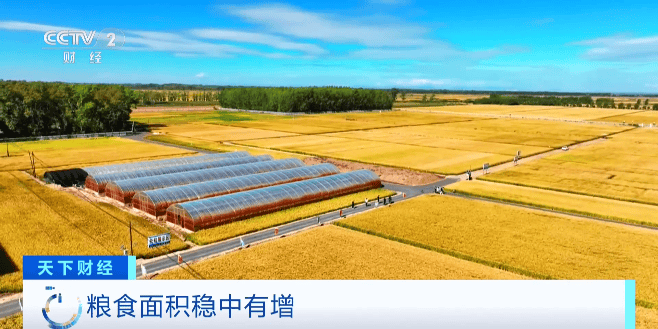
1.4万亿斤,创新高!“大国粮仓”高位增产背后的丰收“密码”
Yang Shi Wang· 2025-12-12 07:43
Core Viewpoint - China's grain production has reached a new high this year, building on last year's milestone of 1.4 trillion jin, supported by various agricultural policies and measures [1] Group 1: Agricultural Policies and Measures - The area of grain cultivation has steadily increased for six consecutive years, with a notable increase of 3.3 million mu in high-yield crops like corn, laying a solid foundation for this year's harvest [3][5] - The government has implemented a series of strong agricultural policies, including minimum purchase prices for rice and wheat, as well as subsidies for corn and soybeans, stabilizing farmers' expectations for grain production [3] Group 2: Yield Improvement Initiatives - Significant improvements in yield have been a highlight of this year's grain production, with the promotion of large-scale yield enhancement actions across 702 counties, focusing on the integration of quality land, seeds, machinery, and methods [5] - The contribution rate of yield improvement to grain production growth has reached over 90%, with plans to expand water and fertilizer integration to over 88 million mu by 2025 [7] Group 3: Resilience Against Adverse Conditions - China's grain production resilience has strengthened, achieving a good harvest despite severe weather challenges such as spring droughts and summer heat [9] - The central government allocated over 6 billion yuan to support disaster relief efforts, including drought and flood prevention, ensuring that areas with no disasters saw increased production [9] Group 4: Future Projections - By 2025, China's grain production is expected to reach new highs, with significant increases anticipated in autumn crops, particularly in the Northeast and Northwest regions, and mainly in corn [11]
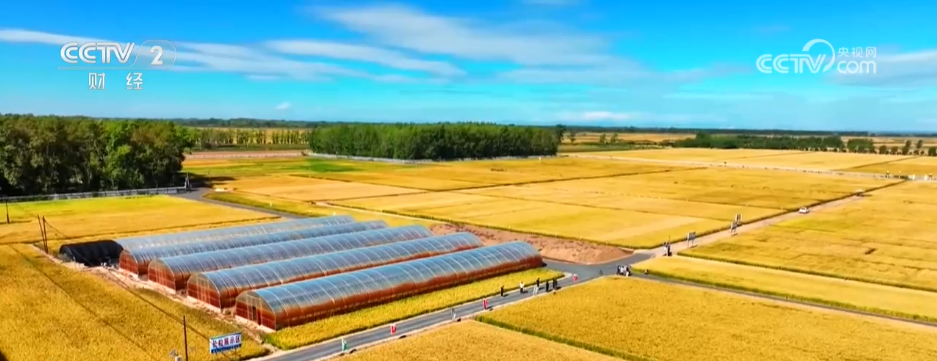
五大重点机遇!瑞再展望“十五五”中国财险市场趋势
券商中国· 2025-12-10 09:55
Core Insights - The insurance industry in China is poised for growth aligned with the "14th Five-Year Plan," focusing on five key areas: disaster prevention and reduction, green development, rural revitalization, enterprises going global, and industrial modernization [1] Group 1: Disaster Prevention and Reduction - The natural disaster insurance protection gap in China is estimated at 90%, compared to a global average of 50%, indicating significant market potential [2] - Annual insurance losses from natural disasters have exceeded $100 billion, approaching $150 billion, with potential global losses reaching $300 billion [2] - The Chinese government is implementing measures to reduce this protection gap, emphasizing collaboration between insurance companies and government to enhance disaster risk management [2] Group 2: Green Development - China is actively promoting renewable energy and green transformation, with the energy-saving and environmental protection industry expected to reach 15 trillion yuan by 2030 [3] - The insurance penetration rate in green energy projects is already high, with most solar and wind facilities insured [3] - The green insurance sector is projected to experience high growth over the next five years, driven by the expansion of infrastructure rather than increased penetration rates [3] Group 3: Rural Revitalization - The focus on rural revitalization aims to enhance food security and agricultural modernization, which will lead to increased investment in agricultural assets and machinery [4] - Two growth directions for agricultural insurance are identified: natural growth due to increased risk awareness among larger farm operators and the need for simplified insurance products for smallholders [4] - Index insurance is highlighted as a promising solution for small farmers, offering a straightforward loss assessment mechanism [4] Group 4: Enterprises Going Global - More Chinese enterprises are expected to accelerate their overseas expansion, diversifying investments beyond traditional infrastructure projects [6] - The changing risk landscape presents opportunities for reinsurance companies to support these enterprises by addressing various overseas risks [6] Group 5: Industrial Modernization - China's push for technological self-reliance and industrial upgrading is creating new risk management demands in emerging technology sectors [7] - Insurance can provide targeted coverage for new risks associated with research, supply chains, and advanced operations, supporting industrial upgrades [7] - The insurance industry must adopt cautious underwriting strategies to adapt to the evolving risk landscape and ensure alignment with future client needs [7] Group 6: Market Growth Projections - The property and casualty insurance sector in China is expected to grow at a rate of 5%-6% from 2025 to 2030, outpacing GDP growth [8] - Non-auto insurance is anticipated to be the main growth driver, while auto insurance remains a stable support for the market [8] - The industry is focusing on improving underwriting quality and operational efficiency to achieve sustainable profitability [8]

农业农村部召开小麦油菜冬前田管现场会
Qi Huo Ri Bao Wang· 2025-12-09 01:48
Core Viewpoint - The Ministry of Agriculture and Rural Affairs is implementing a 60-day action plan to enhance winter wheat and rapeseed management, focusing on seedling health and winter survival [1] Group 1: Action Plans - The ministry held on-site meetings in Henan and Hubei to promote the action plan aimed at improving seedling growth and ensuring winter survival [1] - The plan emphasizes key areas such as cold resistance, pest control, and effective field management before winter [1] Group 2: Technical Guidance - A "100-day agricultural technology campaign" has been initiated to provide technical guidance on winter management for wheat and rapeseed [1] - The ministry has released technical opinions and produced 12 short videos on winter management practices [1] Group 3: Expert Support - Expert teams will be dispatched to key provinces to offer guidance and training on effective winter management techniques [1] - A series of technical training sessions titled "Three Autumn Experts Discuss on the Frontline" will be conducted to ensure local implementation of best practices [1]
北京密云灾后重建完成阶段性任务 桥梁修复等工程已全部启动
Zhong Guo Xin Wen Wang· 2025-11-28 12:48
Core Viewpoint - The article highlights the progress made in the post-disaster reconstruction efforts in Beijing's Miyun District following the severe flooding caused by the "25·7" regional flood, with a focus on restoring infrastructure and ensuring safety for residents by May next year [1][2]. Group 1: Reconstruction Progress - Miyun District has initiated all key reconstruction projects, including water conservancy works, transportation infrastructure, and bridge repairs, aiming for completion by the end of May next year to ensure safety during the flood season [1][2]. - The district has successfully restored essential services, including 8 county-level roads, gas facilities in 80 villages, and power and communication facilities in 165 villages [3]. Group 2: Emergency Response and Support - The district prioritized the basic living needs of affected residents, ensuring the restoration of medical institutions and schools, and providing emergency relief funds to those in need [3]. - Approximately 80% of affected tourist attractions, rural hotels, and guesthouses have resumed operations, contributing to the local economy [3]. Group 3: Long-term Development Plans - Miyun District plans to enhance its disaster prevention and mitigation capabilities through systematic planning, focusing on infrastructure upgrades and resilient city construction [4]. - The district aims to integrate recovery efforts with long-term high-quality development and rural revitalization, preparing a series of major projects for the "14th Five-Year Plan" period [4].
辽宁推进气象观测站网协同建设 筑牢防灾减灾安全屏障
Ren Min Wang· 2025-11-28 01:42
人民网沈阳11月28日电 (记者孝媛)近日,由辽宁省气象局牵头,应急、自然资源、交通运输、 水利、农业农村等十五部门共同编制的《辽宁省气象行业观测站网布局设计方案(2026—2035年)》 (以下简称《方案》)正式印发,为未来十年构建全省气象观测"一张网"布局提供依据。 《方案》将各部门、各行业等规划建设的观测系统纳入综合气象观测业务总体布局,构 建"1+1+N"综合气象观测系统。到2035年,辽宁将形成科学、智能、协同、一体化的气象观测站网布 局,提升气象服务防灾减灾救灾等领域的能力。 据了解,十五部门将联合推动多项观测能力升级。全省地面自动气象站平均站间距将达6千米,地 基遥感垂直观测系统站间距缩小至68公里,天气雷达将填补全省雷达观测空白区和低空盲区,距地1公 里高度覆盖率将达95%,有效支撑东北冷涡、龙卷、雷暴大风、冰雹、短时强降水等强对流天气短时临 近预警、地质灾害风险评估预警、火险预报预警等工作,提升交通运输、流域防洪、水资源管理、旅游 市场安全运营、飞行安全、电力系统安全高效运行、人工增雨和防雹作业等气象保障能力。农业气象观 测站点将覆盖全省永久基本农田,密度达到每5万亩1站,有效支撑开展精准农 ...