零碳排放

Search documents
直击连云港3.36亿打造自走式车场!|活力中国调研行
2 1 Shi Ji Jing Ji Bao Dao· 2025-09-19 14:56
Core Insights - The Jiangsu theme interview event of "Vibrant China Research Tour" highlighted the Lianyungang International Automotive Green Intelligent Logistics Center as the largest automotive logistics center in the national port industry, featuring the highest level of intelligence and concentration, and the first to achieve zero carbon emissions [2][3] Investment and Infrastructure - The logistics center has a total investment of 336 million yuan, completed in 2023, and has been in operation for over a year and a half with excellent performance [3] - The center can accommodate 5,200 vehicles simultaneously and has an annual turnover capacity of 180,000 vehicles, addressing the rapid growth in automotive exports [2] Technological Advancements - The facility is equipped with 4 layers of AGV (Automated Guided Vehicle) parking, 16 vehicle halls, 16 elevators, and 48 AGV robots, allowing for automated classification and preparation of vehicles based on destination, shipping time, and brand, reducing the traditional manual preparation process by 2 days [2] Future Plans - Due to the rapid increase in automotive export volumes, the current logistics center is nearing capacity, prompting the company to consider a second phase of the project [3]


中国动力:绿色智造驱动战略发展 上半年营收净利双增
Zhong Zheng Wang· 2025-09-01 07:36
Core Insights - China Power (600482) reported a revenue of 27.651 billion yuan for the first half of 2025, representing a year-on-year growth of 11.22% [1] - The company's net profit attributable to shareholders reached 919 million yuan, up 93.35% year-on-year, while the net profit excluding non-recurring items was 865 million yuan, reflecting a growth of 106.39% [1] - The company signed new contracts worth 33.919 billion yuan, marking a 25.42% increase year-on-year, with a total backlog of contracts amounting to 62.794 billion yuan, which is an 8% increase compared to the previous year [1] Financial Performance - Basic earnings per share stood at 0.41 yuan, with a proposed cash dividend of 0.8161 yuan per 10 shares (including tax) [1] - The gross margin was positively impacted by an 18% increase in delivery volume and a rise in unit prices within the marine diesel engine segment [1] Business Development - The company achieved a significant breakthrough in the diesel engine sector with the delivery of the world's first 10X92DF-M methanol dual-fuel low-speed engine, which supports zero carbon emissions [2] - The company has successfully delivered various dual-fuel engines, including the 8S50ME-C9.7-GI-HPSCR and the 12G95ME-C-LGIM-EGRTC, ensuring comprehensive coverage of LNG, methanol, and ammonia fuel engine types [2] Industry Context - Despite a decline in China's shipbuilding completion volume by 3.5% and new orders by 18.2% in the first half of 2025, China Power's marine product deliveries showed rapid growth [3] - The company increased its R&D investment to 1.379 billion yuan, a 41.74% increase year-on-year, focusing on high-end, green, and intelligent new products [3] - The company’s diversified product offerings cover seven types of power systems, catering to various application scenarios, and it is strategically entering the new energy sector through its chemical power segment [3]

天津港无人码头引上合记者团惊叹
21世纪经济报道· 2025-08-31 14:28
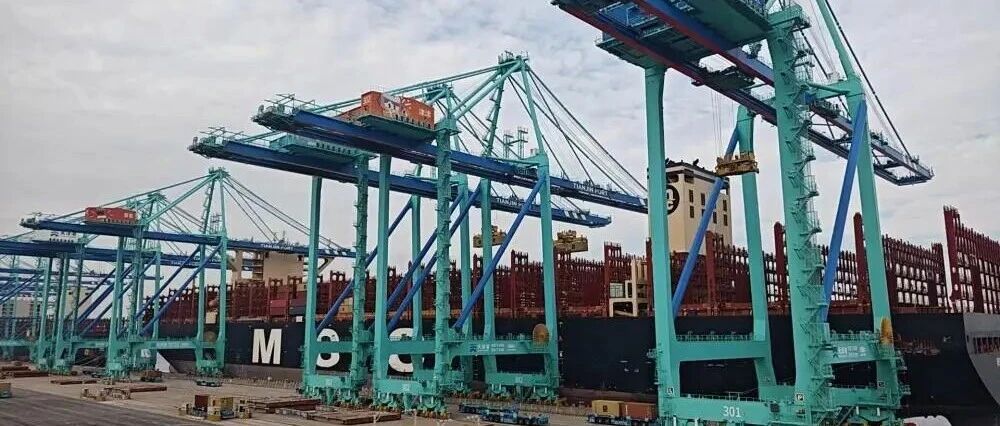
Core Insights - Tianjin Port has achieved a leading position globally with its "smart zero-carbon" terminal, utilizing fully automated operations and advanced technologies to enhance efficiency and reduce carbon emissions [1][2]. Group 1: Operational Efficiency - The Tianjin Port's second container terminal recorded a historical peak operational efficiency of 329 boxes per hour during docked operations and 416 boxes per hour at peak times [2]. - From January to May this year, the port handled a cargo throughput of 207 million tons, marking a year-on-year increase of 1.1%, and a container throughput of 9.931 million TEUs, reflecting a growth of 3.7% [2]. Group 2: Environmental Sustainability - The terminal operates on a "wind-solar-storage" integrated green energy system, achieving 100% electricity usage from renewable sources, resulting in zero carbon emissions throughout its operations [2]. - International journalists have expressed admiration for the port's zero carbon emissions and advanced technology, highlighting its leadership in sustainable port operations [2][3]. Group 3: International Relations and Perception - As an international hub, Tianjin Port maintains close shipping ties with numerous countries, showcasing China's technological prowess and economic vitality during the Shanghai Cooperation Organization (SCO) summit [3]. - Journalists from various countries have noted the impressive scale and efficiency of the port, emphasizing its role in enhancing international cooperation and regional development [3].

天津港无人码头引上合记者团惊叹
2 1 Shi Ji Jing Ji Bao Dao· 2025-08-31 11:21
Core Insights - Tianjin Port has achieved a leading position in global port operations through automation and zero-carbon initiatives [2][3] - The port's operational efficiency has reached historical highs, with a berth efficiency of 329 boxes per hour and a peak efficiency of 416 boxes per hour [3] - The port has implemented a fully automated and intelligent container operation system, utilizing a green energy system that ensures 100% self-sufficient renewable energy [3] Operational Efficiency - In the first five months of this year, Tianjin Port handled a cargo throughput of 207 million tons, a year-on-year increase of 1.1% [3] - The container throughput reached 9.931 million TEUs, reflecting a year-on-year growth of 3.7% [3] - The port's operational time for a 20,000 TEU container ship is approximately 28 hours, showcasing its high efficiency [2] Technological Advancements - The port is recognized as the world's first "smart zero-carbon" terminal, employing fully automated operations from cranes to transport vehicles [2][3] - Advanced technologies such as big data and cloud computing enhance operational efficiency and facilitate the detection of illegal trade [3] International Recognition - Foreign journalists attending the Shanghai Cooperation Organization summit expressed admiration for the port's zero-carbon operations and advanced technology [3][4] - The port's modern facilities and technological capabilities have impressed international visitors, highlighting China's economic vitality [4][5]
在离太阳最近的地方“发热”
Shan Xi Ri Bao· 2025-08-25 00:51
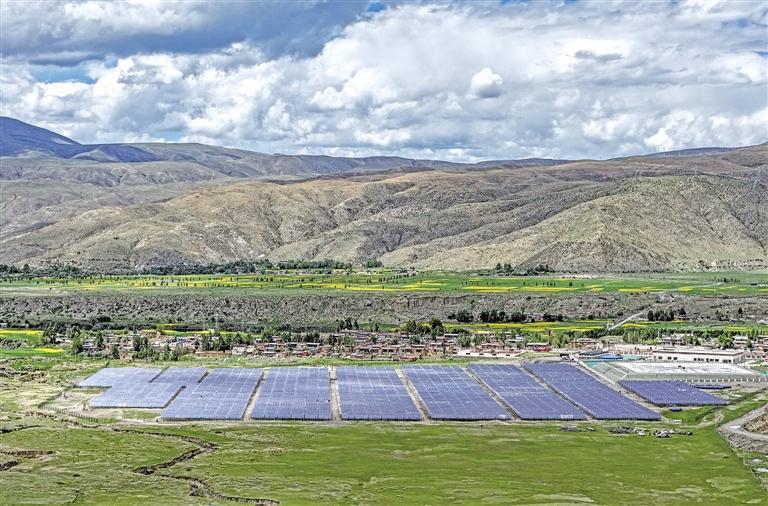
Core Viewpoint - The article highlights the development and implementation of solar energy heating systems in Tibet, emphasizing the importance of utilizing local solar resources to improve living conditions in the region [1][10][21]. Group 1: Research and Development - The research team, led by Liu Jiaping and Liu Yanfeng, faced numerous challenges in developing a solar heating system suitable for the harsh conditions of the Tibetan Plateau [5][6][15]. - Over a span of ten years, the team conducted extensive field research and testing, overcoming technical difficulties related to solar energy collection, storage, and distribution [7][16][26]. - The team developed large solar collectors that convert solar energy directly into heat, which is then stored for winter heating [16][21]. Group 2: Project Implementation - In 2018, the first large-scale solar heating demonstration project was completed in Langkazi County, covering an area of 23,000 square meters and capable of heating over 110,000 square meters of residential space without using coal, gas, or electricity [21][27]. - The project has achieved a 100% operational guarantee over four years, resulting in a reduction of 13,000 tons of carbon dioxide emissions annually [22][27]. - The research team has assisted in establishing over 30 solar heating pilot projects across various regions in Tibet, benefiting more than 500,000 residents [27]. Group 3: Future Prospects - The team aims to expand solar heating solutions across Tibet, with plans to integrate additional functionalities such as oxygen supply and humidity control to enhance living conditions [27]. - The ongoing efforts and innovations in solar energy technology are expected to lead to widespread adoption of solar heating systems in suitable areas of Tibet within a few years [27].
中船七一八所助力国内首艘氢电拖轮启航
势银能链· 2025-08-14 03:03
Core Viewpoint - The article highlights the successful trial of China's first hydrogen-electric dual-energy hybrid tugboat "Hydrogen Electric Tug 1," which is expected to significantly reduce carbon emissions in port operations [3][5]. Group 1: Tugboat Features and Innovations - The "Hydrogen Electric Tug 1" is equipped with an innovative hybrid system combining hydrogen fuel cells and liquid-cooled lithium batteries, achieving true zero carbon emissions [5]. - The tugboat has the largest horsepower and lithium battery capacity among port operation tugs in China, and it has received the AUT-0 additional mark for electric propulsion vessels [5]. - It is estimated that the tugboat will reduce carbon dioxide emissions by over 1,500 tons annually once it is in operation [5]. Group 2: Technical Developments - The tugboat features a maximum towing force of 82 tons and a range of 120 nautical miles, supported by a hydrogen storage and supply system developed by a specialized technical team [7]. - Advanced marine "three-proof" technology has been developed to enhance the hydrogen storage system's performance under extreme environmental conditions [7]. Group 3: Hydrogen Refueling Solutions - A specialized hydrogen refueling system has been created to address the challenges of hydrogen refueling for ships, successfully completing the first shore-based hydrogen refueling operation for the "Hydrogen Electric Tug 1" [9]. - The project demonstrates the leading technology application by the technical team in the upstream and downstream fields of hydrogen energy shipping [9][10].

9个绿色甲醇项目获进展
势银能链· 2025-08-13 04:05
Core Viewpoint - The article highlights the rapid development of green methanol projects across various regions in China, emphasizing the collaboration among energy companies, engineering institutions, and equipment suppliers to achieve "negative carbon production" and "zero carbon emissions" through clean energy technologies [2]. Group 1: Project Developments - In August 2025, multiple green methanol projects were initiated, including collaborations in Jilin, Inner Mongolia, and environmental assessments in Xinjiang, Guangdong, and Fujian [2]. - The total investment for the green methanol project in Yushu, Jilin, is 21.4 billion yuan, utilizing a dual-path production process combining renewable energy and biomass [4]. - The Fuhai County integrated project aims to produce 3.6 million tons of green hydrogen annually, with a contract value of 450 million yuan for the hydrogen system [6]. - Longi Green Energy's project in Inner Mongolia has a total investment of 2.365 billion yuan, targeting an annual production of 400,000 tons of green methanol [7]. - The project in Xinjiang, led by Jindahongjing, involves a design contract worth 22.3 million yuan for a 100,000 tons/year green methanol facility [8]. - The total investment for the Guangdong Energy Group's biomass project is 149.617 million yuan, focusing on green methanol production [9][10]. - The project in Qiqihar has a total investment of 842.96459 million yuan, with a planned annual production of 43.4 million tons of green methanol [12]. - Charoen Pokphand Group's project in Fujian aims for an annual production of 1 million tons of green methanol, with a total investment of approximately 15 billion yuan [13]. - The green methanol project in Jilin has received approval for a total investment of 2 billion yuan, targeting 150,000 tons of green methanol production annually [14].

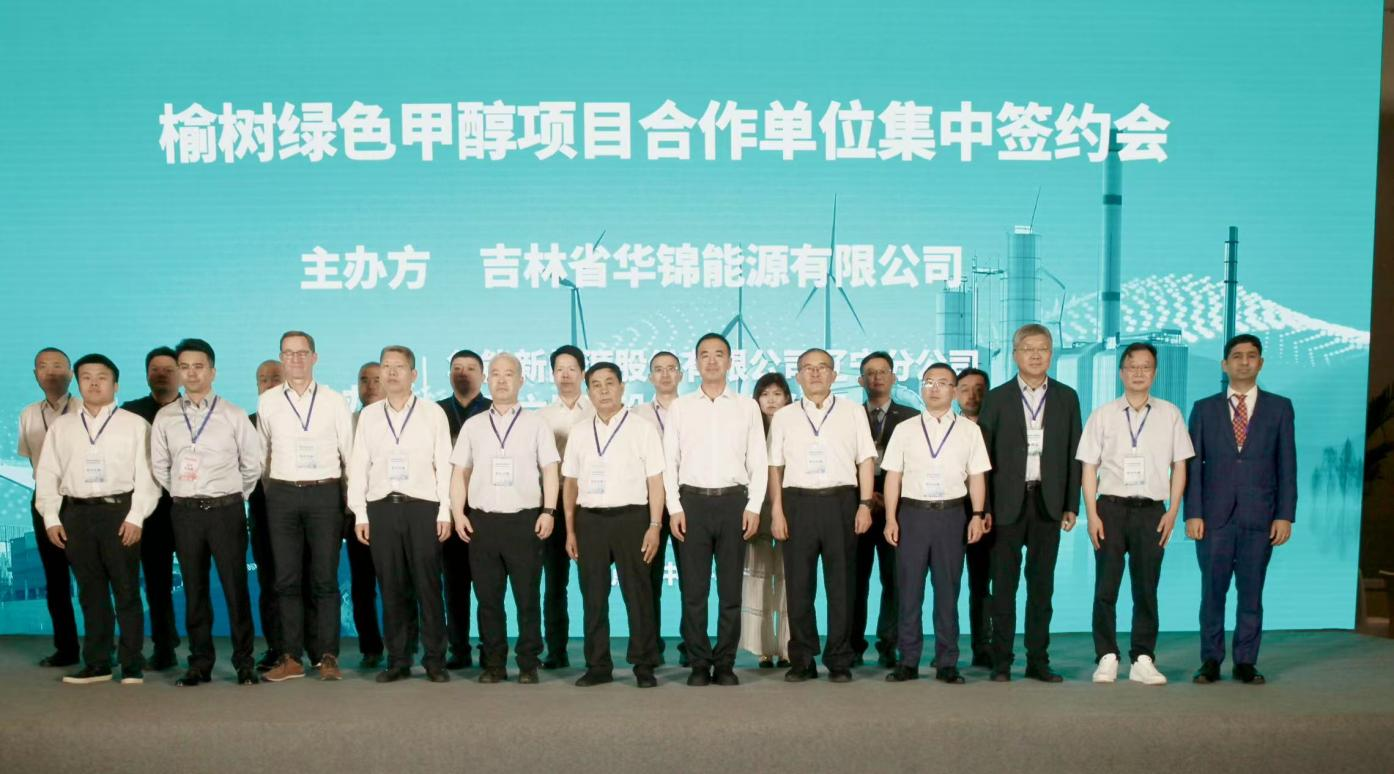
榆树绿色甲醇项目合作单位集中签约会在北京举行 共启绿色燃料发展新篇章
Zhong Guo Neng Yuan Wang· 2025-08-13 02:56
Core Insights - The signing ceremony for the Yushu Green Methanol Project took place in Beijing, marking a significant step in promoting the green methanol industry and contributing to global carbon reduction efforts [2][3] - The project is positioned as a leading comprehensive demonstration base for green methanol in China, with a total planned investment of 21.4 billion yuan [6] Group 1: Project Overview - The Yushu Green Methanol Project utilizes a dual-path production process combining renewable energy and biomass, aiming for "negative carbon production" and "zero carbon emissions" [6] - The project is expected to reduce CO₂ emissions by 410,000 tons annually compared to traditional methods, with energy consumption reduced by 4% [6] Group 2: Collaboration and Support - The signing event involved 18 core units across six groups, showcasing strong industry collaboration [4] - Key participants included representatives from the Yushu municipal government, Huaneng New Energy, China State Construction Engineering Corporation, and international partners such as Iceland's Carbon Recycling International [5][6] Group 3: Market Potential - The project has secured substantial market support, with intentions for annual procurement of 120,000 tons from Carbon Recycling International and 500,000 tons from a partnership with the Korean Green Fuel Alliance [7] - The successful signing event signifies the project's transition into a substantive development phase, with expectations to set a benchmark in the green fuel industry [7]
本届唯一获奖中国日化企业,立白科技集团荣获亚洲企业社会责任奖“绿色领导奖”
Zhong Jin Zai Xian· 2025-08-04 06:54
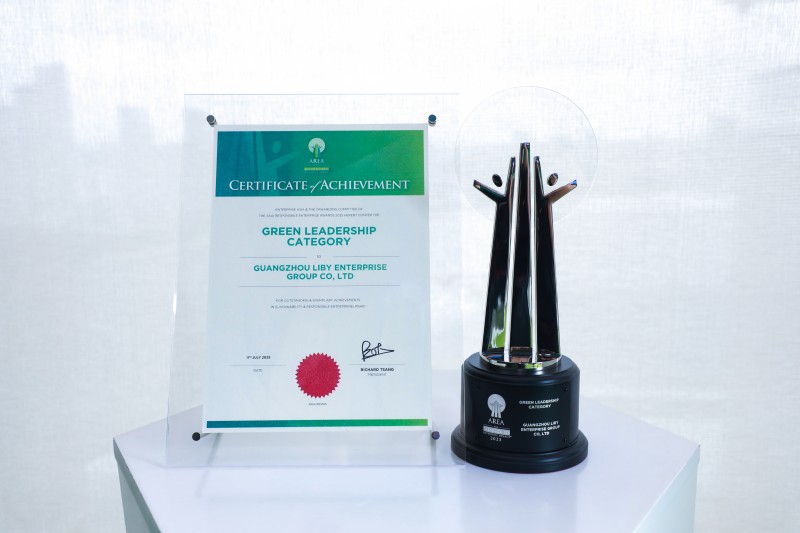
Group 1 - Liby Technology Group won the "Green Leadership Award" at the 2025 Asia Responsible Enterprise Awards, becoming the only Chinese daily chemical company to receive this honor [1][3] - The award ceremony took place on July 11, 2025, in Shanghai, organized by the Asia Corporate Social Responsibility Chamber [3][4] - Liby is the first Chinese household cleaning company to announce a net-zero target, with its "Green Future·Net Zero Liby" climate action plan outlining eight major initiatives and 30 pathways [3][5] Group 2 - The Asia Responsible Enterprise Awards (AREA) has been a leading ESG award in Asia since its establishment in 2011, recognizing over 900 companies for their ESG and sustainability projects [5] - The awards cover eight categories, highlighting outstanding performance in environmental, social responsibility, and corporate governance [5] - This year's winners include prominent companies across various industries, such as China Bank (Hong Kong), China Construction Bank, and JD Group, showcasing a diverse representation of the business landscape [5]
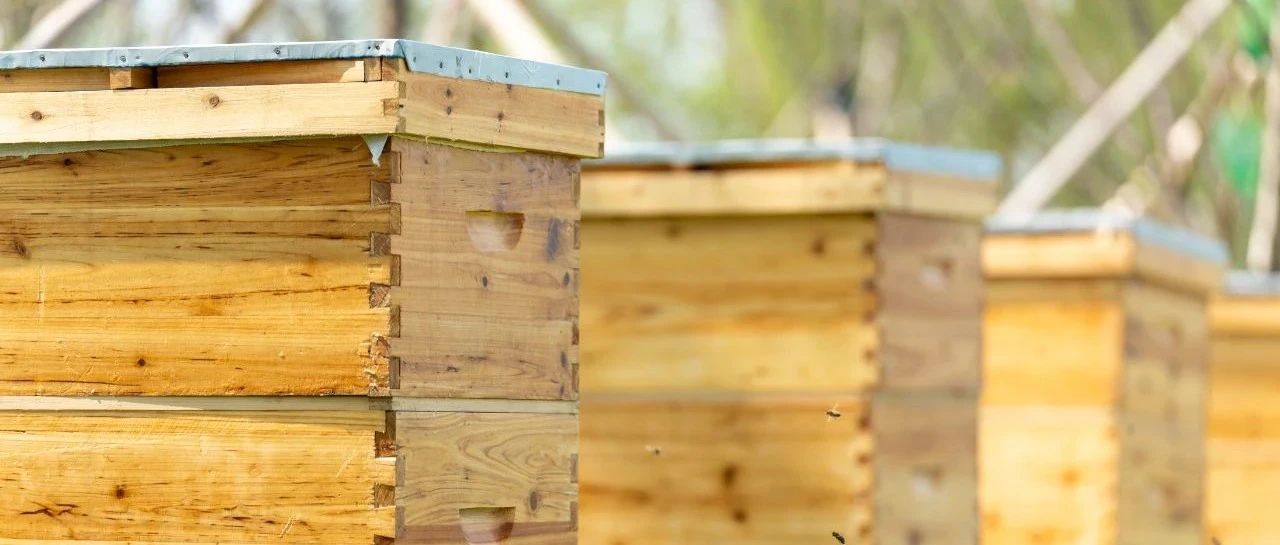
新车下线前,这家工厂先生产了100斤蜂蜜
汽车商业评论· 2025-06-20 14:40
Core Viewpoint - The newly established Audi FAW New Energy Company in Changchun emphasizes environmental sustainability and advanced manufacturing technology, aiming to set a benchmark for luxury electric vehicle production in China [4][15]. Group 1: Environmental Sustainability - The factory covers 154 hectares, with 640,000 square meters of green vegetation and a 72,000 square meter wetland park, showcasing a commitment to ecological balance [4]. - The facility operates on 100% green energy, recycles 100% of production waste, and achieves 100% recycling of wastewater, resulting in zero carbon emissions [8]. - The installation of approximately 320,000 square meters of solar panels generates over 30 million kilowatt-hours annually, covering at least 25% of the factory's annual electricity needs [9]. - The factory has a rainwater collection and treatment system that saves over 5,000 cubic meters of water annually [12]. - Emissions of volatile organic compounds (VOCs) are significantly below national standards, with a discharge of less than 10 mg/Nm³ compared to the national limit of 60 mg/Nm³ [14]. Group 2: Advanced Manufacturing Technology - The factory is designed to produce 150,000 vehicles annually, starting with the Audi Q6L e-tron series, marking a significant step in Audi's electrification strategy in the world's largest electric vehicle market [15]. - The stamping workshop utilizes high-precision molds imported from Germany, achieving a dimensional accuracy of ±0.3 mm [18]. - The welding workshop is equipped with 824 robots, achieving a welding automation rate of 100%, ensuring consistent high-quality production without human intervention [20]. - The battery workshop boasts an automation rate of 86%, surpassing industry standards, with critical processes performed by robots to minimize human error [21]. - The factory employs a 14-axis synchronous tightening system for assembly, which is faster and more precise than traditional methods, reducing production costs significantly [24][25]. Group 3: Digitalization and Intelligence - The factory integrates digital twin technology and Building Information Modeling (BIM) for real-time monitoring and maintenance of production processes [28]. - Automated systems in the welding workshop achieve detection precision of less than 0.02 mm, allowing for immediate identification and correction of anomalies [30]. - All logistics within the factory utilize automated transport modes, enhancing efficiency by 90% while ensuring the integrity of components [32].