食品安全主体责任

Search documents
连锁餐饮企业如何管好食品安全?市场监管总局出台新规加强监管
Xin Hua Wang· 2025-09-28 14:05
Core Viewpoint - The State Administration for Market Regulation has issued regulations to enhance food safety responsibilities among chain catering enterprises, addressing issues of lax management and accountability at headquarters [1][2]. Summary by Sections Regulatory Framework - The new regulations define the roles of chain catering businesses, including headquarters and branches, shifting focus from quantity to operational models to clarify regulatory targets [1][2]. Responsibilities of Headquarters - Headquarters must allocate a certain percentage of annual revenue to food safety management and are held accountable for any food safety issues arising from insufficient funding [2]. Accountability and Risk Management - The regulations clarify the responsibilities of headquarters, branches, and stores, aiming to eliminate the practice of passing blame when issues arise. Headquarters are required to create a food safety risk management checklist and establish relevant systems [2][3]. Operational Guidelines - Headquarters must develop operational procedures for raw material procurement, inspection, and food preparation, utilizing technology such as "Internet + Bright Kitchen" to ensure food safety and promptly address risks [2]. Regulatory Oversight - The regulations specify that provincial, municipal, and county-level market supervision departments will oversee chain catering enterprises based on the number of stores and risk levels [2]. Legal Accountability - The regulations outline penalties for failure to establish food safety management systems or appoint responsible personnel, with headquarters facing fines for attempting to evade responsibility through contractual agreements [2]. Industry Trends - The chain catering sector in China has seen an increase in brandization and scale, with the chain rate rising from 15% in 2020 to an expected 23% in 2024, highlighting the need for robust food safety measures [1][4].
新疆公布食品安全主体责任创新案例 融兴易购成典范
Zhong Guo Shi Pin Wang· 2025-09-24 09:40
Core Viewpoint - The Xinjiang Uygur Autonomous Region's Food Safety Office is enhancing the food safety responsibility system and risk prevention capabilities by promoting innovative practices and sharing exemplary cases, with Xinjiang Rongxing Yigou being highlighted as a model [1] Group 1: Company Overview - Xinjiang Rongxing Yigou Commercial Co., Ltd. was established in September 2017, is wholly state-owned, and has a registered capital of 1 million yuan [1] - The company is responsible for food ingredient distribution to 21 schools and multiple units in Wusu City, serving over 10,000 people [1] Group 2: Management Practices - The company operates under a "responsibility closed loop + technology empowerment + social collaboration" management system [1] - It employs a "dual director" system and dedicated safety personnel, utilizing the HACCP system to control 12 processes and 23 critical points [1] - Information technology is leveraged for source traceability, intelligent production monitoring, and logistics tracking [1] Group 3: Safety Measures - Four delivery vehicles are standardized with unified identification, disinfection, and configuration [1] - A rapid testing room is established to cover the testing of edible agricultural products [1] - The company holds a "Food Safety Open Day" each month to accept social supervision [1] Group 4: Key Insights - The experience of Rongxing Yigou indicates that a responsibility closed loop, ecological collaboration, and a focus on local characteristics are crucial for implementing primary responsibilities [1] - The practices provide a replicable model for food circulation enterprises in border areas and contribute to food safety governance with local wisdom [1]
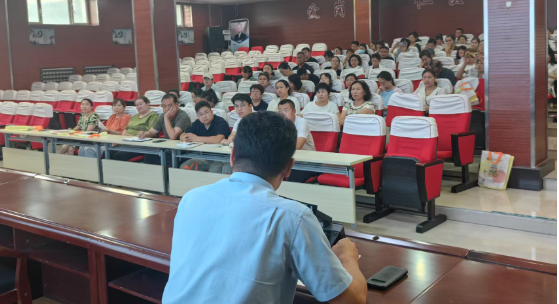
塔城市市场监督管理局召开食品经营企业食品安全主体责任培训会 筑牢舌尖上的安全防线
Zhong Guo Shi Pin Wang· 2025-09-04 08:30
Core Viewpoint - The training organized by the Tashkent Market Supervision Administration aims to enhance food safety responsibility among food business operators, ensuring compliance with the new regulations and improving overall food safety standards in the region [1][2]. Group 1: Training Content - The training session included three main components: policy interpretation, case analysis, and practical guidance [1]. - The policy interpretation focused on the specific requirements of the "daily control, weekly inspection, monthly scheduling" mechanism, clarifying the responsibilities of key personnel such as the main responsible person, food safety director, and food safety staff [1]. - Case analysis involved discussing recent violations related to food traceability, kitchen hygiene, and expired health certificates, emphasizing the consequences of non-compliance and the direction for rectification [1]. - Practical guidance provided demonstrations on filling out food safety logs, verifying incoming goods, and handling emergency situations, addressing specific concerns raised by businesses [1]. Group 2: Follow-up Actions - The Market Supervision Administration plans to implement follow-up measures such as "return visits" and random inspections to monitor the implementation of responsibilities by food businesses [2]. - There will be legal actions against businesses that fail to establish responsibility mechanisms or do not rectify issues as required, promoting a shift from "I have to ensure safety" to "I want to ensure safety" among food operators [2].
网络食品安全监管领域拟出新规:平台企业应设“食品安全总监”
Xin Jing Bao· 2025-08-13 14:15
Core Viewpoint - The State Administration for Market Regulation has drafted the "Regulations on the Supervision and Management of Food Safety Responsibilities of Third-Party Platforms and Online Food Sales Enterprises" to enhance online food safety supervision and enforce responsibilities on platform enterprises and online food sales companies [1][2][4]. Group 1: Regulatory Framework - The draft consists of 23 articles that strengthen food safety management requirements for platform enterprises and online food sales companies across various dimensions, including management personnel allocation, operational mechanisms, supervision, and legal responsibilities [1][3]. - The regulations require platform enterprises to appoint food safety directors and food safety personnel commensurate with the scale of the enterprise, food categories, online food transaction volume, and risk levels [1][4]. Group 2: Responsibilities and Obligations - The draft clarifies the division of responsibilities between platform enterprises and online food sales companies, mandating them to sign contracts that specify food safety responsibilities [4][7]. - It emphasizes that food safety directors and personnel must possess the capability to identify and mitigate food safety risks, handle complaints, and manage emergency responses [4][7]. Group 3: Implementation and Compliance - The regulations introduce a "daily control, weekly inspection, monthly scheduling" mechanism for food safety management, requiring food safety personnel to undergo at least 40 hours of training annually [4][5]. - Non-compliance with the established food safety management system may result in penalties, including warnings, fines, suspension of operations, or revocation of licenses [5]. Group 4: Industry Impact - The new regulations are expected to enhance the precision of food safety management, targeting issues like "ghost takeout" businesses that operate without physical establishments [6][7]. - The shift from a "rough" to a "refined" regulatory approach aims to prevent food safety risks by solidifying the responsibilities of platform enterprises and online food sales companies [7].
连锁企业总部禁止转嫁食品安全责任,市场监管总局拟出新规
Xin Jing Bao· 2025-08-06 12:27
Core Viewpoint - The Market Supervision Administration has drafted the "Regulations on the Supervision and Management of Food Safety Responsibilities of Food Sales Chain Enterprises (Draft for Comments)" to clarify food safety responsibilities and management levels for food sales chain enterprises [1][2][3]. Group 1: Regulatory Framework - The draft consists of 34 articles that define management responsibilities, risk prevention requirements, and legal liabilities for food sales chain enterprises [1][2]. - It emphasizes that headquarters of food sales chain enterprises cannot transfer food safety responsibilities through contracts or exemption clauses [1][5]. Group 2: Management Responsibilities - The draft establishes a tiered management system for food sales chain enterprises based on the number of stores, with provincial, municipal, and county-level market supervision departments responsible for oversight [3][4]. - Headquarters must implement a dynamic management mechanism for food safety risk prevention, including daily management, weekly inspections, and monthly assessments [4][5]. Group 3: Compliance and Training - Food sales chain enterprises are required to establish comprehensive food safety management systems and appoint qualified food safety personnel [4][6]. - Food safety supervisors and staff must undergo at least 40 hours of training annually [6]. Group 4: Monitoring and Reporting - The draft mandates that real-time video information from stores must be retained for at least 14 days and integrated into the local market supervision department's monitoring system [7]. - Headquarters must conduct comprehensive inspections of storage and distribution centers and stores, addressing any identified issues promptly [5][8]. Group 5: Legal Consequences - Specific penalties are outlined for non-compliance, including fines ranging from 100,000 to 200,000 yuan for transferring food safety responsibilities [8]. - Violations such as failing to establish food safety management systems or conduct regular inspections may result in warnings, fines, or even license revocation [8]. Group 6: Expert Opinions - Experts suggest that the effectiveness of the new regulations hinges on practical implementation at the store level, advocating for a shift from mere compliance to active management [9][10]. - Recommendations include government support for small and medium-sized enterprises to adopt technology solutions for compliance and enhanced monitoring [9][10].
北京将出台巴氏杀菌乳、冷藏非即食菜肴等规范
Bei Jing Shang Bao· 2025-08-01 10:46
Group 1 - Beijing is set to introduce quality management standards for pasteurized milk and refrigerated non-ready-to-eat dishes, with a 100% certification rate for quality management systems among large-scale food production enterprises [1] - The Beijing market supervision department is actively implementing measures to support high-quality development in food production, including a comprehensive quality safety enhancement action [1] - The food industry is experiencing an upgrade, with increasing consumer concern for nutritional health, prompting regulatory support for innovation in the entire production chain [1] Group 2 - Food production companies have raised concerns regarding the practical implementation of new food labeling regulations, particularly regarding ingredient composition and allergen identification [2] - The market supervision department is open to consultations from enterprises regarding the execution of new regulations and is organizing expert guidance for specific issues [2] - Beijing has achieved 100% staffing of food safety management personnel in production enterprises, with 489 food safety directors and 1,476 food safety officers appointed [2]
新疆乌苏市加强食品安全培训 强化食品安全主体责任落实
Zhong Guo Shi Pin Wang· 2025-06-18 06:21
Core Viewpoint - The implementation of the "Regulations on the Supervision and Management of Food Safety Responsibilities of Food Production and Operation Enterprises" aims to enhance the awareness of food safety responsibilities among enterprises and improve food safety standards in Urumqi City, Xinjiang [1] Group 1: Training and Implementation - The Urumqi City Market Supervision Bureau organized a training session on June 16, 2025, focusing on the importance of food safety responsibilities in the catering industry, attended by over 130 participants including food safety supervisors and directors from 43 campus dining facilities [1][3] - The training covered various laws and regulations related to food safety, emphasizing the current challenges in food safety supervision and the need to implement core responsibilities effectively [3] - The training concluded with an examination on the relevant laws and regulations using the "Food Safety Smart Enjoy" app, reinforcing the importance of compliance among participants [3] Group 2: Ongoing Training Initiatives - Since the beginning of the year, Urumqi City has conducted four training sessions, engaging over 3,000 participants, addressing key challenges in food safety supervision and providing insights into food safety policies [4] - The training sessions have received positive feedback for their relevance to grassroots food safety supervision and the operational challenges faced by food production and operation enterprises [4]