高铁经济

Search documents
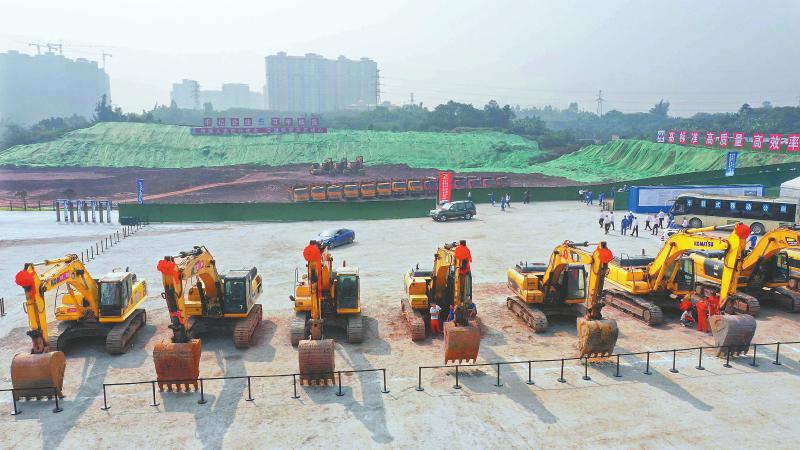
渝昆高铁四川段、重庆段同步启动建设 这条高铁将给四川带来什么?
Si Chuan Ri Bao· 2026-01-06 07:00
Core Viewpoint - The Yukun High-Speed Railway is a significant component of China's medium- and long-term railway network, enhancing connectivity and economic development in the Sichuan region, particularly in the cities of Luzhou and Yibin [1][4]. Group 1: Project Overview - The Yukun High-Speed Railway will connect Chongqing and Kunming, with a total length of 699 kilometers and a design speed of 350 kilometers per hour, featuring 20 stations [2][3]. - In Sichuan, the railway spans approximately 186 kilometers and includes 6 stations, making it the second longest in the four provinces it traverses, after Yunnan [3]. Group 2: Economic Impact - The railway is expected to accelerate the development of Luzhou and the surrounding Sichuan region, which currently lacks direct national railway connections [3][5]. - The Yukun High-Speed Railway will enhance the strategic position of the southern Sichuan region in the province's open development strategy, strengthening economic ties with Chongqing and Yunnan [4][5]. Group 3: Connectivity and Infrastructure - The railway will create a triangle of connectivity between Luzhou, Yibin, and Zigong, facilitating new travel routes to Chongqing and Kunming [3][6]. - The integration of the Yukun High-Speed Railway with existing and planned rail lines will form a comprehensive high-speed rail corridor from Chengdu to Kunming, significantly reducing travel time from approximately 6.5 hours to around 2.5 hours [8]. Group 4: Future Development - The ongoing construction of multiple high-speed rail lines in Sichuan, including the Chengdu to Zigong and Chengdu to Yibin lines, indicates a broader strategy to leverage high-speed rail for regional economic growth [6][8]. - The development of the Yukun High-Speed Railway is seen as a critical support for Sichuan's participation in the China-ASEAN framework, promoting regional integration and economic collaboration [8].

坐着高铁来巴彦淖尔品美食
Xin Lang Cai Jing· 2026-01-02 18:29
(来源:内蒙古日报) 转自:内蒙古日报 □本报记者 薄金凤 元旦假期首日,巴彦淖尔市临河区一家新开业的重庆火锅店内座无虚席。来自重庆的店主赖甜表示,选 择在此创业,源于当地涌动的营商"暖流"。 为适应旅客需求,他改良了特产包装,并计划在站内开设巴盟烩菜馆与内蒙古特产专卖店。"每道河套 美食都是一张地方名片,借助高铁,它们能走得更远。"杨东信心十足。站外高铁疾驰,站内旅客熙 攘,他的小店正忙碌地迎接着"高铁生活圈"带来的新机遇。 高铁如同一条"美食专列",不仅吸引外地食客前来寻味,也让本地特产更方便地走出去,激发了从生产 到销售的全链条消费活力。 这个元旦,来自银川的乌云夫和朋友们就乘着高铁,开启了一场巴彦淖尔之旅。"这里有山水林田湖草 沙的全景生态,还有游牧与农耕交织的多元文化,真是一座来了就不想走的城市。"乌云夫感慨道。他 已将巴彦淖尔列入深度旅行清单,计划未来常带亲友来"快旅慢游",细细品味每个旗县区的独特魅力。 这股"暖流",始于2025年8月。赖甜与儿子驾车至乌拉特后旗巴音戈壁苏木玛瑙湖游玩,遭遇降雨,车 辆陷入泥地。报警后,不到30分钟,民警立即携带绞盘、铁锹等工具赶到现场,成功将车辆拖出。赖甜 将 ...
海南与粤港澳大湾区将实现高铁直达!网友:一整个期待住了
Zhong Guo Ji Jin Bao· 2026-01-02 17:06
Core Viewpoint - The Zhanhai High-Speed Railway project is progressing, with significant infrastructure investments exceeding 400 billion yuan, aimed at enhancing connectivity between the Guangdong-Hong Kong-Macao Greater Bay Area and Hainan Free Trade Port [1][2]. Group 1: Project Overview - The Zhanhai High-Speed Railway will connect Zhanjiang in Guangdong Province to Haikou in Hainan Province, featuring a 23-kilometer ferry crossing over the Qiongzhou Strait [2]. - The project is part of the national "eight vertical and eight horizontal" high-speed railway network, facilitating rapid transit between key regions in Guangdong and Hainan [2][3]. Group 2: Economic Impact - Upon completion, travel time from Zhanjiang to Xu Wen is expected to decrease from approximately 2 hours to under 30 minutes, while the journey from Zhanjiang to Haikou will be reduced from 3-4 hours to around 2 hours [2]. - The railway aims to create a seamless connection between Hainan's circular island high-speed railway and the national high-speed rail network, promoting resource sharing and industrial collaboration between the two economic zones [2][5]. Group 3: Development Timeline - The project is on track to be completed and operational during the "14th Five-Year Plan" period, with preliminary work progressing steadily [3]. - The Zhanhai High-Speed Railway is expected to significantly enhance the geographical and functional positioning of the Guangdong region, transforming it from a peripheral area to a frontline hub [5].
南珠高铁南玉段运营一周年 累计发送旅客275万人次
Xin Lang Cai Jing· 2025-12-31 00:19
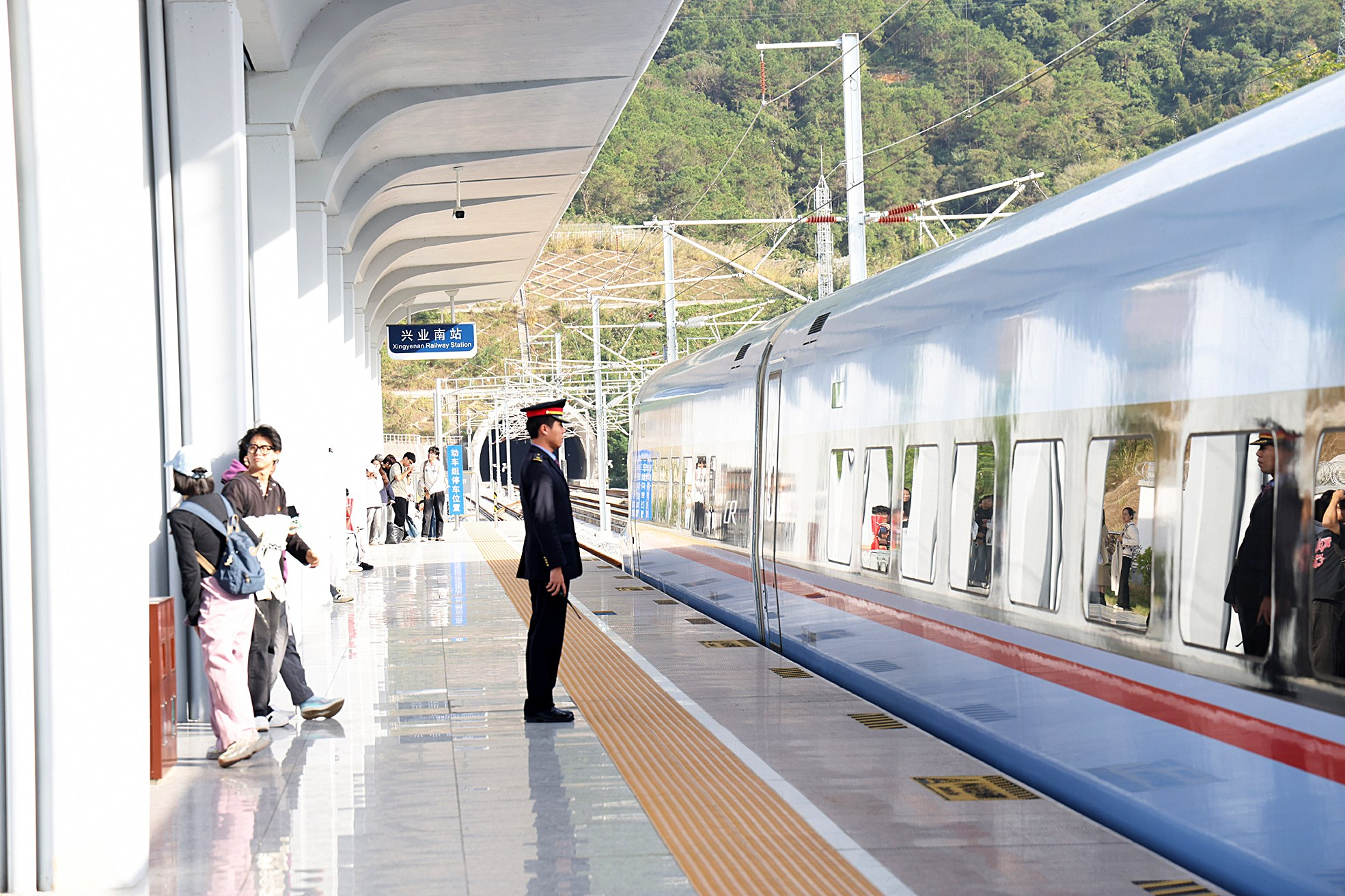
Group 1 - The Nanzhu High-speed Railway Nanyu section has been operational for one year, sending a total of 2.75 million passengers, significantly enhancing the flow of people, logistics, information, and capital in the region, thus promoting high-quality development along the line [2] - The railway covers a distance of 193 kilometers with a design speed of 350 kilometers per hour, making Guangxi the first province in western China and among the few ethnic minority autonomous regions to achieve "high-speed rail connectivity between cities" [2] - The railway has optimized train schedules based on passenger flow, operating 20 trains daily to meet travel demands, thereby facilitating convenient travel for local residents [2] Group 2 - The opening of the high-speed railway has revitalized the development dynamics along the Nanyu section, enabling the return of talent, technology, and capital [3] - A local tea company has successfully addressed its talent shortage by attracting five senior tea artisans and marketing experts from Nanning, who commute via high-speed rail without relocating [3] - As of December, Yulin City has attracted 757 projects with a total investment of 138.144 billion yuan, compared to 526 projects and 103.174 billion yuan the previous year, showcasing the railway's role in facilitating talent and capital return [3]
湖北汉川步入“双高铁时代”
Zhong Guo Jing Ji Wang· 2025-12-30 02:41
Core Insights - The opening of the Hanchuan North Station marks the beginning of a "dual high-speed rail era" for Hanchuan, significantly enhancing connectivity with Wuhan and other cities [1][2] - The Hanchuan North Station is a key node in the national "eight vertical and eight horizontal" high-speed rail network, with an expected annual passenger volume of 2 million [1] Group 1: Infrastructure and Connectivity - The Wuhan-Yichang section of the Yangtze River High-Speed Railway is 314 kilometers long, with a design speed of 350 kilometers per hour, connecting multiple cities including Hankou, Hanchuan, and Yichang [1] - Travel time from Hanchuan to Wuhan is reduced to 20 minutes, with travel times to Shanghai and Chongqing also significantly shortened to approximately 4 hours and 5 hours, respectively [1] Group 2: Station Facilities and Transportation - Hanchuan North Station features modern amenities such as automatic ticket machines, intelligent security systems, and convenient facilities like nursing rooms and drinking water stations [1] - The station's transportation system is designed for efficient passenger flow, with dedicated access for vehicles and seamless connections to public transport options [2] Group 3: Economic and Development Impact - The integration of Hanchuan into the Wuhan "half-hour urban circle" is expected to foster industrial collaboration, particularly in automotive parts and optoelectronic information sectors [2] - The high-speed rail's completion will lower logistics and business costs for enterprises, enhancing Hanchuan's ability to connect with Wuhan's talent, technology, and market resources [2]
2025高铁开通5万公里 广东里程再居全国榜首
3 6 Ke· 2025-12-29 02:21
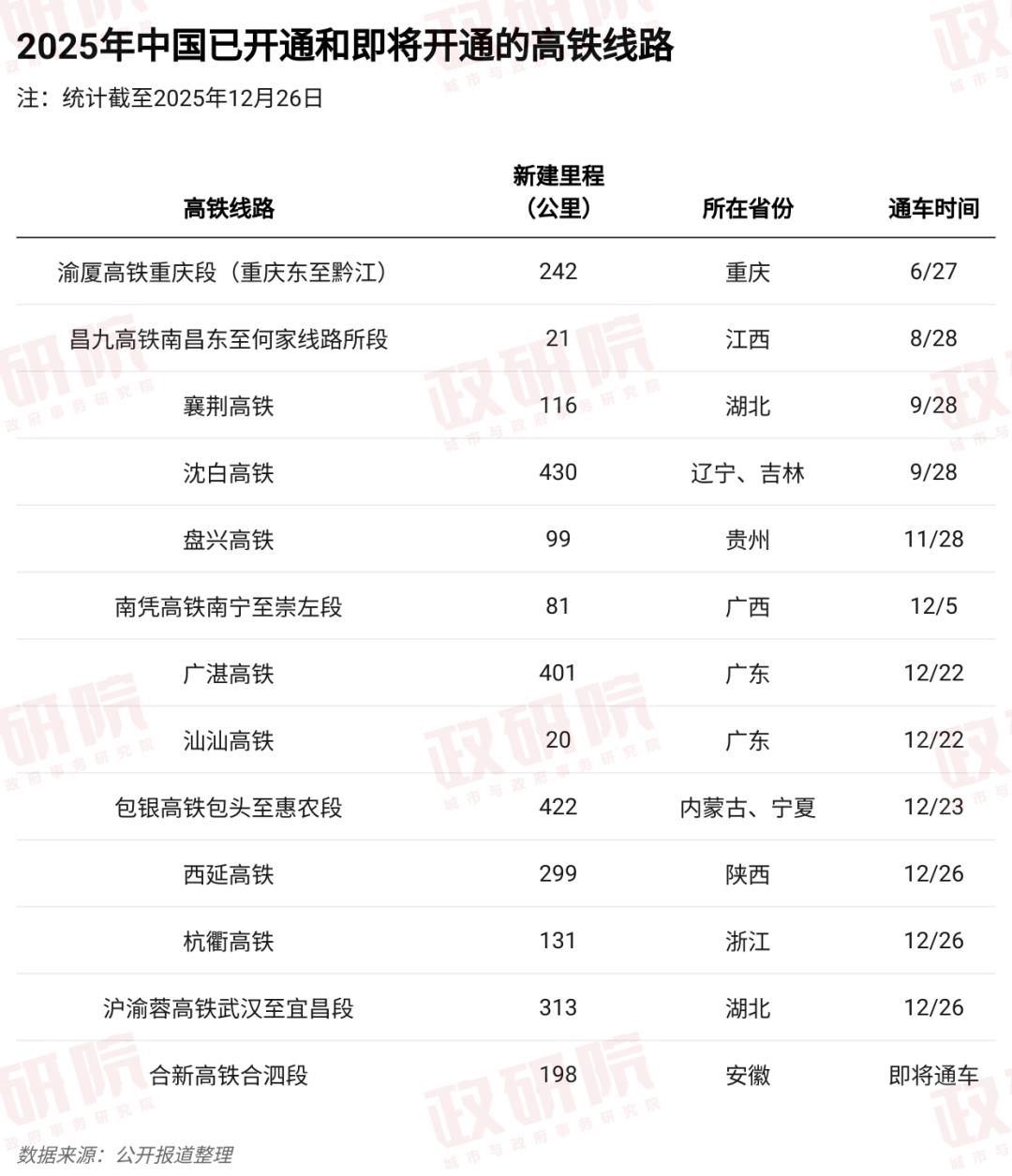
2025年收官在即,中国高铁网络也迎来一轮密集更新。 12月22日,广湛高铁和汕汕高铁汕头至汕头南段开通运营,凭借这两条线路,广东省的高铁运营里程再次回到全国榜首。12月23日,包银高铁包头至惠农 段通车,至此,包银高铁实现全线贯通运营。12月26日,杭衢高铁、西延高铁、沪渝蓉高铁武汉至宜昌段也全部通车。此外,合新高铁合泗段也在为开通 运营做最后准备。 据经济观察报统计,截至2025年12月26日,2025年已开通的高铁共计12条,高铁营业总里程已突破5万公里。其中,新增运营里程约2575公里,湖北增长 最多,达429公里。 | | 打律年六 | | | | --- | --- | --- | --- | | 高铁线路 | (公園) | 所在省份 | 通车时间 | | 渝厦高铁重庆段(重庆东至黔江) | 242 | 重庆 | 6/27 | | 昌九高铁南昌东至何家线路所段 | 21 | 江西 | 8/28 | | 襄荆高铁 | 116 | 湖北 | 9/28 | | 沈白高铁 | 430 | 辽宁、吉林 | 9/28 | | 盘兴高铁 | gg | 贵州 | 11/28 | | 南凭高铁南宁至崇左段 | 81 ...
高铁织网绘宏图 荆楚协同启新程
Zhong Guo Jing Ji Wang· 2025-12-26 13:56
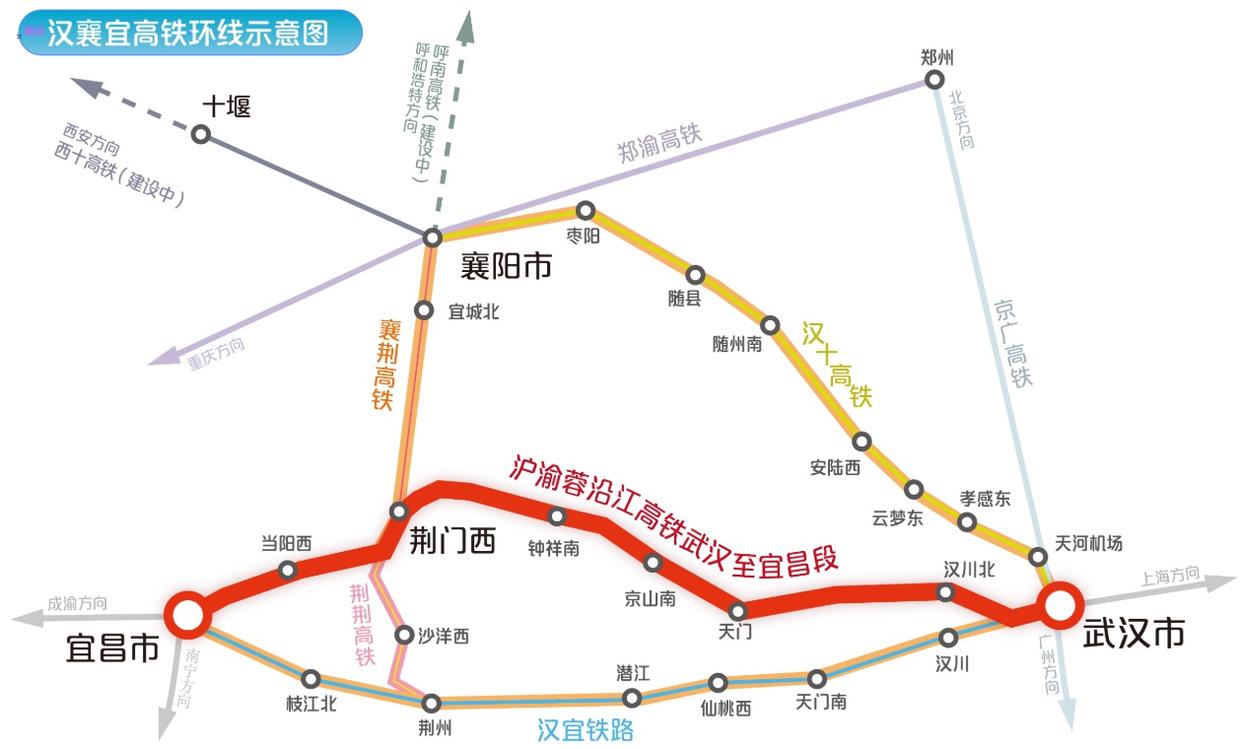
Core Viewpoint - The opening of the Wuhan to Yichang section of the Huhuo Railway marks a significant development in China's high-speed rail network, enhancing regional connectivity and economic collaboration, while also improving the quality of life for residents in the area [1][2][3] Group 1: Time and Space Restructuring - The travel time between Wuhan and Yichang has been reduced from 2 hours to approximately 1 hour, facilitating a new lifestyle where residents can enjoy local delicacies from both cities [1] - The new high-speed rail line connects seamlessly with other high-speed rail services, creating a "Golden Triangle" high-speed rail loop that links Wuhan, Xiangyang, and Yichang, thereby connecting 23 million people within a 1-hour commuting radius [1] Group 2: Industrial Synergy - The Wuhan to Yichang section serves as a major transportation corridor that links the Chengdu-Chongqing economic circle, the central Yangtze River city cluster, and the Yangtze River Delta, fostering industrial collaboration [2] - The complementary industrial strengths of Wuhan's optoelectronics and automotive sectors with Yichang's fine chemicals and Jingmen's equipment manufacturing are accelerating the formation of a division of labor model [2] - The reduction in logistics costs and increased flow of resources due to the high-speed rail are enabling local agricultural products to reach national markets, thus promoting the formation of industrial clusters along the route [2] Group 3: National Strategic Support - The completion of the Wuhan to Yichang section enhances the national high-speed rail framework, making the comprehensive transportation corridor of the Yangtze River Economic Belt more efficient [2] - The new rail line strengthens Hubei's strategic position as a transportation hub, addressing traffic bottlenecks in the central Yangtze River city cluster and enhancing the development capabilities of provincial sub-centers like Xiangyang and Yichang [2]
沿江高铁首段在湖北开通运营,长江经济带再添新引擎
Di Yi Cai Jing· 2025-12-26 10:37
Core Viewpoint - The opening of the Wuhan-Yichang section of the Shanghai-Chongqing-Rongjiang high-speed railway not only enhances transportation efficiency but also serves as a cultural link and innovation corridor, significantly reducing travel time between cities in Hubei province [1][6]. Group 1: Economic Impact - The new high-speed railway will accelerate the flow of economic elements along the Yangtze River Economic Belt, helping to narrow the development gap between eastern, central, and western regions of China [3]. - The railway's completion will create a "T"-shaped high-speed rail framework in Hubei, allowing for 3-4 hour access to major cities nationwide, thus enhancing personnel mobility and economic cooperation potential [4]. - The opening of the Tianmen Station is expected to significantly boost local economic development, with predictions of a 1-2 percentage point increase in retail sales growth due to increased tourism and business traffic [5]. Group 2: Infrastructure Development - The Wuhan-Yichang section is the first to open in the Shanghai-Chongqing-Rongjiang high-speed railway project, which spans a total of 314 kilometers with a design speed of 350 km/h [4]. - The railway includes 88 new bridges and 25 tunnels, with a bridge-tunnel ratio of 85%, enhancing the overall infrastructure quality [4]. - The high-speed railway will connect various cities in Hubei, including Tianmen, Jingmen, and Yichang, filling the gap in east-west high-speed rail connectivity in the province [4]. Group 3: Cultural and Innovation Aspects - The high-speed railway will connect diverse cultural regions along the Yangtze River, potentially creating a globally influential inland cultural tourism brand [7]. - It will facilitate the flow of innovative elements and promote industrial upgrades by shortening the travel time between major innovation centers, fostering high-frequency exchanges among researchers, entrepreneurs, and investors [7]. - The railway is expected to support the development of a "high-speed rail + innovation + industry" model, enhancing the core position of the Yangtze River Economic Belt in the national industrial chain [7].
“超米字型”画下关键一笔 ,武汉高铁枢纽“七向”贯通
Chang Jiang Ri Bao· 2025-12-25 13:04
Core Points - The Wuhan-Yichang High-Speed Railway (Wuyiy High-Speed Railway) officially opened on December 26, significantly reducing travel time between Wuhan and Yichang to a maximum of 69 minutes, marking the end of the absence of high-standard railways in the Jianghan Plain [1] - The opening of Wuyiy High-Speed Railway is a crucial step in constructing Wuhan's "super cross-shaped" high-speed rail hub, enhancing the city's transportation, economic, and talent radiating capabilities [1][4] Summary by Sections High-Speed Rail Development - The total high-speed rail mileage in Hubei province was approximately 1,000 kilometers at the beginning of the 14th Five-Year Plan, ranking it in the second tier nationally. With the opening of the Wuyiy and Xiangjing High-Speed Railways, Hubei added 429 kilometers of high-speed rail this year, leading the nation in new mileage and elevating its total ranking from 13th to 5th [4] - The Wuyiy High-Speed Railway is part of the important "super cross-shaped" high-speed rail network, filling the gap for high-standard railways in the east-west direction [4][5] Economic Impact - The Wuyiy High-Speed Railway not only enhances travel speed but also reshapes the economic landscape by facilitating the reallocation of economic factors. Areas closer to Wuhan benefit significantly from improved transportation, attracting talent, technology, and capital [5][6] - A case study in Jingmen illustrates the rapid development of the aviation manufacturing sector, which has benefited from the collaboration with Wuhan for technology and talent resources, facilitated by the new high-speed rail connections [6] Future Developments - The opening of the Wuyiy High-Speed Railway is a milestone, but it is not the endpoint. The construction of Wuhan's "super cross-shaped" high-speed rail hub has a clear timeline and roadmap, with plans to start building the Wuhan Hub Direct Line and the Fuhuang High-Speed Railway during the 15th Five-Year Plan [9][10] - The Fuhuang High-Speed Railway will connect with existing lines and enhance the efficiency of the rail hub, ultimately forming a comprehensive economic life circle that allows for 1-2 hour access between provincial cities and 3-4 hour access to major domestic cities [10]
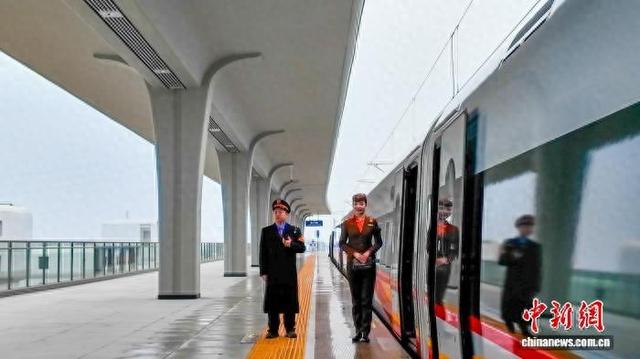
湖北再添交通新动脉 沪渝蓉沿江高铁武宜段即将开通
Xin Lang Cai Jing· 2025-12-24 14:45
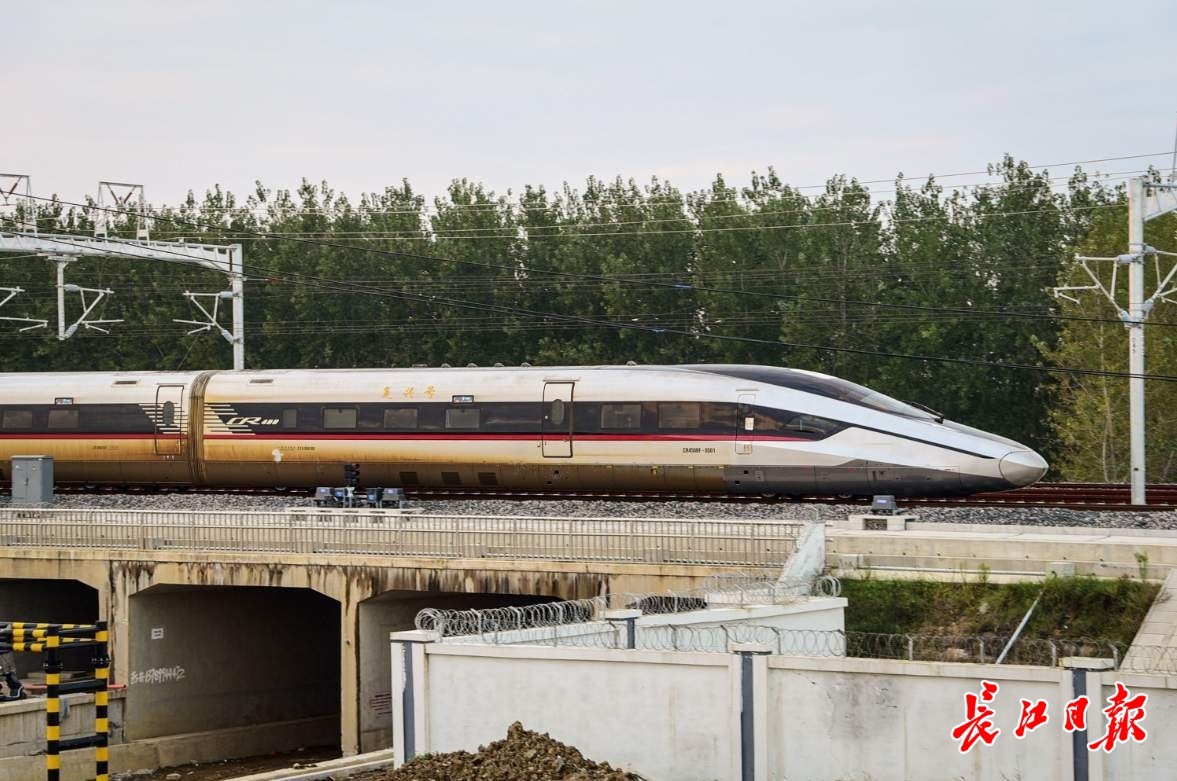
中铁十一局沪渝蓉高铁武宜段5标项目质量总监韩帅涛介绍,建设期间,项目团队先后攻克深水双壁钢 围堰设计、制造、运输和下沉,大节段牵索挂篮设计安装走行和大跨度高速铁路无砟轨道桥梁线形控制 等技术难点。 武宜高铁建设过程中多次刷新国内高铁建设纪录。中铁十一局沪渝蓉武宜段四电标项目经理姜廷军介 绍,智能化腕臂预配车间引入机器人自动切割、打孔、组装系统,将预配作业由"人工+机械"升级为机 器人智能化生产,实现了从"经验依赖"向"数字驱动"的跨越。 中新网武汉12月24日电 (张倩龙 秦涛 沈正华)沪渝蓉沿江高铁武宜段(以下简称武宜高铁)即将开通运 营。23日—24日,武宜高铁举行媒体试乘体验活动,G9385次"复兴号"列车自汉口站缓缓驶出,疾驰于 江汉平原腹地,这条正线全长314公里的高速铁路,将为长江经济带综合立体交通走廊再添主动脉。 湖北再添交通新动脉 作为沪渝蓉沿江高铁最早开工建设的重要线路,武宜高铁是国家铁路网中长三角—成渝经济区高铁主轴 的重大升级工程。线路自武汉市引出,经天门市、荆门市,终至宜昌市,设计时速350公里。全线新建 桥梁88座、隧道25座,桥隧比高达85%。 日,武宜高铁媒体试乘体验活动举行,图 ...