
鲜花经济

Search documents
年经济新热度|年宵花“上新”:花漾年味的“新热潮”
Xin Hua She· 2026-01-22 08:21
Core Insights - The upcoming Lunar New Year is driving a peak sales period for the domestic flower market, with a focus on new domestic varieties and high-quality production capabilities [2] - The flower industry is experiencing a dual empowerment of consumption and production, creating a new wave of economic growth [2] Industry Overview - In Yunnan Lijiang Modern Flower Industry Park, various fresh-cut flowers are being harvested, with a daily output of approximately 100,000 stems and weekly exports of 100,000 to 150,000 stems to countries like Japan, South Korea, Thailand, and Russia [2] - Many flower companies are increasing inventory in anticipation of market demand to ensure stable supply before the holiday [2] Market Dynamics - The Dounan Flower Market features over 1,600 varieties of fresh-cut flowers, with popular species like butterfly orchids and large-flowered orchids in high demand during the festive season [2] - The rise of "Chinese chip" varieties and explosive online sales are contributing to a thriving flower market, stimulating new economic momentum [2] Economic Impact - According to the China Flower Association, the retail consumption market for flowers is expected to reach nearly 220 billion yuan in 2024, representing a year-on-year growth of approximately 8%, with e-commerce sales accounting for about 120 billion yuan [2] - The flower industry is developing robustly, forming a market scale of over 100 billion yuan, and the "fresh flower economy" is enhancing the well-being of the public [2]

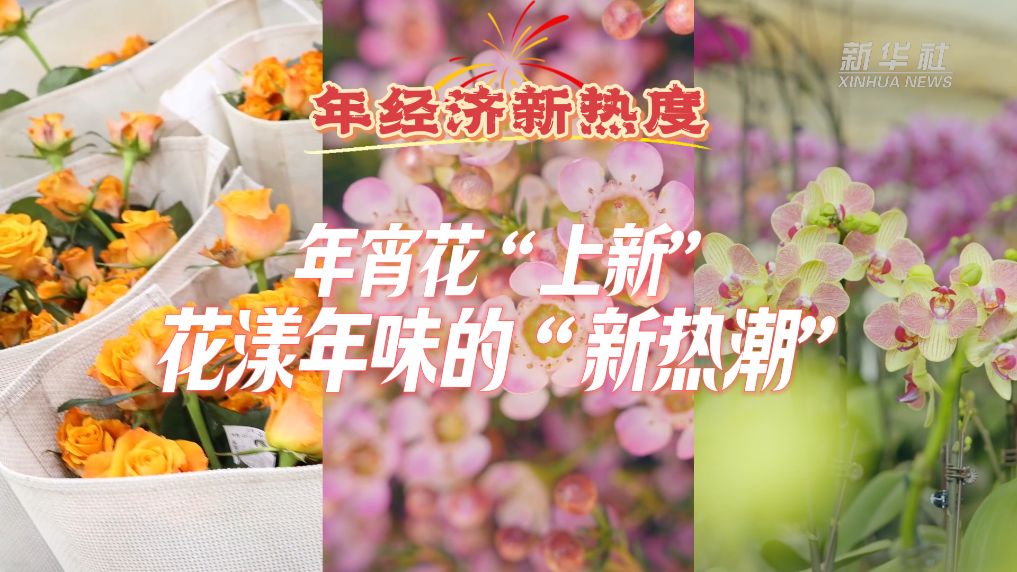
年经济新热度丨年宵花“上新”:花漾年味的“新热潮”
Xin Hua She· 2026-01-21 09:19
Group 1 - The core viewpoint of the article highlights the booming domestic flower market as the Lunar New Year approaches, driven by new domestic flower varieties and quality production capacity, creating a "new trend" of dual empowerment in consumption and industry [2] - The modern flower industry park in Lijiang, Yunnan, produces approximately 100,000 fresh flowers daily, with weekly exports to countries such as Japan, South Korea, Thailand, and Russia reaching 100,000 to 150,000 stems [2] - Many flower enterprises are increasing their inventory in advance to meet market demand, ensuring stable supply before the festival, with over 1,600 varieties of fresh-cut flowers available at the Dou Nan Flower Market [2] Group 2 - The China Flower Association projects that the retail consumption market for flowers will reach nearly 220 billion yuan in 2024, representing a year-on-year growth of about 8%, with e-commerce sales of flowers estimated at around 120 billion yuan [2] - The flower industry in China is thriving, with the "fresh flower economy" forming a market scale of over 100 billion yuan, indicating significant economic growth potential [2] - The complete industrial chain of the flower industry, from seedling cultivation to packaging and distribution, is operating efficiently, contributing to the "beautiful economy" and enhancing the well-being of the public, injecting vitality into the New Year economy [2]
“鲜味经济”“鲜花经济”撬动节前火热消费 多地开启“年货交易模式”
Yang Shi Wang· 2026-01-18 11:03
Seafood Industry - The seafood market in Shandong is experiencing a surge in demand during the Spring Festival, with significant activity in Qingdao and Rizhao, where oyster processing is reaching daily volumes of tens of thousands of pounds [1][4][7] - In Qingdao, the Red Island Fishing Port is bustling with activity as fishing boats unload oysters, which are then sorted, weighed, and packaged for sale [4][7] - Rizhao's seafood markets are well-stocked, with a variety of fresh seafood and popular dried products like grilled shrimp and squid being highly sought after by consumers [11] Flower Industry - In Yunnan, the flower market is seeing a peak in production and sales, particularly for the lotus flower, which symbolizes good fortune as the Year of the Horse approaches [12][13] - The black lotus flower is gaining popularity among consumers, reflecting a desire for success in the upcoming year [13] - The Kunming Dounan Flower Market, Asia's largest fresh-cut flower trading market, is also seeing strong sales for traditional New Year flowers and other ornamental plants [13][15] Agricultural Products - The Northeast New Fa Di Agricultural Supply Chain Center in Liaoning is bustling with activity as it prepares for the Spring Festival, attracting buyers from across the country [16][18] - Daily sales of sugar oranges are around 80 tons, with local vegetable procurement also increasing significantly as the festival approaches [18][20] - The center serves as a distribution hub for Liaoning's agricultural products, with improved transportation routes enhancing the flow of goods to the Beijing-Tianjin-Hebei region [21]

小城大市丨花开“富贵”:一座西部县城的鲜花经济跃迁之路
Xin Hua She· 2026-01-16 07:57
Group 1 - The e-commerce live streaming market for flowers has shown strong performance amid the emotional economy trend, with the flower market gradually heating up as the Spring Festival approaches [1] - Guangxi Shanglin County has positioned the fresh flower economy as a key green industry, utilizing a "company + collective economy + farmers" model to integrate agriculture with tourism and e-commerce, thereby building a regional brand and a complete fresh flower economic ecosystem [3] - Under the guidance of the "14th Five-Year Plan" which emphasizes the cultivation of rural characteristic industries and the improvement of mechanisms to connect farmers, Shanglin County has strengthened the ecological foundation for flower planting and enhanced flower quality and yield through technological empowerment, leveraging an e-commerce logistics system to streamline the sales chain from production to consumers [5]
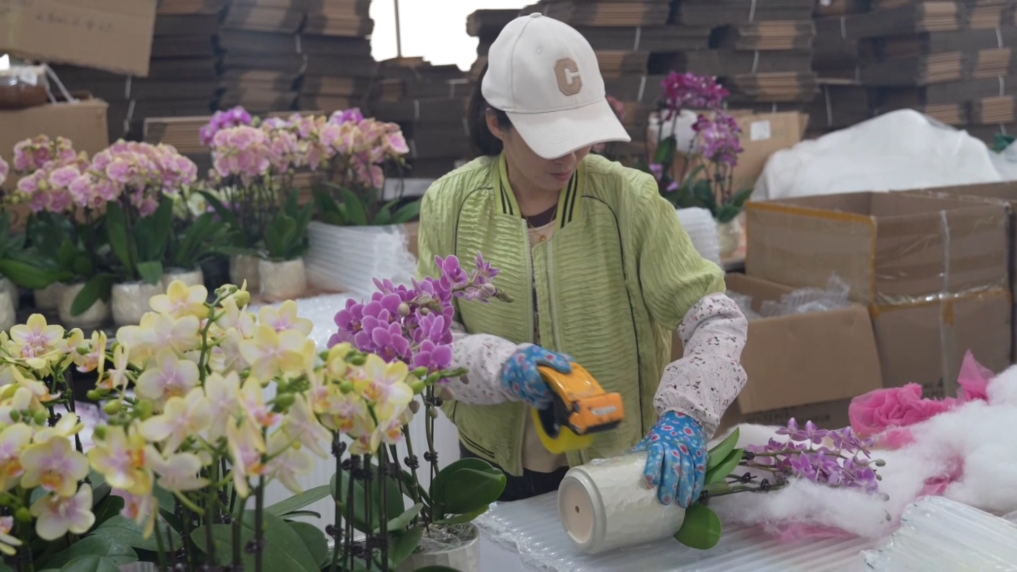
“花样”致富路 芬芳满城香
Xin Lang Cai Jing· 2026-01-13 04:19
Core Viewpoint - The article highlights the flourishing flower economy in Langfang, showcasing how the flower industry not only beautifies the city but also contributes to rural revitalization and economic growth through innovative agricultural practices [7][10][16]. Industry Overview - The flower market in Langfang is thriving, with various flower species, including orchids, being in high demand, especially as the Spring Festival approaches [11][12]. - The region has established a comprehensive flower industry chain that includes planting, storage, and sales, positioning itself as a benchmark for the "beautiful economy" [10]. Technological Advancements - The use of smart temperature-controlled greenhouses has enabled year-round flower production, breaking seasonal limitations and enhancing the quality of flowers [9][16]. - The integration of technology in flower cultivation has led to a stable output of high-quality flowers, meeting the growing demand in high-end markets [9]. Economic Impact - The flower industry has significantly increased farmers' incomes, with Langfang's strategic location near Beijing and Tianjin facilitating the development of flower production clusters [9][10]. - The article notes that the flower economy is a vital part of rural revitalization efforts, contributing to the livelihoods of local farmers [10][16]. Consumer Trends - There is a growing trend among consumers to purchase flowers for home decoration, with many transforming their balconies into "micro-gardens" [14][15]. - The demand for aesthetically pleasing and meaningful flowers, such as orchids, has surged, with consumers increasingly seeking unique arrangements and combinations [11][12].
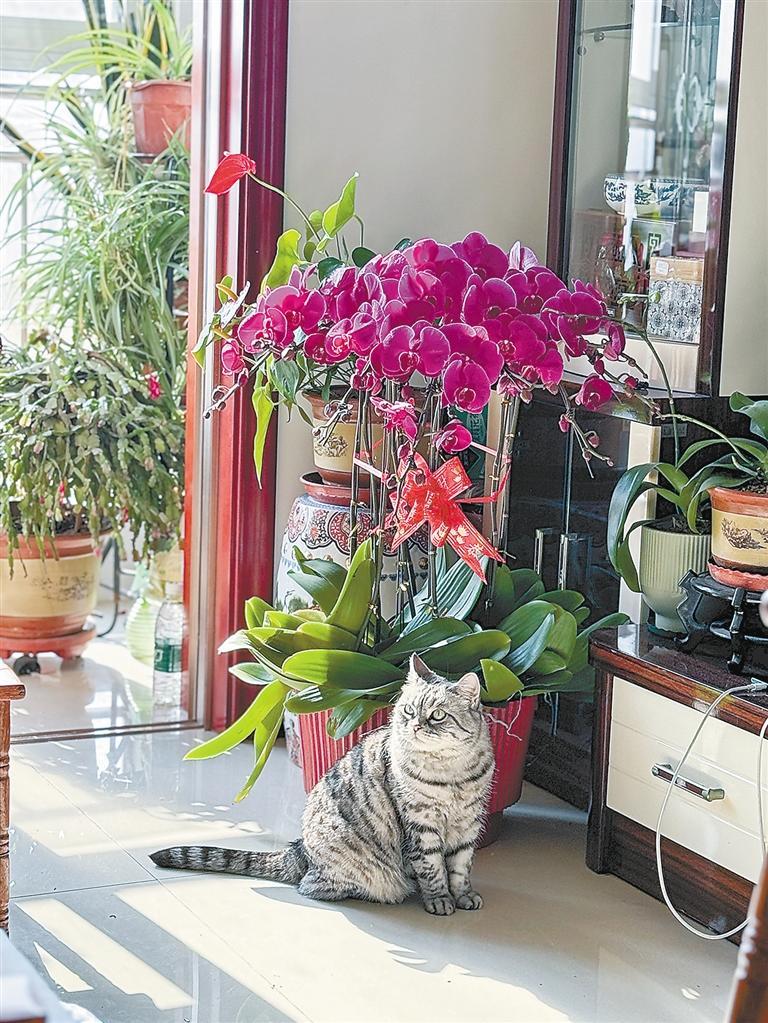
“鲜花经济”撬动节前火热消费 新品种添彩新春 年宵花香飘海外
Yang Shi Wang· 2026-01-06 08:16
Core Viewpoint - The flower market in Tianjin is experiencing a peak sales season as the Spring Festival approaches, with a focus on new flower varieties and pricing for 2026 [1] Group 1: Market Overview - The Caozhuang Flower Market in Tianjin spans over 30,000 square meters with more than 700 stalls, attracting over 30,000 visitors daily since the New Year [3] - The overall flower production and pricing for 2026 are expected to remain stable compared to 2025 [6] Group 2: Flower Varieties - The "dyed" orchid is highlighted as a premium flower variety for the Spring Festival, gaining popularity due to its improved quality over the past two years [6][7] - The market offers over 80 varieties of orchids, with significant cultivation bases in Beijing, Tianjin, and Hebei, and these varieties are being exported to countries like Russia and Vietnam [9] Group 3: Sales and Distribution - Vendors can complete their purchases in a "one-stop" manner without the need to travel across regions, significantly reducing costs and time [11] - Many vendors are utilizing online and offline strategies, including live streaming and short videos, to promote new flower varieties and real-time pricing, enhancing consumer access and addressing supply-demand information asymmetry [13]
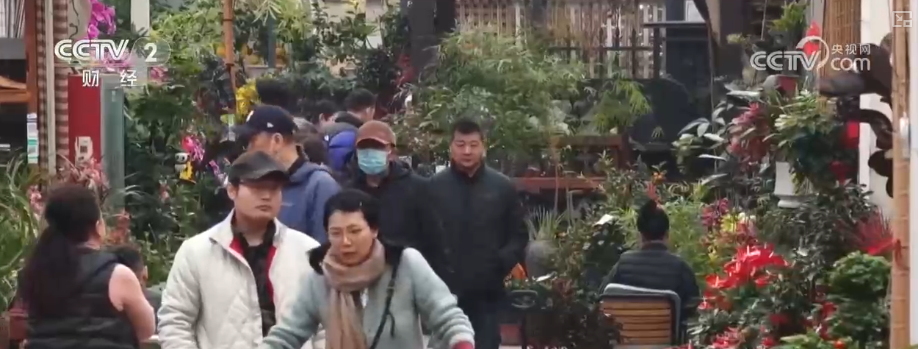
寒冷冬日绽放“花”样经济
Xin Lang Cai Jing· 2025-12-31 20:02
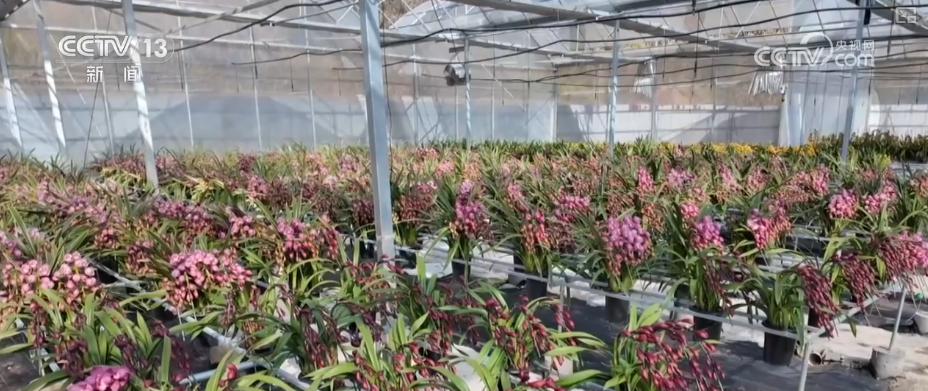
Core Viewpoint - The "flower economy" in the Xinjiang Production and Construction Corps is being developed as a new engine for rural revitalization and increasing income for workers, with significant growth in the flower market observed during the winter season [10]. Group 1: Market Growth - The flower market in various regions of the Corps is thriving, especially with increased customer traffic around the holiday season, indicating a growing demand for flowers [10]. - New flower varieties have been introduced to the market, enhancing the selection available to consumers and attracting more visitors [10]. Group 2: Industry Development - The Corps is actively adjusting its industrial structure to prioritize flower cultivation as a specialty economic crop, responding to the high environmental requirements of flower growing [10]. - The introduction of facility agriculture has led to rapid development in the flower industry, ensuring better quality and yield compared to traditional outdoor planting [10]. Group 3: Economic Impact - The establishment of a standardized intelligent greenhouse for butterfly orchids is projected to generate an estimated revenue of 3 million yuan in 2025, filling a gap in large-scale flower cultivation in the region [11]. - Local employment opportunities have increased, with the butterfly orchid base providing stable jobs for local residents, contributing to their income [11]. Group 4: Value Addition and Tourism - The flower industry is creating additional income opportunities through processing and sales, with some bases developing essential oil extraction and other high-value products [12]. - The integration of flower cultivation with tourism, such as the annual Tulip Festival, is driving related industries like dining and accommodation, showcasing a successful "flower + tourism" model [12].
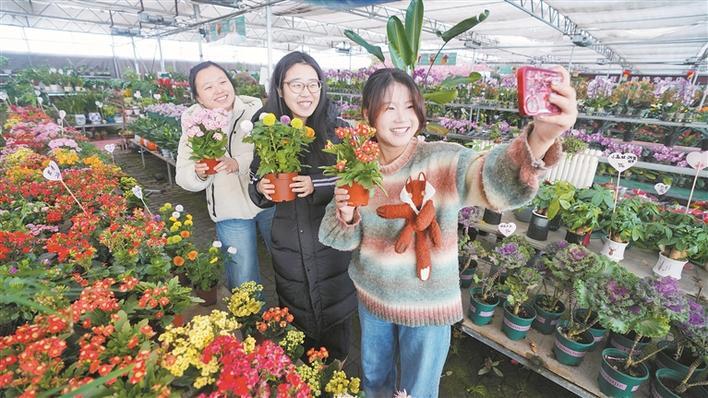
“创新搭配+定制服务”催生鲜花经济“新”消费 花样“抢手货”俏销假日市场
Yang Shi Wang· 2025-12-30 05:31
Core Insights - The flower market is heating up as the New Year holiday approaches, with strong demand for various floral products in regions like Ningde, Fujian, indicating a trend towards creative customization services for 2025 consumption [1][10] Group 1: Market Trends - In Ningde, over 3,000 pots of large flower orchids are in high demand, with a flowering period of over three months, making them a sought-after item for the 2025 New Year flower market [3] - The local flower industry has over 4,000 acres of planting area, generating an annual output value of 370 million yuan, contributing to rural revitalization [10] Group 2: Product Offerings - Besides large flower orchids, various creative floral products have been developed, including unique potted plants made from different succulent species, appealing to consumers of all ages [8][12] - The flower planting base offers personalized customization services, including pot styles, succulent combinations, greeting cards, and themed scene designs to meet diverse consumer needs [12] Group 3: Regional Developments - In Zaozhuang, Shandong, the flower market has introduced numerous new varieties and combinations, including fresh-cut flowers and potted plants, catering to diverse consumer preferences [13] - Popular flower varieties in Zaozhuang include colorful orchids and winter greens, which resonate with the festive atmosphere of the New Year, while affordable and easy-to-care-for plants like pothos and bamboo are also favored by consumers [15]
(乡村行·看振兴)浙江平湖:统战赋能“花经济” 同心共富绘就“花田喜事”
Zhong Guo Xin Wen Wang· 2025-12-05 11:12
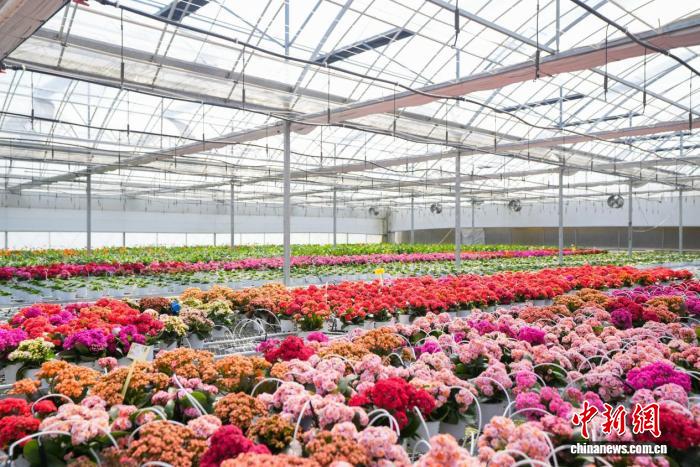
Core Viewpoint - The article highlights the development of the flower economy in Pinghu, Zhejiang, driven by the integration of technology and community resources, showcasing a model of rural revitalization and shared prosperity through the flower industry [1][5]. Group 1: Industry Development - The flower industry in Pinghu has expanded significantly, with over 4,600 acres of flower planting area and the ability to supply more than 3,000 varieties of plants and flowers [3]. - The "flower intelligent factory" in the region can plant 160,000 seedlings per hour, utilizing automated sowing equipment and IoT systems for precise control of environmental conditions [1][3]. - The annual sales of the flower industry exceed 100 million yuan, establishing Pinghu as a key player in the flower market within the Yangtze River Delta [5]. Group 2: Community and Economic Impact - The local government has initiated various activities to integrate tourism and flower cultivation, leading to an increase in local tourism revenue by over 2 million yuan since 2025 [4]. - The "Ping e Assist Farmers" initiative promotes a cooperative model involving farmers, industry parks, and cooperatives, enhancing community participation and shared management [4]. - The return of local residents to work in the flower industry has provided stable income opportunities, with many individuals like Zhou Shifu finding employment close to home [4]. Group 3: Technological Integration - The integration of technology in the flower industry includes training programs for new farmers and the use of big data and internet resources to enhance sales and cultural engagement [3][4]. - The establishment of multiple horticultural internship points and technology expert workstations supports the continuous development of the flower economy [3].
进博会苏作馆“苏”香十足 3大主题展区演绎江南文化盛宴
Su Zhou Ri Bao· 2025-11-06 00:04
Core Insights - The Suzhou Pavilion showcased at the 8th China International Import Expo, featuring a cultural experience centered around the osmanthus flower, attracting global visitors [1][2] - The pavilion includes three themed exhibition areas: "Seasonal Flavors of Suzhou," "Osmanthus Gathering," and "Suzhou Selections," highlighting local delicacies and traditional crafts [1][2] Group 1 - The "Osmanthus Gathering" area offers a cultural experience with osmanthus tea and handcrafted accessories, emphasizing the integration of traditional craftsmanship and modern aesthetics [1][2] - The "Seasonal Flavors of Suzhou" section displays seasonal delicacies such as Yangcheng Lake hairy crabs and Biluochun tea, allowing international guests to experience Suzhou's culinary culture [2] - The "Suzhou Selections" area features popular items like the "Ruyi" Song brocade scarf gift box and "Fushan" silk ornaments, which have become sought-after gifts for visitors [2] Group 2 - Since its debut in 2021, the Suzhou Pavilion has expanded from 12 categories and 36 masterworks to over 20 categories and nearly 1,000 art pieces, becoming a key platform for understanding Jiangnan culture [2] - The pavilion aims to promote the philosophy of elegance and harmony with nature through interactive experiences and immersive settings, enhancing the visibility of intangible cultural heritage [2]