
黄酒高端化

Search documents
会稽山热度爆了,为何业绩没爆发?|酒业财报观察
2 1 Shi Ji Jing Ji Bao Dao· 2025-08-21 11:36
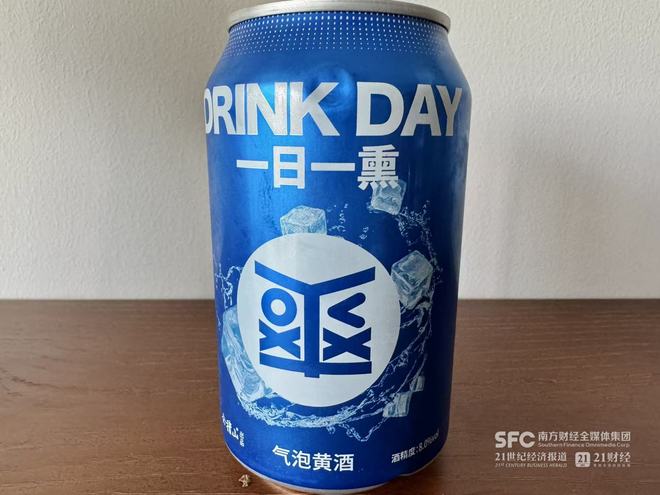
Core Viewpoint - The company Kuaijishan has experienced significant stock price increases and market attention, but its financial performance has not matched expectations, with lower revenue growth compared to previous years [1][2]. Financial Performance - In the first half of 2025, Kuaijishan reported revenue of 817 million yuan, a year-on-year increase of 11.03%, and a net profit attributable to shareholders of 93.87 million yuan, up 3.41% [1]. - The revenue growth rate for the first half of 2025 is lower than the growth rates of 18.24% and 14.25% seen in the first halves of 2024 and 2023, respectively [1]. - The company's net profit for the second quarter was only a few hundred thousand yuan, with a non-recurring net profit showing a loss [1]. - Kuaijishan's sales target for the year is a 15% to 20% increase in liquor sales, but the actual growth in liquor product sales for the first half was only 9.18% [1]. Market Position and Innovations - Kuaijishan has gained popularity due to its innovative product, sparkling yellow wine, and aggressive marketing strategies, leading to 11 stock price limit increases this year and a stock price rise of approximately 106% [2]. - The sparkling yellow wine "Yiri Yixun" saw a revenue increase of 60.5% in the first half, but its contribution to overall revenue remains limited [4][6]. Sales and Marketing Strategies - The company has implemented various marketing strategies, including celebrity endorsements and collaborations, which have contributed to a nearly 20% growth in its core market of Zhejiang [6]. - However, the sales expenses increased by over 53% in the first half, totaling more than 75 million yuan, which has impacted profitability [7]. Profitability and Valuation - The net profit growth of 3.4% is significantly lower than revenue growth, indicating challenges in converting sales into profit [7]. - The company previously benefited from one-time gains from asset disposals, which are not present this year, affecting profit comparisons [8]. - The current performance growth is insufficient to justify Kuaijishan's high valuation, which exceeds 50 times earnings, suggesting a need for breakthroughs in traditional product sales, innovative product growth, or new channel development [10]. Regional Performance - While Kuaijishan achieved high growth in its home market of Zhejiang, it experienced declines in key markets like Jiangsu and Shanghai, indicating challenges in expanding its national presence [11].


黄酒变革下行业走向何处
2025-08-18 01:00
Summary of the Yellow Wine Industry Conference Call Industry Overview - The yellow wine industry has long faced challenges such as low-end perception, limited consumption scenarios, and demographic constraints. The mainstream consumption price point is concentrated below 20 yuan, with over 60% of revenue coming from products priced below 40 yuan. More than 70% of consumers are over 40 years old, and 80% of consumption is concentrated in the Yangtze River Delta region [1][3][4]. Key Companies - The two leading companies in the industry, Kuaijishan and Guyuelongshan, have reached a strategic consensus to actively promote reforms. The establishment of the "Yellow Wine Revitalization Task Force" in Shaoxing provides policy and financial support. Both companies have improved their governance structures, with management binding their interests to the company through shareholding and incentive mechanisms [1][5]. Strategic Initiatives - Both companies are focusing on high-end brand development, launching products such as "Guoniang" (Guyuelongshan) and "Lanting" (Kuaijishan), which have achieved sales exceeding 100 million yuan by 2024. However, the revenue share from high-end single products remains low, and the repurchase rate is also low. Continuous efforts to build high-end brands are crucial for changing consumer perceptions [1][6]. Product Innovations - Kuaijishan has introduced upgraded products priced at 40 yuan ("1,743") and over 100 yuan ("Qinghua Sui"), benefiting from the high-end brand image. Both companies are also innovating flavors by incorporating elements like coffee, lime, and bubbles into their products to cater to younger consumers and open up more consumption scenarios [1][7]. Market Dynamics - Kuaijishan has a higher marketization degree and stronger channel control compared to Guyuelongshan, which has a more established national layout. Guyuelongshan leads in revenue from markets outside the Yangtze River Delta, with over 70% of its products in the mid-to-high-end range [2][9]. Challenges and Limitations - The yellow wine industry has been hindered by several limitations: - **Price Limitations**: The inability to penetrate high-end consumption scenarios has led to a low-end perception among consumers [3]. - **Scenario Limitations**: Over 50% of yellow wine consumption occurs in home settings, with less than 10% in business or formal social scenarios [3][4]. - **Demographic Limitations**: More than 70% of the core consumer group is over 40 years old, leading to a significant gap in younger consumer engagement [4]. - **Regional Limitations**: Nearly 80% of consumption is concentrated in the Yangtze River Delta, with weak recognition in peripheral markets [4]. Future Outlook - The industry is entering a revival phase, with both leading companies expected to make significant progress. Kuaijishan may advance more quickly due to its governance structure, while Guyuelongshan's national layout and international promotion strategies may allow it to achieve greater long-term success. The outcome will depend on market responses and execution efforts [6][8][18]. Competitive Analysis - A comprehensive comparison of Kuaijishan and Guyuelongshan across management, products, brands, and channels indicates that Kuaijishan's market-driven approach may lead to faster short-term growth, while Guyuelongshan's strong brand assets and national layout provide long-term growth advantages. The ability to capture pricing power in the 500 yuan high-end segment will be critical for future growth [9][18].

黄酒:龙头引领破局,黄酒复兴可期
Tianfeng Securities· 2025-08-14 05:13
Investment Rating - Industry Rating: Outperform the market (first rating) [5] Core Viewpoints - The yellow wine industry, as one of the three ancient wines in the world, is expected to revive due to the leadership of major brands and the transformation towards "high-end, national, and youth-oriented" strategies [1][3][19] - Historical constraints such as low pricing, regional limitations, weak social scenarios, and a lack of younger consumer engagement have hindered the development of yellow wine [2][10] - Recent breakthroughs include supportive policies, a shift towards high-end branding, national expansion, and targeting younger demographics, which are expected to drive the industry's revival [3][19] Summary by Sections Historical Constraints - Pricing limitations have led to a low-end product structure, with 60% of national sales coming from products priced below 40 yuan [11] - The primary market for yellow wine remains concentrated in the Yangtze River Delta, accounting for 79% of the overall market size [14] - Consumption scenarios are predominantly home-based, with social attributes being weak, as only 21% of consumption occurs in social settings [16] - The core consumer group is primarily males aged 40 and above, with younger consumers showing limited engagement [17] Breakthrough Changes - Policy support has emerged, with local governments establishing dedicated teams to promote the yellow wine industry [20] - Major brands are focusing on high-end product development, with successful launches like Gu Yue Long Shan's "Guo Niang 1959" and Kuaijishan's "Lanting" [21] - National expansion efforts have shown results, with Gu Yue Long Shan's sales outside Jiangsu, Zhejiang, and Shanghai increasing from 27% to 43% from 2018 to 2024 [22] - Innovations targeting younger consumers include new flavor profiles and lower alcohol content products, such as sparkling yellow wine and herbal-infused options [26] Investment Recommendations - The report suggests focusing on two leading brands, Kuaijishan and Gu Yue Long Shan, which have made significant progress in high-end, national, and youth-oriented strategies [28]
会稽山20250807
2025-08-07 15:04
Summary of the Conference Call for Kuaijishan Company Overview - Kuaijishan is undergoing modernization and diversification efforts, including acquisitions of Wuzhanmao and Tang Song, but has not yet established a core business from these attempts [2][4] - The company aims to become a benchmark for Chinese yellow wine through high-end, youthful, and fashionable strategies under the leadership of Zhongjianxin Holdings [5] Financial Performance - The proportion of mid-to-high-end revenue increased from 60% in 2022 to 67.3% in 2024, nearing the peak of 2019 [2][7] - The compound annual growth rate (CAGR) for mid-to-high-end yellow wine revenue is projected at 21.4% from 2022 to 2024, significantly outpacing the 3.7% growth for regular yellow wine [2][7] - Revenue is heavily concentrated in the Jiangsu, Zhejiang, and Shanghai regions, accounting for 88.8% of total revenue, with Zhejiang alone contributing 62.1% [2][8] Strategic Initiatives - The company has implemented a dual-brand strategy with Kuaijishan and Lanting, focusing on enhancing brand recognition through tasting events and factory tours [4][6] - Collaborations with KOLs on platforms like Douyin have attracted younger consumers, with notable sales increases in the Shaoxing region [4][17] Market Dynamics - The yellow wine industry is experiencing a recovery, with total revenue for large-scale yellow wine enterprises reaching 8.547 billion yuan in 2023, although still below 2022 levels [12] - The industry is characterized by a high market concentration, with the top three companies (Guyuelongshan, Kuaijishan, and Jinfeng Wine Industry) holding a combined market share of approximately 43% [13] Consumer Trends - The primary consumption scenario for yellow wine remains home drinking, accounting for about 55%, but there is potential for expansion into business banquets as economic conditions improve [11] - The company is exploring innovative product categories, such as sparkling yellow wine, to appeal to younger demographics [17][18] Governance and Management - Kuaijishan has a clear governance structure following the change of controlling shareholder and actual controller in 2022, enhancing execution efficiency [9] - A share repurchase plan was initiated to boost market confidence, with 9 million shares repurchased by February 2024 [9] Future Outlook - The company is expected to benefit from price elasticity due to coordinated price increases by distributors, which could enhance profitability [19] - Despite high current valuations, there is significant potential for profit expansion as reforms deepen and new products are launched [20]
搜狐酒馆第24期|欧阳千里:黄酒仍有增长空间,全国化需突破场景限制
Sou Hu Cai Jing· 2025-06-13 07:56
Core Insights - The Huangjiu industry is experiencing a significant transformation, emerging as a favorite among younger consumers and gaining attention in the capital market [2][3] - The surge in Huangjiu stock prices is attributed to the interplay between capital and consumer behavior, suggesting a potential industry expansion driven by financial marketing [3][4] Industry Overview - Huangjiu's market size remains smaller compared to Baijiu and beer, but recent growth indicates potential for sustained expansion [4] - The stock price increase in 2025 is linked to price hike expectations and celebrity endorsements, alongside high-end product explorations [4][10] Marketing Strategies - The strategy of inviting celebrities for endorsements and cross-marketing is evolving, focusing on matching celebrity profiles with product attributes to enhance brand exposure and sales conversion [5][6] - The rise of innovative products like sparkling Huangjiu has lowered consumption barriers, appealing to younger demographics [6] Competitive Landscape - National expansion of Huangjiu faces challenges due to traditional consumption patterns, but high-end and youth-oriented marketing is creating new consumption scenarios [7] - Financial data indicates that Kuaijishan has a higher gross margin compared to Guyue Longshan, suggesting potential for market leadership if high-end strategies are maintained [8] Future Growth Paths - The primary growth strategies for the Huangjiu industry are expected to be youth engagement and high-end product development, leveraging e-commerce and innovative offerings [9] - The industry is projected to reach a market size of 50 billion, indicating significant growth potential [10] Policy and Market Dynamics - Policy initiatives are seen as supportive rather than core drivers for industry growth, with companies needing to independently navigate market challenges [11] - Companies like Kuaijishan are positioned as potential "dark horse" candidates due to their adaptability and responsiveness to consumer trends [12]

黄酒—龙头引领升级,行业共振机遇可期
2025-06-09 01:42
Summary of the Yellow Wine Industry Conference Call Industry Overview - The yellow wine industry is experiencing a positive shift in its development environment due to increased government support, particularly from local governments since 2023, with significant investments in the industry [1][4][5] - Historical challenges included low tax rates and a lack of leading enterprises, but current leading companies are playing a larger role in driving industry upgrades [1][3][5] Key Insights and Arguments - The yellow wine industry missed past consumption upgrade opportunities due to governance and management issues, but leading companies like Kuaijishan and Guyuelongshan are improving governance and management quality [1][7][8] - The industry is showing a K-shaped development trend, where leading enterprises are thriving while smaller companies are struggling, leading to market share concentration towards top brands [1][9] - The future of the yellow wine industry is expected to go through three phases: premiumization, nationalization, and youth-oriented strategies, with premiumization prioritized in the short term to enhance product value and brand competitiveness [1][10][12] Government Support and Policy Changes - Significant government initiatives include the establishment of a special task force in Shaoxing to support the yellow wine industry, with a goal of reaching 10 billion yuan in sales by 2027 and a national market share exceeding 50% [4][5] - The Ministry of Industry and Information Technology has emphasized the importance of cultural brand inheritance in the yellow wine industry, indicating ongoing support for its development [4] Historical Context and Challenges - The yellow wine industry has historically been hindered by low tax rates and insufficient government attention, with the current consumption tax rate remaining unchanged since 1994 [5][6] - The lack of strong leading enterprises has been a significant constraint on the industry's growth, contrasting with the white wine sector where leading brands have successfully driven market upgrades [6][7] Future Development Trends - The yellow wine industry is expected to see a revival in volume and price over the next 3-5 years, driven by leading enterprises and their strategic initiatives [10][12] - The focus on premium products is anticipated to elevate the average price per ton significantly, contributing to overall market price increases [9][12] - The industry is also expected to attract younger consumers by aligning with new consumption trends and cultural elements, as seen with product launches targeting this demographic [15] Conclusion - The yellow wine industry is on the cusp of a transformative phase, supported by government initiatives and the strategic actions of leading enterprises, which are likely to reshape its market dynamics and consumer perceptions in the coming years [2][10][15]
气泡黄酒打开年轻人市场想象空间,会稽山能推动黄酒迎来爆发期吗?
Xin Lang Cai Jing· 2025-06-04 09:21
Core Viewpoint - The yellow wine sector is experiencing a surge in stock prices ahead of the Dragon Boat Festival in 2025, driven by collective price increases and a shift towards high-end products among leading companies [1][2][4]. Group 1: Stock Performance - Three A-share listed companies in the yellow wine sector are Gu Yue Long Shan, Kuaiji Mountain, and Jin Feng Wine, with Kuaiji Mountain's stock price increasing over 70% in May and more than 126% year-to-date, raising its market value from approximately 5 billion to 12 billion [1]. - Gu Yue Long Shan and Jin Feng Wine also saw stock price increases of 11.3% and 7.7% respectively in May [1]. Group 2: Price Increases and Market Strategy - Since 2025, yellow wine companies have collectively raised prices, with Kuaiji Mountain increasing prices by 4%-9% across various product lines [2]. - Gu Yue Long Shan adjusted prices for key products by 2%-12%, citing the need for yellow wine to reclaim its value amid intense competition in the beverage market [2][4]. Group 3: Market Dynamics and Competition - The yellow wine industry is benefiting from a shift in consumer preferences as the white wine market shows signs of weakness, allowing yellow wine to gain market share [3][4]. - Kuaiji Mountain is challenging Gu Yue Long Shan's leading position, with Kuaiji Mountain reporting a 10.1% increase in revenue in Q1 2025, while Gu Yue Long Shan's revenue declined by 4.9% [6][7]. Group 4: Financial Performance - In Q1 2025, Kuaiji Mountain's revenue reached 481 million, while Gu Yue Long Shan's revenue was approximately 539 million, indicating Kuaiji Mountain's stronger growth trajectory [6]. - Kuaiji Mountain's mid-to-high-end products achieved a revenue of 1.065 billion with a gross margin exceeding 61%, while Gu Yue Long Shan's mid-to-high-end revenue was 1.398 billion with a gross margin of 44.3% [6][8]. Group 5: Future Outlook - The yellow wine market is expected to stabilize and grow, with projections indicating that the revenue of regulated enterprises could expand from 8.5 billion in 2023 to approximately 12.5 billion to 14 billion by 2027 [8].
古越龙山20250602
2025-06-04 01:50
Summary of Gu Yue Long Shan Conference Call Company and Industry Overview - **Company**: Gu Yue Long Shan - **Industry**: Huangjiu (Yellow Wine) Key Points and Arguments 1. **Pricing Strategy**: Gu Yue Long Shan has implemented a collective price increase and market reversal strategy, leveraging its central wine cellar IP, historical legacy, and national brewing advantages to solidify its market position and attract investor attention. However, there are risks associated with delays in new capacity release [2][3] 2. **Cultural Promotion**: The company promotes traditional Chinese culture, national brewing culture, and the pairing of fine wine with food to enhance the image of Huangjiu and cultivate a younger consumer base [2][4] 3. **National Expansion**: Gu Yue Long Shan is actively pushing for national expansion by investing resources in non-mature Huangjiu markets, aiming to increase the popularity of Huangjiu and develop new consumer groups, thereby enhancing industry growth potential [2][5][6] 4. **Health Trends**: Huangjiu is positioned favorably in the global trend towards low-alcohol beverages, characterized by its lower alcohol content, health benefits, and suitability for food pairing, presenting a significant growth opportunity [2][7] 5. **High-End Strategy**: The introduction of high-end products like the Qingyu series aims to change consumer perceptions of Huangjiu, establishing a high-value, high-quality brand image that has gained market recognition [2][8] 6. **Product Strategy**: The company's Huangjiu product strategy focuses on high-end and youth-oriented offerings. The high-end strategy seeks to alter negative perceptions of Huangjiu, while the youth strategy employs online marketing and food pairings to attract younger consumers [2][14] 7. **Cost Reduction**: The new intelligent brewing park is expected to reduce production costs by over 5%, similar to a centralized management model that helps lower logistics and management expenses, enhancing competitiveness and resource optimization. However, the release of new capacity may face delays [2][19] 8. **Sales Goals**: The sales target for 2025 remains unchanged as it is the minimum requirement set by the State-owned Assets Supervision and Administration Commission. The focus for 2025 is on quality, pricing, and market management rather than expanding high-end sales [15][16] 9. **Market Dynamics**: The Huangjiu market has seen a rise in attention this year, particularly for Gu Yue Long Shan as a leading player. The company’s price adjustments have not negatively impacted sales growth, indicating a strong brand presence and consumer loyalty [3][21] 10. **Market Concentration**: The Huangjiu industry has experienced a trend towards increased market concentration, with a significant number of smaller manufacturers exiting the market, leading to a stronger position for leading enterprises [22] Additional Important Insights - **Consumer Trends**: Young consumers show interest in innovative Huangjiu products, although their purchasing habits may not yield immediate profits. Long-term strategies include launching low-alcohol products and leveraging seasonal promotions [10][11] - **Regulatory Impact**: Government regulations limiting the use of alcoholic products in official settings have a minimal impact on Huangjiu, as it is not a mainstream choice for business dining compared to other spirits [20] - **Regional Development**: In the national expansion strategy, the Jiangsu, Zhejiang, and Shanghai regions account for approximately 60% of sales, with growth in non-mature regions expected to outpace mature ones in the next five years [21]
营销破圈,黄酒“狂飙”
Xin Lang Cai Jing· 2025-06-03 05:48
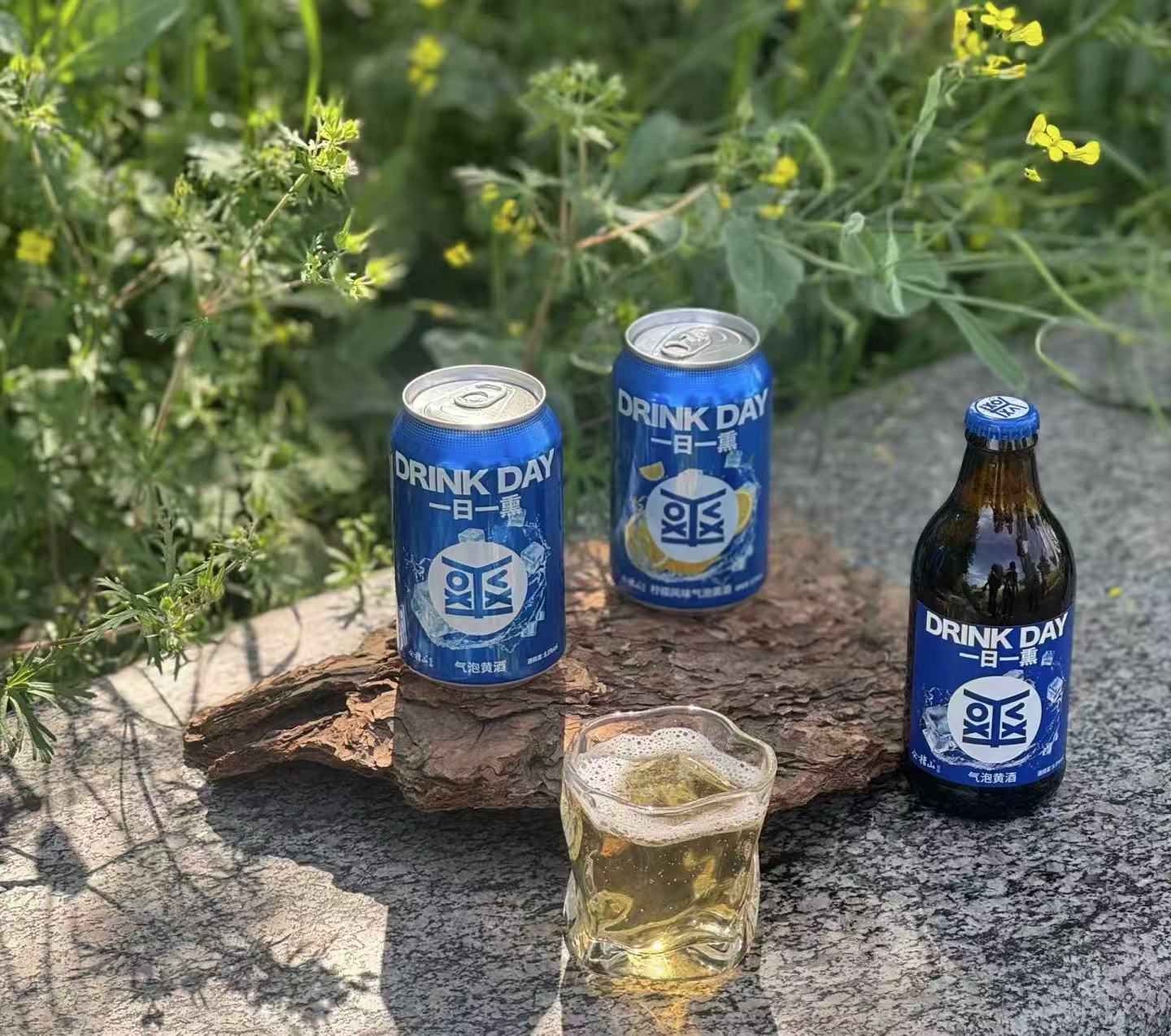
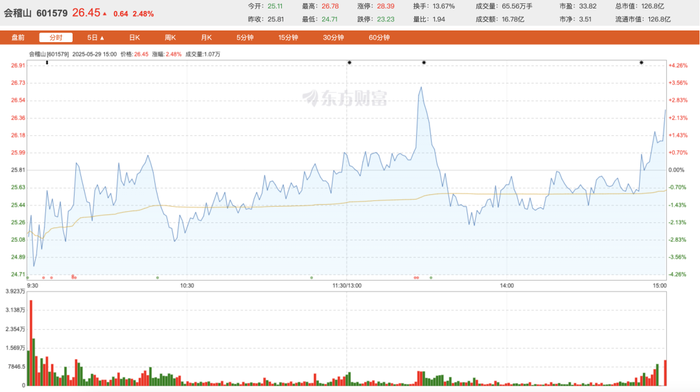
Group 1 - The yellow wine sector has suddenly become a focus in the capital market, with significant stock price increases observed in May, particularly for companies like Kuaijishan and Guyuelongshan, which saw respective gains of 17.36% and 18.13% [1][2] - Kuaijishan's stock price reached a high of 26.69 yuan per share on May 29, marking a 2.48% increase for the day, and its market capitalization rose to 12.68 billion yuan, surpassing Guyuelongshan [2][5] - Institutional investors have shown increased interest in yellow wine stocks, with notable increases in holdings for Kuaijishan and Guyuelongshan by the Penghua Zhongzheng Wine ETF [4] Group 2 - In 2024, Kuaijishan and Guyuelongshan reported revenues of 1.63 billion yuan and 1.94 billion yuan, respectively, with year-on-year growth rates of 15.6% and 8.55% [5][7] - Kuaijishan's mid-to-high-end product revenue reached 1.06 billion yuan, a 31.3% increase, while Guyuelongshan's mid-to-high-end product revenue grew by 12.5% [11][12] - The yellow wine industry is experiencing a transformation driven by high-end and youth-oriented strategies, with companies innovating their product offerings to attract younger consumers [11][18] Group 3 - Yellow wine companies are launching innovative products such as low-alcohol, fruit-flavored, and sparkling varieties to appeal to younger demographics [18][22] - Kuaijishan achieved remarkable sales through social media, with its "Kuaijishan Refreshing Wine" generating over 10 million yuan in sales within 12 hours during a live stream [18][22] - Companies are also creating new consumption scenarios, such as Kuaijishan's 1743 Yellow Wine Bar, which offers unique yellow wine-based products [22][24]

走出破圈新路 老黄酒焕发新活力
Zheng Quan Shi Bao· 2025-05-28 17:48
Core Viewpoint - The Huangjiu (yellow wine) industry is experiencing a resurgence, driven by its health attributes and innovative marketing strategies, which are appealing to younger consumers and providing a competitive edge against traditional Baijiu (white liquor) [1][2]. Industry Performance - The Huangjiu index has seen a cumulative increase of over 40% since May, significantly outperforming the broader market [1]. - Key companies such as Kuaijishan (会稽山) have experienced substantial stock price increases, with a 73% rise in May alone, and a total increase of 133.36% since 2025, reaching a market capitalization of nearly 12.4 billion [1]. - In 2024, Gu Yue Long Shan (古越龙山) led in revenue with 1.936 billion, a year-on-year growth of 8.55%, while Kuaijishan reported 1.631 billion with over 15% growth for two consecutive years [1]. Strategic Shifts - The Huangjiu sector is benefiting from a shift in consumer preferences as Baijiu consumption faces pressure, allowing Huangjiu companies to capture market share [2]. - Companies are focusing on high-end and youth-oriented strategies, successfully attracting younger consumers and shifting some high-end Baijiu consumption towards Huangjiu [2][3]. - Innovations in product offerings, such as Kuaijishan's "sparkling Huangjiu," have quickly gained traction, achieving over 10 million in sales within 12 hours of a live-streaming event [3]. Market Trends - The trend towards sparkling Huangjiu is seen as a potential competitor to the ready-to-drink beer market, prompting beer companies like Qingdao Beer to invest in Huangjiu [4]. - The high-end segment of Huangjiu is expected to grow, with companies focusing on quality and value enhancement to strengthen their market position [4][6]. Policy Support - Local government initiatives, such as those from Shaoxing City, aim to boost the Huangjiu industry, targeting a sales revenue of 10 billion by 2027 and establishing leading enterprises in the sector [5]. - The overall market outlook for Huangjiu is positive, with expectations of expanding consumer bases and diversified consumption scenarios as health and wellness trends gain traction [5]. Industry Concentration - The Huangjiu market is becoming increasingly concentrated, with leading companies capturing a larger share of revenue and profits, indicating a trend that is likely to continue [6].
