
Chiplet

Search documents
研报掘金丨爱建证券:首予拓荆科技“买入”评级,认为公司具备较高中长期配置性价比
Ge Long Hui A P P· 2025-12-18 07:55
Group 1 - The core viewpoint of the article highlights that Tuojing Technology is a leading manufacturer of front-end thin film deposition equipment in China, with core products covering various processes such as PECVD, ALD, Flowable CVD, and HDPCVD, achieving large-scale delivery in advanced logic and memory production lines [1] - The company is strategically advancing into hybrid bonding and supporting measurement equipment, entering critical areas of heterogeneous integration and 3D integration, evolving its business from a single deposition equipment focus to a dual-engine platform of "deposition + bonding" [1] - The Chinese market is expected to remain the largest semiconductor equipment market globally, driven by wafer fab expansions and domestic substitution, with the demand for deposition and bonding processes becoming increasingly important due to the rising requirements for interconnect density and interface quality in HBM, Chiplet, and 3D stacking technologies [1] Group 2 - From a PEG perspective, the company's projected PEG ratios for 2025E-2027E are 1.3, 0.8, and 0.9, respectively, indicating a favorable valuation [1] - Considering the technological barriers in thin film deposition and hybrid bonding processes, along with the medium to long-term profit elasticity, the company is deemed to have a high medium to long-term configuration cost-effectiveness [1] - The report initiates coverage with a "Buy" rating for the company, reflecting confidence in its growth potential and market positioning [1]

人工智能时代,EDA巨变
半导体芯闻· 2025-12-02 10:18
Core Viewpoint - The semiconductor industry is undergoing a significant transformation driven by AI, which is leading to a shift from traditional SoC designs to Chiplet architectures, enhancing performance and flexibility in chip design [2][5][9]. Group 1: Chip Design Evolution - The traditional SoC design is becoming inadequate due to increasing demands for AI processing power and the challenges posed by advanced manufacturing processes [5][6]. - The Chiplet model allows for the separation of different functional modules, improving yield and flexibility while enabling heterogeneous integration of various manufacturing processes [5][6]. - The transition from SoC to CoWoS (Chip on Wafer) can enhance bandwidth by 4 to 8 times, and moving towards SoW (System on Wafer) can increase scale by up to 40 times [6]. Group 2: EDA's Role in AI - EDA (Electronic Design Automation) must evolve to support the new demands of AI, requiring a shift from chip-level considerations to system-level integration, including power, thermal management, and interconnects [7][9]. - The introduction of AI into EDA processes aims to transition from rule-driven design to data-driven design, significantly improving design efficiency [9][10]. - The company is focusing on a dual strategy of "EDA FOR AI" and "AI+EDA," leveraging its expertise in Chiplet and system design to support AI chip development [9][10]. Group 3: Future Directions - The integration of AI into EDA tools is expected to lead to continuous learning and iteration, transforming EDA from a passive tool to an active collaborator in the design process [12]. - The next phase of AI development is anticipated to be the era of physical AI, where multi-physical simulation technologies will play a crucial role [12].

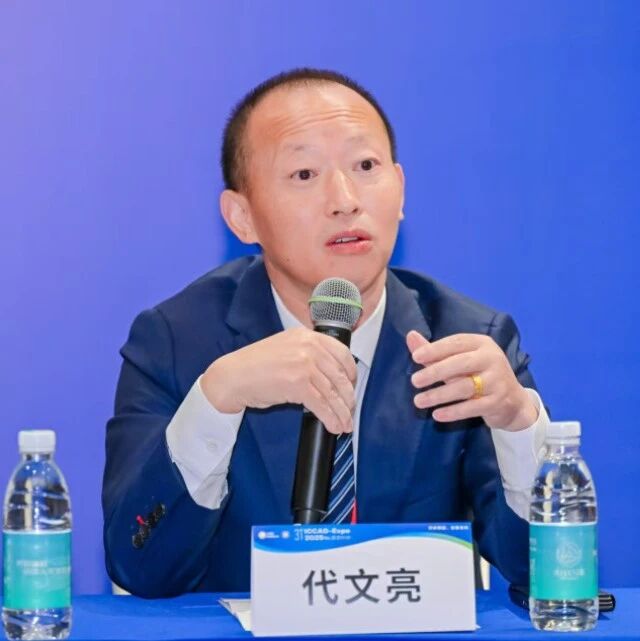
从 Chiplet 到超节点:奇异摩尔正在塑造中国 AI 算力的“互联底座”
半导体行业观察· 2025-11-26 00:39
Core Viewpoint - The competition in computing power is shifting from single GPU performance to cluster-based systems, emphasizing the importance of chiplet, packaging, and interconnect technologies as the foundation of the new computing ecosystem [1][3]. Group 1: Interconnect as a Key Component - Interconnect and scheduling are essential for realizing the full potential of cluster computing, as AI models demand higher computational scales [3][4]. - The current state of domestic AI network cards lags behind international standards, with the most advanced being 200G compared to 800G or even 1.6T abroad, highlighting the need for significant improvements in interconnect architecture [3][4]. Group 2: Challenges of Supernode Architecture - The emergence of supernode architecture is reshaping system models and presents significant challenges, particularly in achieving high bandwidth and low latency interconnects [4][5]. - The lack of established standards for supernodes has led to a proliferation of protocols, indicating a diverse and evolving landscape in this area [5][6]. Group 3: Chiplet Implementation and Standardization - The supernode chiplet concept is seen as a solution to the challenges of chiplet implementation, allowing for shared R&D costs and faster product development [6][8]. - The HPDE architecture enables programmability and compatibility with multiple standards, facilitating the transition to unified supernode standards [6][8]. Group 4: Importance of Heterogeneous Computing - The future of computing may involve heterogeneous integration at the chip level, necessitating high interconnect bandwidth and effective task scheduling across different architectures [7][8]. - Both interconnect and scheduling are critical for optimizing performance, as they are interdependent in the context of heterogeneous computing [7][8]. Group 5: Industry Trends and Product Development - The AI sector is witnessing increased participation from various companies, indicating a collective shift towards AI-focused solutions across the semiconductor industry [12][14]. - The company has developed a comprehensive product lineup, including high-performance interconnect chiplets and AI-native network products, aimed at establishing a robust interconnect infrastructure for the AI computing industry [12][14]. Group 6: Future Goals and Market Positioning - The company aims to collaborate with clients to integrate new technologies into their products and expand into larger markets over the next one to two years [14][15]. - The focus on interconnect solutions positions the company as a key player in the evolving landscape of AI networking, striving for performance breakthroughs and industry standardization [15].
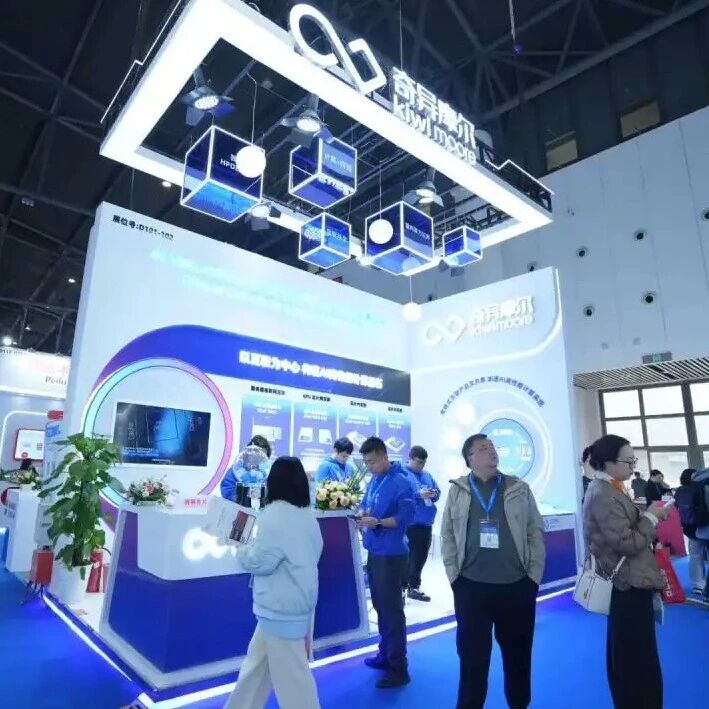
芯和代文亮博士:AI时代,要把EDA 这条“脖子”练粗
半导体行业观察· 2025-11-25 01:20
Core Viewpoint - The EDA industry is undergoing a methodological reconstruction due to the exponential increase in AI model scale and computing power requirements, transitioning from a "design tool" to the underlying operating system of AI computing systems [1][3]. Group 1: Challenges in EDA - The main challenge for domestic EDA in ensuring the autonomy of AI computing systems lies in the need to consider the entire system rather than just the chip, especially as Moore's Law becomes less applicable [3]. - The evolution of computing architecture from single chips to multi-chiplets and supernodes presents new challenges in maintaining flexibility, scalability, and high-bandwidth interconnects [4]. Group 2: Chiplet Architecture - The Chiplet design requires new verification and collaboration processes, with a two-phase approach: the first phase focuses on integrating computing and storage through a 2.5D structure, while the second phase involves hybrid bonding for 3D stacking [4]. - The integration of various components such as sensors, storage, and RF devices into a compact design necessitates multi-physical field collaborative analysis, which increases the complexity of simulation across different scales [4][6]. Group 3: System-Level Simulation - System-level simulation differs significantly from traditional EDA, as it must account for multi-physical field interactions and the potential for issues arising from high current and impedance fluctuations [5]. - Chiplet architecture offers advantages in system-level considerations, allowing for a more comprehensive approach to design and integration [5]. Group 4: AI Integration in EDA - The strategy of "EDA for AI" focuses on providing comprehensive solutions from chip design to system integration, addressing the challenges posed by AI's increasing computational demands [10]. - The "AI + EDA" strategy aims to integrate AI models into the design and simulation processes, significantly enhancing efficiency and enabling a shift from rule-driven to data-driven design approaches [12]. Group 5: Future Outlook - The future of EDA in the AI era is characterized by cross-scale, cross-physical, and cross-system engineering, with expectations for more domestic design tools to become practical and for system-level issues to be resolved during the simulation phase [14]. - The company is positioned as a key player in this transformation, leveraging advancements in Chiplet technology, supernodes, and AI factories to enhance the stability and power of AI computing infrastructure [14].
每周股票复盘:和顺石油(603353)拟收购奎芯科技控股权
Sou Hu Cai Jing· 2025-11-22 18:36
Core Viewpoint - The company, Heshun Petroleum, is experiencing significant stock price movement and is planning a strategic acquisition to enhance its business model and market position in the semiconductor industry [1][2][4][8]. Trading Information Summary - Heshun Petroleum's stock closed at 30.59 yuan on November 21, 2025, up 9.13% from the previous week, with a market cap of 5.259 billion yuan [1]. - The stock reached a peak of 35.88 yuan on November 20, 2025, marking a near one-year high, and recorded two instances of limit-up trading without any limit-down occurrences [1][2]. Shareholder Changes - The actual controllers, Yan Ximing and Zhao Zunming, along with their concerted actors, plan to transfer a total of 6% of the company's shares (10,314,360 shares) to Chen Wanyi at a price of 22.932 yuan per share, totaling approximately 236.53 million yuan [3][8]. - Following this transfer, the controlling shareholders' stake will decrease from 66.5817% to 60.5817%, without changing the company's control [3]. Institutional Research Highlights - The company intends to acquire at least 34% of Shanghai Kuixin Integrated Circuit Design Co., Ltd. and will control 51% of the voting rights through a voting rights entrustment [4][8]. - The valuation for 100% of Kuixin's equity is capped at 1.588 billion yuan, with the expected transaction amount not exceeding 540 million yuan [4][8]. Company Announcement Summary - The board of directors approved the acquisition of Kuixin Technology, which is expected to enhance Heshun Petroleum's capabilities in the semiconductor sector, particularly in high-speed interface IP products [8]. - The company plans to hold a shareholder meeting on December 5, 2025, to discuss changes in business scope and amendments to the articles of association [8][9]. Industry Context - Kuixin Technology operates in the semiconductor IP sector, focusing on high-speed interface IP products, with a strong customer base in SSD and AI chip markets [4][5][7]. - The company aims to become a leader in the domestic interconnect IP and Chiplet market, which is projected to be significantly larger than the IP market alone [7].

无锡超级IPO,来了
投中网· 2025-11-21 08:22
Core Viewpoint - Wuxi's IPO landscape is rapidly expanding, highlighted by the emergence of Shenghe Jingwei, a notable unicorn in the semiconductor industry, which is preparing for its A-share listing [5][11]. Group 1: Shenghe Jingwei's Development - Shenghe Jingwei was established in 2014 with investments from leading semiconductor companies, aiming to create a complete domestic 12-inch integrated circuit manufacturing chain [8]. - The company has achieved significant milestones, including becoming the first in mainland China to mass-produce 14nm silicon wafer bump processing [10]. - By 2024, Shenghe Jingwei is projected to have the largest 12-inch bump manufacturing capacity in mainland China, providing advanced packaging services for various high-performance chips [10]. Group 2: Financial Performance - Shenghe Jingwei's revenue from 2022 to mid-2025 is expected to grow from approximately 1.633 billion to 3.178 billion yuan, with net profits transitioning from a loss of 329 million yuan to a profit of 435 million yuan [10]. - The company has attracted significant investment, with a valuation reaching 20 billion yuan after a C+ round financing in 2023 [14]. Group 3: Wuxi's IPO Landscape - Wuxi has seen a surge in IPOs, with four companies listed in A-shares since 2025, and a total of 167 listed companies, including 126 A-share companies [6][19]. - The local government has implemented various supportive measures to facilitate the growth of listed companies, contributing to Wuxi's economic development [19][20]. Group 4: Economic Impact - Wuxi's GDP is projected to reach approximately 1.63 trillion yuan in 2024, with a growth rate of 5.8% [20]. - The city is recognized for its strong manufacturing base, with Jiangyin County leading in the number of listed companies among county-level cities in China [20].

陈立武讲中文!英特尔中国区董事长亮相,晒AI“全家福”
Sou Hu Cai Jing· 2025-11-20 11:02
Core Insights - Intel is celebrating its 40th anniversary in China with a special exhibition at the Technology Innovation and Industry Ecosystem Conference held in Chongqing, where CEO Pat Gelsinger shared the company's strategic vision and blessings for the Chinese market [2][4]. Group 1: Company Strategy and Market Position - Intel aims to create a more powerful, focused, and execution-oriented organization to help customers tackle critical challenges and gain market advantages [4][6]. - The company has partnered with over 15,000 industry partners in China and has significantly contributed to the PC and cloud computing markets, with approximately 1 billion PCs shipped since 2001 [4]. - Intel's future CPU designs will utilize Chiplet architecture, emphasizing a commitment to innovation and collaboration with local partners [4][6]. Group 2: Product Innovations and Technology Advancements - Intel plans to launch new products, including the Panther Lake at CES next year, which will feature the Intel 18A technology, promising over 15% performance improvement per watt and a 25% reduction in power consumption compared to Intel 3 [8][14]. - The Panther Lake platform will combine high efficiency and performance, achieving over 50% improvement in multi-core and graphics performance, while reducing power consumption by 40% [16][21]. - Intel's XeSS technology will enhance gaming experiences by upscaling 1080p to 4K quality, with over 300 games already supporting this technology [21]. Group 3: AI and Data Center Solutions - The AI-driven data center market is expected to grow significantly, with a projected 3.5 times increase in the next five years, necessitating robust data center solutions [28]. - Intel's Xeon 6 processors are positioned as the preferred CPU for data centers, offering significant upgrades in memory and I/O bandwidth, with performance improvements of over 20% for various applications [30][33]. - The Gaudi 2E accelerator is tailored for generative AI inference and is compatible with Chinese open-source models, facilitating the deployment of large models in various sectors [40][42]. Group 4: Ecosystem Collaboration and Industry Impact - Intel's collaboration with industry partners has led to the introduction of over 1,600 components, achieving a 100% local component satisfaction rate [25]. - The company hosted over 3,000 industry partners at the conference, showcasing more than 10,000 innovative solutions and sharing practical application experiences [47].

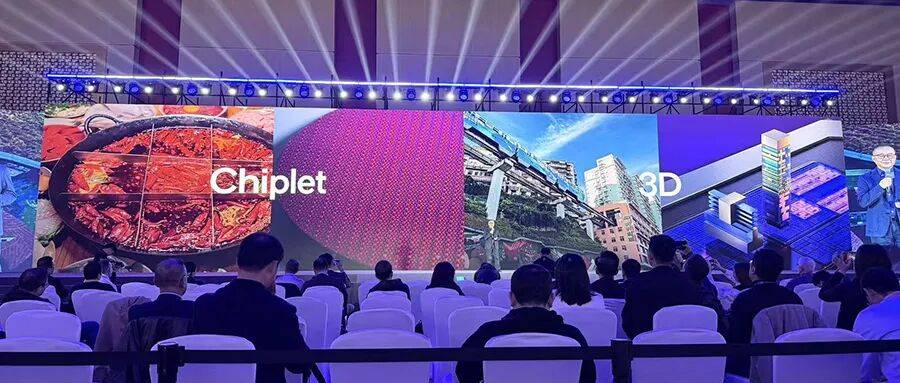
聚焦产业链精准对接与协同创新……集成电路产业链合作对接交流会在无锡举行
Yang Zi Wan Bao Wang· 2025-11-20 09:42
Core Insights - The event held on November 19 in Wuxi focused on high-quality development paths for the integrated circuit industry, emphasizing collaboration and resource sharing among key players in the sector [1][4] - Jiangsu's integrated circuit industry has maintained its position as the largest in China, with Wuxi, Nanjing, Suzhou, and Nantong forming differentiated industrial clusters [2] Industry Performance - In the first three quarters of this year, China's integrated circuit production reached 381.9 billion units, an increase of 8.6%, while exports totaled 265.3 billion units, growing by 20.3% [2] - The integrated circuit sector is the largest in terms of import and export for Jiangsu province, highlighting its significance in the national economy [2] Investment and Development - Six key integrated circuit projects were signed at the event, with a total investment of 2.6 billion yuan, covering semiconductor equipment, materials, and components [3] - Wuxi has established a complete industrial chain encompassing design, manufacturing, testing, and materials, with over 600 companies contributing to a revenue of 114.5 billion yuan in core sectors [2][3] Future Focus - Wuxi aims to address critical weak links in the industry, such as photolithography and electronic measurement equipment, while advancing cutting-edge technologies like Chiplet and HBM [2] - The event facilitated a platform for effective communication and collaboration among integrated circuit enterprises, promoting deep integration of industry, academia, and research [4]
和顺石油,重磅收购!
Zheng Quan Shi Bao Wang· 2025-11-17 03:14
Core Viewpoint - Heshun Petroleum plans to acquire at least 34% of Kuixin Technology's equity, aiming to gain control over the company through a combination of equity purchase and capital increase, with an estimated transaction value not exceeding 540 million yuan [1][2]. Group 1: Acquisition Details - Heshun Petroleum signed a control acquisition intention agreement with Kuixin Technology and its actual controller, Chen Wanyi, to ensure control over 51% of Kuixin Technology's voting shares [1]. - The transaction will allow Heshun Petroleum to appoint two-thirds of the board members at Kuixin Technology and control its operational, personnel, and financial decisions [1]. - The total equity value of Kuixin Technology is estimated to be no more than 1.588 billion yuan, with the final transaction amount expected to be under 540 million yuan [1]. Group 2: Kuixin Technology Overview - Kuixin Technology, established in 2021, focuses on high-speed interface IP and Chiplet solutions, filling a domestic gap and gradually breaking foreign monopolies [2]. - The company has developed a complete product matrix for high-speed interface IP, covering protocols such as UCIe, HBM, ONFI, LPDDR, PCIe, eDP, and USB, with performance metrics comparable to leading foreign companies [2]. - Kuixin Technology has established strategic partnerships with international foundries like TSMC and Samsung, developing interface IP applicable from 5nm to 55nm processes [2]. Group 3: Performance Commitments - The performance commitment period for Kuixin Technology spans from 2025 to 2028, with audited revenue targets set at no less than 300 million yuan, 450 million yuan, 600 million yuan, and 750 million yuan for each respective year [3]. - Specific revenue targets for IP and high-speed interconnect products are set at no less than 105 million yuan, 157.5 million yuan, 210 million yuan, and 262.5 million yuan for the same years [3]. - The net profit for Kuixin Technology is expected to be positive for each year from 2025 to 2028 [3]. Group 4: Heshun Petroleum's Strategic Position - Heshun Petroleum operates in the refined oil circulation sector, with a complete industry chain including retail, storage, logistics, and wholesale [4]. - The company is expanding its business beyond Hunan province and is accelerating its layout in the ultra-fast charging sector, leveraging existing gas station resources [4]. - Management believes that the semiconductor IP industry has significant growth potential, prompting the strategic acquisition of Kuixin Technology to seek new performance growth points [4].
油品龙头,要“换挡跨界”卖芯片
Shen Zhen Shang Bao· 2025-11-17 01:29
Core Viewpoint - Heshun Petroleum plans to diversify into the semiconductor industry by acquiring a significant stake in Shanghai Kuixin Integrated Circuit Design Co., aiming to find new growth opportunities as its traditional gas station business slows down [1][2][3]. Group 1: Business Transition - Heshun Petroleum's main business includes gas station retail, oil storage, logistics, and wholesale, primarily dealing with diesel and gasoline [2]. - The company intends to acquire at least 34% of Kuixin Technology's equity and control 51% of its voting rights, allowing it to influence the company's operations and financial decisions [2][4]. - The acquisition is part of a strategic move to enter the high-barrier semiconductor IP and Chiplet market, which is expected to provide new profit growth points [3][4]. Group 2: Financial Performance of Target Company - Kuixin Technology, established in 2021, has incurred losses exceeding 80 million yuan over two and a half years, with projected revenues of 146 million yuan, 193 million yuan, and 110 million yuan for 2023, 2024, and the first half of 2025, respectively [4][5]. - The company has a high debt ratio of 65.29% as of June 2025, with total assets of 224 million yuan and equity of 77.89 million yuan [5][7]. - Despite its financial struggles, Kuixin Technology has developed a comprehensive product matrix for high-speed interface IP and Chiplet solutions, serving over 60 clients in various sectors, including AI and data centers [4][5]. Group 3: Performance Commitments - The acquisition agreement includes performance commitments, with Kuixin Technology promising cumulative revenues of at least 2.1 billion yuan over four years from 2025 to 2028 [8]. - The annual revenue targets are set at 300 million yuan, 450 million yuan, 600 million yuan, and 750 million yuan for the respective years, with net profits expected to be positive [8]. Group 4: Market Reaction - Following the announcement, Heshun Petroleum's stock price surged by 59%, closing at 28.03 yuan per share on November 13, up from 17.62 yuan on October 27 [10]. - Analysts caution that the significant leap from oil products to semiconductors may involve speculative elements, urging investors to monitor the transaction's evaluation report and performance commitments closely [10].
