ESG披露

Search documents
中上协召开董事会秘书 专业委员会年中工作会议
Jin Rong Shi Bao· 2025-08-28 01:40
Group 1 - The China Listed Companies Association (CLCA) held a mid-year work meeting focusing on enhancing corporate governance, optimizing information disclosure quality, and promoting the professional development of company secretaries [1] - The meeting was attended by over 5,400 participants, including company secretaries, financial officers, and securities representatives from more than 1,500 listed companies [1] - The CLCA emphasized the importance of compliance awareness and proactive information disclosure in areas such as dividend planning, ESG disclosure, and risk prevention [1] Group 2 - The meeting featured insights from officials of the China Securities Regulatory Commission (CSRC) regarding the latest regulatory policies and cases of corporate violations [2] - The CSRC highlighted the significance of dividends for investors and companies, urging listed companies to enhance sustainable information disclosure and avoid basic errors in information reporting [2] - The discussion included an overview of administrative penalties for information disclosure violations in 2024, revealing new trends and characteristics in enforcement work [2]
上市公司俱乐部董秘分会成立仪式在沪举行
Zhong Guo Jin Rong Xin Xi Wang· 2025-08-23 10:15
Core Insights - The event focused on the transformation of the role of company secretaries from traditional information disclosure to strategic resource integration, emphasizing cross-industry collaboration and corporate social responsibility as new pathways for companies to thrive [1][2][3] Group 1: Event Overview - The fifth "Economic Reference High Friends" private meeting and the establishment of the listed company club secretary branch took place in Shanghai, highlighting the importance of sustainable development and resource ecosystem construction [1][2] - The listed company club, founded in 2023, has gathered over 700 chairpersons and more than 8,000 senior executives, aiming to enhance collaboration among listed companies [2] Group 2: Strategic Focus - Participants emphasized the need for companies to build sustainable competitiveness through media collaboration, cross-industry resource integration, and ESG strategy upgrades during the economic transition [2][3] - The secretary branch aims to provide comprehensive support for company secretaries, including the development of a "White Paper on the Duties of Company Secretaries" and a "Career Development Map for Secretaries" [2] Group 3: Future Directions - The "Economic Reference High Friends" initiative will continue to expand its influence nationwide, gathering resources from government, enterprises, and academia to foster collaborative development [3][4] - The focus will be on three main areas: professional empowerment, resource connection, and organizational support, facilitating the transition of company secretaries to strategic roles [3]

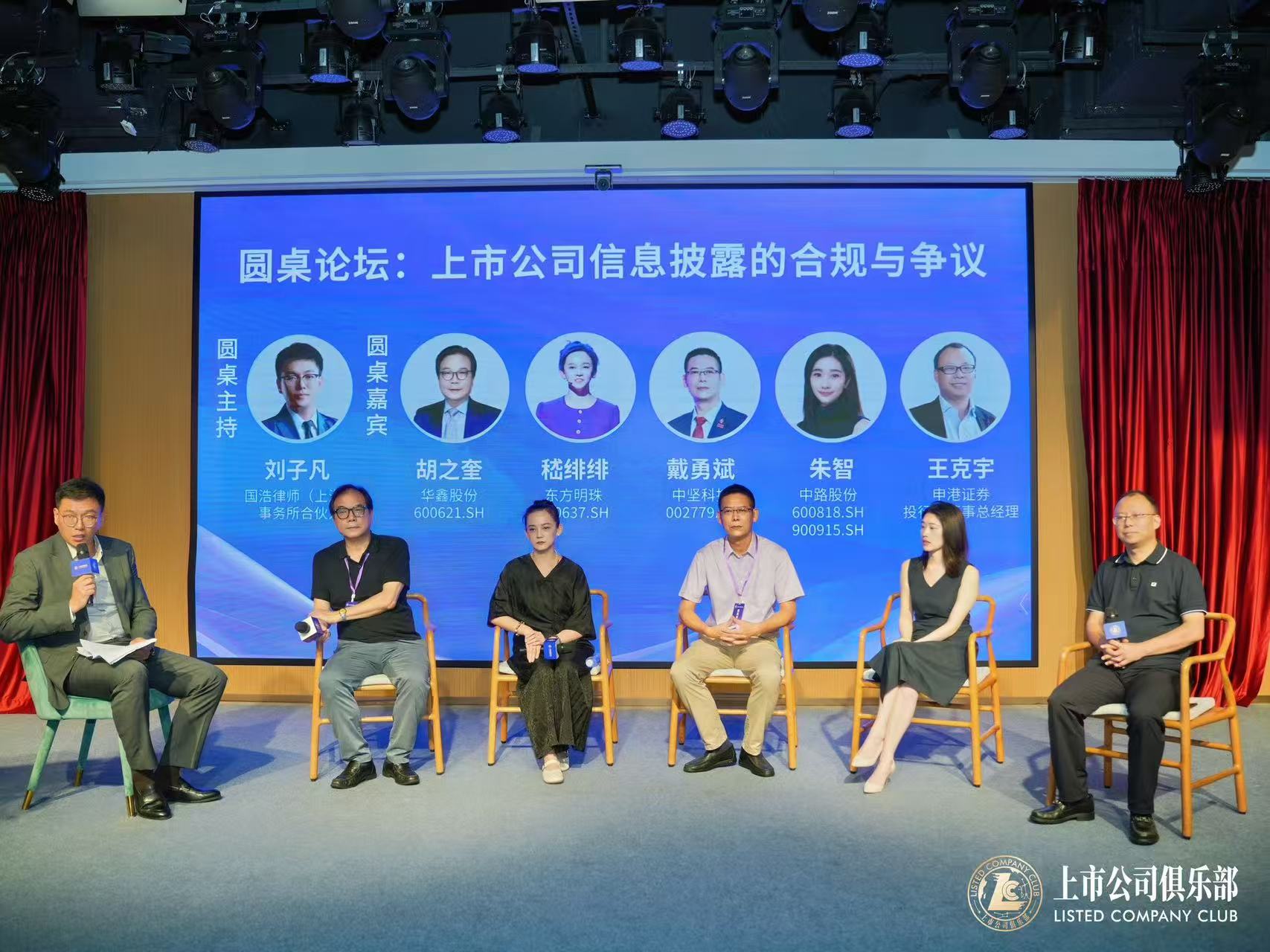
创投观察:美元LP又回来了!重点关注这些赛道
Sou Hu Cai Jing· 2025-08-20 11:34
Core Insights - The primary focus of the article is the resurgence of dollar Limited Partners (LPs) in the Chinese market, driven by policy incentives and technological innovations [1][4]. Group 1: Market Dynamics - Six local VC firms in China are launching new dollar fundraisings with a total target of at least $2 billion [1]. - There has been an increase in job postings for Investor Relations (IR) positions related to dollar funds, indicating a growing interest in fundraising in Southeast Asia and the Middle East [1]. - Dollar LPs, previously cautious due to geopolitical factors, are now showing increased interest in collaborating with domestic General Partners (GPs) to identify quality investment opportunities in China [1][3]. Group 2: Characteristics of New Dollar LPs - The current wave of dollar LPs differs from previous investors, primarily consisting of sovereign funds from the Middle East and Southeast Asia, as well as some family offices from Europe and the U.S. [2]. - Middle Eastern sovereign funds are projected to commit $21 billion to equity investments in China in 2024, a fourfold increase from 2022 [2]. - New dollar LPs are focusing on popular sectors in China, such as innovative pharmaceuticals, and are interested in establishing new companies in collaboration with local firms [2]. Group 3: Investment Trends and Sentiment - Despite geopolitical tensions and economic fluctuations, foreign LPs remain committed to the Chinese market, viewing it as a crucial part of their investment strategy [3]. - The perception of the Chinese economy is optimistic, with a consumer growth rate of 5% still seen as favorable due to the large population and expanding middle class [3]. - The transition period for dollar funds in China is marked by evolving strategies and expectations, with a focus on adapting to the new investment landscape [4].
《经济的正确打开方式》
Sou Hu Cai Jing· 2025-08-13 07:13
Core Insights - China's economy demonstrates resilience amid global uncertainties, attributed to stable institutions, active markets, innovative technology, and green development [4] - Property rights and trust form the foundation of the economy, enabling investment and efficient transactions through a robust social credit system [4] - Green finance and carbon neutrality are seen as catalysts for a new industrial revolution, reshaping capital flows and global rules through market-oriented approaches [4] Group 1: Economic Foundations - Clear property rights encourage investment, while a strong trust framework enhances transaction efficiency [4] - The establishment of a social credit system fosters a business culture that promotes low-cost collaboration among strangers [4] - Evaluative governance, such as rankings for best business environments, can accelerate local service improvements and industrial upgrades if designed effectively [4] Group 2: Technological Advancements - The rise of generative AI is significant, optimizing pricing, enhancing efficiency, and empowering industries, though it requires a balance of computing power, data, and algorithms [5] - Blindly following trends in technology can lead to negative repercussions, emphasizing the need for strategic investment in human capital [5] Group 3: Future Development - High-quality development is shifting focus from material investment to human capital investment, with upgrades in education, healthcare, and social security acting as invisible drivers of economic growth [5] - The future economy will favor those who can accurately identify opportunities and endure the process of refinement [5]

“三新”经济正成中国经济发展新动能 去年占GDP比重为18.01%
Zheng Quan Ri Bao· 2025-07-31 16:12
Core Insights - The "Three New" economy in China achieved a value-added of 242,908 billion yuan in 2024, growing by 6.7% year-on-year, which is 2.5 percentage points higher than the GDP growth rate [1] - The "Three New" economy accounted for 18.01% of GDP, an increase of 0.43 percentage points from the previous year [1] Group 1: Economic Performance - The "Three New" economy is characterized by new industries, new business formats, and new business models, which are essential for economic activities [1] - The rapid development of the "Three New" economy has created more job opportunities, improved labor productivity, and promoted consumption upgrades [1] Group 2: Trends and Developments - The "Three New" economy is experiencing three major trends: leading growth and structural upgrades, expansion into new fields driven by technology, and regional collaboration [2] - Emerging industries such as digital economy, smart manufacturing, and life health are developing rapidly, contributing to the upward momentum of the economy [2] Group 3: Recommendations for Development - Suggestions for strengthening the foundation of the "Three New" economy include deepening the market-oriented allocation of data elements, enhancing regulatory innovation, and aligning with international standards [2]
揭榜港交所上市委员会最新成员名单,细究背后选拔逻辑
梧桐树下V· 2025-07-12 07:49
Core Viewpoint - The Hong Kong Stock Exchange (HKEX) has announced the latest list of members for its Listing Committee, which consists of 28 members, effective from July 4, 2025, highlighting the committee's composition and its role in overseeing the listing process and regulatory compliance [1][5][9]. Group 1: Committee Composition - The new chairman of the Listing Committee is Huang Jiaxin, with Terence Keyes and Liu Guoxian serving as vice-chairmen [5][8]. - The committee includes a diverse range of professionals from finance, law, and accounting, with a total of 28 members, including 8 investor representatives and 19 industry representatives [7][9]. - The committee has seen the addition of 5 new members with backgrounds in investment, private equity, and law, while 5 members have retired [6][9]. Group 2: Member Selection and Criteria - The selection process for committee members is competitive, with a success rate of 9.4% for the 2025 applications, indicating a rigorous vetting process [7][9]. - Members are required to have significant experience in legal, financial, auditing, or corporate governance fields, with a preference for candidates from top investment banks, law firms, and leading funds [7][9]. - The committee aims for a balance of expertise, with a focus on professional independence and representation from various sectors [9][13]. Group 3: Responsibilities and Functions - The Listing Committee is responsible for approving listing applications, enforcing listing rules, handling significant listing matters, interpreting and amending listing rules, and ensuring market fairness and investor protection [11][12]. - The committee evaluates whether companies meet the necessary financial and governance standards for listing, and it has the authority to impose disciplinary actions for non-compliance [12][13]. - The decision-making process is structured as a closed-loop system involving pre-review, deliberation, voting, and review, ensuring confidentiality and integrity in the decision-making process [13]. Group 4: Market Trends and Future Outlook - The Hong Kong IPO market is showing signs of recovery, with an increasing number of Chinese companies considering re-listing in Hong Kong amid geopolitical tensions [9][10]. - The committee's focus on candidates with expertise in specialized technology and ESG (Environmental, Social, and Governance) disclosures reflects the evolving needs of the market [10][13]. - As cross-border restructuring and compliance issues become more complex, the committee's members will need to integrate legal, financial, and industry knowledge to address these challenges effectively [10].


侃股: 如何看待安井食品H股破发背后的争议
Bei Jing Shang Bao· 2025-07-06 11:04
Core Viewpoint - Anjiu Foods has become the first A+H dual capital platform enterprise in the frozen food industry by listing on the Hong Kong Stock Exchange, but its stock price fell on the first day of trading, raising concerns among small shareholders about the potential negative impact on A-share prices due to the H-share listing [1][2]. Group 1: Investor Concerns - Small investors are primarily worried that the performance of the Hong Kong stock will limit the price increase of the A-shares, fearing an implicit dilution effect if the H-shares trade below the A-shares [1][2]. - There is skepticism regarding the necessity of raising funds through the Hong Kong listing, especially since Anjiu Foods has accumulated significant cash reserves since its A-share listing in 2017 [1]. - Concerns have been raised about the company's financing practices, with accusations of "money-grabbing" due to the cycle of financing, cashing out, and refinancing, despite having over 2 billion yuan in cash [1]. Group 2: Institutional Investor Perspective - Large institutional investors are generally optimistic about Anjiu Foods' Hong Kong listing, viewing it as a key factor for the IPO's success [2]. - The company plans to allocate 35% of the raised funds to expand into Southeast Asia, where the hot pot restaurant market is growing at an annual rate of 14.4%, and the penetration rate of frozen food is below 5% [2]. - The stricter ESG disclosure and transparency requirements of the Hong Kong market are expected to enhance the company's governance structure, which could boost investor confidence in the long run [2]. Group 3: Investment Strategies - Small investors can mitigate the short-term negative impact of implicit dilution by selling their A-shares and buying H-shares of Anjiu Foods, potentially lowering their holding costs [3].

CFO 洞察:重塑财务部门职能,充分释放业务价值
Jing Ji Guan Cha Wang· 2025-06-16 07:57
Group 1 - The report emphasizes the transformation of finance departments in growth-oriented companies amidst digitalization, providing new insights for financial executives to navigate challenges [1] - Financial executives are increasingly involved in market volatility management and technology strategy planning, utilizing real-time data and advanced analytical tools to capture market trends [5] - Leading companies break down departmental barriers to ensure tight integration between finance and business, facilitating resource allocation and timely strategic updates [5] Group 2 - The report highlights the necessity of maintaining a robust financial position as companies pursue expansion, addressing the challenge of balancing financial risks during growth [6] - Leading firms implement lean operations and automation to reduce inefficiencies, allowing finance personnel to focus on value-creating analysis [6] - Establishing comprehensive risk monitoring systems is crucial for safeguarding steady expansion by tracking key financial indicators [6] Group 3 - Compliance and sustainable development are identified as critical for long-term value growth, with ESG disclosure requirements posing challenges and opportunities for finance departments [8] - Financial executives are encouraged to integrate sustainable development principles into corporate strategy through precise data collection and analysis to track ESG progress [8] - Building long-term compliance mechanisms not only meets current regulatory demands but also enhances the company's risk resilience [8]
一文读懂企业纳斯达克IPO需聘请各中介机构(名单、收费标准、工作内容)
Sou Hu Cai Jing· 2025-04-22 10:58
Group 1 - The intermediary system for NASDAQ IPOs is crucial for connecting local operations with international capital markets, directly impacting the success rate and financing efficiency of listings [1] - Key intermediary institutions include investment banks, law firms, accounting firms, depositary banks, market makers, and public relations and investor relations consultants [1][27] - The article provides a comprehensive analysis of the roles, service offerings, fee structures, and selection strategies of these intermediaries, along with practical guidelines for 2025 market dynamics [1] Group 2 - Investment banks play a vital role in valuation pricing, roadshow strategies, and risk hedging, with underwriting fees ranging from 5-7% for amounts less than $100 million and 3-5% for amounts greater than $500 million [2][40] - Law firms are responsible for cross-border compliance, including VIE structure reviews and data security, with fixed fees between $500,000 and $2 million depending on complexity [3][4][40] - Accounting firms focus on financial restructuring and internal control establishment, charging between $500,000 and $1.5 million based on revenue [7][10][40] Group 3 - Depositary banks facilitate the issuance of American Depositary Receipts (ADRs) and cross-border settlements, with fees ranging from $50,000 to $200,000 [12][15][40] - Market makers manage liquidity and crisis response, charging annual fees between $100,000 and $500,000 [17][20][40] - Public relations and investor relations consultants assist in brand building and crisis management, with service fees ranging from $200,000 to $1 million [22][25][40] Group 4 - The overall fee structure for intermediaries in the IPO process can range from $200,000 to $600,000, accounting for 8-15% of the total financing amount [40] - Cost optimization strategies include selecting boutique investment banks for smaller fundraising and splitting auditing tasks to save costs [41] - The selection of intermediaries should consider industry expertise, regional experience, and crisis management capabilities [42][44] Group 5 - The intermediary system for NASDAQ listings exhibits a dual characteristic of "international rules + local adaptation," requiring firms to navigate both global standards and local regulatory environments [47][48] - Companies should prioritize intermediaries with capabilities that blend Western and Chinese practices to ensure compliance and efficiency in the IPO process [49]