MoE架构

Search documents
AI大模型与异构算力融合技术白皮书
Sou Hu Cai Jing· 2025-10-13 14:16
Core Insights - The report highlights the exponential growth in AI model parameters from hundreds of millions to trillions, with global AI computing demand doubling every 3-4 months, significantly outpacing traditional Moore's Law [14][15][17] - The training cost for models like Llama 4 is projected to exceed $300 million by 2025, a 66-fold increase compared to the $4.5 million cost for training GPT-3 in 2020, indicating a critical need for heterogeneous computing solutions [15][17] - Heterogeneous computing, integrating various processing units like CPU, GPU, FPGA, and ASIC, is essential to meet diverse computational demands across different AI applications [18][29] Group 1: Industry Trends - The global AI computing market is expected to grow significantly, with China's intelligent computing scale projected to reach 1,037.3 EFLOPS by 2025, and the AI server market anticipated to hit $300 billion by the same year [26][28] - The "East Data West Calculation" initiative in China aims to enhance computing infrastructure, with over 250 optical cables planned to improve connectivity and efficiency [24][25] - The report emphasizes the increasing participation of domestic tech giants like Alibaba, Tencent, and Baidu in AI chip and computing infrastructure investments, fostering a robust ecosystem for AI development [26][28] Group 2: Technological Developments - The report discusses the evolution of AI models, with significant advancements in architectures such as the Mixture of Experts (MoE) model, which allows for efficient scaling while reducing computational costs [39][40] - Open-source models are gaining traction, with various series like GLM, Llama, and Qwen contributing to the democratization of AI technology and fostering innovation [41][42] - The integration of heterogeneous computing is seen as a pathway to optimize performance and efficiency, addressing the challenges posed by diverse computational requirements in AI applications [19][29]


英伟达,再次押注“美版DeepSeek”
Zheng Quan Shi Bao Wang· 2025-10-13 12:31
Core Insights - Reflection AI has raised $2 billion in funding, led by Nvidia's $800 million investment, with a valuation soaring to $8 billion from approximately $545 million in March [1][4] - The company aims to create an open-source alternative to closed AI labs like OpenAI and Anthropic, positioning itself as a Western counterpart to China's DeepSeek [4][5] Funding and Valuation - Reflection AI's recent funding round occurred just seven months after a $130 million Series A round, indicating rapid growth in valuation [1] - The investment round included notable investors such as Lightspeed Venture Partners, Sequoia Capital, and Eric Schmidt [1] Company Background - Founded in March 2024 by Misha Laskin and Ioannis Antonoglou, both of whom have significant experience in AI development at Google [2][4] - The team consists of around 60 members, primarily AI researchers and engineers, with a focus on developing cutting-edge AI systems [4] Technology and Development - Reflection AI is developing a large language model (LLM) and reinforcement learning training platform capable of training large-scale MoE models [5] - The company plans to release a frontier language model trained on "trillions of tokens" next year [4] Market Position and Strategy - The company aims to fill a gap in the U.S. market for open-source AI models to compete with top closed-source models [4] - Reflection AI's approach to "open" is more aligned with open access rather than complete open-source, similar to strategies employed by Meta and Mistral [5] Future Outlook - Misha Laskin expressed optimism about the company's potential to become larger than current major cloud service providers [6] - The rapid pace of funding and high amounts reflect strong investor interest in the AI sector, with venture capital funding for AI startups reaching a record $192.7 billion this year [6] Nvidia's Investment Strategy - Nvidia has made significant investments across the AI landscape, including an $800 million investment in Reflection AI and a commitment to invest up to $100 billion in OpenAI [7][8] - The company is actively collaborating with Reflection AI to optimize its latest AI chips, indicating a deep technical partnership [7] Additional Investments by Nvidia - Nvidia has engaged in multiple investments totaling over $100 billion since September, including significant stakes in companies like Wayve, Nscale, and Dyna Robotics [8][10][11] - These investments reflect Nvidia's strategy to maintain a leading position in the evolving AI technology landscape [8]


大厂AI模型专题解读
2025-09-28 14:57
Summary of Conference Call Records Industry Overview - The conference call focuses on the AI model landscape in China, highlighting the challenges and advancements in the domestic AI industry compared to international counterparts [1][2][4][5]. Key Points and Arguments 1. **Architecture and Innovation** - Domestic AI models heavily rely on overseas architectures like Transformer and MoE, leading to difficulties in surpassing foreign models [1][2]. - There is a lack of self-developed, breakthrough architectural innovations in China, which hampers competitiveness [2]. 2. **Computational Power** - Chinese AI companies have significantly lower GPU computational power compared to international giants like Microsoft, Google, and Meta, often by an order of magnitude [2]. - The ongoing US-China trade war has restricted resource availability, further impacting computational capabilities [1][2]. 3. **Cost and Performance Focus** - Domestic models prioritize inference cost and cost-effectiveness, aligning with local consumer habits, while international models like GPT focus on top-tier performance [1][2]. - The commercial model differences create a substantial gap in model capabilities [2]. 4. **Data Acquisition** - The relatively lenient data laws in China provide an advantage in data acquisition for training models, unlike the stringent regulations in Europe and the US [3]. 5. **Open Source Strategies** - Alibaba adopts a nearly fully open-source strategy, including model weights, code, and training data, to enhance influence and integrate its cloud services [4]. - Other companies like ByteDance and Kuaishou are more selective in their open-source approaches due to their reliance on proprietary technology [4]. 6. **Multimodal Model Developments** - Domestic companies are making strides in multimodal models, focusing on applications in e-commerce and short videos, which cater to local needs [5][6][7]. - Companies like Alibaba, Kuaishou, Tencent, and ByteDance are developing models that integrate text, image, audio, and video generation [7][8]. 7. **MoE Architecture Adoption** - The MoE architecture is becoming standard among major companies, allowing for reduced computational costs and inference times [10]. - Future optimization directions include precise input allocation, differentiated expert system structures, and improved training stability [10][11]. 8. **Economic Viability of Large Models** - Starting mid-2024, pricing for APIs and consumer services is expected to decrease due to the release of previously constrained GPU resources [13]. - The overall cost conversion rate in the large model industry is increasing, despite initial low profit margins [13][14]. 9. **Competitive Differentiation** - Key competitive differences among leading domestic firms will emerge from their unique strategies in technology iteration, data accumulation, and business models [15]. 10. **Future Trends and Innovations** - The focus will shift towards agent systems that integrate user understanding and tool invocation, enhancing overall efficiency [16]. - The MCP concept will gain traction, addressing data input-output connections and reducing integration costs [22]. Additional Important Insights - The acceptance of paid services among domestic users is low, with conversion rates around 3% to 5%, indicating a need for improved user experience to enhance willingness to pay [20][21]. - Successful AI product cases include interactive systems that combine companionship with professional analysis, indicating a potential path for monetization [22]. This summary encapsulates the critical insights from the conference call, providing a comprehensive overview of the current state and future directions of the AI industry in China.
6.1B打平40B Dense模型,蚂蚁开源最新MoE模型Ling-flash-2.0
机器之心· 2025-09-17 09:37
Core Insights - Ant Group's Ling-flash-2.0 model, a new MoE model, features a total of 100 billion parameters with only 6.1 billion active parameters, achieving performance comparable to or exceeding that of larger models with 40 billion parameters [1][3][4] - The model represents a shift from a "parameter arms race" to an "efficiency-first" approach, emphasizing full-stack optimization across architecture, training, and inference [3][4][10] Group 1: Model Performance and Efficiency - Ling-flash-2.0 achieves approximately 7 times the performance leverage, activating only 6.1 billion parameters while delivering performance equivalent to a 40 billion dense model [4][9] - The model's inference speed is over three times faster than similar performance dense models, capable of generating over 200 tokens per second on the H20 platform [9][10] - The architecture includes a 1/32 activation ratio, expert fine-tuning, and a shared expert mechanism to enhance efficiency and reduce redundant activations [6][10] Group 2: Application and Use Cases - Ling-flash-2.0 demonstrates strong capabilities in various tasks, including high-difficulty mathematical reasoning, code generation, and front-end development [11][14][15] - The model outperforms both similar-sized dense models and larger MoE models in benchmarks across multiple disciplines [11][14] - Specific applications include generating Python programs, creating responsive web designs, and solving complex mathematical problems like Sudoku [17][19][27] Group 3: Training and Data Management - The model's training is supported by a robust AI Data System, processing over 40 trillion tokens of high-quality data, with a focus on 20 trillion tokens for pre-training [31][34] - The pre-training process is divided into three stages, optimizing hyperparameters and employing innovative learning rate scheduling to enhance downstream task performance [32][34] - The vocabulary has been expanded to 156,000 tokens to improve multilingual capabilities, incorporating high-quality data from 30 languages [34] Group 4: Post-Training Innovations - The model employs a four-stage post-training process designed to enhance reasoning and conversational abilities, including decoupled fine-tuning and progressive reinforcement learning [35][38][40] - ApexEval is introduced to evaluate model potential based on knowledge mastery and reasoning depth, ensuring only the most capable models proceed to reinforcement learning [39] - The training system supports high-quality data selection and model iteration through an efficient reward system [41] Conclusion - Ling-flash-2.0 redefines the relationship between efficiency and capability in large models, emphasizing that intelligence is not solely dependent on scale but on the synergy of architecture, data, and training strategies [42][43][46]

扩散语言模型也有MoE版本了!蚂蚁&人大从头训练LLaDA-MoE,即将完全开源
机器之心· 2025-09-12 11:31
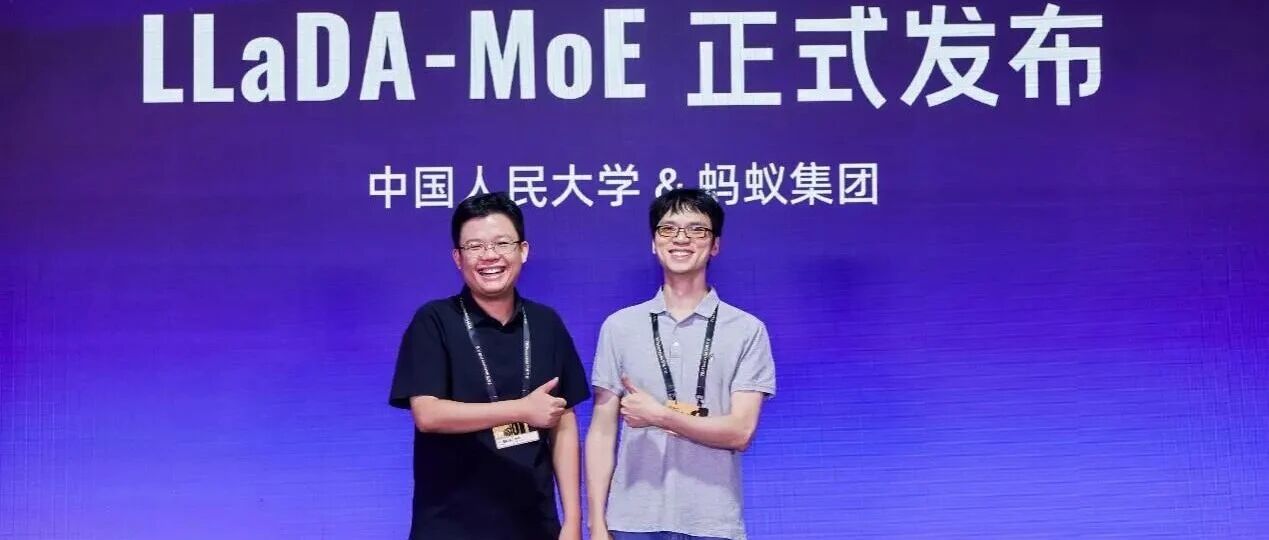
Core Viewpoint - The article discusses the development of the LLaDA-MoE model, the first native MoE architecture diffusion language model trained from scratch, which demonstrates significant performance and efficiency advantages over traditional autoregressive models [2][15][18]. Group 1: Model Development and Performance - The LLaDA-MoE model was trained on 20 terabytes of data and features 1.4 billion active parameters, achieving performance comparable to denser autoregressive models like Qwen2.5-3B while maintaining faster inference speeds [15][17][29]. - The LLaDA series has rapidly evolved, with LLaDA-MoE being a notable milestone, surpassing previous models like LLaDA1.0/1.5 and Dream-7B in various benchmark tests [13][18][29]. - The model's architecture allows for significant scaling potential, with plans to explore higher sparsity ratios and larger MoE diffusion language models [29][40]. Group 2: Technical Innovations and Advantages - The diffusion model approach allows for parallel decoding, bidirectional modeling, and iterative correction, addressing limitations of autoregressive models such as serial bottlenecks and lack of error correction capabilities [38][40]. - Evidence suggests that diffusion language models can achieve better learning outcomes than autoregressive models, particularly in scenarios with limited data, demonstrating a data utilization efficiency that can exceed three times that of autoregressive models [40][41]. - The training framework and infrastructure developed by Ant Group, including the ATorch framework, supports the efficient training of large-scale MoE models [25][26]. Group 3: Strategic Vision and Future Directions - The development of LLaDA-MoE reflects a strategic choice to explore high-potential areas in AI, moving beyond established paths to enhance the limits of intelligence [44][47]. - Ant Group's commitment to innovation is evident in its previous projects and ongoing research in areas like dynamic MoE architectures and hybrid linear architectures, all aimed at achieving general artificial intelligence (AGI) [45][46][47].
能像人类专家团一样干活的AI Agent,出现了吗?
3 6 Ke· 2025-08-18 10:16
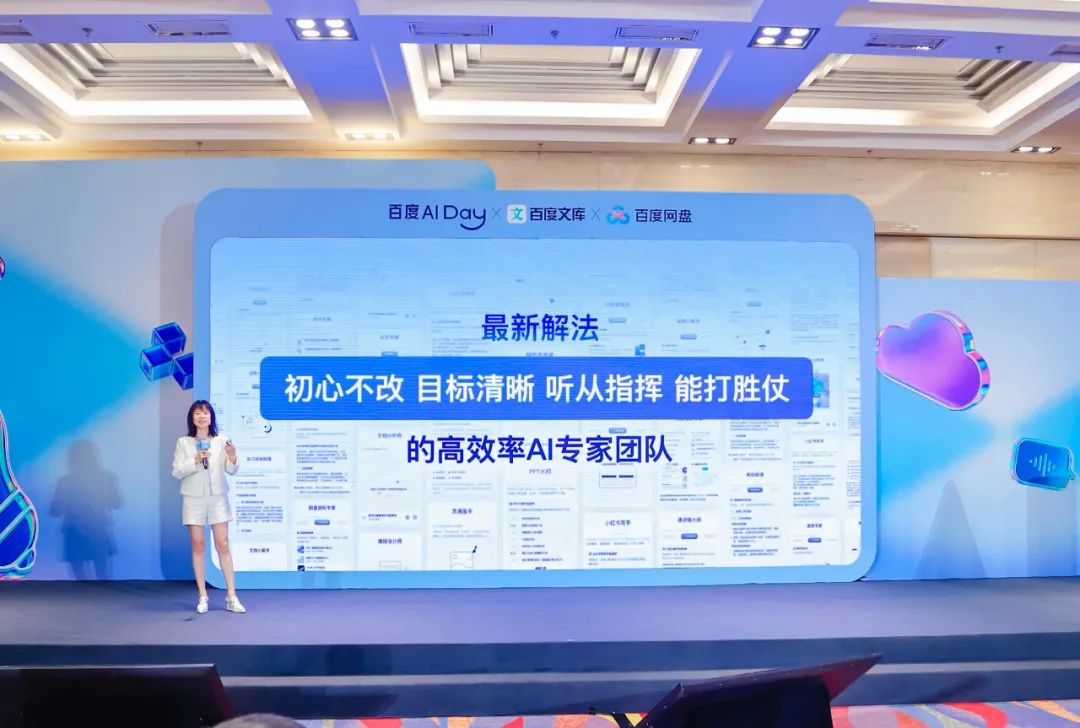
Core Insights - The emergence of AI Agents has generated significant interest, but their practical utility remains limited, with performance varying widely across different products [1][2] - The primary bottleneck for AI Agents is their single-threaded architecture, which restricts their ability to handle complex tasks simultaneously [2][3] - The introduction of GenFlow 2.0 by Baidu's Wenku has demonstrated a breakthrough in AI Agent capabilities, allowing for the parallel execution of multiple complex tasks [4][6] Group 1: AI Agent Challenges - AI Agents currently struggle with understanding complex user needs due to their linear processing approach, which leads to inefficiencies [2][3] - The slow processing speed of single-threaded Agents creates a bottleneck, affecting overall user experience and satisfaction [2][3] - Many AI Agents lack the ability to personalize and accurately match task execution with user expectations, further complicating their utility [2][3] Group 2: GenFlow 2.0 Innovations - GenFlow 2.0 utilizes a Multi-Agent architecture, consisting of over 100 specialized Agents that collaborate to complete tasks more efficiently [3][4] - The new architecture allows GenFlow 2.0 to handle complex tasks in as little as 3 minutes, significantly improving delivery speed and quality [6][14] - The system's ability to dynamically allocate tasks to specialized Agents enhances its overall effectiveness and user experience [8][10] Group 3: User Interaction and Workflow - GenFlow 2.0 shifts the interaction model from merely finding tools to assembling a team of expert Agents, improving task management [7][8] - The system incorporates user data and preferences to create a personalized experience, allowing for real-time adjustments during task execution [10][12] - This approach enables users to manage complex projects more effectively, reducing the time and effort required for task completion [12][17] Group 4: Ecosystem and Future Directions - The underlying technology of GenFlow 2.0 is supported by the newly launched Cangzhou OS, which facilitates seamless integration and collaboration among various Agents [15][16] - The MCP (Multi-Agent Communication Protocol) allows for standardized connections between Agents and external services, enhancing the ecosystem's flexibility [14][16] - The ongoing development aims to lower barriers for businesses to access AI capabilities, positioning GenFlow 2.0 as a leader in the general-purpose AI Agent market [17]

能像人类专家团一样干活的AI Agent,出现了吗?
36氪· 2025-08-18 10:13
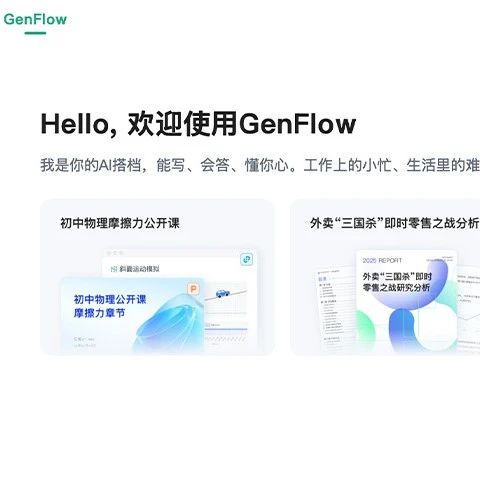
Core Viewpoint - The article discusses the evolution and capabilities of AI Agents, particularly focusing on the advancements made by Wenku GenFlow 2.0, which aims to enhance productivity by transitioning from single-task operations to a collaborative expert team approach [2][10][28]. Group 1: Current State of AI Agents - AI Agents have shown potential but still struggle with complex tasks, often requiring users to switch between technical capabilities and manual intervention, leading to inefficiencies [3][5][7]. - The primary bottleneck for AI Agents is their single-threaded architecture, which limits their ability to handle multiple complex tasks simultaneously [5][6]. - Many AI Agents lack contextual memory and personalized task execution, making it difficult to meet user demands effectively [7][6]. Group 2: Innovations in GenFlow 2.0 - Wenku GenFlow 2.0 is recognized as a leading AI Agent, utilizing a Multi-Agent architecture that allows for parallel task execution and collaboration among over 100 specialized Agents [10][11]. - The system can complete multiple complex tasks in a significantly reduced time frame, showcasing a leap in efficiency and quality of delivery [11][12]. - GenFlow 2.0 emphasizes a workflow that mirrors human assistants, focusing on integrating various tasks and leveraging user data for personalized service [16][17]. Group 3: Technological Foundations - The underlying technology of GenFlow 2.0 is based on the MoE (Mixture of Experts) model, which enhances efficiency by activating only a subset of experts for each task, leading to cost-effective operations [24]. - The architecture allows for seamless integration with third-party services through standardized protocols, expanding the capabilities of AI Agents beyond a single platform [24][26]. Group 4: Future Directions and Ecosystem - The introduction of the Cangzhou OS serves as a foundational system for managing AI Agent operations, enabling better collaboration and data management across various applications [26][28]. - The goal is to create an "Agent as a Service" ecosystem, allowing businesses to easily access expert teams for their AI needs, thus transforming the landscape of AI productivity [28]. - The advancements in GenFlow 2.0 and Cangzhou OS are expected to redefine the role of AI in the workplace, shifting from individual task execution to a more integrated and collaborative approach [28].
赛道Hyper | 阿里开源通义万相Wan2.2:突破与局限
Hua Er Jie Jian Wen· 2025-08-02 01:37
Core Viewpoint - Alibaba has launched the open-source video generation model "Wen2.2," which can generate 5 seconds of high-definition video in a single instance, marking a significant move in the AI video generation sector [1][10]. Group 1: Technical Architecture - The three models released, including text-to-video and image-to-video, utilize the MoE (Mixture of Experts) architecture, which is a notable innovation in the industry [2][8]. - The MoE architecture enhances computational efficiency by dynamically selecting a subset of expert models for inference tasks, addressing long-standing efficiency issues in video generation [4][8]. - The total parameter count for the models is 27 billion, with 14 billion active parameters, achieving a resource consumption reduction of approximately 50% compared to traditional models [4][6]. Group 2: Application Potential and Limitations - The 5-second video generation capability is more suited for creative tools rather than production tools, aiding in early-stage planning and advertising [9]. - The limitation of generating only 5 seconds of video means that complex narratives still require manual editing, indicating a gap between the current capabilities and actual production needs [9][11]. - The aesthetic control system allows for parameterized adjustments of lighting and color, but its effectiveness relies on the user's understanding of aesthetics [9][12]. Group 3: Industry Context and Competitive Landscape - The open-source nature of Wen2.2 represents a strategic move in a landscape where many companies prefer closed-source models as a competitive barrier [8][12]. - The release of Wen2.2 may accelerate the iteration speed of video generation technologies in the industry, as it provides a foundation for other companies to build upon [8][12]. - The global context shows that while other models can generate longer videos with better realism, Wen2.2's efficiency improvements through the MoE architecture present a unique competitive angle [11][12].

阿里开源电影级AI视频模型!MoE架构,5B版本消费级显卡可跑
量子位· 2025-07-29 00:40
Core Viewpoint - Alibaba has launched and open-sourced a new video generation model, Wan2.2, which utilizes the MoE architecture to achieve cinematic-quality video generation, including text-to-video and image-to-video capabilities [2][4][5]. Group 1: Model Features and Performance - Wan2.2 is the first video generation model to implement the MoE architecture, allowing for one-click generation of high-quality videos [5][24]. - The model shows significant improvements over its predecessor, Wan2.1, and the benchmark model Sora, with enhanced performance metrics [6][31]. - Wan2.2 supports a 5B version that can be deployed on consumer-grade graphics cards, achieving 24fps at 720P, making it the fastest basic model available [5][31]. Group 2: User Experience and Accessibility - Users can easily create videos by selecting aesthetic keywords, enabling them to replicate the styles of renowned directors like Wong Kar-wai and Christopher Nolan without needing advanced filmmaking skills [17][20]. - The model allows for real-time editing of text within videos, enhancing the visual depth and storytelling [22]. - Wan2.2 can be accessed through the Tongyi Wanxiang platform, GitHub, Hugging Face, and Modao community, making it widely available for users [18][56]. Group 3: Technical Innovations - The introduction of the MoE architecture allows Wan2.2 to handle larger token lengths without increasing computational load, addressing a key bottleneck in video generation models [24][25]. - The model has achieved the lowest validation loss, indicating minimal differences between generated and real videos, thus ensuring high quality [29]. - Wan2.2 has significantly increased its training data, with image data up by 65.6% and video data up by 83.2%, focusing on aesthetic refinement [31][32]. Group 4: Aesthetic Control and Dynamic Capabilities - Wan2.2 features a cinematic aesthetic control system that incorporates lighting, color, and camera language, allowing users to manipulate over 60 professional parameters [37][38]. - The model enhances the representation of complex movements, including facial expressions, hand movements, and interactions between characters, ensuring realistic and fluid animations [47][49][51]. - The model's ability to follow complex instructions allows for the generation of videos that adhere to physical laws and exhibit rich details, significantly improving realism [51]. Group 5: Industry Impact and Future Prospects - With the release of Wan2.2, Alibaba has continued to build a robust ecosystem of open-source models, with cumulative downloads of the Qwen series exceeding 400 million [52][54]. - The company is encouraging creators to explore the capabilities of Wan2.2 through a global creation contest, indicating a push towards democratizing video production [54]. - The advancements in AI video generation technology suggest a transformative impact on the film industry, potentially starting a new era in AI-driven filmmaking from Hangzhou [55].

商汤高管出走,干出200亿AI独角兽……
Tai Mei Ti A P P· 2025-06-25 08:08
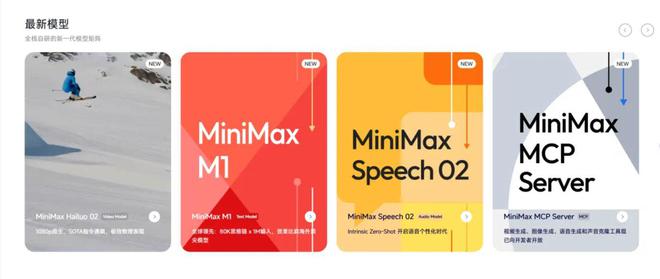
Core Viewpoint - MiniMax has emerged as a leading AI company in China, achieving a valuation of over 20 billion RMB and demonstrating significant user engagement and product innovation in the AI sector [3][6][22]. Company Overview - MiniMax was founded by Yan Junjie, a Tsinghua University PhD and former vice president of SenseTime, who pivoted to the AI large model space in 2021 with a focus on practical applications [3][4]. - The company has developed a range of products, including the conversational AI tool "Xingye," the video generation model "Hailuo," and the voice synthesis tool "Voice AI," all designed to be user-friendly and accessible [6][11][20]. Product Development and Strategy - MiniMax's approach emphasizes a "light, fast, and practical" methodology, utilizing the MoE (Mixture of Experts) architecture to create multiple deployable products across text, audio, and video [10][13]. - The company has successfully launched products that are not only technically sound but also commercially viable, with a clear path from consumer engagement to business-to-business (B2B) API offerings [16][19]. Market Position and Growth - MiniMax has attracted significant investment from top venture capital firms, with its latest funding round pushing its valuation to over 20 billion RMB and plans for a potential IPO in Hong Kong [5][14][22]. - The company has established a robust user base, with over 30 billion daily interactions and more than 50,000 API clients, positioning itself as a strong player in the AI market [3][6][16]. Commercialization and User Engagement - MiniMax's strategy includes a low-cost API model that appeals to startups and small businesses, allowing for easy integration and clear pricing, which has led to high customer retention and repeat purchases [16][18]. - The success of its consumer products, particularly "Xingye" and "Hailuo," has generated significant buzz on social media platforms, enhancing brand visibility and user engagement [19][20]. Conclusion - MiniMax stands out in the crowded AI landscape by focusing on practical applications and user-friendly products, demonstrating that success in the AI sector is not solely about having the most advanced technology but about delivering real-world solutions [22][23].