
多式联运

Search documents
省内唯一!陆港集团“徐州—连云港港”铁水联运线路入选交通运输部品牌线路
Yang Zi Wan Bao Wang· 2025-10-22 14:51
Core Points - The "Xuzhou-Lianyungang Port" container rail-water intermodal route has been selected as a typical case for the 2025 brand route cultivation by the Ministry of Transport, the National Railway Administration, and China National Railway Group, marking a significant breakthrough for Xuzhou in the national intermodal transport system and regional logistics hub enhancement [1][6] Group 1: Route Overview - The "Xuzhou-Lianyungang Port" route has been operational since November 2021, leveraging Xuzhou's position as a national comprehensive transportation hub and integrating rail, road, and port shipping resources [3][4] - The route was officially included in the national railway operation map in April 2024, establishing an efficient operation system characterized by regular service, standardized management, and large-scale operations [3][4] - The route facilitates seamless connections between rail and water transport, effectively opening a logistics corridor between inland and coastal areas, with an average monthly frequency of 10 trains and a reduction in transit time from 30 hours to 8 hours [3][4] Group 2: Performance Metrics - In 2024, the route handled 5,028 TEUs, representing a year-on-year increase of 77.9%, while from January to September 2025, it handled 4,946 TEUs, up 29.82% year-on-year [4] - The implementation of the "one-time commission, one order to the end" CCA single order model has provided comprehensive logistics services, significantly reducing logistics costs by approximately 15% [4][5] Group 3: Infrastructure and Innovation - The Xuzhou Port Group has been enhancing infrastructure and service capabilities, with projects like the second phase of the Huaihai International Port container gathering center and supply chain service center completed [5] - The group is actively integrating into the national "road-rail-water-air" intermodal transport system, promoting resource sharing and information exchange with Lianyungang Port [5][6] - Future plans include strengthening collaboration with Lianyungang Port in areas such as yard, warehouse, and terminal operations, and advancing the construction of intelligent logistics systems and digital supply chain platforms [6]


湖北发布多式联运体系重点项目清单 总投资超8000亿
Chang Jiang Shang Bao· 2025-10-21 00:11
Core Insights - Hubei Province has released a list of 101 key projects for the high-quality development of the "iron-water-public-air" multimodal transport system, with a total investment of approximately 883.79 billion yuan [1][2] - The focus is on addressing issues such as low channel capacity, suboptimal transport structure, and insufficient network intelligence, aiming to enhance the efficiency and resilience of modern supply chains [1][2] Group 1: Project Overview - The 101 projects cover various aspects including waterways, highways, railways, port railways, aviation hubs, and digital platforms [2] - Among these, 24 projects are aimed at addressing shortfalls with a total investment of 163.76 billion yuan, 48 projects focus on enhancing transport efficiency with an investment of 364.45 billion yuan, and 29 projects are dedicated to network construction with an investment of 355.58 billion yuan [2] Group 2: Key Projects and Timelines - Notable projects include the completed and operational Xiangjing High-Speed Railway, the Wuhan to Yichang section of the Yangtze River High-Speed Railway expected to open within the year, and the Huahu International Airport railway link projected for completion in December 2026 [2] - A working group has been established to expedite the progress of these key projects, with 42 projects set to commence, including the Jingjiu High-Speed Railway from Fuyang to Huanggang, which has received land pre-approval and aims to start construction in 2025 [2]
清风为伴产业兴 | 下沉一线破梗阻
Zhong Yang Ji Wei Guo Jia Jian Wei Wang Zhan· 2025-10-21 00:08
Core Insights - The Zhengzhou International Land Port is evolving into a strategic hub for foreign trade in Central China, facilitating the transportation of electric vehicles and other goods to Europe [1][4] - The project has a planned area of 50 square kilometers and an investment of 17.8 billion yuan, aiming to enhance international logistics channels for various industries [1] - The local supervisory committee is actively monitoring the project's progress, focusing on key areas such as land acquisition, funding, and construction efficiency [2][3] Group 1 - The Zhengzhou International Land Port is a key initiative to implement the logistics channel strategy outlined by President Xi Jinping, aiming for an annual target of "10,000 trains and 10 million tons" [1] - The project is expected to open new avenues for the import and export of various commodities, including daily necessities and agricultural products, marking a significant shift for Central China from an "inland area" to an "open hub" [1] - The supervisory committee has established a comprehensive monitoring mechanism to ensure the project's efficient and transparent execution, focusing on project approval, fund usage, and land acquisition [2] Group 2 - The project has faced challenges such as land acquisition for 4,293 acres and the relocation of 518 households, which the supervisory committee is addressing through proactive engagement and conflict resolution [2] - Recent improvements in power supply infrastructure have been made, with 34.8 kilometers of high and low voltage lines removed and 29.2 kilometers of new lines constructed to support the project's operational needs [3] - The operational efficiency of the land port has significantly improved, with a 90% increase in customs clearance efficiency, allowing for streamlined logistics processes [3][4]
有效降低全社会物流成本,国常会四项要求如何落地|记者观察
Di Yi Cai Jing· 2025-10-20 02:03
Core Viewpoint - The Chinese government is taking significant steps to reduce logistics costs across the country, emphasizing the importance of logistics in enhancing economic efficiency and supporting the modern industrial system [1][4]. Group 1: Logistics Cost Reduction Measures - The State Council has outlined four key requirements to effectively lower logistics costs, focusing on improving quality and efficiency, building a modern logistics system, and enhancing multi-modal transport management [1][4]. - The logistics cost reduction initiative aims to decrease national logistics costs by approximately 400 billion yuan in 2024, with a significant portion of this reduction coming from transportation costs, which are expected to drop by 280 billion yuan [4]. Group 2: Current Challenges in Logistics - Major challenges include an unreasonable transportation structure, poor multi-modal transport connectivity, and a fragmented logistics market characterized by small and weak players [4][5]. - The current logistics transportation structure heavily relies on road transport, which accounted for 73.6% of freight volume in 2024, leading to high costs and energy consumption [4]. Group 3: Infrastructure and Technology Investments - There is a push for increased investment in logistics infrastructure, including warehouses and digital logistics systems, to optimize layout and enhance functionality [2][10]. - The integration of artificial intelligence and data sharing among logistics entities is being promoted to facilitate smarter logistics operations and improve efficiency [3][10]. Group 4: Successful Initiatives and Innovations - Various provinces have initiated successful logistics projects, such as the "public-rail-sea" multi-modal transport model in Shandong and the "cloud-based" logistics platform in Yunnan, which have significantly improved operational efficiency [6][7]. - AI-driven logistics solutions in Jiangsu have enhanced decision-making processes, resulting in a 10% increase in transaction success rates and a 5% reduction in transportation costs [8][10].
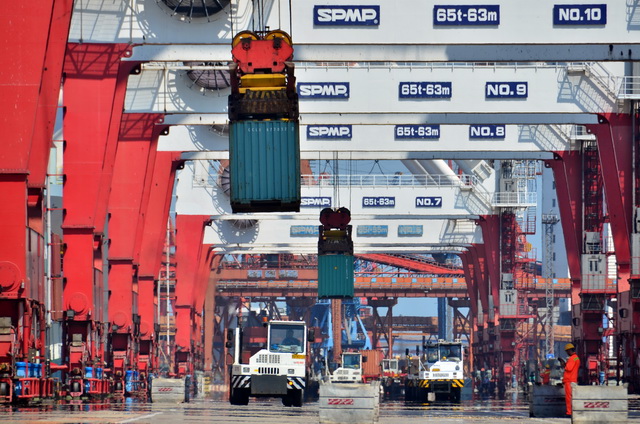
物流业“减负提智”再加速
Zheng Quan Ri Bao· 2025-10-19 17:28
Core Insights - The logistics sector is crucial for the efficient operation of the economy, and reducing logistics costs can directly enhance corporate profit margins and market competitiveness, while promoting the optimization of social resource allocation and sustainable development [1] Group 1: Government Initiatives - The State Council meeting on October 17 emphasized the importance of logistics in facilitating domestic circulation and developing a modern industrial system, calling for continuous efforts to reduce costs and improve quality in logistics [1] - Key initiatives include accelerating the construction of a modern logistics system that is adaptable to supply and demand, interconnected, safe, efficient, and environmentally friendly, as well as enhancing investment in logistics infrastructure [1] - The meeting also highlighted the need for better coordination of multi-modal transport management systems and standards to improve logistics efficiency and reduce costs [1] Group 2: Multi-Modal Transport - The coordination of multi-modal transport management systems is significant for improving logistics efficiency and reducing costs, as it can minimize transfer times between different transport modes [2] - Achieving unified standards in multi-modal transport can reduce repetitive loading and unloading, thereby lowering transportation losses and labor costs [2] - Multi-modal transport is characterized by its low-carbon and environmentally friendly nature, which can enhance the overall level of China's logistics industry and strengthen international competitiveness [2] Group 3: Digital Transformation in Logistics - The logistics sector is undergoing a significant transformation towards digitalization, with the application of artificial intelligence in various logistics processes such as smart shelving, automated picking systems, and intelligent transportation [3] - The integration of AI and IoT technologies enables real-time monitoring and precise management of logistics processes, optimizing resource allocation and enhancing supply chain resilience [3] - Companies that master the integration of AI and logistics technologies are expected to gain a competitive advantage in the evolving market landscape [3]
中企海外仓投入激增三倍,海陆空联运构建全球供应链韧性
Di Yi Cai Jing· 2025-10-19 13:46
Core Viewpoint - The shipping industry is facing urgent challenges due to unilateralism and trade protectionism, necessitating collaborative efforts to ensure supply chain stability and adapt to regionalization trends [1][2]. Group 1: Industry Trends - The forum highlighted a significant trend towards trade regionalization, with cross-continental long-distance transport volumes decreasing by approximately 2%, while regional shipping demand has increased by 6% [3]. - Geopolitical conflicts and trade disputes have led to tariff fluctuations, causing an imbalance in shipping capacity and prompting a shift in supply chains towards nearshore and friendshore solutions [2][3]. Group 2: Multi-Modal Transport - Multi-modal transport, integrating sea, rail, and air freight, is identified as a core strategy for ensuring the stability of global supply chains [4]. - Turkey is positioned as a strategic hub for transportation between China and Europe, enhancing the resilience of global supply chains through improved connectivity [4]. Group 3: Sustainable Development - The forum emphasized the need for a collaborative approach to develop a resilient and sustainable green supply chain, advocating for shared resources and innovative solutions [6]. - The shipping and air transport sectors are responsible for approximately 6% of global greenhouse gas emissions, highlighting the urgency for joint measures to address climate change [5]. Group 4: Shanghai's Role - Shanghai is accelerating its transition from a "basically established" international shipping center to a "fully established" one, focusing on enhancing hub capabilities and service ecosystems [7]. - The city aims to leverage digitalization, green initiatives, and smart technologies to improve operational efficiency and global competitiveness [7]. Group 5: Financial Innovations - Financial innovations are crucial for supporting the international shipping center's development, including the use of blockchain for cross-border payments and the expansion of sustainable finance [8][9]. - The integration of multi-modal transport documents as collateral for financing is expected to drive innovation in trade financing [9].
北外滩国际航运论坛开幕,30项成果发布,创历届之最
Di Yi Cai Jing· 2025-10-19 12:44
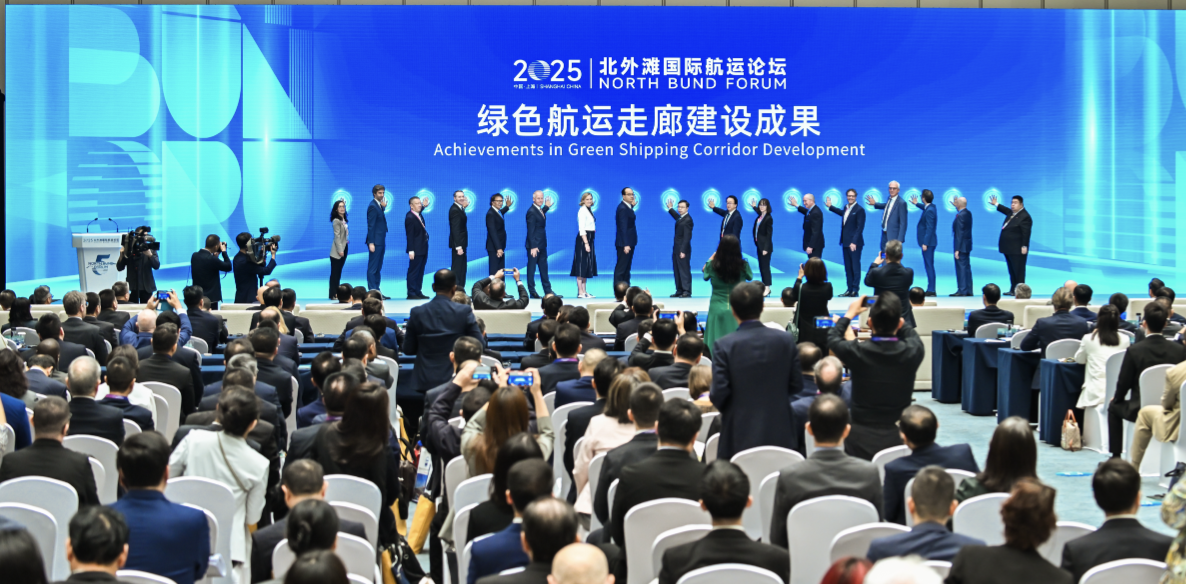
Group 1: Forum Overview - The "2025 North Bund International Shipping Forum" opened in Shanghai with a focus on "Collaborative Promotion of Global Shipping Sustainable Development" [1] - This year's forum is the fifth edition, co-hosted by the Ministry of Transport and the Shanghai Municipal Government, and aims to accelerate the construction of Shanghai as an international shipping center [1] - A record 30 new industry achievements were announced at the opening, with over 50 expected to be released during the forum [1] Group 2: Global Supply Chain Challenges - The global logistics supply chain is facing severe challenges due to rising unilateralism and protectionism [3] - Turkey's Deputy Minister of Transport emphasized the need for multi-modal transport to build a more resilient logistics network, highlighting Turkey's strategic role as a transit hub between China and Europe [3] - Turkey aims to operate 1,000 direct freight trains annually between China and Europe, focusing on infrastructure digitalization, sustainable transport, and enhancing industry resilience [3] Group 3: Aviation and Logistics Developments - Shanghai Pudong Airport has become the world's second-largest air cargo hub, with significant investments in multi-modal transport facilities [4] - The airport's new initiative aims to enhance its international air hub brand, focusing on comprehensive transformation in products, services, and efficiency [4] - China Eastern Airlines plans to open 23 new medium to long-haul international routes starting in 2024, enhancing its connectivity with Belt and Road countries [4] Group 4: Efforts Towards Net Zero Emissions - The shipping and air transport sectors are jointly responsible for about 6% of global greenhouse gas emissions, necessitating collaborative measures for sustainable development [7] - The International Maritime Organization (IMO) aims for net-zero emissions in shipping by around 2050, with significant investments in zero-emission vessels [7] - Over 200 vessels designed for zero or net-zero emissions are currently in operation, with expectations to exceed 1,000 by 2030, representing an investment of over $150 billion [7] Group 5: China's Green Shipping Initiatives - China's shipping industry is making solid progress in green transformation, focusing on a full-chain transport model and reducing carbon intensity [8] - The development of green vessels is being accelerated, with over one-third of new ship orders in 2024 expected to use alternative clean fuels [8] - China is leading in the construction of a green fuel supply network, with ports implementing regular LNG and methanol refueling [8] Group 6: Collaborative Initiatives for Green Shipping - Several green shipping corridors are being established, including collaborations between Shanghai and European ports to facilitate decarbonization [12] - Initiatives are underway to create a green and digital shipping corridor between Shandong and Singapore, promoting low-carbon shipping practices [12] - The forum will feature discussions among international organizations, industry leaders, and experts on key issues and innovations in the shipping sector [12]
寒地“热土”正奋进:东北绘就振兴新图景
Xin Hua Wang· 2025-10-19 00:50
Core Viewpoint - The Northeast region of China is undergoing significant development and revitalization, focusing on transportation integration, modern agriculture, and cross-border trade to enhance its strategic importance in national security and economic growth [1][4][7]. Group 1: Transportation Development - The Northeast region has made strides in transportation integration, enhancing both passenger and freight efficiency, which is crucial for regional development [2]. - The opening of the Shenbei High-speed Railway has reduced travel times significantly, connecting key areas and facilitating integration with the Beijing-Tianjin-Hebei and Bohai Rim regions [2]. - The G331 border tourism corridor in Jilin has been fully opened, contributing to the national "14th Five-Year Plan" and promoting inter-city collaboration [2]. Group 2: Modern Agriculture - The Northeast is focusing on modern agriculture to ensure national food security while extending the agricultural value chain, aiming to transform raw products into higher-value goods [4]. - Black soil regions are experiencing record harvests, with significant advancements in agricultural technology and mechanization, leading to an average yield of over 720 jin per mu, a 26.7 jin increase from the end of the "13th Five-Year Plan" [4][6]. - The ginseng market in Jilin is thriving, with over 600 ginseng products being exported to more than 30 countries, and the total industry chain transaction value expected to reach 18.6 billion yuan in 2024 [5]. Group 3: Cross-Border Trade and Investment - Border cities like Suifenhe are witnessing a surge in foreign visitors, contributing to local tourism and commerce, with a 36.9% increase in tourist numbers during the recent holiday period [7]. - The cross-border e-commerce sector in Jilin is expanding rapidly, with a projected import-export volume of 5.2 billion yuan in 2024, and a 68.3% year-on-year growth in the first half of this year [7][8]. - The Liaoning International Investment and Trade Fair attracted numerous global enterprises, resulting in significant foreign investment growth of 126.3% in the first half of the year [8].
决胜“十四五” 打好收官战丨寒地“热土”正奋进:东北绘就振兴新图景
Xin Hua Wang· 2025-10-18 23:28
Core Viewpoint - The Northeast region of China is experiencing a revitalization, focusing on industrial and agricultural development, enhancing transportation infrastructure, and fostering modern agriculture to boost economic growth and ensure national food security [1]. Group 1: Transportation Infrastructure - The Northeast has been advancing integrated transportation development, significantly improving passenger and freight efficiency, which is crucial for regional growth [2]. - The opening of the Shenbai High-Speed Railway has reduced travel times to Changbai Mountain, enhancing connectivity with the Beijing-Tianjin-Hebei and Bohai Rim regions [2]. - The G331 border tourism corridor in Jilin, a major project under the 14th Five-Year Plan, has been fully opened, further facilitating regional connectivity [3]. Group 2: Agricultural Development - The Northeast is focusing on modern agriculture, aiming to enhance the agricultural value chain and increase farmers' income while ensuring national food security [5]. - In Heilongjiang, major crops have achieved 100% coverage of quality seeds, with a mechanization rate exceeding 99%, leading to an average yield of over 720 jin per mu, a 26.7 jin increase from the end of the 13th Five-Year Plan [5]. - The ginseng market in Jilin is thriving, with over 600 ginseng products being exported to more than 30 countries, and the total industry chain transaction value expected to reach 18.6 billion yuan in 2024 [6]. Group 3: Cross-Border Trade and Investment - The border city of Suifenhe is experiencing a surge in inbound tourism, with a 36.9% increase in visitors during the National Day and Mid-Autumn Festival holidays [10]. - Jilin's cross-border e-commerce is booming, with import and export volumes projected to reach 5.2 billion yuan in 2024, and a 68.3% year-on-year increase in the first half of this year [11]. - The 6th China Liaoning International Investment and Trade Fair attracted numerous global enterprises, with Liaoning's actual foreign investment reaching 2.87 billion USD in the first half of the year, a 126.3% increase [12].

苏州内河港单一码头 集装箱吞吐量创新高
Su Zhou Ri Bao· 2025-10-17 00:17
记者从苏州港航集团获悉,今年9月,苏州内河港白洋湾作业区中港池码头集装箱吞吐量完成10124 标箱。这意味着,苏州内河港单一码头集装箱吞吐量实现单月破万,创该码头运营以来历史新高。 数据显示,今年1至9月,该码头已累计完成集装箱吞吐量超4.7万标箱,较去年同期增长69.8%,9 月单月箱量则同比增长了285.7%。根据货物跟踪,货源主要来自苏州及长三角周边地区,涵盖家电、 汽车配件、家具、纺织等多个品类,出口目的地包括印度、日本、美国、埃及、丹麦等国家和地区。 "我们以内河港口网络化、江海河联运一体化为目标,持续加强各港区间协同联动,不断丰富物流 产品和服务。"港航集团相关负责人介绍。2020年8月,交通运输部批复同意利用江苏(苏州)国际铁路 物流中心沿京杭运河851米岸线建设现代化集装箱智慧码头。2022年12月,中港池码头竣工并投入运 营,该码头设计年吞吐量4.8万标箱、设置两个1000吨级集装箱船泊位。目前,该码头已开通至太仓港 区、上海外高桥、上海洋山集装箱河海直达航线,创新开展CCA(二程船协议)航线业务,实现内河 港进口集装箱水路运输本地清关,内河集装箱"双重运输"实现突破。 更值得一提的是,去年 ...