
空运

Search documents
两岸年货往来升温 厦门对台货运直航网络显成效
Xin Lang Cai Jing· 2026-01-23 13:45
Core Insights - The article highlights the increasing trade activities between Taiwan and mainland China, facilitated by efficient logistics and transportation services at Xiamen International Cruise Center [1][2] - Xiamen has become a key gateway for cross-strait trade, leveraging its geographical advantages to enhance economic exchanges [1] Group 1: Trade Activities - Three Taiwanese cargo ships docked at Xiamen, bringing fresh fruits, seafood, and New Year goods from Taiwan, while carrying daily necessities and cross-border e-commerce products back to Taiwan [1] - The demand for New Year goods has surged, leading to increased shipping activities, with three cargo ships arriving on the same day, marking the second occurrence of such an event this month [1] Group 2: Logistics and Efficiency - Xiamen's port has implemented efficient customs services, allowing cargo ships to complete docking, loading, and departure within 1 to 2 hours, significantly reducing operational costs for businesses [1] - The Xiamen port operates approximately 20 cargo trips weekly on the "Little Three Links" route to Taiwan, characterized by short travel times and high flexibility, while larger routes complement this with stable capacity and timely delivery [1] Group 3: Future Projections - By 2025, Xiamen port is projected to handle over 4,000 inbound and outbound cargo transport vehicles, with Taiwanese vessels accounting for over 2,300 trips, reflecting a growth of over 10% [2] - The establishment of a direct cargo shipping network to Taiwan has shown significant effectiveness, enhancing trade connectivity [2]
航运星球周报第32期-20251231
漫航观察· 2025-12-31 06:39
Investment Rating - The report indicates a positive investment outlook for the cross-border logistics sector, with a noted increase in the sector's performance by 1.16% this week [7][55]. Core Insights - The shipping sector shows a rise in various indices: the China Export Container Freight Index (CCFI) is at 1146.67 points, up by 1.95% week-on-week; the Shanghai Container Freight Index (SCFI) is at 1,656.32 points, up by 6.66%; and the Ningbo Container Freight Index (NCFI) is at 1060.86 points, up by 10.23% [5]. - In air freight, the global air cargo index (BAI) reports a decline, with BAI at 2495 points, down by 3.33%, and BAI80 at 5821 points, down by 8.60% [5]. - Significant developments include MSC's order for six 11,400 TEU container ships at a Chinese shipyard and the opening of new shipping routes to enhance trade efficiency [5][17]. Summary by Sections 1. Global Cross-Border Logistics News - Thailand and Laos postal services have signed a cooperation agreement to enhance e-commerce and cross-border trade [13]. - Amazon has terminated its drone delivery project in Italy due to regulatory challenges [13]. - China plans to adjust certain import tariff rates starting January 1, 2026, to enhance market dynamics [13]. 2. Cross-Border Logistics Data Changes - The shipping sector's weekly leading data shows an increase in freight rates, with the CCFI and SCFI indices reflecting positive trends [5][9]. - Air freight volumes are experiencing a decline, as indicated by the BAI index [5][10]. 3. Capital Market Perspective on Cross-Border Logistics - The cross-border logistics sector has seen a 1.16% increase this week, with a cumulative increase of 2.53% since the beginning of the year [7][55]. - Individual stock performance in the cross-border logistics sector has remained stable overall [7].


答记者问|山东拓展海陆空铁国际物流通道,海运外贸航线总数达271条
Sou Hu Cai Jing· 2025-12-18 00:44
Core Viewpoint - The Shandong Provincial Government is actively promoting the construction of a comprehensive transportation system during the "14th Five-Year Plan" period, focusing on enhancing international logistics channels and high-speed rail development to support economic growth and connectivity [1][12]. International Logistics Development - Shandong is positioned as a key hub for Northeast Asia and the "Belt and Road" initiative, with significant efforts made to enhance the international logistics system, improving supply chain resilience and stability [7]. - The provincial government has implemented high-standard international logistics cooperation platforms and engaged in various international logistics cooperation dialogues, including agreements with Singapore for green and digital shipping corridors [8]. - A robust network of international logistics channels has been established, connecting Shandong to various regions including East Asia, Central Asia, and Europe, with a total of 271 maritime trade routes, leading in northern ports [9]. - The province has initiated innovative multi-modal transport models, such as the trial of land-sea intermodal transport, significantly reducing transport times and costs [10]. High-Speed Rail Development - The Shandong government has prioritized railway construction, achieving a leap from "catching up" to "leading" in high-speed rail development, with the operational mileage increasing from 2,110 kilometers at the end of the "13th Five-Year Plan" to 3,055 kilometers, ranking first in the country [14]. - Several high-speed rail projects have been completed, enhancing connectivity to key urban areas and significantly reducing travel times, such as the Jinan to Zhengzhou route now taking as little as 1 hour and 48 minutes [14][15]. - Future plans include the completion of additional high-speed rail lines by 2028, aiming for a total of 4,400 kilometers of high-speed rail coverage, which will further integrate the Shandong Peninsula urban agglomeration [15].


第15届“亚洲物流航运及空运会议”圆满举行,成功签署11份合作备忘录
Zheng Quan Shi Bao Wang· 2025-11-19 07:57
Core Insights - The 15th "Asian Logistics and Shipping Conference" was successfully held in Hong Kong, attracting over 2,300 participants from more than 40 countries and regions [1] - The conference facilitated substantial cooperation, arranging nearly 400 business matching activities and successfully signing 11 memorandums of understanding across various sectors including aviation, logistics, shipping, and technology [1] - A cooperation agreement was signed between the Hong Kong Trade Development Council and the Greater Bay Area Airlines to deepen collaboration through diverse channels, aiming to promote Hong Kong as a world-class city for global trade and tourism [1]
第15届亚洲物流航运及空运会议在港举行 共探“贸易新局”
Zhong Guo Xin Wen Wang· 2025-11-18 02:53
Core Insights - The 15th Asian Logistics and Maritime Conference opened in Hong Kong, focusing on "New Trade Landscape: Creating Growth Together" with over 80 speakers discussing industry trends and opportunities [1][3] Group 1: Government Initiatives - The Hong Kong government has established "partner port" relationships with ports in Guangxi, Dalian, and San Antonio, Chile [3] - Plans to develop a port community system utilizing AI and blockchain for trade digitization were announced [3] - Expansion of the low-altitude economy "regulatory sandbox" pilot project aims to enhance logistics innovation applications [3] - A roadmap for ESG (Environmental, Social, and Governance) in the logistics industry was introduced to promote sustainable development [3] Group 2: Industry Trends - The global trade network and supply chains are undergoing a structural transformation, presenting new opportunities for businesses [3] - Major economic shifts in trade policies, accelerated trade digitization, and increased demand for sustainability are influencing the logistics sector [3] - Hong Kong is positioned as a crucial hub for air and maritime logistics, enhancing its role as a "super connector" and "super value creator" [3] Group 3: Conference Activities - The conference includes a business matching segment to facilitate partnerships between cargo owners and service providers [4] - Exhibitions feature 90 exhibitors showcasing the latest logistics and supply chain solutions across various sectors, including air transport and low-altitude economy [4] - Discussions will cover key topics such as supply chain management, sustainable development, green energy, and innovative technologies [4]
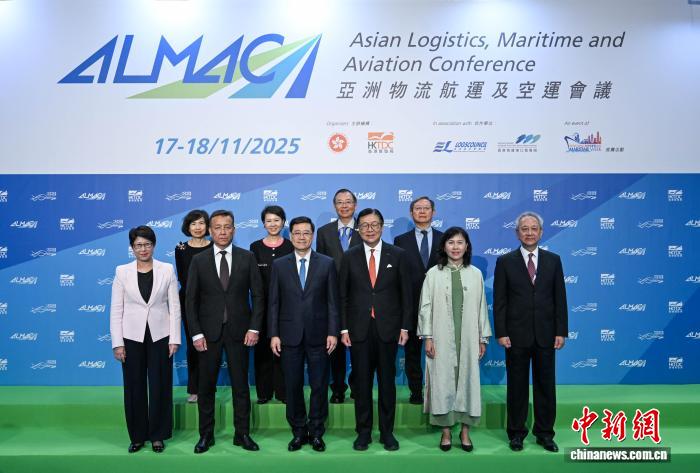
第15届“亚洲物流航运及空运会议”在港举行
Xin Hua She· 2025-11-17 22:57
Core Viewpoint - The 15th "Asian Logistics and Maritime Conference" is being held in Hong Kong, organized by the Hong Kong SAR Government and the Hong Kong Trade Development Council, aiming to promote high-quality development in logistics and supply chain management [1] Group 1 - The conference is taking place from November 17 for two consecutive days at the Hong Kong Convention and Exhibition Centre [1] - Over 80 speakers are participating in the event, indicating a significant gathering of industry experts [1]
第15届亚洲物流航运及空运会议料吸引2300人参与 刘会平:鼓励企业积极出海开拓环球市场机遇
智通财经网· 2025-11-11 12:13
Core Viewpoint - The 15th Asian Logistics, Maritime and Aviation Conference (ALMAC) will be held on November 17-18 in Hong Kong, emphasizing the city's role as an international shipping and air transport hub supported by national policies [1] Group 1: Event Details - The conference is organized by the Hong Kong SAR Government and the Trade Development Council, expecting over 2,300 participants from more than 40 countries and regions [1] - Over 80 star speakers will be featured at the event, focusing on trends and opportunities in logistics, shipping, and air transport [1] Group 2: Strategic Importance - The event aligns with the national 14th Five-Year Plan, which aims to consolidate and enhance Hong Kong's status as an international logistics and air transport center [1] - The Trade Development Council will promote Hong Kong's advantages in high-value supply chain services and encourage businesses to explore global market opportunities, particularly in the Middle East and ASEAN markets [1] Group 3: Conference Theme - The theme of this year's conference is "New Trade Landscape: Co-creating Growth, Collaborative Win-Win," aimed at discussing high-quality development in logistics and supply chain management [1] - The conference seeks to facilitate international exchanges and foster substantial cooperation among enterprises [1]
中企海外仓投入激增三倍,海陆空联运构建全球供应链韧性
Di Yi Cai Jing· 2025-10-19 13:46
Core Viewpoint - The shipping industry is facing urgent challenges due to unilateralism and trade protectionism, necessitating collaborative efforts to ensure supply chain stability and adapt to regionalization trends [1][2]. Group 1: Industry Trends - The forum highlighted a significant trend towards trade regionalization, with cross-continental long-distance transport volumes decreasing by approximately 2%, while regional shipping demand has increased by 6% [3]. - Geopolitical conflicts and trade disputes have led to tariff fluctuations, causing an imbalance in shipping capacity and prompting a shift in supply chains towards nearshore and friendshore solutions [2][3]. Group 2: Multi-Modal Transport - Multi-modal transport, integrating sea, rail, and air freight, is identified as a core strategy for ensuring the stability of global supply chains [4]. - Turkey is positioned as a strategic hub for transportation between China and Europe, enhancing the resilience of global supply chains through improved connectivity [4]. Group 3: Sustainable Development - The forum emphasized the need for a collaborative approach to develop a resilient and sustainable green supply chain, advocating for shared resources and innovative solutions [6]. - The shipping and air transport sectors are responsible for approximately 6% of global greenhouse gas emissions, highlighting the urgency for joint measures to address climate change [5]. Group 4: Shanghai's Role - Shanghai is accelerating its transition from a "basically established" international shipping center to a "fully established" one, focusing on enhancing hub capabilities and service ecosystems [7]. - The city aims to leverage digitalization, green initiatives, and smart technologies to improve operational efficiency and global competitiveness [7]. Group 5: Financial Innovations - Financial innovations are crucial for supporting the international shipping center's development, including the use of blockchain for cross-border payments and the expansion of sustainable finance [8][9]. - The integration of multi-modal transport documents as collateral for financing is expected to drive innovation in trade financing [9].
美线航运、空运市场火热 “抢运潮”带动“涨价潮”
Xin Hua Cai Jing· 2025-05-21 12:06
Core Viewpoint - The shipping market between China and the United States is experiencing a rapid recovery in both sea and air transport due to eased tariffs, leading to significant increases in freight rates and cargo volumes [1][2]. Group 1: Sea Freight Market - The "rush shipping" logic is driving an early peak season for routes to the U.S., as companies are stockpiling inventory in anticipation of potential policy uncertainties [1]. - The Shanghai Shipping Exchange reported a 10% increase in the Shanghai Containerized Freight Index (SCFI) to 1479.39 points, with a notable 31.7% rise in market rates from Shanghai to U.S. West Coast ports [1]. - Freight rates from major Chinese ports to New York have surged approximately 55%, with current quotes ranging from $3700 to $4550 per container [2]. Group 2: Air Freight Market - The air freight market is also seeing a significant rebound, with a reported 10% increase in air freight rates and tight capacity due to rising demand from companies like Amazon [2][3]. - The "90-day window" is expected to boost air cargo volumes on trans-Pacific routes, although the long-term outlook remains uncertain [3]. Group 3: Market Dynamics - The potential for port congestion in the U.S. is high due to increased trade volumes, which may lead to ships being forced to wait offshore, consuming capacity and complicating logistics [2]. - The limited ability to increase air freight capacity quickly due to reliance on cargo and passenger aircraft means that price adjustments are the primary method for airlines and freight forwarders to manage supply and demand [3].