
战略转型

Search documents
枣庄国资收购A股上市公司后大动作!申科股份设立山东子公司,布局“枣庄造”
Sou Hu Cai Jing· 2025-12-22 03:58
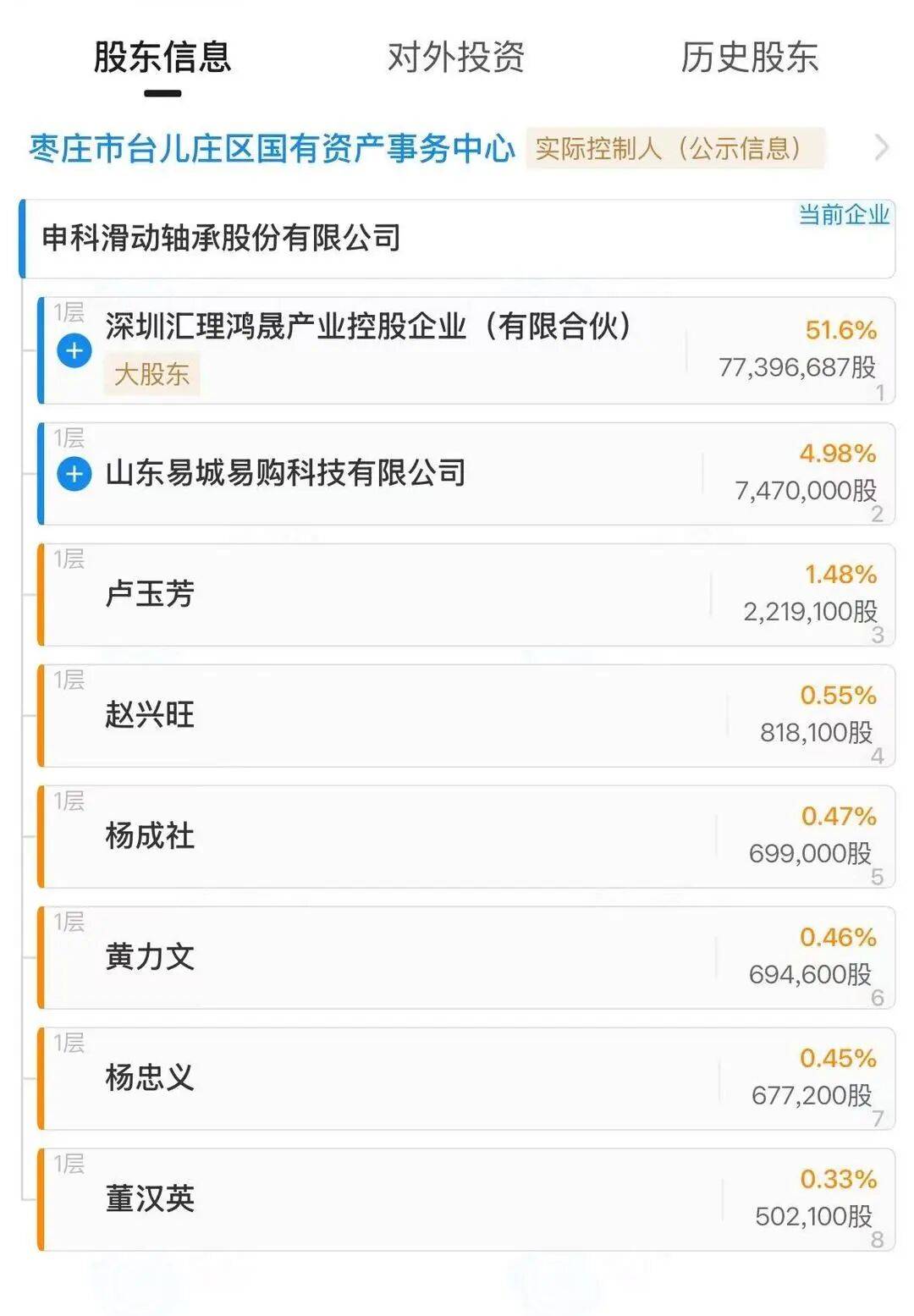
Core Viewpoint - Shinko Co., Ltd. plans to establish a wholly-owned subsidiary, Shandong Shinko Power Equipment Co., Ltd., in Zaozhuang, with a registered capital of 20 million yuan, marking a significant investment in the high-end equipment industry chain following the acquisition of a 51.6% stake by Zaozhuang State-owned Assets [1][3]. Group 1 - The establishment of Shandong Shinko Power Equipment is a strategic move for Shinko Co., Ltd. to transition into a "thick-walled sliding bearing and power equipment system solution provider" [2]. - Zaozhuang was chosen for its regional advantages, labor costs, manufacturing capabilities, and market responsiveness, making it a key location for high-end equipment manufacturing [2]. - Shinko Co., Ltd. was founded in 1996 and went public in 2011, specializing in the research, production, and sales of thick-walled sliding bearings, which are crucial components in major equipment manufacturing [2]. Group 2 - The acquisition of Shinko Co., Ltd. by Zaozhuang State-owned Assets has been highlighted as one of the most successful state-owned acquisitions in the A-share market in recent years, with a total investment of 1.25 billion yuan for a 51.6% stake [3]. - The recent leadership changes at Shinko Co., Ltd. indicate a shift in control from the He family to state-owned entities, with new appointments including Yu Yongqiang as chairman and Song Xiaoming as general manager [5][7]. - The investment in Zaozhuang is expected to enhance Shinko's manufacturing and service capabilities in large structural components and special ships, optimizing its regional layout and improving customer service [8][10].


“卖旧买新”计划终止 渤海化学战略转型紧急“刹车”
Mei Ri Jing Ji Xin Wen· 2025-12-19 16:00
Core Viewpoint - The strategic asset operation of Bohai Chemical has been terminated, which was seen as a significant step in the company's transformation strategy [2][7]. Group 1: Transaction Details - On December 5, Bohai Chemical announced plans to sell 100% of Tianjin Bohai Petrochemical Co. and acquire control of Taida New Materials, but the transaction was terminated on December 19 due to disagreements on core terms [2][7]. - The original plan involved Bohai Chemical's controlling shareholder taking over Bohai Petrochemical and then acquiring Taida New Materials through a combination of share issuance and cash payment [7]. Group 2: Financial Performance - Bohai Petrochemical has been a financial burden for Bohai Chemical, with negative gross margins of -11.14% and -8.13% projected for 2023 and 2024, respectively [7]. - In the first half of 2025, Bohai Petrochemical reported a net loss of 326 million yuan, accounting for over 90% of the company's total net loss [7]. Group 3: Taida New Materials Overview - Taida New Materials has shown significant growth, with projected revenues of 1.167 billion yuan in 2024, a year-on-year increase of 146.02%, and a net profit of 600 million yuan, up 1112.41% [7]. - The company has attempted to go public three times but has faced challenges, including scrutiny over its financial metrics and performance consistency [9][10]. Group 4: Industry Context - Bohai Chemical's core business is propane-to-propylene, primarily serving Shandong and the North China region, but the chemical industry is currently facing challenges due to low oil and petrochemical prices [7]. - The market for phthalic anhydride, a key product of Taida New Materials, has seen price increases from 19,000 yuan/ton to 50,000 yuan/ton due to supply-demand imbalances following the closure of a major competitor's production [12].


蜀道装备(300540) - 投资者活动记录表(2025年12月19日)
2025-12-19 08:40
Group 1: Strategic Development - The company aims to transform from a "traditional equipment manufacturer" to a "comprehensive service provider in gas and new energy" through strategic upgrades and investments in industrial gases, LNG, and hydrogen sectors [2] - A partnership with Shudao Group's specialized investment institutions is established to leverage capital for industrial transformation, creating a new development pattern that integrates technology, industry, and capital [2] Group 2: Joint Ventures and Collaborations - The joint venture "Shudao Toyota Hydrogen Technology (Sichuan) Co., Ltd." has a registered capital of 236 million yuan, with the company holding 45%, Shudao Group 5%, and Toyota 50% [3] - The joint venture will establish an independent R&D team and local production lines in Chengdu for hydrogen fuel cell systems, targeting commercial vehicles and non-vehicle applications in the Sichuan-Chongqing economic circle [3] Group 3: Hydrogen Storage Technologies - Liquid hydrogen (LH2) is preferred for applications requiring high energy density, such as aerospace and long-distance transport, while solid-state hydrogen storage is better suited for distributed, small-scale applications [3] - Both technologies are complementary, serving different market needs rather than being direct substitutes [3] Group 4: Research and Development Progress - The company is collaborating with leading industry players on hydrogen-powered drones and trains, with ongoing projects utilizing onboard liquid hydrogen storage for hydrogen-powered trains [3] - The company ensures compliance with information disclosure regulations, maintaining transparency and accuracy in communications with investors [3]

手握超9亿吨石灰石资源!上峰水泥表示不盲目扩张水泥主业 打造产业投资“第二曲线”
Zhong Guo Zheng Quan Bao· 2025-12-18 03:32
Core Viewpoint - The company has achieved industry-leading ROE for five consecutive years through operational efficiency rather than scale expansion, positioning its cement business as a cash flow fortress while strategically investing in new sectors like semiconductors [1][4]. Group 1: Cement Business Performance - The company has maintained an average ROE of 17.83% over the past five years, with sales gross margin consistently ranking among the top in the industry [3]. - The company controls over 900 million tons of limestone resources, ensuring cost efficiency and a robust national layout that enhances risk resilience [3]. - In 2024, the company's operating cash flow is projected to reach 1.039 billion yuan, with a year-on-year growth of 23.99% in the first half of 2025 [3]. Group 2: Strategic Investment in Semiconductors - The company has invested over 2 billion yuan in the semiconductor sector, focusing on creating a chain ecosystem that includes chip design, manufacturing, and testing [6]. - The company’s equity investment business contributed over 22% to net profit in 2024, with cumulative profits of 530 million yuan over five years [6]. - Recent investments include successful listings of companies in the semiconductor field, indicating a shift from financial investment to deeper industrial collaboration [7]. Group 3: Future Growth Strategy - The company aims to develop a synergistic model comprising traditional building materials, equity investment, and new material growth businesses, referred to as the "three driving forces" [9]. - The strategic plan includes enhancing operational efficiency in the cement business while preparing to invest over 3 billion yuan in equity assets [9]. - The company is transitioning from being an "efficiency champion" in a cyclical industry to an "industry enabler" focused on high-quality transformation [9].

宗馥莉,退出一家“娃哈哈系”核心公司
Shang Hai Zheng Quan Bao· 2025-12-17 08:40
Core Viewpoint - The recent management change at Hangzhou Wahaha Food Co., Ltd. signifies a major shift in the company's leadership structure, with宗馥莉 stepping down and 许思敏 taking over key roles, indicating a potential strategic transition for the Wahaha brand [1][2]. Group 1: Company Overview - Hangzhou Wahaha Food Co., Ltd. was established on October 28, 1992, with a registered capital of approximately 242 million yuan, focusing on pre-packaged food sales and holding 387 trademarks of the "Wahaha" series, valued over 90 billion yuan [1]. - The company serves as a core platform for trademark operations and food sales within the Wahaha Group, linking production bases and distribution networks across the country [1]. Group 2: Leadership Transition - 许思敏, born in 1994 and with a legal background from Zhejiang University, has rapidly ascended within the company, having previously served as the head of the legal department and now taking on a critical role in the subsidiary [2]. - The appointment of 许思敏 is interpreted as a move to balance interests among state-owned assets, family, and employees, positioning her as a potential "proxy" for宗馥莉 [2]. Group 3: Strategic Implications - Despite stepping down from management,宗馥莉 retains a significant stake of 29.40% in Hangzhou Wahaha Group, making her the second-largest shareholder and maintaining substantial influence over strategic decisions [3]. -宗馥莉 is reportedly pursuing an "external" strategy, with her controlled宏胜集团 applying for the "Wah Xiaozong" trademark and transitioning employees and contracts to the宏胜 system, indicating a clear brand separation [3]. - The leadership change reflects the need for Wahaha to navigate complex governance dynamics and market reforms, with 许思敏 facing challenges such as managing state oversight, addressing employee equity lawsuits, and rebuilding distributor confidence [3].
摆脱生长激素收入依赖,长春高新也走上了对外授权交易
第一财经网· 2025-12-17 08:08
Core Viewpoint - Changchun High-tech is shifting its business model from reliance on growth hormone revenue to a diversified approach, highlighted by its recent licensing agreement with Yarrow Bioscience for the development of GenSci098, a monoclonal antibody for thyroid-related diseases [1][4]. Group 1: Licensing Agreement Details - Changchun High-tech's subsidiary, SaiZeng Medical, signed an exclusive licensing agreement with Yarrow Bioscience for the global development, production, and commercialization rights of GenSci098 outside Greater China [1]. - SaiZeng Medical is expected to receive an upfront payment of $120 million, which includes a non-refundable, non-deductible upfront payment of $70 million and a subsequent milestone payment of $50 million [1]. - The total potential milestone payments could reach $1.365 billion, along with over 10% sales royalties after product launch [1]. Group 2: Market Context and Strategic Shift - The clinical trials for GenSci098 targeting thyroid eye disease were approved in both the U.S. and China, with applications for treating Graves' disease also receiving approval from the Chinese regulatory authority [2]. - SaiZeng Medical is a wholly-owned subsidiary of Changchun High-tech's Changchun JinSai Pharmaceutical, which has historically been a significant revenue contributor, accounting for approximately 83% of the company's revenue and 99.5% of its net profit in the first three quarters of 2025 [4]. - Due to increased competition in the growth hormone market, JinSai Pharmaceutical's performance has weakened, leading to a 58.23% year-on-year decline in net profit for Changchun High-tech [4]. - The licensing agreement marks a strategic transition for JinSai Pharmaceutical, moving towards a diversified business model that includes growth hormones, innovative drugs, and revenue from research and development licensing [4][5]. Group 3: Market Potential and Strategic Goals - The market for thyroid eye disease and Graves' disease is substantial, with North America and the Asia-Pacific region accounting for over 65% of the global market share [5]. - The collaboration with Yarrow Bioscience aims to leverage both companies' strengths to accelerate the global development of GenSci098 and maximize its commercial potential [5]. - Changchun High-tech's business development strategy focuses on utilizing positive clinical data to foster international partnerships for development and licensing [5].


公司快评︱持续亏损却卖掉赚钱资产,科森科技的战略抉择能否经得住市场考验?
Mei Ri Jing Ji Xin Wen· 2025-12-17 03:13
Core Viewpoint - Kosen Technology is facing scrutiny over its decision to sell its profitable subsidiary, Kosen Medical, amid ongoing losses, raising questions about the company's future strategic direction and operational viability [1][2]. Group 1: Company Strategy and Financial Performance - Kosen Technology plans to sell Kosen Medical for 915 million RMB, achieving a significant valuation increase of 206.45%, which is intended to enhance its financial performance [1]. - The company has reported consecutive losses for two years, with projected net losses of 281 million RMB in 2023 and 477 million RMB in 2024, indicating ongoing financial challenges [2]. - The sale is part of a broader strategy to optimize business operations and restructure finances, aiming to return to profitability while focusing on high-growth areas such as thermal management modules and robotic components [2]. Group 2: Investor Concerns and Transparency - Investors express concerns regarding the potential impact of asset sales on their interests, questioning the rationale behind selling a profitable asset during a period of financial distress [2]. - Kosen Technology is urged to improve transparency in its disclosures, providing detailed information about the transaction, including valuation methods and expected future benefits, to reassure investors [2]. - The company is also advised to strengthen its strategic planning and clarify the pathways and expected returns of new business initiatives to build investor confidence in its future direction [2][3].

东方园林大转型!收购新能源企业,证券简称将变更为“东方新能”
Sou Hu Cai Jing· 2025-12-17 01:21
Core Viewpoint - Beijing Oriental Garden Environment Co., Ltd. (Oriental Garden) announced two significant initiatives on December 16, marking a key step in its strategic transformation towards the renewable energy sector [1][3] Group 1: Acquisition Details - The acquisition will be conducted through a newly established entity, Oriental New Energy (Beijing) Enterprise Management Center (Limited Partnership), funded by Oriental Garden and its wholly-owned subsidiary [3] - The acquisition includes two transactions: one involves bidding for 100% equity of Haicheng Ruihai New Energy Wind Power Co., Ltd. at a base price of 14.1 million yuan, and the other involves acquiring 80% equity of Beijing Electric Investment Ruixiang New Energy Development Co., Ltd. [3] - Haicheng Ruihai focuses on distributed wind power, with a grid-connected capacity of 41 megawatts expected by June 30, 2025, while Electric Investment Ruixiang operates centralized wind farms and distributed photovoltaic power stations with a total grid-connected capacity of 761.62 megawatts across several provinces [3] Group 2: Strategic Transformation - The transaction aims to implement the company's restructuring plan by enhancing its renewable energy business, which includes investment, development, construction, and operation of photovoltaic and wind power projects [3][4] - Following its judicial restructuring completed by the end of 2024, Oriental Garden has successfully divested its traditional ecological and environmental protection business, establishing renewable energy as its core business [4] - The company reported a significant reduction in net profit loss to 2.0659 million yuan for the first three quarters of 2025, with net cash flow from operating activities reaching 66.7869 million yuan, a year-on-year increase of 170.84% [4]


年内二度换帅 金字火腿急什么
Bei Jing Shang Bao· 2025-12-16 16:19
Group 1 - The core point of the article is the leadership change at Jinzi Ham, with the appointment of Zheng Hu as the new president, following the resignation of Guo Bo, marking the second presidential change within the year [1] - Zheng Hu, the son of the controlling shareholder and chairman Zheng Qingsheng, has a background in automotive sales and has been with Jinzi Ham in a vice president role for less than six months before his promotion [1] - Zheng Qingsheng recently became the controlling shareholder of Jinzi Ham, acquiring an 11.98% stake from the previous controlling shareholder, which gives him a total voting power of 18.83% [1] Group 2 - Following Zheng Qingsheng's takeover, Jinzi Ham has ventured into the semiconductor industry, establishing two wholly-owned subsidiaries focused on chip business [2] - The company plans to invest up to 300 million yuan to acquire up to 20% of Zhongsheng Microelectronics, which is currently not profitable, indicating a significant potential valuation increase [2] - Strategic positioning expert Jian Junhao suggests that the leadership change and diversification into semiconductors reflect a need for strategic transformation due to stagnation in the main business [2] Group 3 - Financial results show that Jinzi Ham's revenue for the first three quarters of 2025 was 222 million yuan, a year-on-year decline of 13.97%, with a net profit drop of 26.25% [3] - The company's main products, including ham and specialty meat products, have also seen significant revenue declines, with the ham business down 9.1% and branded meat revenue down 35.25% [3] - Expert Jian Junhao advises a cautious approach to entering the semiconductor sector, emphasizing the importance of stabilizing the core ham business while exploring new growth opportunities [3]

实控人之子接任总裁,金字火腿年内二度换帅
Bei Jing Shang Bao· 2025-12-16 13:08
Core Viewpoint - The company Jinzi Ham has undergone a leadership change with the appointment of Zheng Hu as president, following the resignation of Guo Bo, indicating a strategic shift as the company explores new business avenues in the semiconductor industry [2][3]. Group 1: Leadership Changes - Guo Bo resigned as president of Jinzi Ham due to personal reasons, while remaining as vice chairman and a member of the board's strategic committee [2]. - Zheng Hu, son of the controlling shareholder Zheng Qingsheng, has been appointed as the new president, marking the second presidential change within the year [2]. - Zheng Hu has a background in automotive sales and has been involved with Jinzi Ham since July 2025 as vice president [2]. Group 2: Strategic Shift to Semiconductors - Following Zheng Qingsheng's acquisition of controlling interest in Jinzi Ham, the company has established two wholly-owned subsidiaries focused on semiconductor business [3]. - Jinzi Ham plans to invest up to 300 million yuan to acquire up to 20% equity in Zhongsheng Microelectronics, a company currently not profitable, indicating a significant strategic pivot [3]. - The investment is based on a pre-investment valuation of 1 billion yuan, suggesting a potential increase in value of 9710% by the end of 2024 [3]. Group 3: Financial Performance - For the first three quarters of 2025, Jinzi Ham reported revenue of 222 million yuan, a year-on-year decline of 13.97%, with a net profit attributable to shareholders of 22.01 million yuan, down 26.25% [4]. - In Q3 alone, revenue fell by 11.45% to 52.61 million yuan, with a net loss of 905,800 yuan [4]. - The company's main product lines, including ham and specialty meat products, have also seen declines in revenue, with the ham business down 9.1% and branded meat business down 35.25% [4].
