空间计算

Search documents
苹果设计炸了!Liquid Glass 颠覆十年审美,这交互我看呆。。。
程序员的那些事· 2025-06-10 01:44
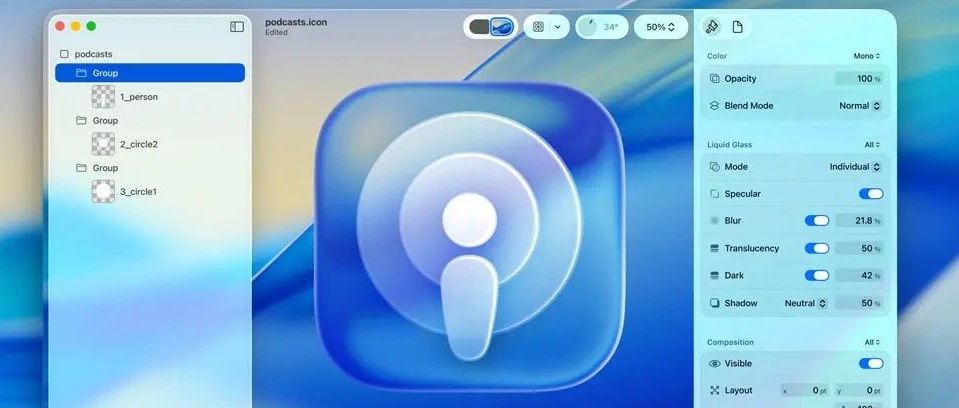
Core Insights - The article discusses the transformative updates presented at WWDC 2025, focusing on software architecture, design language, and AI infrastructure, despite the lack of hardware surprises [1][2]. Group 1: Liquid Glass Design Language - Apple introduced the "Liquid Glass" design language, marking the most significant visual innovation since the flat design in 2013. This semi-transparent material reflects and refracts the surrounding environment, dynamically responding to user actions [3]. - Developers are advised to prioritize using system-provided UIBarAppearance for navigation bars and implement UIBlurEffect for a layered glass effect. Xcode 17 includes design review tools to automatically detect visual inconsistencies [4]. Group 2: Foundation Models Framework - Apple has opened its device-side foundational model framework to developers, which is crucial for building AI functionalities. This includes a unified design standard across all platforms (iOS, iPadOS, macOS, watchOS, tvOS, and visionOS), significantly reducing multi-platform adaptation costs [5]. - New UIVisualEffectView subclasses support glass-like effects, and developers must ensure correct layering of semi-transparent effects in existing applications [5]. - The CoreML's FMFramework allows developers to directly call a 30 billion parameter model on-device for tasks like text generation and image understanding, adhering to Apple's privacy standards [6]. Group 3: iPadOS 26 Productivity Revolution - iPadOS 26 introduces true background multitasking, allowing developers to utilize the new UIWindowScene API for flexible window management. Existing applications using private APIs for window management should transition to official multi-window APIs [9][11]. - The new API supports free scaling and layered window management, while the BGProcessingTask enables computation-intensive background tasks, suitable for video rendering and document processing [11]. Group 4: Xcode 17 and Swift 6 Updates - The development toolchain has received significant upgrades, including the integration of Swift Assist, an AI-based code completion tool that improves accuracy by 40% compared to its testing version [13]. - Swift 6 introduces features such as complete data race safety, enhanced macro systems, and improved testing tools with visual test orchestration [13]. Group 5: visionOS 26 Spatial Computing Expansion - The Vision Pro ecosystem continues to evolve with new features, including support for third-party controllers and the GazeInteraction framework, enabling innovative interactions like gaze scrolling and focus magnification [14].


今早,库克画下另一张大饼
虎嗅APP· 2025-06-10 00:16
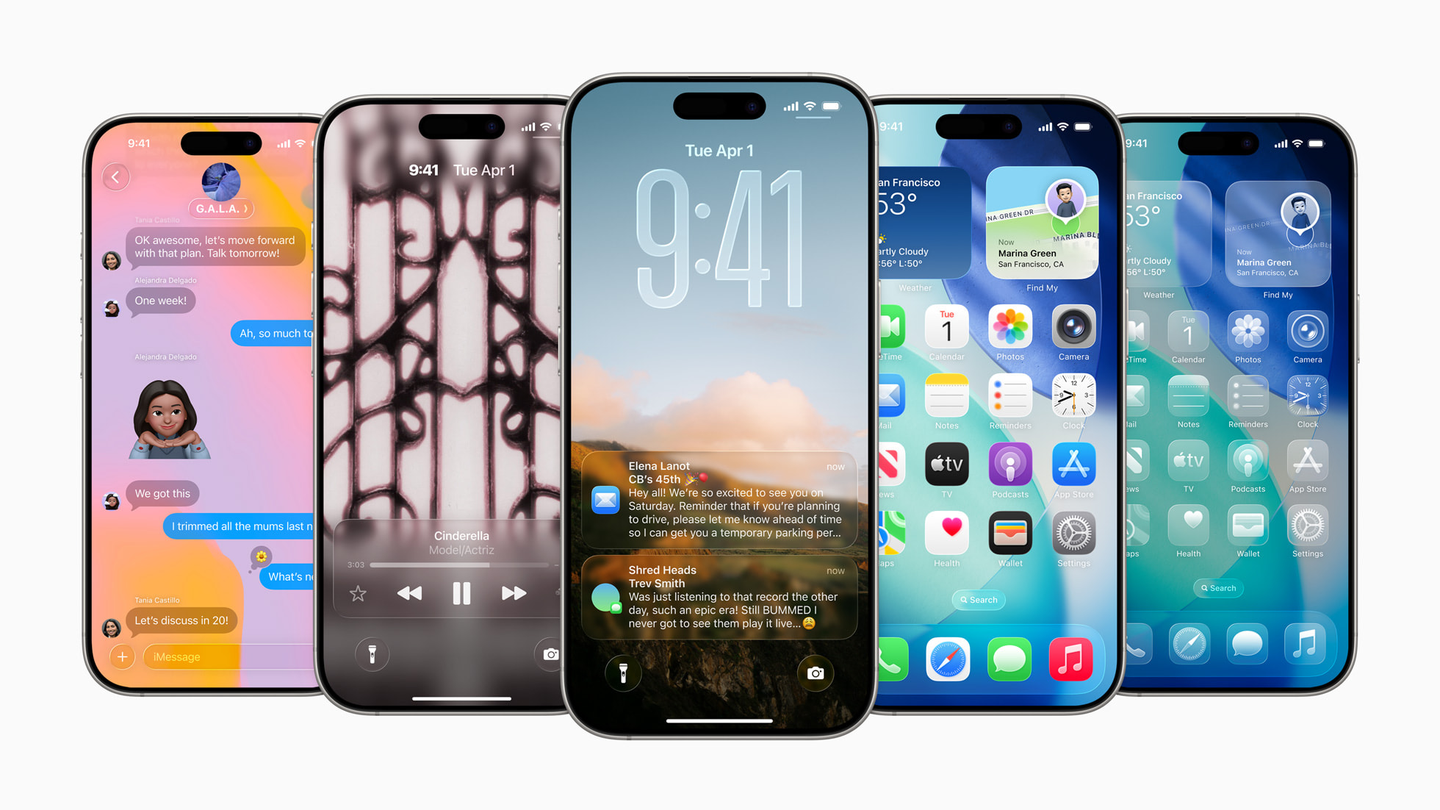
Core Viewpoint - The article discusses Apple's recent WWDC 2025 event, highlighting the company's slow progress in AI and the introduction of new design elements in its operating systems, particularly the Liquid Glass concept in iOS 26, while questioning the effectiveness of these changes in meeting user demands and the competitive landscape in AI [4][6][23]. Group 1: AI and Market Position - Apple's stock has dropped approximately 20% this year, making it the worst performer among the "Big Seven" in the U.S. stock market, raising concerns about its ability to regain a competitive edge in AI [4]. - During WWDC 2025, Apple did not showcase significant advancements in its AI capabilities, with the presentation of the "Live Translation" feature failing to impress compared to competitors [6][11]. Group 2: Liquid Glass Design Concept - The Liquid Glass design language introduced in iOS 26 is described as a semi-transparent material that enhances visual effects by reflecting and refracting the surrounding environment [7][10]. - The new design brings dynamic light and shadow effects, allowing for a more lively interface compared to the static nature of previous designs [10][11]. - The article suggests that the enhancements in iOS 26 may not meet the high expectations set by the previous iOS 7 release, which was more user-driven [11][12]. Group 3: Space Computing and Future Directions - Apple is focusing on "space computing," with the Vision Pro headset leading this initiative, although its current sales figures are relatively low at 400,000 to 500,000 units [15][22]. - The integration of Liquid Glass aims to create a consistent user experience across 2D and 3D interfaces, addressing the challenges of interaction between different dimensions [19][20]. Group 4: iPadOS and macOS Enhancements - iPadOS 26 introduces significant upgrades, including window control buttons and a top menu bar similar to macOS, enhancing productivity features [23][26]. - macOS 26 integrates shortcuts, Spotlight, and Apple Intelligence, allowing users to execute functions using natural language, which reflects a shift towards more user-friendly interfaces [27][28]. - The article raises concerns about whether these enhancements could cannibalize the MacBook Air's market position, given the overlap in functionality [26].

今早,库克画下另一张大饼
Hu Xiu· 2025-06-10 00:04
Core Viewpoint - Apple's stock has dropped approximately 20% this year due to slow progress in AI strategy, making it the worst performer among the "Big Seven" in the U.S. stock market, raising questions about when the tech giant will regain its competitive edge in the AI sector [1] Group 1: WWDC 2025 Highlights - Apple held the WWDC 2025 conference, updating its entire product ecosystem, including iOS, iPadOS, macOS, visionOS, and tvOS, with a notable change in OS naming conventions to use years as suffixes [2] - A significant visual redesign called "Liquid Glass" was introduced, marking the first universal design across all platforms in 12 years, aimed at enhancing user interface dynamics [2][4] Group 2: AI and Liquid Glass - During the iOS 26 launch, Apple introduced the "Live Translation" feature, but failed to showcase significant advancements in its AI capabilities, which were expected to be more developed compared to previous announcements [3] - The Liquid Glass design introduces dynamic light and shadow effects, enhancing the visual experience by reflecting and refracting the surrounding environment, which contrasts with the static nature of previous designs [6][9] Group 3: User Experience and Future Directions - The introduction of Liquid Glass aims to create a more immersive user experience, aligning with the capabilities of the new A18 chip in the iPhone 16 series, which can support real-time rendering of dynamic effects [9] - Apple is focusing on creating a unified cross-platform visual experience to address the challenges of integrating 2D and 3D interactions, particularly in the context of its Vision Pro headset [10][11] Group 4: iPadOS and macOS Enhancements - iPadOS 26 features significant upgrades, including window control buttons and a top menu bar similar to macOS, enhancing productivity tools and user interface [19][23] - macOS 26 integrates features like natural language commands for quick access to functions, indicating a strategic move to enhance user experience across devices [27] Group 5: Market Position and Future Challenges - Despite the advancements in iPadOS and macOS, there are concerns about whether these features could cannibalize the MacBook Air's market position [26] - The article raises questions about Apple's ability to deliver on its AI promises, especially if it continues to lag behind competitors in showcasing substantial AI capabilities [28]
Rokid要借速卖通跳板全球突围
Hua Er Jie Jian Wen· 2025-06-06 11:57
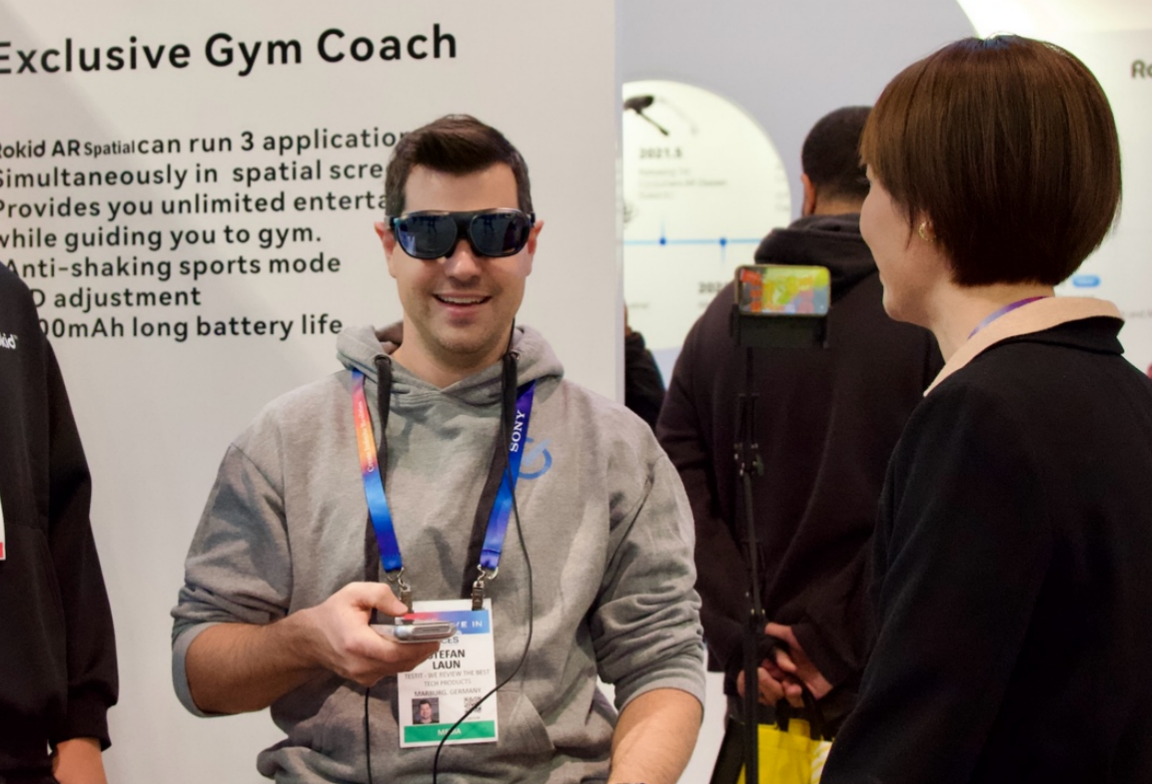
Core Insights - Rokid has launched its overseas version of AR glasses, Rokid AR Spatial, on AliExpress, aiming to expand its international market presence [3][4] - The product features a unique intelligent refractive and interpupillary distance adjustment system, making it lightweight and comfortable for prolonged use [3] - Rokid AR Spatial is positioned as a competitor to Apple's Vision Pro, with a significantly lower price point of $648, potentially dropping to around $500 with promotional subsidies [9] Company Strategy - Rokid's international business head, Shao Huaqiang, emphasized the importance of a successful launch in overseas markets, with AliExpress chosen for its logistics efficiency and customer service capabilities [5][6] - The partnership with AliExpress is part of a broader strategy to leverage the platform's "100 Billion Subsidy" initiative, which has previously resulted in significant sales growth for participating brands [5][6] - Rokid aims to enhance its brand presence in the global market, having transitioned from B2B to B2C sales in 2023, with plans to expand into offline channels later this year [7] Market Context - The AR glasses market is experiencing rapid growth, with a projected increase in global shipments from 500,000 units in 2023 to 800,000 units in 2024, representing a 63% year-on-year growth [12] - The competitive landscape includes major players like Apple and Meta, with Rokid positioning itself as a viable alternative to the high-priced Apple Vision Pro [8][9] - The AR sector is attracting significant investment, with expectations for continued growth driven by advancements in technology and consumer interest in augmented reality applications [12][13]
破界重构:麦克斯韦国际以空间操作系统筑基数字未来——麦克斯韦国际创始人、CEO马鑫
Sou Hu Cai Jing· 2025-06-05 09:05
Core Insights - Maxwell International is redefining the underlying logic of the information world by elevating the internet from a two-dimensional plane to a three-dimensional space, positioning itself as a leading Chinese technology source in the new generation of spatial internet [2][4] - The company’s core product, MSpaceOS, has been recognized in the "Brand Strong Country Preferred Project," marking a significant breakthrough in achieving autonomous and controllable digital space infrastructure in China [2] - The firm is leveraging an open ecological strategy to break through the closed technological systems of international giants, creating a unique strategic high ground for China in the global digital infrastructure competition [4] Technological Breakthroughs - Maxwell International's core competitiveness is built on two major technological breakthroughs: the HMML language, which is the world's first universal language for spatial internet that deeply integrates 2D and 3D modalities, and a microkernel architecture for its spatial internet operating system [6][10] - The HMML language, developed over eight years, provides a technological lead of at least four years over competitors, making it difficult for them to catch up during this critical window [6] - The microkernel architecture allows for the decoupling of terminal devices, enabling compatibility with over ten categories of terminals, including mobile phones, XR devices, and robots, thus breaking the hardware bundling of Apple's VisionOS [6][7] Industry Applications - The company is not only innovating at the technical level but also through its unique industry layout, integrating new information space, new energy space, and new financial space to promote the co-evolution of industry and technology [10] - In the energy sector, Maxwell International has developed a spatial operating system for wind, solar, and nuclear energy that enables three-dimensional visualization and intelligent decision-making for energy scheduling [10] - In finance, the company has deployed a big data comprehensive management decision-making system that visualizes complex financial transactions within a spatial network [10] Ecosystem Activation - Maxwell International has established a complete distribution system through three product categories to activate the industrial ecosystem, covering 28 industries with spatial operating systems and adapting to over 100 hardware solutions [13] - The MSpaceOS enables efficient creation and circulation of 3D models and environments, transforming traditional flat information interaction modes and driving digital transformation across multiple industries [13] Strategic Vision - The founder, Ma Xin, emphasizes the importance of building a self-researched and globally leading spatial operating system to safeguard digital sovereignty and occupy the high ground of digital three-dimensional space [18][20] - The company aims to create a global digital space economic community through cross-industry collaborations, accelerating the deep integration and upgrading of industries [20] - Maxwell International's vision is to promote the creation, prosperity, and sustainable development of the spatial internet, making it an indispensable global public infrastructure resource [20][25] Conclusion - Maxwell International is positioned as a "space builder," reshaping China's status in the global digital competition landscape through its innovative practices and strategic foresight [27] - The company's achievements reflect not only its technological and commercial success but also its profound insights into global digital economic trends and proactive positioning [27]

Rokid AR Spatial新品发布:定价为648美元,速卖通独家首发
news flash· 2025-06-05 03:28
Core Viewpoint - Rokid has launched its new product, Rokid AR Spatial, which will officially debut overseas on June 15, with AliExpress as the exclusive global launch platform. The product is part of the "BigSave" brand export plan, featuring advanced AR technology at a competitive price point compared to similar products in the market [1] Group 1 - Rokid AR Spatial is designed for practicality and immersion, featuring the world's first intelligent adjustment system for refractive power and interpupillary distance, making it lightweight and comfortable for extended wear [1] - The retail price of Rokid AR Spatial is set at $648, offering a similar core multi-screen spatial experience as Apple's Vision Pro, which is priced at $3,500 [1] - On the AliExpress platform, users can benefit from additional platform incentives, bringing the effective price down to as low as $518 [1]
花旗给予苹果“买入”评级,目标价240美元
Huan Qiu Wang· 2025-06-03 08:32
Core Viewpoint - Citigroup has assigned a "Buy" rating to Apple (AAPL.US) with a target price of $240, noting that investor expectations for the 2025 Worldwide Developers Conference (WWDC) are low [1]. Group 1: WWDC 2025 Expectations - WWDC 2025 is scheduled to open on June 9, with the theme "Breakthrough Updates Coming to Apple Platforms" [3]. - The conference is expected to announce the latest software updates for iPhone, iPad, Mac, and new features for Apple Intelligence [3]. - Despite the delay of the AI-supported personalized Siri feature until 2026, Citigroup believes Apple has a significant advantage in the personal AI service device era due to its full-stack approach [3]. Group 2: Product and System Updates - Apple plans to rename its operating systems based on the year, with the upcoming releases being iOS 26, macOS 26, and iPadOS 26 [3]. - A major overhaul of the multi-device user interface is anticipated, aiming for a more unified and simplified design that aligns closely with the Vision Pro operating system [3]. - Citigroup views these updates as a demonstration of Apple's commitment to creating a highly consistent and integrated ecosystem, emphasizing its focus on spatial computing [3]. Group 3: Apple Intelligence Developments - Beyond operating system updates, the focus remains on the upgrade of Apple Intelligence [4]. - Due to the significant delay in Siri's major update during the iOS 18 cycle, Apple may introduce a deeply integrated version of personalized Siri during the iOS 26 cycle, although the specific timing is uncertain [4]. - Citigroup anticipates that Apple Intelligence features will expand to more regions and may include new partnerships with large language models (LLMs) beyond OpenAI, such as Gemini [4].
花旗给予苹果(AAPL.US)“买入”评级,押注WWDC25生态升级
智通财经网· 2025-06-03 07:53
花旗给予苹果(AAPL.US)"买入"评级,目标价240美元。该行认为投资者对苹果2025年全球开发者大会 (WWDC)的预期较低。 WWDC25定于6月9日开幕,主题为"突破性更新即将登陆苹果各平台"。预计活动将公布iPhone、iPad、 Mac等产品的最新软件更新,以及Apple Intelligence的新功能。 在所有操作系统更新之外,花旗认为焦点仍是Apple Intelligence的升级。由于iOS 18周期内Siri重大更新 延迟,苹果可能会在iOS 26周期推出承诺过的深度应用集成版个性化Siri,但具体时间仍不确定。该行 预计Apple Intelligence功能将扩展至更多地区,并可能新增除OpenAI外的LLM合作伙伴(如Gemini)。 苹果计划将操作系统命名格式改为基于年份,这意味着WWDC 2025发布的系统将命名为iOS 26、 macOS 26、iPadOS 26等。除命名外,多设备用户界面预计将大幅革新,设计更统一简洁,尤其值得注 意的是会与Vision Pro操作系统更相似。花旗认为这些更新彰显苹果对打造一致性更高、集成度更强的 生态系统的持续投入,以及对空间计算的重 ...
雷鸟创新发布雷鸟X3 Pro等多款新品 融合手机与AI应用生态
Zheng Quan Shi Bao Wang· 2025-05-27 13:34
Core Insights - RayNeo, a leading brand in consumer AR, launched several innovative products including the RayNeo X3 Pro AR glasses, RayNeo Air 3s series pocket TV, and AI photography glasses RayNeo V3 Slim, showcasing its advancements in AI and AR technology [1] Market Position - According to Runto, RayNeo holds a 50% market share in the online AR/AI photography glasses market in China as of Q1 2025, leading the industry [1] - The RayNeo V3 has a remarkable 95% market share in the AI photography glasses segment, while the RayNeo Air 3 has been the best-selling product in its category for 20 consecutive weeks [1] Product Features - The RayNeo X3 Pro AR glasses feature the world's smallest mass-produced full-color Micro-LED light engine and a 43-inch full-color 3D transparent display [1] - It incorporates the Falcon Imaging Plus system, achieving spatial positioning accuracy within 0.5%, and supports multiple interaction methods including Apple Watch control and voice commands [2] - The glasses are powered by the Snapdragon AR1 platform, offering enhanced AI capabilities and multimedia processing while maintaining a lightweight design of 76g [2] Software and Ecosystem - The RayNeo X3 Pro runs on the new RayNeoOS 2.0, integrating features like AI translation, spatial navigation, and first-person photography, enhancing user experience [2] - It is among the first AR glasses to support visual Live AI interaction, allowing users to receive instant intelligent feedback in various scenarios [3] - RayNeo plans to launch an AI Agent app store with various AI applications, further integrating AI into daily life [3] Collaborations - RayNeo has partnered with Alibaba Cloud, Amap, and Ant Group to explore new applications of spatial computing technology in smart travel and urban living [3] Additional Product Launches - The RayNeo Air 3s series features advanced optical technology and a new 3D surround sound system, significantly improving viewing experience [4] - The RayNeo Magic Box 2nd generation enhances interaction with a new touch control system and high-precision touchpad [4] Pricing and Availability - The RayNeo X3 Pro is priced starting at 8999 yuan, with a subsidized price of 7649 yuan, available for pre-sale on JD and Tmall [4] - The RayNeo Air 3s starts at 1499 yuan, with a subsidized price of 1274 yuan, and the Air 3s Pro starts at 1599 yuan, with a subsidized price of 1359 yuan [4] - The RayNeo V3 Slim is priced from 1799 yuan, with a subsidized price of 1529 yuan, also available for sale on major platforms [4]
硅谷最疯CEO:卖掉摇钱树《宝可梦GO》后,他做了什么?
创业邦· 2025-05-27 10:11
Core Insights - Niantic has announced a significant strategic shift by selling its gaming business for $3.5 billion to Scopely and rebranding itself as Niantic Spatial, focusing entirely on AI development for enterprise clients [4][5][7]. Company Strategy - The restructuring aims to allow both the gaming and AI divisions to pursue their respective futures more effectively, as stated by CEO John Hanke [5]. - Niantic is now concentrating on its newly launched Spatial platform, which provides AI mapping tools for businesses [5][15]. Market Opportunity - The spatial computing market is projected to grow from $110 billion in 2023 to $1.7 trillion by 2033, driven by major players like TomTom and Google [8]. - Niantic's transition highlights the impact of the generative AI trend in Silicon Valley, affecting even established companies [7]. Financial Aspects - Niantic raised $250 million from existing investors to fund its new direction, with the deal expected to close by the end of the month [9]. - The company reported $1 billion in revenue last year, with the majority coming from Pokémon GO, which has generated approximately $8 billion since its launch [10][12]. Competitive Landscape - Niantic faces strong competition in the spatial AI sector from companies like Nvidia and World Labs, which are developing advanced 3D modeling and simulation technologies [9]. - The gaming division's sale involved the transfer of around 400 employees to Scopely, while approximately 200 will remain with Niantic [9]. Data Utilization - Niantic has accumulated vast amounts of location data, totaling 30 billion miles walked by players, which will be leveraged for AI model development [5][22]. - The company will continue to provide AR mapping services to Scopely post-sale, maintaining access to the data used for AI model training [24]. Transition Challenges - The decision to exit the gaming business is not due to poor performance but rather a strategic focus on AI, as maintaining a successful game requires significant resources [13][21]. - Niantic's shift to enterprise solutions represents a serious transformation for a company known for its casual gaming culture [16].