
人工智能大模型

Search documents
国家发改委:重拳整治围串标,将3.8万名违法专家清理出库
Nan Fang Du Shi Bao· 2025-08-29 05:09
Core Viewpoint - The National Development and Reform Commission (NDRC) has made significant progress in reforming the bidding and tendering market over the past year, focusing on improving the business environment and addressing issues such as transaction barriers and market order [1][2][3] Group 1: Institutional Development - The NDRC has optimized bidding and tendering rules through the implementation of new standards for evaluation experts, revised management methods, and guidelines for central enterprise procurement [1] - A total of over 500 policy documents that violated fair competition principles have been revised or abolished to eliminate local protectionism and market segmentation [1] Group 2: Digital Empowerment - The efficiency and transparency of the bidding process have been enhanced through the full electronicization of the bidding process and the application of artificial intelligence for intelligent evaluation and compliance checks [2] - From January to July this year, remote evaluations were conducted 42,000 times, a year-on-year increase of 27.3%, while "blind" evaluations were implemented 53,000 times, up 32.5% [2] Group 3: Industry Governance - The NDRC has taken strong measures against illegal activities in the bidding process, including the crackdown on collusion and the removal of 38,000 illegal experts from the evaluation pool since 2024 [2] - Nearly 2,000 cases of bidding-related crimes have been exposed, creating a strong deterrent against illegal practices [2] Group 4: Participation of Private Enterprises - The reforms have led to increased participation of private enterprises in bidding, with 366,000 private companies winning bids in the engineering construction sector from January to July, representing a year-on-year growth of 11.9% [3] - The proportion of projects won by private enterprises reached 76% during the same period [3]
工业和信息化部:推动构建上合组织工业和信息通信业合作发展新格局
Sou Hu Cai Jing· 2025-08-28 13:50
Group 1 - In the first half of the year, China's industrial and information economy demonstrated strong resilience, with industrial added value above designated size growing by 6.4% year-on-year, and manufacturing investment increasing by 7.5% [3] - The telecommunications sector reported a revenue of 905.5 billion yuan, with a year-on-year growth of 9.3%, and the number of 5G base stations reached 4.55 million, with 1.118 billion 5G mobile phone users [3] - The software business also showed robust growth, with total revenue reaching 7.0585 trillion yuan, a profit increase of 12%, and exports growing by 5.3% [3] Group 2 - The Shanghai Cooperation Organization (SCO) has become a significant regional cooperation organization, with a trade volume exceeding 8 trillion dollars in 2024, accounting for one-fourth of global trade [4] - The SCO aims to promote sustainable development and modernization, with 2025 designated as the "Year of Sustainable Development" [4] Group 3 - The Ministry of Industry and Information Technology (MIIT) has actively engaged in international cooperation with SCO countries, focusing on building an open and inclusive global digital industry ecosystem [9] - MIIT has conducted training for over 830 digital technology talents through the China-SCO Big Data Cooperation Center, facilitating digital transformation [7][9] - The MIIT has also initiated pilot projects to expand foreign investment in value-added telecommunications services, with over 40 foreign enterprises receiving pilot approvals [9][10] Group 4 - The MIIT emphasizes high-level opening up in the industrial sector, removing foreign investment restrictions in manufacturing, and promoting trade liberalization through bilateral cooperation [10] - The MIIT plans to enhance cooperation in energy industries, promote industrial transformation, and build innovative cooperation platforms with SCO countries [10]

与深圳特区“双向奔赴” 华大基因持续用科技实力赋能民生健康
Mei Ri Jing Ji Xin Wen· 2025-08-28 12:34
Core Insights - Shenzhen, as a pioneering city in China's reform and opening-up, has transformed from an agricultural county to one of the most open and economically vibrant cities in China, celebrating its 45th anniversary [1] - BGI Genomics (华大基因) emphasizes its commitment to "benefiting humanity through genetic technology" and its continuous innovation and empowerment in the life sciences industry, aligning its growth with Shenzhen's development [1][2] Company Development - BGI Genomics, founded in 1999, has established a strong presence in Shenzhen, benefiting from the city's innovative environment and government support, which includes tax reductions and on-site assistance from government officials [2] - The company has built a global marketing and service network covering over 100 countries and regions, becoming a leading provider of scientific and technological services and precision medical services [4] Technological Innovation - BGI Genomics has gained recognition for its contributions to significant projects, including the Human Genome Project in China and the decoding of the SARS virus genome, establishing itself as a leading genomics research institution [5] - The company focuses on continuous investment in upstream experimental technologies and applications in various fields, including molecular detection, reproductive health, cancer prevention, and infectious disease control [6] Global Strategy - BGI Genomics aims to leverage its experience in precision medicine and public health to promote Chinese technology and standards globally, enhancing local healthcare services and contributing to a more comprehensive health industry ecosystem [3] - The company plans to accelerate its global business layout, expand gene health screening applications, and integrate artificial intelligence with multi-omics data to enhance precision health management and medical services [6][7] Future Outlook - BGI Genomics is committed to transforming into a data-driven enterprise focused on disease prevention and health management, with the goal of becoming a leader in the precision medical and public health sectors [6][7]
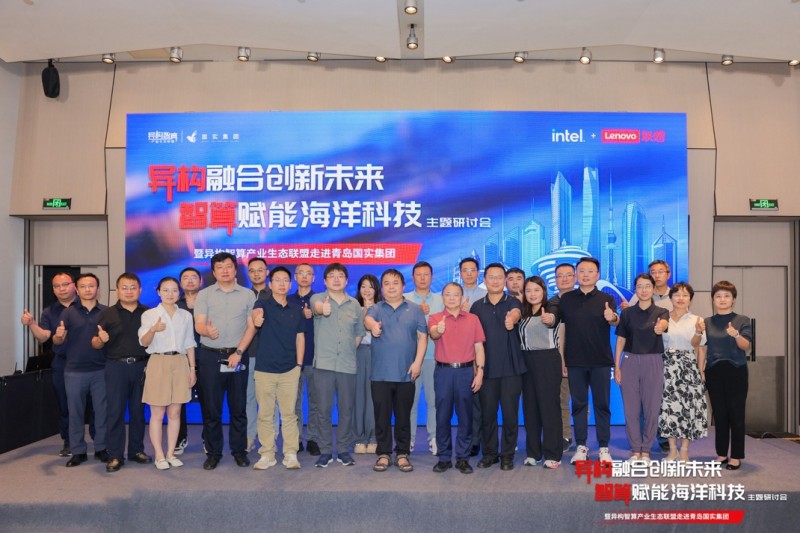
异构智算产业生态联盟走进青岛国实集团 共探异构智算与AI大模型的深度融合
Zheng Quan Ri Bao Zhi Sheng· 2025-08-28 11:12
Group 1 - The seminar themed "Heterogeneous Fusion Innovation Future, Intelligent Computing Empowering Marine Technology" was held in Qingdao, focusing on the innovative applications of GPU+CPU hybrid architecture in deep-sea exploration and marine carbon sink monitoring [1] - The national-level platform for marine technology, Laoshan Laboratory, is integrating marine technology with heterogeneous computing to provide strong strategic technological support for building a marine power [2] - The rapid development of large model technology is providing a solid foundation for marine artificial intelligence, with Qingdao Guoshi Group actively promoting the transformation and industrialization of technological achievements in the marine technology sector [2] Group 2 - The integration of computing power, models, and applications is reshaping the marine economy, with the demand for computing power driving growth in high-performance computing and intelligent computing markets [3] - Lenovo's AI infrastructure strategy includes a heterogeneous computing platform designed to meet the computing needs of large model pre-training and traditional model inference, featuring five key technologies [3][4] - Intel is continuously updating and enhancing its product portfolio to support diverse computing power needs across various industries in the context of rapid AI development [4]


异构融合,创新未来|异构智算产业生态联盟走进青岛国实集团,见证智算赋能海洋科技
Cai Fu Zai Xian· 2025-08-28 07:52
Core Viewpoint - The seminar focused on the innovative applications of GPU+CPU hybrid architecture in deep-sea exploration and marine carbon sink monitoring, highlighting the collaboration between the heterogeneous computing industry and various partners, including Intel [1][5][6]. Group 1: Event Overview - The seminar titled "Innovating the Future of Heterogeneous Integration, Empowering Marine Technology with Intelligent Computing" was held in Qingdao, featuring discussions on the innovative applications of hybrid computing architectures [1]. - Key attendees included members from the Chinese Academy of Sciences, the Marine Technology Industry Alliance, and various technology companies, who engaged in in-depth discussions and showcased technological advancements [3][5]. Group 2: Technological Insights - The integration of AI, high-performance computing, and cloud computing is enhancing the understanding and predictive accuracy of marine environmental changes, contributing to sustainable development goals [5]. - The rapid development of large model technology is providing a solid foundation for marine artificial intelligence, enabling better understanding of climate change impacts on marine ecosystems [9]. Group 3: Strategic Initiatives - The Laoshan Laboratory is focusing on the integration of marine technology and heterogeneous computing to support the construction of a strong marine nation, emphasizing the importance of high-performance computing systems [6]. - Qingdao Guoshi Group aims to leverage advancements in algorithms, computing power, and data accumulation to accurately simulate marine ecosystems and address data processing challenges in various marine technology fields [9]. Group 4: Industry Collaboration - Lenovo is advancing its "One Horizontal and Five Verticals" strategy to provide comprehensive infrastructure solutions, including a heterogeneous computing platform tailored for large model training and inference [12][13]. - Intel is committed to developing HPC & AI integrated computing technologies to support diverse industry needs and enhance AI technology deployment [15][17].
调研速递|西安国际医学获开源证券等29家机构调研 上半年营收20.34亿元
Xin Lang Cai Jing· 2025-08-27 14:18
Core Viewpoint - Xi'an International Medical Investment Co., Ltd. has made significant progress in its operational development in the first half of 2025, focusing on enhancing service quality, optimizing operational efficiency, and expanding its business layout [2][3]. Group 1: Operational Achievements - In the first half of 2025, the company achieved a total outpatient and emergency service volume of 1.3191 million visits, a year-on-year increase of 5.42%, while inpatient service volume decreased by 4.01% to 96,300 visits [3]. - The company reported a revenue of 2,034.31 million yuan, a year-on-year decrease of 15.95%, and a net profit attributable to shareholders of -164.96 million yuan, a reduction in losses by 4.98% [3]. - The net operating cash flow was 592.54 million yuan, reflecting a year-on-year increase of 12.75%, indicating stable medical business collections and good capital turnover [3]. Group 2: Business Development and Innovations - The company established new specialized clinical departments and completed 636 clinical application filings for restricted technologies, along with obtaining 24 national authorized patents [2]. - The company has expanded its service offerings by establishing specialized treatment services such as geriatrics and proton therapy to meet market demand [2]. - The integration of artificial intelligence and the expansion of internet hospital services have improved patient service processes and enhanced operational efficiency [2]. Group 3: Financial Performance of Subsidiaries - Xi'an High-tech Hospital reported an outpatient service volume of 578,700 visits, a year-on-year increase of 3.04%, while inpatient service volume decreased by 6.48% [4]. - Xi'an International Medical Center Hospital had an outpatient service volume of 740,400 visits, a year-on-year increase of 7.37%, but a net profit of -113.21 million yuan, a decrease of 44.63% [4]. Group 4: Future Strategies - The company plans to enhance cost control through bed integration and departmental optimization, as well as increase the use of drugs that meet DRG payment standards [5]. - The focus will be on health management, aesthetic medicine, physical examinations, elderly care, and international cooperation to implement differentiated business strategies [5]. - The company aims to strengthen cost control and efficiency while enhancing medical quality and service experience to build competitive advantages and achieve steady growth [6].

国际医学(000516) - 000516国际医学投资者关系管理信息20250827
2025-08-27 13:32
Group 1: Company Performance Overview - In the first half of 2025, the company achieved a total outpatient and emergency service volume of 1.3191 million visits, a year-on-year increase of 5.42% [2] - The inpatient service volume reached 96,300 visits, a year-on-year decrease of 4.01% [2] - The company reported operating revenue of 2,034.31 million yuan, a year-on-year decrease of 15.95% [2] - The net profit attributable to shareholders was -164.96 million yuan, a year-on-year improvement of 4.98% [2] - The net operating cash flow was 592.54 million yuan, an increase of 12.75% compared to the same period last year [2] Group 2: Hospital-Specific Performance - Xi'an Gaoxin Hospital had an outpatient and emergency service volume of 578,700 visits, a year-on-year increase of 3.04% [3] - Inpatient service volume at Xi'an Gaoxin Hospital was 30,300 visits, a year-on-year decrease of 6.48% [3] - The hospital's operating revenue was 638.74 million yuan, a year-on-year decrease of 17.30% [3] - The net profit for Xi'an Gaoxin Hospital was 30.98 million yuan, a year-on-year decrease of 37.48% [3] - Xi'an International Medical Center Hospital had an outpatient and emergency service volume of 740,500 visits, a year-on-year increase of 7.37% [3] - Inpatient service volume at the center was 66,000 visits, a year-on-year decrease of 2.80% [3] - The center's operating revenue was 1,383.27 million yuan, a year-on-year decrease of 15.37% [3] - The net profit for the center was -113.21 million yuan, a year-on-year decrease of 44.63% [3] Group 3: Strategic Initiatives and Future Outlook - The company is focusing on cost control and efficiency improvement through bed integration and department optimization [4] - It aims to enhance service quality and patient experience while implementing a differentiated business strategy [4] - The company is actively adapting to industry changes to achieve orderly expansion of service scale and continuous optimization of operational efficiency [6] - Research in stem cell therapy is ongoing, with over 500 testing projects related to hematological diseases, tumor diagnosis, and preventive medicine [4]
8月27日沪深两市涨停分析
Xin Lang Cai Jing· 2025-08-27 07:44
Group 1: Company Performance - Nengke Technology reported a net profit growth of 18.75% year-on-year in its mid-year report, focusing on smart manufacturing and developing a comprehensive product system that includes AI applications across various industrial scenarios [2][3] - Jianye Technology achieved a net profit growth of 51.12% year-on-year, supplying high-speed optical modules to Microsoft, with 800G products in small batch delivery [2] - Lianhua Technology, a leader in custom production of pesticide intermediates, reported a staggering net profit growth of 1481.94% year-on-year [2] - Xianggang Technology, a provider of integrated solutions in printing and packaging, saw a net profit increase of 432.14% year-on-year [2] - Dongpeng Holdings, primarily engaged in ceramics and sanitary ware, reported a net profit growth of 3.85% year-on-year, significantly up from the first quarter [2] - Aonong Bio reported a net profit of 361 million, marking a turnaround from losses [2] - Qiming Information, under FAW Group, reported a net profit growth of 2568.5% year-on-year, focusing on digital operations and smart marketing [2] Group 2: Industry Trends - The State Council issued an opinion on the implementation of the "Artificial Intelligence +" initiative, aiming for over 70% penetration of new intelligent terminals and applications by 2027 [2][4] - The demand for liquid cooling solutions in data centers is increasing, with companies like Huangma Technology focusing on organic silicon modified polyether as a supplier for immersion cooling liquids [4] - The agricultural sector is seeing significant developments, with Aonong Co. reporting a net profit of 361 million, indicating a recovery in the agricultural products market [5] Group 3: Strategic Partnerships and Collaborations - Ge'ern Automotive has entered a strategic partnership with NVIDIA to develop control systems for robots, covering the entire range of NVIDIA's Jetson series [3] - Magmi Technology has formed a partnership with NVIDIA to become a designated supplier of data center components, actively participating in the design and construction of NVIDIA's Blackwell architecture [4]

传媒互联网重点公司25Q2业绩解读
2025-08-25 14:36
Summary of Key Points from Conference Call Records Industry Overview - The conference call covers the performance of key companies in the media and internet sector, including Meitu, Xiaomi, NetEase, Kuaishou, and educational institutions like Tianli International Education Group and Zhuoyue Education. Meitu Company - Meitu reported a revenue of HKD 1.82 billion in the first half of 2025, with an adjusted net profit margin of approximately 26% [1][2] - Monthly active users (MAU) increased by about 8.5% year-on-year, while the number of paying users grew by 42% to 15.4 million [1][2] - The company announced an interim dividend of HKD 0.045 per share [2] - R&D spending is increasing rapidly, with foundational mathematical model training completed, shifting focus to vertical model training, which is expected to enhance gross margins [1][4] Xiaomi Company - Xiaomi's automotive business showed strong performance in Q2 2025, achieving a gross margin of 26.4% [1][5] - New car models, SU7 and YO7, have been phenomenally successful, but new vehicle plans are expected to roll out by 2026, shifting market focus to production capacity in the second half of the year [5] - The automotive gross margin is projected to remain between 22% and 26% in the second half [5] - The gross margin for smartphones and IoT products decreased due to rising BOM costs and changes in the smartphone business structure [5] - Xiaomi's high-end strategy is showing progress, with a strong retail system creating a commercial loop, enhancing market share and profit potential [1][7] NetEase Company - NetEase's revenue grew by 9% year-on-year in Q2 2025, slightly below expectations [1][6] - NetEase Cloud Music's revenue fell by 4%, primarily due to a decline in the social entertainment segment, but is expected to stabilize [1][6] - The core online music business is projected to maintain a growth rate of over 15% in Q3, with a gross margin of 36% exceeding expectations [6] Kuaishou Company - Kuaishou demonstrated strong user engagement, with DAU and average daily usage time increasing for several consecutive quarters [1][8] - Advertising revenue grew by 12.8%, while live streaming revenue increased by 8% [1][8] - New business KOLIN is expected to significantly exceed initial revenue forecasts, driven by strong product competitiveness, especially in overseas markets [1][9] Tianli International Education Group - Tianli launched an AI self-study room product, aiming to expand student numbers to 5,000-10,000 by the 2025-2026 academic year, with a price range of RMB 30,000 to 40,000 [1][10] - The product line is projected to contribute approximately RMB 100 million in profit by FY 2026 [11] Zhuoyue Education - Zhuoyue Education is on track to meet its 2025 profit growth target, estimating a profit of around RMB 320 million, with a dividend yield of 4% to 5% [1][12] - Thinking乐 Education faced a nearly 20% decline in mid-year profits due to expansion costs in Guangzhou but aims to maintain a 20% growth target for the year [12] Additional Insights - The overall gross margin for Meitu was reported at 74%, with a continuous upward trend [2] - Xiaomi's average selling price for smartphones decreased to RMB 1,073, impacting gross margins [5] - The educational sector is increasingly integrating AI products to enhance efficiency and market reach [12]

构建创新与安全并重的大模型竞争治理体系丨法经兵言
Di Yi Cai Jing· 2025-08-25 11:37
Core Viewpoint - The article emphasizes the need for a balanced approach in the AI large model market, focusing on innovation as the main line and safety as the bottom line, while optimizing competition paths that consider both efficiency and fairness [1] Group 1: Market Competition and Governance - The AI large model industry faces low-level competition and structural monopoly risks domestically, along with potential regulatory failures [1] - The debate between open-source and closed-source models continues, with closed-source models like OpenAI's GPT series and Google's Gemini dominating, while open-source models like DeepSeek are gaining global recognition [2] - The governance of open-source large models is complex due to the diverse interests of various stakeholders and the significant costs associated with maintaining open-source ecosystems [3] Group 2: Challenges in Market Competition Governance - Current standards for identifying monopolistic behavior are inadequate for the dynamic nature of the large model market, leading to potential misjudgments regarding market power [4] - The existing concentration system in the large model market has inherent flaws, as many open-source models provide free services, making it difficult to meet revenue-based reporting standards [5] - General large models struggle to meet regulatory transparency requirements due to their unpredictable nature, complicating the enforcement of antitrust laws [6] Group 3: Governance Measures for Market Competition - A more inclusive regulatory environment is needed to encourage innovation in the early stages of AI large model development [8] - Establishing sensitive preemptive antitrust regulations is crucial, including refining rules for assessing market dominance and allowing for innovation defenses [9] - Strengthening collaboration between industry regulation and antitrust enforcement is essential to adapt to the rapid development of large models [10] Group 4: Policy Coordination - There is a need for better coordination between industrial policies and competition policies to prevent disorderly development and competition in the AI large model sector [11]