
共同富裕

Search documents
努力让每个“小家”热气腾腾
Ren Min Ri Bao· 2026-01-13 07:03
Core Viewpoint - The Chinese government emphasizes the importance of improving people's livelihoods and ensuring that every household experiences a better quality of life, reflecting a commitment to social welfare and economic development [1][2][4]. Group 1: Government Initiatives - The government has made significant investments in social welfare, with nearly 1 trillion yuan allocated to the livelihood sector over the past five years [1]. - New policies for 2026 include the full opening of childcare subsidies, accelerated cross-province integration of personal medical insurance accounts, and the expansion of occupational injury insurance trials [4]. Group 2: Challenges and Areas for Improvement - Despite progress, there are still gaps in social security and living conditions that need to be addressed to meet the public's expectations for a better life [2]. - The government recognizes that improving livelihoods is a long-term, complex task that requires ongoing efforts and a focus on the needs of the people [2][3]. Group 3: Practical Approaches - Successful implementation of livelihood projects requires thorough research and understanding of community needs, as demonstrated by the renovation of over 6,000 old residential units in Shanghai [2]. - Attention to detail in livelihood projects is crucial, ensuring that initiatives are practical and beneficial for the community, such as making elderly-friendly modifications and simplifying the application process for subsidies [3].
海乐行启动国际助学基金扶持计划
Sou Hu Wang· 2026-01-13 05:17
Core Insights - The core focus of the news is the launch of the upgraded "Team Leader Welfare Policy" by the Hailuoxing China Federation in 2026, which aims to enhance the support system for team leaders through a more structured talent development path and international resource integration [1][2] Group 1: Policy Overview - The "Team Leader Welfare System" has been elevated to a strategic level within the federation, becoming a key component in promoting global organizational development [1] - The new policy emphasizes support for personal growth and extends benefits to the families of team leaders, reflecting the federation's commitment to long-term investment in its core members [1][2] Group 2: Educational Support Initiatives - The introduction of the "International Education Support System" aims to provide financial assistance for team leaders' children studying abroad, covering up to 70% of total study costs, including tuition, accommodation, and living expenses [2][4] - The establishment of the "Global Scholarship Fund" is a highlight, designed to internationalize the talent system and create intergenerational incentives through educational support [3][4] Group 3: Fund Management and Evaluation - The fund operates on principles of fairness, transparency, and excellence, focusing on the contributions of team leaders and the potential of their children [3][7] - A comprehensive evaluation system will assess both the team leaders' contributions and the students' academic abilities, ensuring that the fund is not merely financial support but also a recognition mechanism [3][5] Group 4: Collaboration with International Institutions - The federation has established partnerships with several prestigious international universities, including University College London and the University of California, Berkeley, to ensure high-quality educational opportunities for beneficiaries [4][5] - The collaboration is not limited to well-known institutions but is also aligned with students' professional directions and growth plans [4] Group 5: Long-term Vision and Social Responsibility - The policy reflects the federation's response to contemporary ideals of "common prosperity," "talent empowerment," and "educational equity," aiming to alleviate the pressure on talented families in accessing educational resources [8] - The federation plans to expand the scholarship program and explore initiatives like a "Return Plan" to encourage funded students to participate in federation projects after their studies, creating a closed-loop system of international learning and organizational development [9]
凤桥镇绘就高质量发展新图景
Xin Lang Cai Jing· 2026-01-12 23:09
(来源:嘉兴日报) 转自:嘉兴日报 近年来,"大三星"片区聚焦"土特产筑基、文旅赋能、业态创新"核心方向精准发力,成功落地9个总投 资2.8亿元的重点项目,招引10个特色业态项目,撬动社会资本超2000万元。同时,创新推出"大三星优 选"公共品牌,开发32类特色产品与6条精品文旅线路。截至2025年11月,片区7个村集体经营性收入合 计达1296.96万元,同比增长27.78%,共同富裕的美好图景正逐步铺展。 党建引领不仅激活了乡村产业发展动能,更锻造出一支敢担当、善作为的干部队伍。凤桥镇推行"一线 练兵"机制,启动干部四大提能行动,通过多维度比拼激励机制,充分激发干部队伍的责任担当与实干 精神。"原粮站区域60天实现拔钉清零、威肯西项目30天顺利开工,这些攻坚任务的圆满完成,离不开 党建引领下的团队协作与实干担当。"凤桥镇党建办相关负责人介绍。 依托"桃源先锋"淬炼计划、青年干部成长营等培育载体,5名干部赴市级部门开展融入式锻炼,1名干部 斩获国家级宣讲类荣誉,干部队伍的综合素养与履职能力得到显著提升。 ■撰文 陆欣瑜 冯思家 图片由凤桥镇提供 近日,嘉兴市推进长三角一体化发展典型案例名单公布,南湖区凤桥镇 ...


凝聚巾帼力 绘就共富梦
Xin Lang Cai Jing· 2026-01-12 23:09
2025年初,南湖区"巾帼赋能·共富同行"乡村主理人项目认领活动正式启动,吸纳三星村周边一批优秀 巾帼主理人参与,她们在儿童研学、文旅推广、庭院经济、社会公益等方面开展了大量工作,形成了一 批精彩实践案例。 (来源:嘉兴日报) 转自:嘉兴日报 ■记者 朱弼瑜 通讯员 丁雨露 本报讯 昨天下午,南湖区举办第二十一届睦邻友好季暨"睦邻和美大三星 巾帼共富同心行"主题活动, 汇聚"大三星"片区巾帼主理人代表,以及片区内镇(村)妇联主席、妇联执委的代表们,共同见证2025 年睦邻友好季温暖收官。 活动中,"大三星"片区妇联宣布成立。南湖区妇联相关负责人介绍,接下去"大三星"片区妇联将充分发 挥妇联组织优势,通过组织联建、活动共办、资源共享、人才共育,推动女性同胞人心凝聚、产业发 展,共助"大三星"区域乡村振兴、村民共富。 在昨天的活动中,"大三星"巾帼主理人联盟扩容升级,片区内其他村的优秀女性也加入其中,成为新一 批巾帼主理人,将"点点星光"汇成"璀璨星河",为片区共同富裕注入更强大的巾帼动能。 在凤桥镇三星村,牟冬菊以桃然居为"撬点",尝试将优美庭院与庭院经济衔接,融入传统文化传播与公 益服务,让这里有了沉浸式乡村 ...
群众路线与共同富裕实践的文学映照
Xin Lang Cai Jing· 2026-01-12 23:09
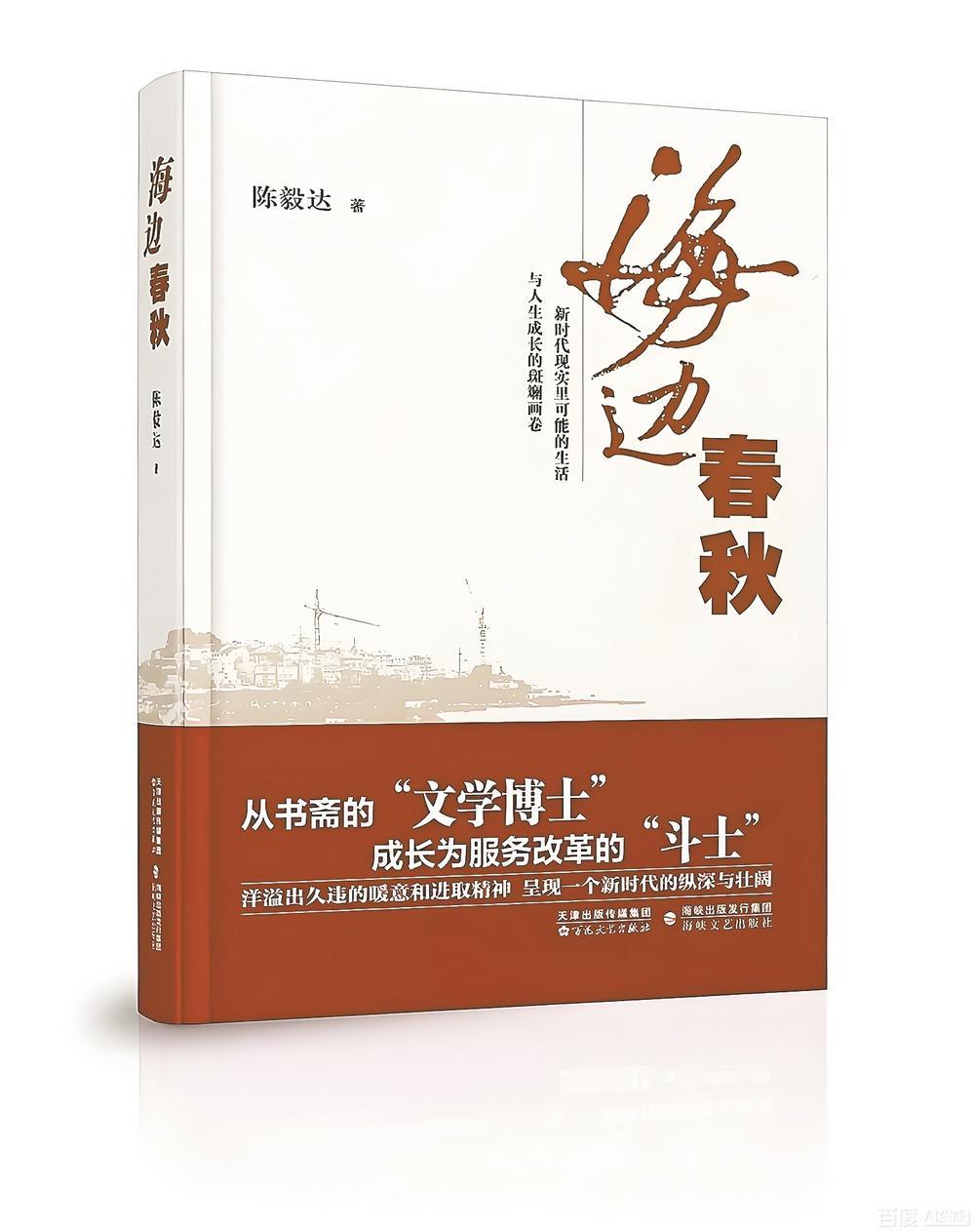
《海边春秋》中,刘书雷初到岚岛时面临着推动蓝港村整体搬迁的"硬任务"。他深入调查研究,找准共同富裕的实践基点,最初按照常规工作 思路,他带着既定方案做群众工作,却遭遇了意想不到的阻力。这种困境在许多地方工作中并不鲜见——干部怀揣着"为民造福"的良好意愿, 制定的方案却难以获得群众认同。问题症结何在?小说通过刘书雷的转变过程给出了答案。 陈毅达 著 百花文艺出版社出版 文学作品如何映照时代命题?长篇小说《海边春秋》通过青年干部刘书雷在岚岛的实践经历,生动再现了新时代扎实推进共同富裕进程中,福 建人民坚持党的群众路线的伟大实践。作品以细腻的笔触和深刻的洞察,精彩呈现了从"代民做主"到"由民做主"、从"外部规划"到"内生发 展"的工作方法转变,为我们在新时代扎实推动共同富裕提供了宝贵的方法论启示。 刘书雷放下干部身份,独自走进村庄,坐在村民大依公家里喝着地瓜酒,聆听村庄历史与家族记忆。这次没有秘书陪同、没有记录本的走访, 成为他工作思路转变的关键节点。正是在这种"去形式化"的交流中,他理解到村民守护的不仅是石厝房屋,更是几代人积淀的生活智慧和文化 根脉。这启示我们,扎实的调查研究必须"身入"更要"心至",要能够穿透 ...
信义暖乡邻 实干促增收
Xin Lang Cai Jing· 2026-01-12 19:03
Core Viewpoint - The article highlights the dedication and integrity of Xie Ruiyin, a retired worker who established a farm supply store and an agricultural cooperative, emphasizing the importance of trust and community support in achieving mutual prosperity [20]. Group 1: Business Operations - In 2014, Xie Ruiyin opened the first farm supply store in her team, emphasizing that "agricultural supplies are the lifeline of farmers" and refusing to compromise on quality for profit [2]. - The store maintained transparent pricing and never stocked substandard products, earning a reputation as a "trustworthy store" with over 80% repeat customers [8]. - Xie Ruiyin led the establishment of the Lanhai Hongxing Agricultural Planting Cooperative in 2018, promising members that the cooperative would ensure prices not lower than market rates and cover any losses [10]. Group 2: Community Engagement - Xie Ruiyin actively supported local farmers by allowing them to take supplies on credit during financial difficulties, demonstrating her commitment to community welfare [8]. - She personally tested seeds and fertilizers before recommending them to cooperative members, ensuring quality and reliability [12]. - During the 2023 cotton purchasing season, she worked tirelessly at the cotton processing plant to assist cooperative members in selling their harvests [16]. Group 3: Ethical Standards - Xie Ruiyin believes that integrity is not only a business principle but also a source of trust within the community, as shown by her charitable actions towards struggling families [17]. - Over the years, she has donated over 100,000 yuan to help 13 families in need, reinforcing her commitment to social responsibility [17]. - Her contributions and dedication to honesty have earned her recognition as one of the "Honest and Trustworthy People" in 2025 [19].

苕溪潮未歇 改革步不停
Xin Lang Cai Jing· 2026-01-12 16:57
Core Insights - The article highlights the transformative journey of Deqing County in Zhejiang Province, emphasizing its strategic focus on the geographic information industry as a key driver for economic growth and regional integration [3][4][5]. Industry Development - Deqing County has successfully transitioned from a traditional manufacturing base to a hub for the geographic information industry, with over 12 companies established in the area since 2010 [4][5]. - The county aims to achieve a geographic information industry scale exceeding 60 billion yuan by 2027, supported by initiatives such as the establishment of a 3.3 billion yuan industry fund and the development of specialized industrial spaces [5][6]. Regional Integration - Deqing has effectively integrated into the Hangzhou metropolitan area, enhancing its role from a geographical hinterland to a functional node within the Yangtze River Delta [7][8]. - The county has developed extensive transportation networks, including multiple highways and railways, facilitating a 30-minute commuting radius with Hangzhou, thereby redefining local living and working patterns [8][9]. Economic and Social Reforms - Deqing has implemented significant reforms aimed at reducing urban-rural disparities, including the introduction of policies that allow rural land to be treated equally with urban land, thus unlocking economic potential [11][12]. - The county's focus on public services and community engagement has led to improved living standards, with initiatives such as a 15-minute public service access model and enhanced healthcare and educational resources [12][13]. Future Outlook - Deqing is positioned to continue its trajectory of high-quality economic development through ongoing reforms and strategic planning, aiming to serve as a model for county-level economic practices in China [13].
下好协调发展一盘棋
Xin Lang Cai Jing· 2026-01-11 22:25
Group 1 - The core viewpoint emphasizes that regional coordinated development is essential for achieving high-quality growth and addressing social contradictions and imbalances [1] - The city of Kunming exhibits both modern urban areas and relatively underdeveloped rural regions, highlighting the need for coordinated development to ensure equitable living standards and public services across the city [1] - The article outlines three key areas of focus for promoting regional coordinated development, including rural revitalization, urban-rural integration, and cross-regional collaboration [1] Group 2 - The implementation of the rural revitalization strategy is crucial, which includes establishing monitoring and support systems to prevent poverty and consolidating poverty alleviation achievements [2] - Urban-rural integration should be advanced through a people-centered new urbanization approach, promoting coordinated development of health, beauty, civilization, intelligence, and happiness in county towns [2] - Utilizing cross-regional coordination mechanisms is vital, with an emphasis on integrating Kunming into national development strategies and enhancing collaboration with major economic zones [3]
【新年开新局・工会主席谈实干】在现代化新重庆建设中展现工会新作为
Xin Lang Cai Jing· 2026-01-11 19:16
Core Viewpoint - The article discusses the strategic initiatives and plans of the Chongqing Federation of Trade Unions as it approaches significant milestones, including the 100th anniversary of its establishment and the beginning of the "15th Five-Year Plan" period, emphasizing the importance of labor unions in promoting high-quality development and enhancing workers' welfare in Chongqing [1][2]. Group 1: Key Initiatives and Actions - The Chongqing Federation of Trade Unions aims to implement the "559" work deployment through a dual approach of "strengthening deepening and building new achievements," focusing on five major actions and ten practical matters to create distinctive outcomes that are regionally and nationally recognized [1]. - The organization plans to upgrade the "Chongqing Workers' Red Rock Ideological System" and conduct a series of cultural and sports activities under the theme "Chinese Dream, Labor Beauty," alongside the establishment of a labor movement history museum to showcase the achievements of labor movements in Chongqing [1]. Group 2: Engagement and Support for Workers - The Federation will leverage the effects of the Third National Craftsman Innovation Exchange Conference and implement the Bayu Craftsman Cultivation Project, aiming to mobilize over 3 million workers through various initiatives, including the "New Mission, Achieving '15th Five-Year Plan'" theme practice activities and labor skill competitions [2]. - There will be an increase in budget allocations for "investing in people," focusing on employment support, corporate culture, and union infrastructure, alongside various employment service activities both online and offline to enhance workers' welfare [2]. Group 3: Organizational Development and Reform - The Federation emphasizes grassroots development by expanding union coverage in emerging sectors and strengthening the organization of unions in non-public enterprises and new employment forms, aiming to enhance its leadership, organizational strength, and service capabilities [2]. - Key reform projects will drive the strengthening of organizational systems and broaden service areas, integrating digital tools to improve engagement and service delivery for workers [2].
发挥“大思政课”优势 拓展全面育人新格局
Xin Lang Cai Jing· 2026-01-11 18:13
Core Viewpoint - The construction of ideological and political theory courses (思政课) is essential for cultivating comprehensive socialist builders and successors, requiring innovation and collaboration to enhance its development in the new era [1] Group 1: Teacher Development - The need to build a strong teaching team for ideological and political courses, characterized by political strength, deep sentiment, innovative thinking, broad vision, strict self-discipline, and integrity [1] - Emphasis on the recruitment, training, assessment, and motivation of full-time ideological and political teachers to enhance their role as the main force in education [1] - Encouragement for university leaders to engage with teachers, participate in collective lesson preparation, and invite various professionals to contribute to the teaching process [1] Group 2: Classroom Expansion - The concept of expanding the "big classroom" to include social life, integrating significant achievements of socialism into the curriculum [2] - The importance of addressing students' concerns about modernization and common prosperity through real-life examples and stories [2] - Encouragement for students to engage in social practice outside the classroom to deepen their understanding of national conditions and the party's innovative theories [2] Group 3: Resource Integration - The necessity of integrating high-quality ideological and political teaching resources to support effective teaching [3] - Breaking down barriers between disciplines and educational stages to promote collaborative education across all levels [3] - Utilizing various teaching resources, including traditional and modern technologies, to create engaging and relatable learning experiences for students [3]