
区域协同发展

Search documents
统筹保护发展 共护一江碧水
Jing Ji Ri Bao· 2025-11-22 22:00
Core Viewpoint - The Yangtze River Economic Belt is positioned as a key area for ecological priority and green development, contributing significantly to China's economic growth and environmental protection efforts [1][2]. Economic Performance - The GDP of the Yangtze River Economic Belt is projected to exceed 63 trillion yuan in 2024, accounting for over 46% of the national total [1]. - The per capita GDP in the Yangtze River Delta region is 139,400 yuan, with Shanghai at 217,100 yuan, while the central and upper reaches show lower figures, indicating significant regional economic disparities [2]. Environmental Challenges - There are ongoing issues with ecological protection, including problems with drainage systems in older urban areas along the river, which need comprehensive solutions [2]. - The ecological environment in some river sections and bays still poses risks, necessitating improved governance models [2]. Innovation and Development - Emphasis on leveraging innovation as a primary driver for high-quality development, with a focus on transforming research and talent advantages into development strengths [4]. - The integration of technology and industry is crucial, with efforts to ensure that scientific innovations transition from laboratories to production lines [4]. Regional Collaboration - The need for enhanced regional cooperation is highlighted, advocating for a unified approach to ecological governance and shared development among provinces along the river [5]. - The establishment of mechanisms for cross-administrative cooperation and benefit-sharing is essential for promoting sustainable development and improving living standards [5].
“媒体+”力量!河北曲阳肉牛“叩门”大湾区,南北对话共探高质量发展路径|潮汕牛肉火锅文化节
Nan Fang Nong Cun Bao· 2025-11-22 11:30
Core Viewpoint - The meeting between Hebei Quyang and Guangdong's beef industry development association aims to address the supply-demand imbalance in the beef industry and promote high-quality beef from northern regions to the Greater Bay Area [8][9][11]. Group 1: Industry Challenges - The beef industry is at a critical transformation point, shifting from a phase of "product availability equals market" to facing overcapacity and supply-demand mismatches [15][16][17]. - Quyang County produces 50,000 to 60,000 beef cattle annually, but faces structural issues, with nearly 80% being Simmental cattle, leading to price instability and difficulties in selling [18][19][20]. - Key pain points identified include: 1. Single breed dependency and market disconnection, with a lack of focus on high-quality breeds like Angus and Qin Chuan [23][25]. 2. Information asymmetry and intermediary barriers, where brokers control channels and farmers lack market price knowledge [26][28]. 3. Fragmented industry chain and insufficient refinement, leading to blind expansion without quality improvement [29][30]. Group 2: Proposed Solutions - New pathways for breaking through industry challenges include: 1. Market-oriented breed optimization and quality enhancement, introducing high-quality breeds and improving breeding techniques to meet market demands [45][46][48]. 2. Establishing a platform to bridge industry barriers and information gaps, promoting direct connections between farmers and markets to reduce intermediaries [52][54][56]. 3. Focusing on niche markets to extend the industry chain and enhance value, emphasizing specialized production and diverse product offerings [60][62][64]. Group 3: Collaborative Actions - The Guangdong Beef Industry Development Association plans to share resources, channels, information, and branding with Quyang to enhance local beef production [68][71]. - The introduction of the "Yue Mu Quality Certification" system will serve as a standard for local restaurants and supermarkets to procure quality beef [72][75]. - Upcoming initiatives include online training for farmers on breed selection and market trends, as well as field visits to the Greater Bay Area for direct market engagement [82][84].


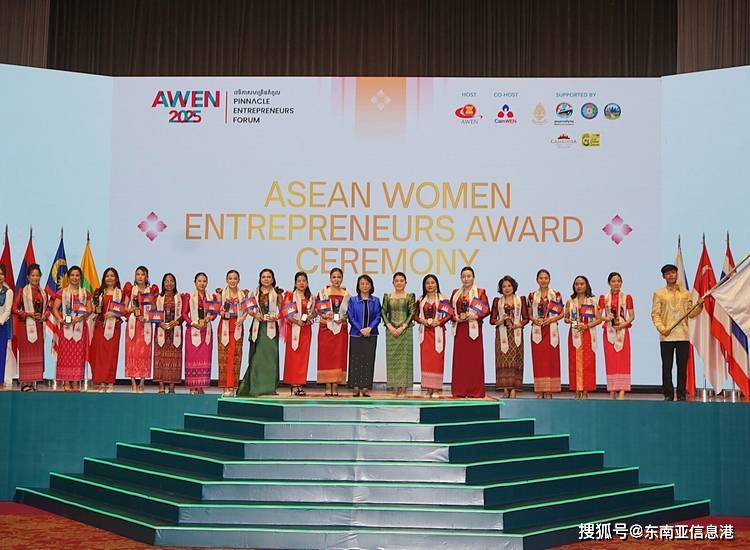
东盟女性企业家论坛金边圆满落幕 老挝接任 AWEN 主席国 柬埔寨企业家斩获殊荣
Sou Hu Cai Jing· 2025-11-22 10:41
Core Insights - The 2025 ASEAN Women Entrepreneurs Network (AWEN) Forum and Awards Gala successfully concluded on November 21 in Phnom Penh, Cambodia, focusing on regional cooperation, digital innovation, and women's entrepreneurship empowerment [2][10] - The event highlighted the significant role of women entrepreneurs in driving high-quality economic development in the ASEAN region, with over a hundred outstanding female entrepreneurs recognized [4][8] Group 1: Key Discussions and Contributions - Cambodian Deputy Prime Minister Sun Chanthol emphasized the need for ASEAN countries to unite in fostering women's entrepreneurial innovation and leveraging cross-border cooperation and digital technology for sustainable economic development [6] - The Minister of Industry and Technology Innovation of Cambodia, Kan Vandy, discussed Cambodia's unique position and market potential within the ASEAN integration process, providing valuable insights for female entrepreneurs [6] - The President of the BRICS Women Business Alliance in Russia, Anna Nesterova, presented on "ASEAN 2030: Building Borderless Enterprises in a Disruptive Era," exploring new directions for regional economic cooperation [6] Group 2: Event Highlights and Future Directions - The forum featured high-level dialogues and thematic workshops focusing on digital economic transformation, innovative investment cooperation, and regional collaborative development, with a consensus on the urgent need to enhance women's entrepreneurial capacity [8] - A significant highlight was the handover ceremony of the AWEN presidency from Cambodia to Laos, marking a new phase in regional cooperation among women entrepreneurs [8] - The new AWEN President expressed a commitment to deepening multilateral cooperation and partnerships, aiming to empower women entrepreneurs through resource integration, capacity building, and platform development for sustained economic prosperity in ASEAN [8][10]
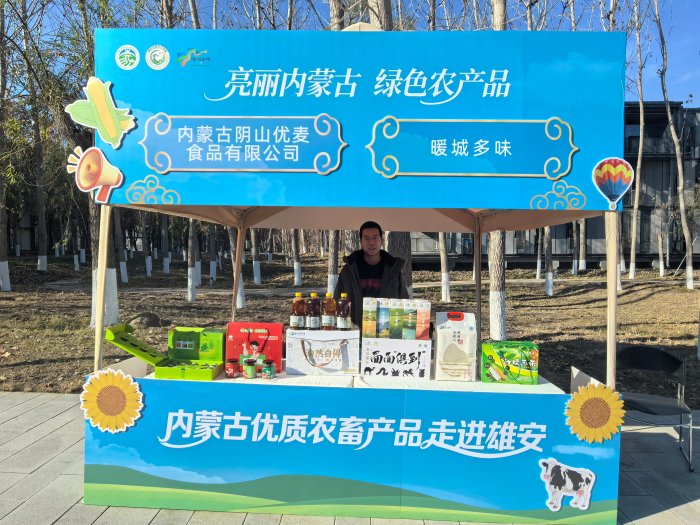
黄河几字湾“草原优品”走进雄安新区
Zhong Guo Jin Rong Xin Xi Wang· 2025-11-22 04:58
Group 1 - The event marks the beginning of a series showcasing high-quality agricultural and livestock products from Inner Mongolia in Xiong'an New Area [1][3] - Huanghe Jiziwan Company presented various specialty agricultural products, highlighting the ecological advantages and quality of regional agricultural products [3] - The company aims to establish stable partnerships with supermarkets, e-commerce, and catering enterprises in Xiong'an to promote more "Prairie Quality Products" in the Beijing-Tianjin-Hebei market [3][5] Group 2 - The event is co-hosted by the Inner Mongolia Autonomous Region Government in Beijing, the Agricultural and Animal Husbandry Department, the Cultural and Tourism Department, and the Ordos Municipal Government, featuring product exhibitions, food tastings, and supply-demand matching [5] - Huanghe Jiziwan Company is a key member of the "Prairie Quality Products" brand matrix and is actively expanding market channels and strengthening regional collaboration [5] - The participation in Xiong'an not only showcases the company's quality products but also injects new momentum into the high-quality development of Inner Mongolia's agriculture and deepens industrial cooperation between the two regions [5]
盛阅春会见恩施州党政代表团
Chang Jiang Ri Bao· 2025-11-21 00:21
Core Viewpoint - The meeting between the leaders of Wuhan and Enshi highlights the ongoing collaboration and mutual support between the two regions, focusing on high-quality development and regional cooperation in various sectors [2][3]. Group 1: Economic and Social Development - Enshi has maintained a good momentum in high-quality development, with continuous improvement in people's livelihoods and a better ecological environment [2]. - The support from Wuhan has significantly contributed to Enshi's achievements in industrial development, infrastructure construction, and improving living standards [3]. Group 2: Regional Cooperation - The collaboration between Wuhan and Enshi has led to advancements in industrial investment, project assistance, public services, and talent cultivation [2]. - Both regions aim to deepen practical cooperation in areas such as ecological cultural tourism, green industry development, rural revitalization, and talent exchange [3]. Group 3: Strategic Goals - The current focus is on implementing the spirit of the 20th Central Committee and accelerating the construction of a national central city, with an emphasis on building "five centers" [2]. - The commitment to regional coordinated development is underscored by the intention to enhance cooperation in technology innovation, resource development, and shared public welfare [2].
亮马河北路建设稳步推进
Bei Jing Ri Bao Ke Hu Duan· 2025-11-19 21:19
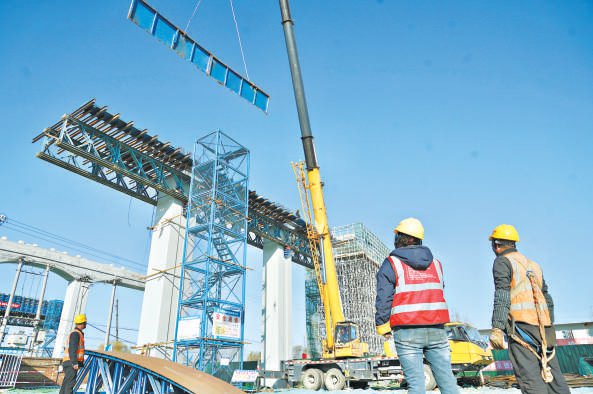
Core Points - The construction of Liangmahe North Road from East Fifth Ring to Capital Airport Second Expressway has commenced, with plans for significant progress by the end of the year [2][3] - The road is a crucial fast track connecting Beijing's central urban area, spanning 9.1 kilometers, and aims to alleviate traffic pressure in the region [3] Group 1 - The section from East Fourth Ring to the Capital Airport Second Expressway is being constructed with a total length of 9.1 kilometers, divided into two segments [2] - The project includes the construction of two interchanges: East Fifth Ring and Capital Airport Second Expressway [2] - The construction method "climbing cone leg method" has been innovatively used to address challenges in the construction of the bridge's cap beam [2] Group 2 - The project is expected to enhance regional connectivity by linking key areas such as Yaojiayuan Road, Jiuxianqiao, Dongba, and Jinzhan [3] - The engineering team is currently focusing on the construction of the upper structure of the bridge, with most of the lower structure already completed [3] - The project is anticipated to inject strong momentum into regional collaborative development [3]
这个国家级都市圈,开启新一轮“组局”
Mei Ri Jing Ji Xin Wen· 2025-11-18 14:01
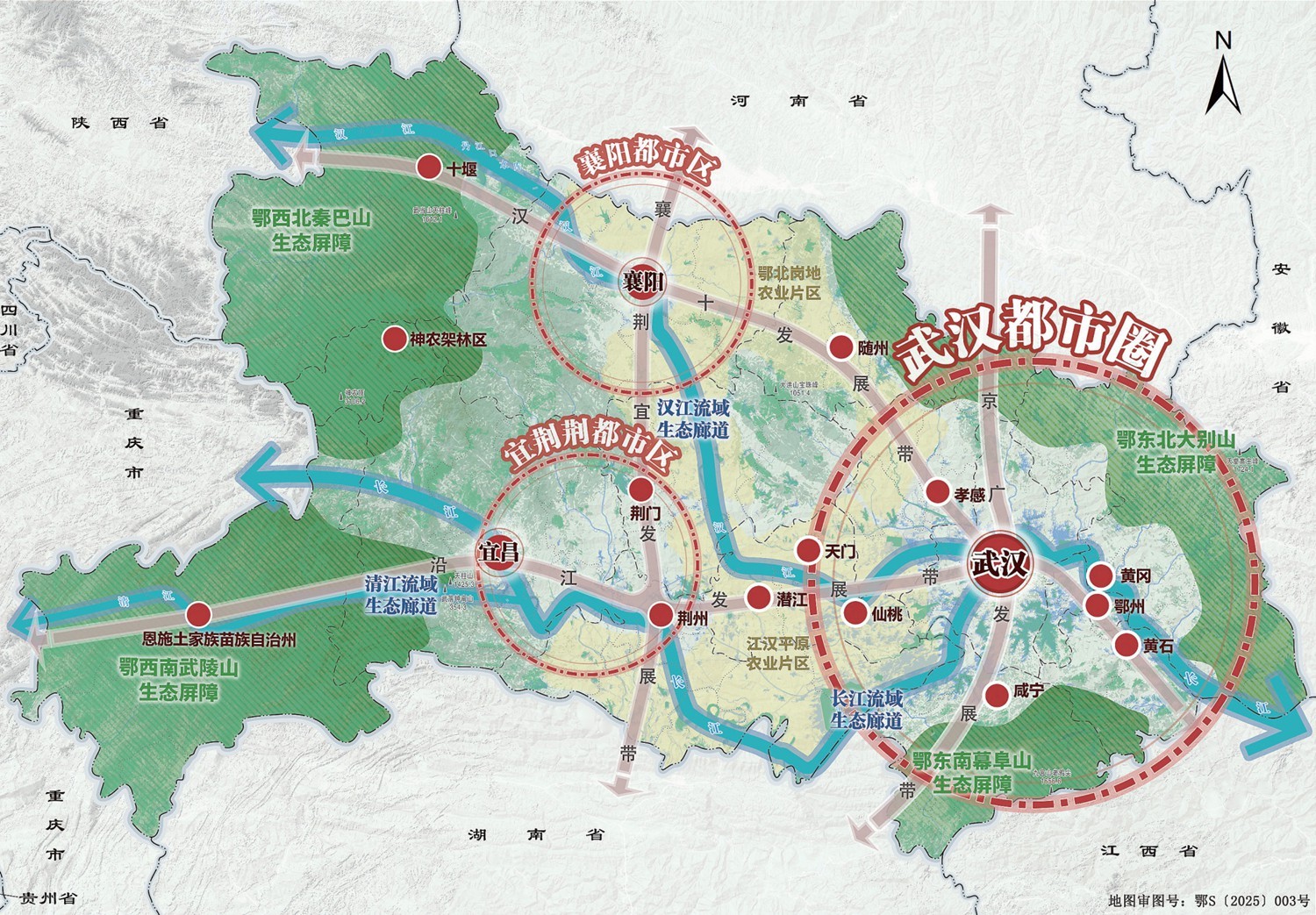
Core Insights - The "same city" concept is becoming a new trend in the Wuhan metropolitan area, emphasizing the need for collaborative development among surrounding cities to enhance the overall economic capacity of the region [1][4][5] - The Wuhan metropolitan area is projected to exceed a GDP of 3.6 trillion yuan in 2024, accounting for over 60% of Hubei's total economy, highlighting its significance as a growth engine in the central Yangtze River region [1][13] - The focus on "same city" development indicates a shift towards greater integration and cooperation among the cities within the metropolitan area, aiming to create a more efficient commuting network and facilitate industrial expansion [5][10][11] Urban Development Strategy - The Wuhan metropolitan area is recognized as a national-level urban cluster, with a strategic plan to enhance its development capabilities and promote high-quality growth in the central Yangtze River city group [1][8] - The "1+8" city system, which includes Wuhan and eight surrounding cities, is crucial for achieving the targeted GDP growth of approximately 400 billion yuan by 2025 [1][8][14] - Recent research and planning efforts are aimed at establishing a comprehensive development framework for the metropolitan area, focusing on infrastructure connectivity and industrial collaboration [7][19] Economic Contributions - The contribution of the Wuhan metropolitan area to Hubei's economy has increased from 46.38% to 46.61% between 2022 and 2024, indicating a growing economic influence [14] - The metropolitan area is expected to play a pivotal role in the development of the central Yangtze River city group, which has seen its economic total surpass 12 trillion yuan, representing 9.2% of the national economy [15][17] - The integration of industries and innovation across the metropolitan area is essential for enhancing its competitive edge and fostering regional development [20][21] Collaborative Initiatives - The Wuhan government is actively promoting cross-regional cooperation with neighboring cities, focusing on transportation, industry, and technology to strengthen the metropolitan area's influence [19][20] - The emphasis on avoiding homogeneous competition among cities is crucial for fostering unique development paths and collaborative growth [21] - Future plans include enhancing the metropolitan area's technological innovation capabilities and establishing a robust industrial chain to better connect with other urban clusters [20][21]
进步最快的百强市,慢了?
Mei Ri Jing Ji Xin Wen· 2025-11-17 14:46
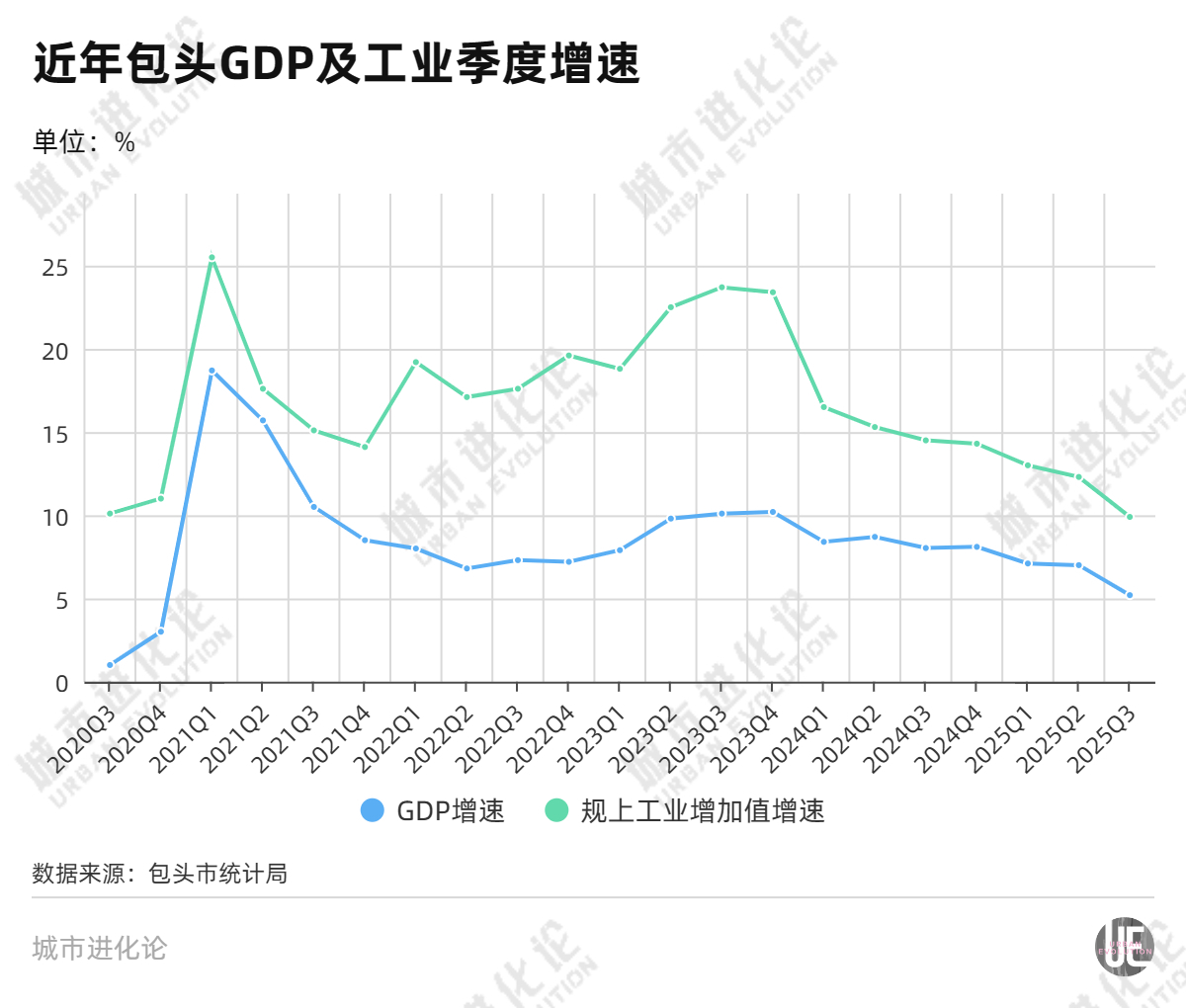
Core Insights - Inner Mongolia has released a significant document titled "Comprehensive Promotion of Beautiful Inner Mongolia Construction to Strengthen the Ecological Security Barrier in Northern China Planning Outline (2025-2035)" which emphasizes the development of Baotou as a key industrial city [1] - Baotou aims to enhance urban development, focusing on the construction of the Hohhot-Baotou-Ordos-Yulin urban cluster and the high-quality development of the Hohhot-Baotou-Ordos-Ulanqab region [1] - The city is set to develop a large-scale wind power base and become the largest rare earth new materials base in China, leveraging its rich resources [1] Economic Performance - In the first three quarters of this year, Baotou's industrial added value growth rate was 9.9%, marking the end of a 60-month streak of double-digit growth [2][5] - Baotou's GDP is projected to reach 457.51 billion yuan in 2024, with an 8.1% growth rate, continuing to lead among China's top 100 cities [2][3] - From 2020 to 2024, Baotou's GDP has increased from 276.97 billion yuan to 457.51 billion yuan, moving up in national rankings from outside the top 100 to 72nd place [2] Industrial Development - Baotou's industrial growth is primarily driven by its traditional heavy industries, including rare earths, polysilicon photovoltaic, steel, and aluminum, which are now valued at over 1 trillion yuan [2][10] - The rare earth industry in Baotou has seen a 19.7% increase in added value in the first three quarters, contributing significantly to overall industrial growth [12] - The city is also focusing on expanding its renewable energy sector, particularly in solar and wind power, to create a comprehensive industrial system [10][11] Infrastructure and Transportation - Baotou is prioritizing transportation infrastructure as part of its development strategy, with plans for high-speed rail connections to enhance regional integration [17][18] - The ongoing construction of the Baotou-Yinchuan high-speed rail is expected to improve connectivity and support industrial upgrades [18] - The establishment of a modern transportation network is seen as crucial for Baotou to leverage its industrial strengths and enhance its position within the urban cluster [18] Strategic Goals - Baotou has set a target to achieve a GDP of around 500 billion yuan by 2025, indicating ambitious growth plans despite current economic challenges [3][6] - The city aims to return to its historical peak GDP ranking, which was 41st in 2010, by addressing structural challenges and enhancing innovation capabilities [7][13] - The local government is focusing on integrating technological innovation with industrial development to strengthen its economic foundation [13]
第十五届全运会:共燃全民健身 畅享文旅消费
Yang Shi Wang· 2025-11-16 22:47
Core Viewpoint - The 15th National Games is leveraging "Sports+" as a link to promote widespread participation in sports across Guangdong, Hong Kong, and Macau, while stimulating cultural and tourism consumption through unique event designs and routes, thereby releasing new momentum for regional collaborative development [1] Group 1 - The event aims to enhance public engagement in sports across the three regions [1] - It focuses on integrating sports with cultural and tourism sectors to boost economic activity [1] - The design of distinctive routes and events is intended to stimulate consumer spending in the region [1]
世界在建最长高速铁路跨海大桥建设取得新进展
Zhong Guo Xin Wen Wang· 2025-11-16 01:41
Core Viewpoint - The successful installation of a 626-ton steel beam marks a significant milestone in the construction of the Hangzhou Bay Cross-Sea Railway Bridge, which is a key project for the Nantong to Ningbo High-Speed Railway [1] Group 1: Project Overview - The Hangzhou Bay Cross-Sea Railway Bridge is a critical component of the Nantong to Ningbo High-Speed Railway, featuring three navigation bridges and a total length of 29.2 kilometers [1] - The bridge is designed for a speed of 350 kilometers per hour and is currently the longest and highest-standard cross-sea high-speed railway bridge under construction globally [1] Group 2: Technical Details - The North Navigation Bridge is a 450-meter main span steel box-steel truss cable-stayed bridge, with two main towers (No. 8 and No. 9) and a total length of 932.7 meters, making it the largest span ballastless track cable-stayed bridge under construction in the world [1] - The design and construction challenges of this bridge are relatively rare among similar types of bridges in China [1] Group 3: Safety Measures - The Jiaxing Maritime Bureau has established a "data + precision + drill" comprehensive guarantee mechanism to ensure construction safety, including precise work window predictions and tailored simulation lifts for each beam [1] - The use of VTS, drones, and patrol boats provides full-scale control during the lifting process [1] Group 4: Future Impact - The Hangzhou Bay Cross-Sea Railway Bridge is expected to be completed and operational by 2027, ending the lack of railway access in Haiyan, Zhejiang, and significantly reducing travel time between cities in the Yangtze River Delta [1] - This project will contribute to the establishment of a "one-hour traffic circle" and further promote regional collaborative development [1]