
医疗AI

Search documents
医疗器械定义背后,原来藏着注册、入院收费与监管的生死线|MedTech Base
思宇MedTech· 2025-07-28 10:22
Core Viewpoint - The definition of "medical devices" is crucial as it delineates industry boundaries, research paths, capital logic, pricing strategies, and even the starting point for industry reshuffling [1][2][4]. Group 1: Definition and Importance - The definition of medical devices affects product marketability, profitability, and industry regulation [2][4]. - Understanding what constitutes a medical device is fundamental for companies to strategize product development and market entry [3][5]. Group 2: Regulatory Implications - Medical AI software must undergo registration and approval processes if classified as medical devices, impacting their commercialization and revenue generation [4][5]. - Medical beauty products face stricter regulations once classified as medical devices, leading to industry consolidation and increased barriers to entry [4][5]. Group 3: Global Perspective - The official definition of medical devices in China is derived from the "Medical Device Supervision and Administration Regulations," emphasizing non-pharmacological efficacy [7][9]. - Globally, while definitions may vary, a common understanding is that medical devices do not achieve their effects through pharmacological, immunological, or metabolic means [9][10]. Group 4: Misconceptions and Clarifications - Not all software qualifies as a medical device; it depends on whether it serves a medical function [12][16]. - Devices used for animal treatment are not classified as medical devices under Chinese regulations, presenting unique challenges for the pet medical equipment market [13][16]. Group 5: Future Directions - Understanding the classification of medical devices is essential for determining project viability, hospital integration, financing, and revenue potential [17]. - The upcoming series "MedTech Base" will explore medical device classification, registration pathways, regulatory systems, and representative products [17][18].


医疗AI的人机协同对战:医疗影像诊断整体效率提升25%,人工智能迎来出海风口
Hua Xia Shi Bao· 2025-07-28 09:51
Group 1 - The core viewpoint of the articles highlights the significant advancements in AI technology within the medical field, particularly in imaging diagnostics and patient interactions, showcasing the efficiency and accuracy improvements brought by AI [1][5][6] - A demonstration at the 2025 WAIC showed that AI-assisted teams completed imaging diagnostics and report writing 25% faster than teams relying solely on human expertise [1] - The collaboration between Zhongshan Hospital and AI companies has led to the development of AI applications for detecting brain and bone metastases, which are now implemented in over 400 hospitals nationwide, enhancing patient care [2] Group 2 - Traditional patient visits often involve cumbersome processes, such as carrying paper medical histories, which can lead to repeated tests and increased costs; AI solutions aim to streamline these processes [3][4] - The development of an electronic medical record AI system allows for real-time transcription of doctor-patient conversations, improving the accuracy and completeness of medical records [4] - The introduction of a chest CT AI system capable of detecting 73 types of abnormalities has achieved an average AUC value of 94%, indicating high diagnostic accuracy [7] Group 3 - AI technology is being integrated into healthcare in remote areas, such as Xinjiang, to enhance the efficiency of tuberculosis screening, addressing the challenges posed by limited medical resources [9] - The international response to Chinese medical AI technology has been positive, with reports from Indonesia highlighting successful case studies where AI identified conditions that local doctors missed, demonstrating the potential for AI to improve healthcare access globally [10][11]
泰坦科技拟5585万元收购境外公司ASL;美中嘉和拟配股融资2.7亿港元丨医药早参
Mei Ri Jing Ji Xin Wen· 2025-07-23 23:09
Group 1 - Titan Technology plans to acquire 100% of Apollo Scientific Ltd. for approximately 55.85 million yuan, enhancing its global supply chain and competitiveness in the reagent field [1] - Qianjin Pharmaceutical has received registration certificates for two drugs, enriching its product line and strengthening its position in the treatment of vitamin B12 deficiency and heart failure [2] - Meizhong Jiahe intends to raise approximately 270 million HKD through a share placement, focusing on hospital construction, medical AI, and operational funding [3] Group 2 - ST Weiming has successfully recovered 100% equity of Xiamen Weiming, resolving long-standing equity disputes and stabilizing corporate governance [4] - Guangji Pharmaceutical has been fined 1.5 million yuan for information disclosure violations, highlighting governance issues and the need for compliance to restore investor confidence [5]


美中嘉和 :通过一般授权配售新 H 股募资约 2.7 亿港元 改善资本结构及储备资金
Xin Lang Cai Jing· 2025-07-21 23:25
Group 1 - The core announcement is that Meizhong Jiahe plans to raise approximately HKD 270 million through the placement of 48,723,600 new H shares, with a net amount of about HKD 260 million after expenses [1] - The placement price is set at HKD 5.54 per share, representing a discount of approximately 16.9% to the closing price of HKD 6.67 on July 21, 2025, and a discount of about 19.9% to the average closing price of HKD 6.92 over the previous five trading days [1] - The newly issued shares will account for approximately 6.6% of the existing issued share capital and about 6.2% of the enlarged share capital after the placement [1] Group 2 - The funds raised will be allocated for the construction of Shanghai Taihe Cheng Cancer Hospital, support for medical AI business needs, repayment of financial institution loans, and to supplement working capital [1] - The issuance is conducted under a general mandate granted by the shareholders' meeting and is expected to be completed on the second business day after obtaining listing approval, no later than July 29, 2025 [1]
美中嘉和(02453.HK)拟配股总筹2.7亿港元 加速肿瘤医院建设及医疗AI布局
Ge Long Hui· 2025-07-21 23:01
Core Viewpoint - 美中嘉和 (02453.HK) has entered into a placement agreement with Guotai Junan International to issue 48.72 million shares at a price of HKD 5.54 per share, representing approximately 18.38% of the existing H shares and 6.63% of the total issued shares as of the announcement date [1][2] Group 1: Placement Details - The placement involves 48.72 million shares, which will be issued under a general authorization [1] - The placement shares will account for approximately 15.52% of the enlarged issued H shares and about 6.22% of the total issued shares after the placement [1] Group 2: Use of Proceeds - The total expected proceeds from the placement are approximately HKD 270 million, with a net amount of about HKD 259 million [2] - The net proceeds will be allocated as follows: - Approximately HKD 77.63 million (30%) for the construction of Shanghai Taihe Cheng Tumor Hospital, expected to be fully utilized by June 30, 2026 [2] - Approximately HKD 38.82 million (15%) to support the company's medical AI business, including operational and R&D expenses, also expected to be fully utilized by June 30, 2026 [2] - Approximately HKD 64.69 million (25%) for repaying loans from financial institutions, including principal and interest for working capital loans and fixed asset loans, expected to be fully utilized by June 30, 2026 [2] - Approximately HKD 77.63 million (30%) for replenishing the company's working capital and general corporate purposes, expected to be fully utilized by June 30, 2026 [2]
国联民生证券:国内医疗设备招投标延续增长 建议关注医疗AI和医疗设备招投标恢复标的
Zhi Tong Cai Jing· 2025-07-21 01:42
Group 1 - The core viewpoint is that the investment enthusiasm for medical AI products is increasing overseas, with significant financing events related to medical AI electronic medical record products [1] - In June 2025, the global healthcare sector saw 144 financing events, with disclosed amounts reaching approximately $2.2 billion, highlighting innovative drugs as a hot financing area in China's healthcare sector [1] - The largest disclosed financing amounts in June 2025 for innovative drugs were $2 million each for Tianchen Biotech, Sipure, and Baiquan Biotech, focusing on allergy and cancer drug development [1] Group 2 - There is a notable difference in financing preferences between overseas and Chinese medical device sectors, with overseas favoring cutting-edge innovations like medical AI electronic medical records, while China focuses on cardiovascular interventions [2] - The top three disclosed financing amounts in China's medical device sector were for companies involved in vascular intervention devices and high-end interventional medical devices [2] Group 3 - The bidding data for medical devices continues to show growth, with significant increases in sales for CT, MRI, and ultrasound devices in June 2025 [3] - Specific sales figures include CT at $1.9 billion (yoy +63%), MRI at $1.5 billion (yoy +65%), and ultrasound at $1.4 billion (yoy +50%) [3] - The sales figures for blood/purification dialysis devices and gene sequencing instruments also show strong recovery, with $324 million (yoy +54%) and $65 million (yoy +50%) respectively [3]



大厂为何扎堆卷赛博“大白”
虎嗅APP· 2025-07-19 13:48
Core Viewpoint - The article discusses the rapid growth and potential of AI in healthcare, highlighting its transformative impact on patient management and the healthcare system in China, while also addressing the challenges and limitations faced by AI technologies in this sector [2][4][10]. Group 1: AI in Healthcare Services - AI services are increasingly being adopted by patients for health management, with applications such as report interpretation and intelligent triage leading the trend [2][3]. - Major internet companies like JD Health, Alibaba Health, and Baidu Health are actively developing independent AI health management applications, indicating a competitive landscape [3][4]. - The AI health management market in China is projected to reach 25.9 trillion yuan by 2027, with a compound annual growth rate exceeding 20% [4]. Group 2: Impact on Traditional Healthcare - AI technologies are significantly changing the traditional healthcare system, allowing hospitals to serve a larger number of patients efficiently [5][10]. - AI can alleviate the burden on healthcare professionals by handling repetitive tasks, thus improving overall service efficiency [7][10]. - The integration of AI into healthcare aims to create a closed-loop system that connects various healthcare services, enhancing data collection and patient management [7][10]. Group 3: Challenges and Limitations - Despite the potential benefits, there are significant challenges in gaining public trust in AI healthcare solutions, with only 3.59% of people believing AI can fully replace doctors [13][14]. - The complexity of integrating AI into healthcare requires deep collaboration with medical professionals to ensure the accuracy and reliability of AI systems [14][15]. - Legal and regulatory challenges, particularly concerning data privacy and the definition of responsibility in AI applications, pose significant hurdles for the industry [15][16].



大厂为何正扎堆卷赛博“大白”
Hu Xiu· 2025-07-19 13:12
Core Viewpoint - The article discusses the rapid growth and adoption of AI-driven health management services in China, highlighting the competitive landscape among major internet companies and the potential impact on the healthcare system [5][14][16]. Group 1: Market Trends and Growth Potential - The AI health management market in China is projected to reach 2.59 trillion yuan by 2027, with a compound annual growth rate exceeding 20% [4]. - Over 90% of working individuals are affected by sub-health conditions, creating a significant demand for AI health management solutions [3][4]. - Major internet companies like JD Health, Alibaba Health, and Baidu Health are actively developing independent AI health management applications, indicating a fierce competition in the sector [3][4][10]. Group 2: AI Integration in Healthcare - AI technologies are being utilized to enhance patient care, with hospitals reporting significant increases in patient consultations through AI systems [6][7]. - AI health management products are emerging to cover pre-consultation and post-discharge follow-ups, addressing gaps in traditional healthcare services [8][9]. - The integration of AI with offline healthcare services aims to create a seamless healthcare experience for users, improving data collection and service efficiency [10][11]. Group 3: Challenges and Considerations - Despite the promising market, there are challenges in gaining trust from the public, as only 3.59% of people believe AI can fully replace doctors [18][19]. - The complexity of healthcare services requires AI systems to connect with a wide range of medical resources, which is crucial for effective health management [16][23]. - Legal and regulatory issues surrounding data privacy and AI accountability remain significant hurdles for the industry [28][29][30].
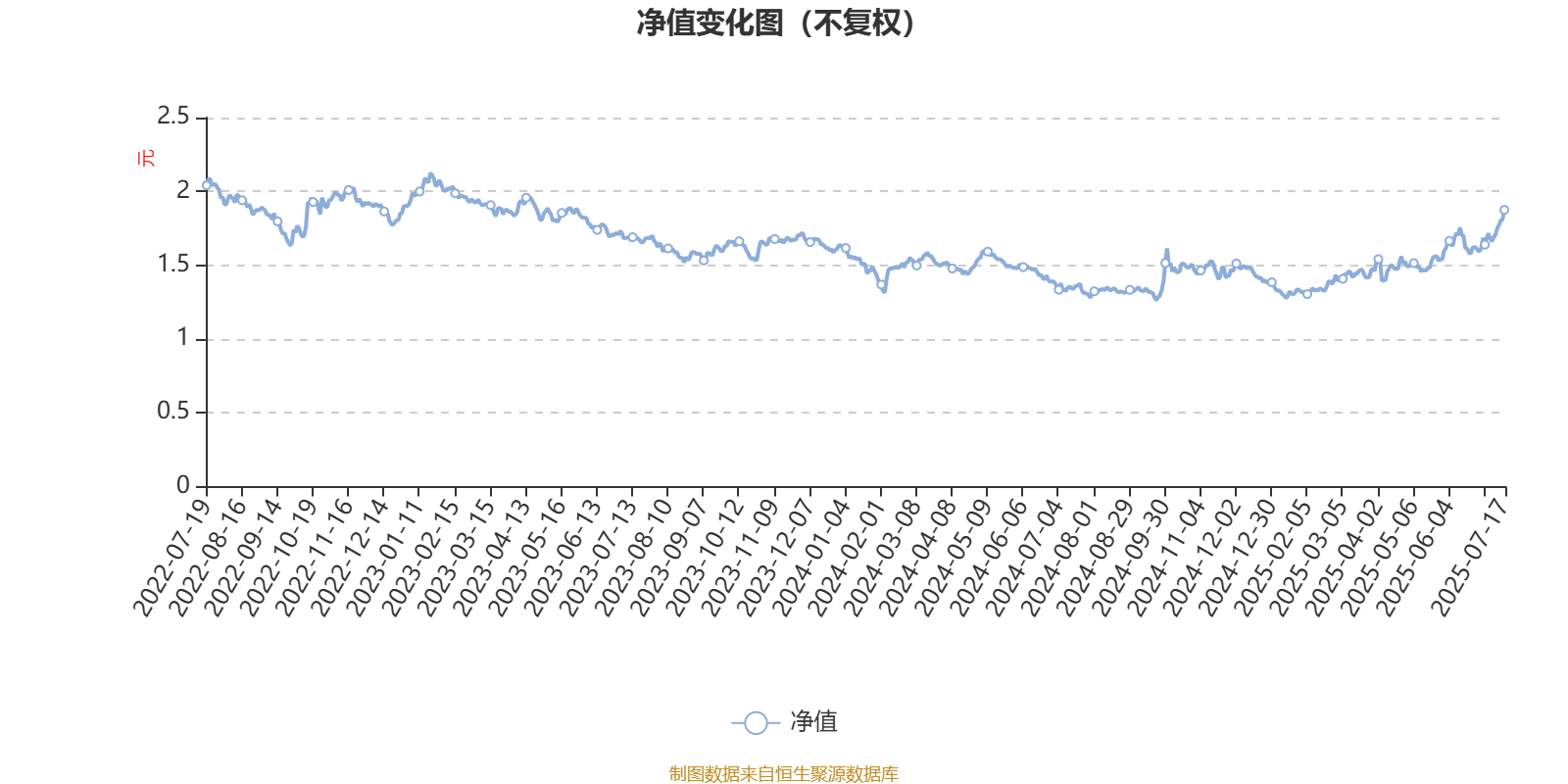
农银医疗保健股票:2025年第二季度利润1.42亿元 净值增长率10.67%
Sou Hu Cai Jing· 2025-07-18 04:39
Core Viewpoint - The AI Fund Agricultural Bank Healthcare Stock (000913) reported a profit of 142 million yuan for Q2 2025, with a weighted average profit per fund share of 0.1565 yuan, and a net asset value growth rate of 10.67% during the reporting period [2] Fund Performance - As of the end of Q2 2025, the fund's scale was 1.441 billion yuan [13] - The fund's unit net value as of July 17 was 1.875 yuan [2] - The fund's one-year cumulative net value growth rate was 38.71%, ranking 24 out of 53 comparable funds [2] - The fund's three-month cumulative net value growth rate was 26.79%, ranking 28 out of 54 comparable funds [2] - The fund's six-month cumulative net value growth rate was 42.95%, ranking 22 out of 54 comparable funds [2] - The fund's three-year cumulative net value growth rate was -9.44%, ranking 24 out of 46 comparable funds [2] Risk Metrics - The fund's three-year Sharpe ratio was -0.143, ranking 33 out of 46 comparable funds [7] - The maximum drawdown over the past three years was 40.52%, ranking 23 out of 46 comparable funds [8] - The highest single-quarter maximum drawdown occurred in Q1 2021, at 28.61% [8] Investment Strategy - The fund manager defined investment keywords for 2025 as innovation, medical AI, self-control, and state-owned enterprise reform [2] - The average stock position over the past three years was 90.34%, compared to the industry average of 88.16% [11] - The fund reached its highest stock position of 93.72% at the end of Q3 2020 and its lowest of 84.43% at the end of Q3 2024 [11] Top Holdings - As of the end of Q2 2025, the fund's top ten holdings included companies such as Heng Rui Medicine, Zejing Pharmaceutical, and Xinlitai [15]



为什么百度总是起个大早,却赶了晚集?
Hu Xiu· 2025-07-16 03:40
Core Insights - Baidu's recent internal reflection by founder Li Yanhong highlights the company's organizational culture and business performance [2] - The company has faced several setbacks despite early advantages in various sectors, leading to a perception of missed opportunities [3][4] Group 1: Business Performance and Challenges - Baidu's AI product, Wenxin Yiyan, initially had a first-mover advantage but has since become a source of ridicule in the industry [3] - The market share of Baidu's food delivery service once reached 33% but was subsequently overtaken by competitors like Ele.me [3] - Baidu's early entry into smart driving technology was promising, but the collapse of Jiyue Automotive raised concerns [3] Group 2: Internal Organizational Issues - The company struggles with internal alignment, where different teams often conflict with each other, leading to inefficiencies [11][12] - There is a notable lack of focus on user experience and product documentation, which complicates collaboration and slows down processes [14][25] - The internal culture favors elite talent, which can lead to internal strife and a lack of cohesive strategy execution [20][22] Group 3: Recommendations for Improvement - Baidu needs to address the issues of information distortion and evaluation failure to ensure strategic focus can be effectively executed [24][32] - Enhancing the quality of documentation and collaboration efficiency should be prioritized in performance evaluations [25][26] - A new evaluation system that encourages problem-solving and transparency is essential for fostering a more effective organizational culture [28][30]