
门罗主义

Search documents
“美国战略重大转向”,震动欧洲!俄总统新闻秘书:不再将俄称为“直接威胁”是积极举措,将详细研究
Mei Ri Jing Ji Xin Wen· 2025-12-07 16:10
Core Points - The new U.S. National Security Strategy marks a significant shift from the long-standing "pivot to Asia" approach, emphasizing a focus on limited "core national interests" rather than global dominance [2] - The strategy indicates a prioritization of U.S. homeland and the Western Hemisphere, reflecting a return to "Monroe Doctrine" principles [5][6] - The report highlights a critical stance towards Europe, suggesting a decline in its global economic influence and calling for increased U.S. intervention in European internal affairs [11][12] Summary by Sections U.S. National Security Strategy - The report states that the pursuit of "permanent global dominance" is fundamentally unattainable and detrimental to the U.S. middle class and industrial base [2] - It aims to protect prioritized national interests rather than attempting to address all global issues [2] Focus on the Western Hemisphere - U.S. Defense Secretary emphasizes prioritizing national interests, particularly in the homeland and the Western Hemisphere, and calls for increased military presence in Latin America [3][4] - The strategy is seen as a revival of "Monroe Doctrine," which historically aimed at U.S. dominance in the Americas [5][6] Critique of European Relations - The report expresses an unprecedented confrontational stance towards Europe, noting a decline in its share of global GDP from 25% in 1990 to 14% today [11] - It raises concerns about the potential for non-European populations to become a majority in some NATO countries, questioning the future of U.S.-European alliances [11] - The strategy criticizes European governments for their handling of the Russia-Ukraine conflict, suggesting they have undermined democratic processes [11][12] Implications for Defense and Military Strategy - The U.S. plans to invest heavily in defense industrial capabilities, including ships, drones, and air defense systems [4] - The strategy indicates a shift towards a more militarized approach to issues in Latin America, framing them as national security concerns [6][9]


美国最新报告:不允许任何国家过于强大
Zhong Guo Ji Jin Bao· 2025-12-07 10:02
Core Points - The new U.S. National Security Strategy report emphasizes prioritizing the Western Hemisphere and critiques Europe while downplaying the threat of terrorism [1] - The report introduces the "Trump Doctrine" as a modern version of the Monroe Doctrine, asserting U.S. intervention rights in Latin America [1] - The report indicates a shift in U.S. military presence globally, reducing resources in areas deemed less critical to national security [1][2] Group 1: U.S. National Security Strategy - The report outlines a focus on the Western Hemisphere as a frontline for U.S. border security and geopolitical competition [1] - It aims to prevent large-scale immigration, combat drug trafficking, and counter foreign adversaries in Latin America [1] - Analysts suggest this will lead to increased U.S. investment in intelligence, military, and economic strategies in the region [1] Group 2: Global Military Presence - The report calls for a reallocation of military resources away from regions of declining importance, such as Europe, the Middle East, and Africa [1] - It emphasizes the need for allies to take on more defense responsibilities and aims to avoid costly "forever wars" [1] - The report also seeks to rebuild the U.S. defense industrial base and enhance economic security as a foundation for national security [1] Group 3: Anti-Immigration and Globalization Stance - The report reflects a strong anti-immigration sentiment, attributing many global challenges to immigration issues [1] - It criticizes European policies and warns of a "civilizational decline" due to immigration and economic stagnation [1] - The report indicates a shift in U.S. foreign policy to a more inward-looking and selective engagement based on national interests [2]
美国发布最新《国家安全战略》:放弃全球霸权 承认中美“近乎对等”
天天基金网· 2025-12-07 08:35
Core Viewpoint - The new National Security Strategy under the Trump administration marks a significant shift from pursuing global hegemony to prioritizing U.S. interests, particularly in Latin America, while criticizing European allies for their declining economic influence and potential demographic changes [2][6][11]. Summary by Sections U.S. Foreign Policy Shift - The document emphasizes "America First" as the guiding principle, abandoning the decades-long pursuit of global dominance, which is deemed destined to fail [6][7]. - It states that the era of the U.S. supporting the global order is over, and the focus will be on preventing other major powers from gaining dominance without extensive military engagement [6][7]. Focus on Latin America - The strategy aims to restore U.S. hegemony in the Western Hemisphere, addressing issues like immigration and drug trafficking, and reasserting the Monroe Doctrine [7][9]. - The U.S. will adjust its military presence globally, withdrawing from regions deemed less critical to national security, while increasing the Coast Guard and Navy's deployment in the Western Hemisphere [7][9]. Critique of Europe - The strategy presents an unprecedented confrontational stance towards Europe, highlighting a decline in Europe's share of global GDP from 25% in 1990 to 14% today, and warns of a potential "civilizational extinction" [11][12]. - It raises concerns about the demographic shifts in NATO countries and questions the future of U.S.-European alliances [11][12]. Response to Ukraine Conflict - The document states that the U.S. core interest is to quickly end hostilities in Ukraine and rebuild strategic stability with Russia, while criticizing European officials for obstructing U.S. efforts to resolve the conflict [12][12]. Military and Economic Strategy - The strategy calls for increased R&D investment to maintain U.S. superiority in advanced military technologies, focusing on areas like underwater, space, nuclear technology, artificial intelligence, and quantum computing [14][15]. - It indicates a shift in U.S.-China relations towards a more reciprocal economic relationship, while deemphasizing the Middle East in U.S. foreign policy priorities due to the U.S. becoming an energy net exporter [15][15]. Comparison with Previous Strategies - The new strategy represents a significant departure from the Biden administration's 2022 National Security Strategy, which focused on strategic competition with China and Russia, domestic industrial policy, and climate change as a national security challenge [17][17].
美国最新报告:不允许任何国家过于强大
证券时报· 2025-12-07 08:12
Core Viewpoint - The U.S. National Security Strategy report emphasizes prioritizing the Western Hemisphere, criticizing Europe, downplaying terrorism threats, and aiming for a balance between external commitments and internal capabilities [1][2]. Group 1: Monroe Doctrine and Intervention in Latin America - The report introduces the "Trump Doctrine" as a modern version of the Monroe Doctrine, asserting U.S. dominance in the Western Hemisphere [1]. - It outlines objectives such as preventing mass immigration, using lethal force against drug cartels, and ensuring U.S. access to strategic locations in Latin America [1][2]. - Analysts suggest this indicates a significant increase in U.S. resources allocated to intelligence, military, law enforcement, and economic strategies in Latin America [2]. Group 2: Global Military Presence Adjustment - The report calls for a "reallocation" of U.S. military resources, reducing presence in regions deemed less critical to national security [3]. - Experts interpret this as a decline in the importance of Europe, the Middle East, and Africa in U.S. foreign policy [3]. Group 3: Strategic Military and Economic Goals - The report aims to alleviate global security burdens by encouraging allies to take on more defense responsibilities and avoiding costly "forever wars" [4]. - It emphasizes the need to rebuild the U.S. defense industrial base and maintain dominance in key technological fields [5]. - The report also highlights the end of the era where the Middle East dominated U.S. foreign policy, although skepticism remains about the actual shift in focus [5]. Group 4: Anti-Immigration and Anti-Globalization Stance - The report reflects a vision of global order based on "America First," characterized by anti-immigration and anti-globalization sentiments [6]. - It attributes many global challenges to immigration, asserting that large-scale immigration undermines traditional powers' cultural and economic dominance [6]. - The report contains strong criticisms of Europe, warning of severe consequences due to immigration policies and economic stagnation [6]. Group 5: Power Dynamics and Global Influence - The report indicates a more inward-looking and narrow view of U.S. security, while simultaneously asserting that no country should become too powerful to threaten U.S. interests [7]. - It continues to advocate for a strong power logic in international relations, emphasizing that great powers have significant influence [7]. - The report has been described as an attempt to impose the President's worldview selectively on the global stage [7].

“美国将调整与中国的经济关系”
第一财经· 2025-12-07 01:37
Core Viewpoint - The article discusses the release of the Trump administration's updated National Security Strategy, emphasizing a shift in U.S. foreign policy, particularly regarding military presence in the Western Hemisphere and relations with China and Europe [3][5][8]. Group 1: U.S. National Security Strategy - The new strategy prioritizes border security and combating drug trafficking as core defense tasks, reflecting a shift from terrorism to immigration as the primary threat [5]. - It outlines plans to enhance the U.S. Coast Guard and Navy presence in the region to ensure border safety and counter drug cartels, potentially using lethal force if necessary [3][5]. Group 2: Relations with Europe - The strategy adopts an unprecedented confrontational stance towards Europe, warning of economic recession and demographic shifts in NATO member states, raising questions about their alliance with the U.S. [7]. - It criticizes European officials for obstructing U.S. efforts to end the Russia-Ukraine conflict, highlighting the adverse effects of the conflict on European external dependencies [7]. Group 3: U.S.-China Relations - The strategy notes that the relationship between the U.S. and China has evolved from one of disparity to a near-equal status, prompting a reevaluation of economic relations based on mutual benefit [8]. - It indicates a shift in focus from Asia to Latin America, elevating the latter's importance on the U.S. agenda [8].

美国家安全战略报告提出“西半球优先”,美防长称门罗主义“比以往任何时候都更加强大”
Hua Er Jie Jian Wen· 2025-12-07 01:07
Core Viewpoint - The U.S. is shifting its national security focus to the Western Hemisphere, marking a significant strategic adjustment under the Trump administration, emphasizing "America First" diplomacy and core national interests [1] Group 1: Monroe Doctrine and Military Strategy - The U.S. Defense Secretary announced the revival of the Monroe Doctrine, asserting its effectiveness and strength, with a focus on protecting U.S. homeland and interests in the hemisphere [1][2] - The strategic report suggests potential increases in military presence, bases, and operations in the Western Hemisphere to address regional tensions [1] - The U.S. currently has the largest naval deployment in the Caribbean, with over 12 vessels and more than 14,000 soldiers, and has conducted 22 strikes against drug smuggling vessels, resulting in at least 87 deaths [1] Group 2: Regional Responsibilities and Controversies - The Defense Secretary emphasized the need for neighboring countries, particularly Mexico, to take more responsibility in regional security, while acknowledging some progress [2] - Controversy arose regarding the legitimacy of U.S. counter-narcotics operations, with the Defense Secretary defending these actions as necessary for deterring threats in the hemisphere [2] - The Secretary acknowledged threats in Europe and the Middle East but stated that these regions should not rely on U.S. defense support, indicating a shift in military priorities [3]
国际观察丨美国实为拉美“乱源” 武力“禁毒”纯属“贼喊捉贼”
Xin Hua She· 2025-12-07 01:04
新华社墨西哥城12月6日电 题:美国实为拉美"乱源" 武力"禁毒"纯属"贼喊捉贼" 新华社记者王植樱 吴昊 由加勒比地区和瑞士多家机构近日联合发布的一份重量级报告显示,枪支泛滥的美国是加勒比地区枪支暴力问题的重要源头,来自美国的武器进 一步助长了拉美和加勒比地区的贩毒等犯罪活动。 拉美安全专家认为,美国长期松懈的控枪政策和监管漏洞,使其成为拉美和加勒比地区非法武器的主要来源国。 来自美国的武器源源不断流入制毒和贩毒的拉美和加勒比地区犯罪集团手中,助长了该地区的贩毒活动,这是这一地区暴力犯罪形势持续恶化的 重要原因。 据哥伦比亚官方机构估算,每年约有4.5万支枪从美国流入哥伦比亚,其中80%落到犯罪集团和非法武装组织手中。 拉美专家指出,美国作为拉美枪支暴力和贩毒等犯罪活动的一大"乱源",居然以"解决问题"为由大举出兵加勒比海域,干涉拉美地区事务,这完 全是"贼喊捉贼"。 2023年2月24日,在美国马萨诸塞州波士顿,当地学生参加反枪支暴力集会。新华社发(朱子于摄) 美国是"绝对的主要源头" 由加勒比共同体犯罪和安全事务执行机构、加勒比公共卫生署、瑞士"小型武器调查"项目等机构近日联合发布的报告显示,加勒比地区 ...

美国战略重心大转向,第一枪瞄准这个国家?
吴晓波频道· 2025-12-07 00:29
点击上图▲立即了解 " 美国战略收缩,意在美洲重组供应链和再工业化,而美国绝对主导的东亚旧秩序出现松动。 " 文 /巴九灵(微信公众号:吴晓波频道) 据CCTV国际时讯、参考消息报道,特朗普政府于当地时间12月4日晚,发布最新的《国家安全战略》报告,堪称重磅。 报告中最关键的一点是,美国战略重心将从"重返亚洲"转向美洲地区,中国不再被定义为"首要威胁",而是经济领域的竞争对手。 文件中出现了一个历史词汇:门罗主义。它是1823年美国总统门罗提出的外交政策,从早期孤立主义演变为对美洲的经济控制和政治干预。 这也意味着,美国战略收缩,意在泛美地区重组供应链和再工业化,而美国绝对主导的东亚旧秩序出现松动。 很多人猜想,美国重返美洲,会对哪个国家率先开刀?首先跳出脑海的,自然是那个近日被美国军事威胁的反美国家——委内瑞拉。 巧合的是,2013年美国电子游戏公司动视暴雪曾推出了一款名为《使命召唤:幽灵》的游戏,第一次将美国和南美国家对立: 2020年代前后,拉美国家联合成一个强大政权,迅速崛起成新的超级大国,劫持了美国的太空武器并对美国本土发动毁灭性打击。 而这个联盟的中心,正是委内瑞拉的首都加拉加斯。 委内瑞拉首都加 ...

重大转向!美国发布最新《国家安全战略》:放弃全球霸权,将调整与中国经济关系,“以互惠平等为原则”,承认中美“近乎对等”!欧洲炸锅
Mei Ri Jing Ji Xin Wen· 2025-12-06 15:27
Group 1 - The core viewpoint of the new U.S. National Security Strategy is a shift from pursuing global hegemony to strengthening U.S. dominance in Latin America, marking a significant departure from the previous focus on Asia [1][5][6] - The document emphasizes that the era of the U.S. acting as the global order's Atlas is over, and it will not engage in costly efforts to curb the influence of all major and medium powers [5][6] - The strategy highlights the need to address immigration and drug trafficking as central national defense tasks, reflecting a change in perceived threats to the U.S. [8][12] Group 2 - The strategy criticizes European allies, warning of a "civilizational extinction" risk and suggesting that European nations must change their approach to remain reliable partners [10][12][13] - It notes a decline in Europe's share of global GDP from 25% in 1990 to 14% today, indicating a shift in geopolitical dynamics [12] - The document calls for increased U.S. intervention in European domestic affairs to counteract current trends, reflecting a more confrontational stance towards Europe [13][14] Group 3 - The strategy outlines a reallocation of military resources to the Western Hemisphere, emphasizing the restoration of U.S. hegemony in the region [6][8] - It states that the U.S. will adjust its economic relationship with China to one based on mutual benefit, indicating a shift towards a more balanced approach [17] - The Middle East is no longer a priority in U.S. foreign policy, as the U.S. has become an energy net exporter, marking a significant change in focus [17][18]
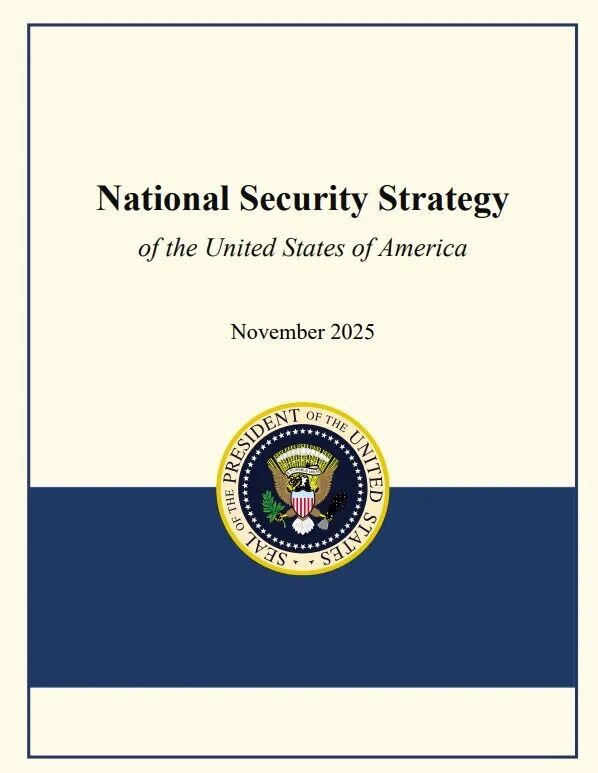
“美国将调整与中国的经济关系”
Zhong Guo Ji Jin Bao· 2025-12-06 15:26
Group 1 - The new National Security Strategy marks a significant shift in the U.S. approach, moving away from the long-standing goal of being the sole superpower and rejecting the idea of a U.S.-led global hegemony [1][2] - The strategy emphasizes a need to adjust global military deployments to address imminent threats in the Western Hemisphere, while also asserting U.S. dominance in Latin America [2] - The report indicates that the U.S. will maintain a larger military presence in the Western Hemisphere to tackle issues such as immigration and drug problems, and to reaffirm the Monroe Doctrine [2] Group 2 - The U.S. plans to adjust its economic relationship with China based on mutual respect and aims to restore American economic autonomy [3][4] - The report highlights the evolution of U.S.-China relations from a disparity between a mature economy and a poor nation to a near-equal relationship [3] - The strategy places increased emphasis on Taiwan, noting its critical role in global semiconductor production and its strategic location in the Asia-Pacific region [5]