6G技术

Search documents
芯片ETF天弘(159310)、科创综指ETF天弘(589860)低开后回升,工信部:加快高端算力芯片等技术攻关
2 1 Shi Ji Jing Ji Bao Dao· 2025-10-13 02:34
Group 1 - A-shares indices opened lower but rebounded, with the chip ETF Tianhong (159310) narrowing its decline to 0.74%, while component stocks like Huada Jiutian surged over 16% [1] - The Tianhong chip ETF saw a net subscription of 10 million units during the trading session, following a significant inflow of over 77 million yuan on the previous trading day [1] - The Tianhong Science and Technology Innovation Index ETF (589860) also narrowed its decline to 0.46%, with a trading volume exceeding 12 million yuan, and component stocks such as Kingsoft Office rising over 12% [1] Group 2 - The Ministry of Industry and Information Technology emphasized innovation and self-reliance in the information and communication sector, focusing on 6G technology research and the development of high-end computing chips [2] - Nanjing University's research team developed a high-precision simulation in-memory computing chip, achieving the highest precision record in the field [2] - Shenzhen's measures to promote high-quality development in the semiconductor and integrated circuit industry have benefited over 40 enterprises since their release [2] Group 3 - CITIC Securities maintains a positive outlook on the market, highlighting three key areas: computing power, storage, and chip testing, with a focus on the PCB sector [3] - Guotai Junan Securities notes that domestic chip upgrades are accelerating, supporting the development of large models, with companies like Huawei and Cambricon adapting to new AI models [3] - The domestic AI ecosystem is forming an internal cycle of rapid iteration, with new model releases leading to domestic chip adaptations and optimizations [3]



中方回应美威胁对华加征100%关税;七部门:深入推动服务型制造创新发展丨盘前情报
2 1 Shi Ji Jing Ji Bao Dao· 2025-10-13 00:44
Market Performance - A-shares showed mixed performance in the first two trading days after the National Day holiday, with the Shanghai Composite Index closing at 3897.03 points, up 0.37%, while the Shenzhen Component Index and the ChiNext Index fell by 1.26% and 3.86% respectively [2][3] - Over 54% of stocks rose during the week, with 47 stocks gaining over 15% and 14 stocks dropping more than 15% [2] International Market Trends - Major U.S. stock indices experienced significant declines on October 10, with the Dow Jones down 878.82 points (1.90%), the S&P 500 down 182.60 points (2.71%), and the Nasdaq down 820.20 points (3.56%) [3][5] - European stock indices also fell, with the FTSE 100 down 81.93 points (0.86%), the CAC 40 down 123.36 points (1.53%), and the DAX down 369.79 points (1.50%) [4] Commodity Prices - International oil prices saw a notable decline, with WTI crude oil falling by $2.61 to $58.90 per barrel (down 4.24%) and Brent crude down $2.49 to $62.73 per barrel (down 3.82%) [4] Regulatory Developments - The Chinese Ministry of Commerce responded to the U.S. announcement of a 100% tariff on certain Chinese exports, emphasizing that China's export control measures are a normal legal action to safeguard national security [6] - The Chinese government criticized the U.S. for its discriminatory practices and excessive use of export controls, which it claims harm legitimate business interests and disrupt international trade [6] Industry Insights - The Shanghai government announced measures to accelerate the development of industries such as silicon photonics, 6G, fourth-generation semiconductors, and brain-like intelligence [9] - The Ministry of Housing and Urban-Rural Development reported that the approved loan amount for white list projects has exceeded 7 trillion yuan, supporting the construction and delivery of commercial housing projects [10] Trust Industry Updates - Trust companies have been instructed to investigate their reverse repurchase leverage ratios and ensure compliance with regulatory limits [11] Service-Oriented Manufacturing - A new implementation plan aims to enhance the role of service-oriented manufacturing in high-quality development by 2028, focusing on key tasks such as technology innovation and standard system construction [12][13] Market Outlook - Analysts predict that the market will continue its upward trend, supported by stable inflows of capital and expected earnings growth in the third quarter [18]






工业和信息化部总工程师钟志红:加快高端算力芯片等技术攻关
Zhong Guo Zheng Quan Bao· 2025-10-11 10:39
Core Viewpoint - The development of China's information and communication industry has achieved significant results, with advancements in infrastructure, network capabilities, and technology, positioning the country at the forefront of global innovation in key areas such as 5G-A and 6G [1][2]. Group 1: Industry Achievements - The information and communication industry has made notable progress, with network capabilities reaching a dual-gigabit level and computational power ranking second globally [1]. - Key technologies such as 5G-A and 6G are being developed and standardized, placing China in the leading global position [1]. - The integration of emerging technologies like 5G, artificial intelligence, and industrial internet with the real economy is fostering new business models and driving industrial transformation [1]. Group 2: Development Recommendations - The industry should focus on building a comprehensive intelligent information infrastructure, enhancing 5G-A network coverage in key cities, and optimizing computational resource allocation [2]. - Emphasis on innovation is crucial, with a focus on advancing 6G technology, developing high-end computational chips, and creating high-quality data sets to support new intelligent terminals [2]. - The integration of information and communication technology across various sectors is essential, particularly in areas like smart cities and digital rural development, to enhance social governance [2]. - A collaborative governance approach is necessary to ensure a healthy and sustainable development environment, improving cybersecurity and establishing a regulatory framework that aligns with digital development [2].
工信部总工程师钟志红:加快高端算力芯片等技术攻关
Zhong Zheng Wang· 2025-10-11 09:05
Core Insights - The development of China's information and communication industry has achieved significant results, with advancements in infrastructure, network capabilities, and technology systems, positioning the country among the global leaders in 5G-A and 6G research and standards [1][2] Group 1: Industry Development Achievements - Infrastructure has made a new leap, with network capabilities entering the dual-gigabit era and computing power ranking second globally [1] - Key technologies such as 5G-A and 6G are being developed and standardized in the leading global tier [1] - The integration of emerging technologies like 5G, artificial intelligence, and industrial internet with the real economy is fostering new business models and driving industrial transformation [1] Group 2: Strategic Recommendations - Emphasize building a comprehensive intelligent information infrastructure, enhancing 5G-A network coverage in key cities, and optimizing computing power resource allocation [2] - Focus on innovation to strengthen self-reliance in technology, including advancing 6G research and developing high-end computing chips and intelligent terminals [2] - Promote the deep integration of information and communication technology across various industries, particularly in smart cities and digital rural areas [2] - Establish a healthy and sustainable development environment through improved cybersecurity and a regulatory framework that aligns with digital development [2]
建设高水平科技强省,跑出加速度—— 江苏“十四五”经济社会发展综述之二
Xin Hua Ri Bao· 2025-10-10 23:35
Group 1: R&D Investment and Innovation Capacity - Jiangsu's R&D investment intensity has steadily increased from 2.95% in 2021 to 3.36% in 2023, positioning it at a mid-to-high level among innovative countries and regions [1] - Jiangsu's regional innovation capability ranked second nationally last year and maintained this position this year, with a narrowing gap to the top [1] - The province has launched over 9,000 basic research projects during the "14th Five-Year Plan" period, emphasizing the importance of original innovation [2] Group 2: Major Technological Platforms and Achievements - Jiangsu has established 44 national key laboratories and is developing the Suzhou Laboratory, which focuses on materials research [3] - The province has made significant breakthroughs, including the first observation of a graviton mode in condensed matter and the establishment of the world's first 8-inch silicon-based gallium nitride production line [3] - Jiangsu's innovation in pharmaceuticals is notable, with seven innovative drugs approved during the "14th Five-Year Plan," compared to just one during the previous period [5] Group 3: Support for Enterprises and Startups - The number of listed companies on the Science and Technology Innovation Board in Jiangsu has increased from 42 at the end of the "13th Five-Year Plan" to 114, the highest in the country [5] - Jiangsu has implemented policies to support high-tech enterprises and unicorn companies, resulting in a growth of technology-based SMEs from 40,000 to 89,000 [6] - The province is fostering innovation through high-tech zones and collaborations with universities, enhancing the local innovation ecosystem [7] Group 4: Innovation Ecosystem and Financial Support - Jiangsu is reforming its technology system to eliminate barriers to innovation, including pilot reforms in technology achievement ownership [8] - The province has established a comprehensive financial support system for technology startups, with over 640 billion yuan in new loans for the technology sector in the past two years [9] - The Jiangsu Provincial Technology Finance Integration Conference has been held for three consecutive years, promoting the integration of technology and finance [9]
建设高水平科技强省,跑出加速度
Xin Hua Ri Bao· 2025-10-10 21:38
Core Insights - Jiangsu's R&D investment intensity has steadily increased from 2.95% in 2021 to 3.36% in 2023, positioning it above the average level among innovative countries and regions [1] - Jiangsu's regional innovation capability has maintained the second position nationally, with a narrowing gap to the top spot [1] - The province has implemented significant missions outlined by President Xi Jinping, focusing on technological self-reliance and innovation breakthroughs [1] Group 1: Innovation Foundation - Jiangsu has approved over 9,000 provincial basic research projects during the "14th Five-Year Plan" period, emphasizing the importance of foundational research for high-level technological self-reliance [2] - The province's basic research funding has increased from 24.8 billion yuan to 26.8 billion yuan, alongside the establishment of various scientific centers and pilot projects [2] - Jiangsu is focusing on cutting-edge technologies such as AI, quantum technology, and 6G, with 254 major projects underway [2] Group 2: Strategic Technology Development - Jiangsu is enhancing its strategic technological capabilities by establishing major innovation platforms, including the Suzhou Laboratory and 44 national key laboratories [3] - The province has achieved significant breakthroughs, including the world's first observation of a graviton mode in condensed matter and the establishment of the first 8-inch silicon-based gallium nitride production line [3] - Since 2021, Jiangsu has had six achievements recognized in the "Top Ten Scientific Advances in China" [3] Group 3: Innovation Entities - Jiangsu leads the nation in the number of innovative drugs approved, with seven new drugs approved during the "14th Five-Year Plan" compared to just one during the previous period [4][5] - The number of companies listed on the Science and Technology Innovation Board has increased from 42 to 114, making Jiangsu the only province with over 100 such companies [5] - Policies have been implemented to support the development of high-tech enterprises and unicorn companies, resulting in a significant increase in the number of high-tech firms [5] Group 4: Innovation Ecosystem - Jiangsu is reforming its technology system to eliminate barriers to innovation, including pilot reforms in technology achievement ownership and management [7] - The province has established a legal framework to support the development of new research institutions, enhancing the stability and growth of these entities [8] - Financial integration with technology has been emphasized, with over 640 billion yuan in new loans for technology sectors and a total fund size exceeding 140 billion yuan for incubators [8]
一眼支付、一机识诈、一网预警:硬核应用走进现实 政策“组合拳”推动创新成果加速落地
Yang Shi Wang· 2025-09-26 02:55
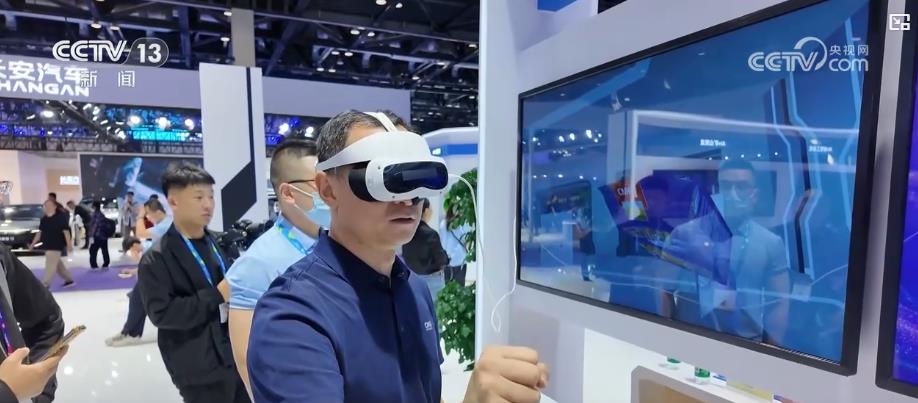
Core Insights - The article highlights the emergence of advanced technologies such as AI fraud prevention, iris payment systems, and earthquake early warning systems showcased at the China International Information Communication Exhibition held in Beijing [1] Group 1: Technology Applications - AI fraud prevention technology can automatically identify scam calls and provide real-time risk alerts during conversations, generating a risk analysis report post-call [4] - The iris payment system integrates biometric recognition and VR technology, allowing users to select products and complete transactions with gestures and eye blinks in a metaverse supermarket [3] - A 5G+AI industrial platform features robotic systems for inspection and quality control, demonstrating the application of AI in manufacturing processes [5] - The earthquake early warning system, the largest of its kind globally, utilizes communication networks and tower resources to enhance disaster response capabilities [6] Group 2: Policy and Development - The Ministry of Industry and Information Technology is implementing policies to accelerate the integration of advanced technologies into daily life, promoting innovation and industrial application [7] - The Chief Engineer of the Ministry emphasized the need to enrich the 5G-A product system, advance 6G technology research, and foster a new generation of information technology innovations, including AI, quantum information, and blockchain [9] - There is a focus on deepening the integration of information technology and industrialization, promoting the development of industrial internet applications, and expanding the use of information communication technology in smart cities and digital rural areas [11]
“十四五”时期我国科研基础研究显新效
Zhong Guo Hua Gong Bao· 2025-09-22 02:35
Core Insights - The Chinese government emphasizes the importance of basic research as the foundation of the entire scientific system and aims to enhance its overall strength during the "14th Five-Year Plan" period [1] Group 1: Achievements in Basic Research - The Ministry of Science and Technology highlights significant advancements in basic research, focusing on both free exploration and goal-oriented approaches [1] - Key research areas include nanotechnology, catalytic science, and material state control, addressing national needs and deploying major R&D tasks [1] Group 2: Breakthroughs and Applications - Notable breakthroughs include the development of a new architecture for wireless communication systems based on information metamaterials, providing foundational support for 6G technology [1] - Establishment of green and efficient theories for the collection, selection, and smelting of rare earth resources, which is crucial for the development of rare earth materials [1] - The application of nanoconfined catalytic theory for the efficient and clean conversion of coal and natural gas, contributing to energy security and the achievement of carbon neutrality goals [1]
通信行业双周报(2025、9、5-2025、9、18):中国电信在3GPP实现首个6G标准立项-20250919
Dongguan Securities· 2025-09-19 08:28
Investment Rating - The report maintains an "Overweight" rating for the communication industry, expecting the industry index to outperform the market index by more than 10% in the next six months [2][42]. Core Viewpoints - The year 2025 marks the beginning of 6G standardization, with 3GPP fully initiating research on 6G technology. A unified global technical standard is essential for building the 6G ecosystem and promoting industrial scale applications and sustainable development [3][38]. - The communication industry is currently in a phase of technological iteration and policy dividends, with new productivity directions such as AI, quantum communication, and low-altitude economy expected to continuously release growth momentum. The recovery of cellular IoT modules from inventory adjustments and ongoing construction of communication facilities like base stations and data centers will drive demand for new devices, equipment, and service operations [3][38]. - The report suggests focusing on three main lines of enterprise opportunities: "technology commercialization + policy catalysis + performance certainty" [3][38]. Summary by Sections 1. Industry Market Review - The communication sector index rose by 8.52% over the two weeks from September 5 to September 18, outperforming the CSI 300 index by 5.48 percentage points, ranking 5th among 31 first-level industries. Year-to-date, the communication sector has increased by 63.03%, surpassing the CSI 300 index by 48.72 percentage points [10][11]. 2. Industry News - China Telecom achieved the first 6G standard project approval in the 3GPP, marking a significant milestone in international standardization efforts [14]. - Microsoft signed a $6.2 billion agreement to build AI infrastructure in Norway, aiming to enhance service support for the European market [15][17]. - The global Ethernet switch market revenue reached $14.5 billion in Q2 2025, showing a year-on-year growth of 42.1%, driven by rapid data center expansion [18]. - The global enterprise WLAN market grew by 13.2% year-on-year in Q2 2025, reaching $2.6 billion, fueled by the rapid adoption of new Wi-Fi standards [19]. 3. Company Announcements - China Unicom signed a financial services agreement with its subsidiary, expected to facilitate daily business operations [21][22]. - Guangxun Technology plans to raise up to 3.5 billion yuan for projects related to optical connectivity and high-speed optical transmission [24]. 4. Industry Data Updates - As of July 2025, the mobile phone user base reached approximately 1.815 billion, a year-on-year increase of 2.68% [25]. - The length of optical cable lines reached about 73.77 million kilometers in Q2 2025, a year-on-year increase of 9.91% [31]. - The total number of 5G base stations reached 4.598 million by July 2025, with a net increase of 348,000 from the end of the previous year [35]. 5. Investment Recommendations - The report recommends focusing on companies such as China Mobile, China Telecom, FiberHome, Yangtze Optical Fibre, and Weisheng Information, which are expected to benefit from the ongoing technological advancements and policy support in the communication sector [38].

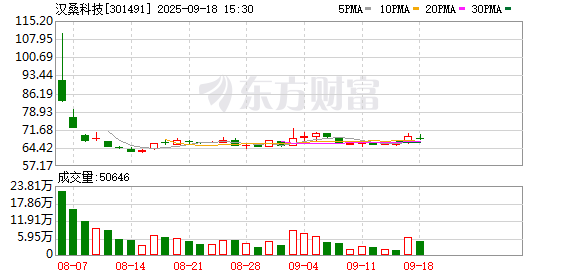
上市一个月后,汉桑科技董事长王斌回母校捐赠200万元
Shang Hai Zheng Quan Bao· 2025-09-18 23:01
Core Viewpoint - The speech by Wang Bin emphasizes the importance of innovation and value creation in entrepreneurship, highlighting her journey from state-owned enterprises to successfully listing her company, Hansang Technology, on the capital market [2][8]. Group 1: Company Background - Hansang Technology was established in 2003 in Jiangning District, Nanjing, focusing on the audio sector and has gradually increased its market share in international markets [8]. - The company aims to become a leading enterprise in the high-end audio industry and has implemented a "virtual equity" incentive plan to boost employee motivation [8][9]. Group 2: Entrepreneurial Journey - Wang Bin started her entrepreneurial journey in 1995 with import and export trade of home appliances, overcoming initial challenges to find opportunities in the high-end audio market [8]. - The company has consistently focused on R&D and high-quality products, which has led to its recognition and sustained growth in the industry [9]. Group 3: Future Outlook - Following its successful listing on the Shenzhen Stock Exchange in August 2025, Hansang Technology views this milestone as a new starting point, with plans to continue investing in R&D and expanding market partnerships [9]. - The company is poised to leverage advancements in new audio technologies, communication, IoT, and AI to explore innovative applications and new market opportunities [9]. Group 4: Educational Contributions - Wang Bin and her husband donated 2 million yuan to Southeast University, with the intention of inspiring students to pursue excellence and contribute to society [10]. - The Southeast University School of Information Science and Engineering has a rich history of producing industry leaders and has been instrumental in the development of communication technology in China [12].