
知识产权保护

Search documents
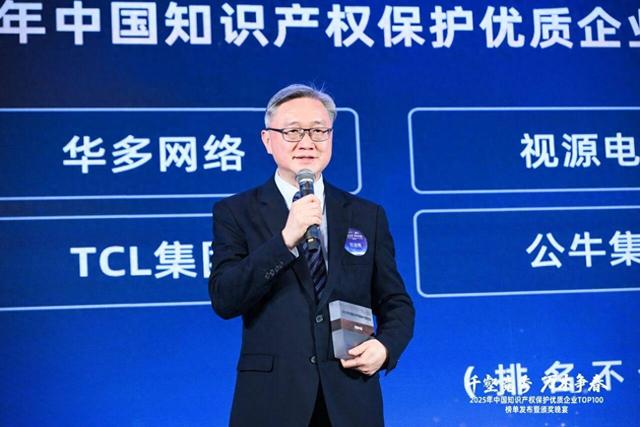
荣耀登榜! 完美公司入选“中国知识产权保护优质企业Top100”
Xin Lang Cai Jing· 2026-01-05 10:27
Group 1 - The core event was the release and award ceremony of the "Top 100 Quality Enterprises in China's Intellectual Property Protection," where the company was recognized for its achievements in intellectual property management and protection [1][3]. - The event was co-hosted by Zhichanbao and Zhichanli, focusing on recognizing outstanding enterprises and empowering industry development, with over 2,000 companies evaluated based on various criteria such as case numbers and win rates [3]. - The recognition reflects the company's comprehensive efforts in the creation, protection, and utilization of intellectual property across its entire ecosystem [3]. Group 2 - The company has over 30 years of commitment to its intellectual property strategy and has established a complete intellectual property management system, holding 459 valid patents, 2,651 registered trademarks, and 378 copyrights as of November 2025 [5]. - The brand "Maryyan" is valued at 8.415 billion yuan for 2025 and has won the "Fengming Tianxia Annual Influential Brand Award," while 10 core trademarks, including "Perfect," are included in Guangdong's key trademark protection list [5]. - The company has developed a comprehensive anti-counterfeiting system, successfully dismantling dozens of counterfeit operations and filing over a thousand civil lawsuits, effectively protecting brand rights and market order [5].

南威软件:2025年四季度获多项发明专利证书
Xin Lang Cai Jing· 2026-01-05 09:04
Core Viewpoint - The company announced the acquisition of multiple invention patents from the National Intellectual Property Administration, which will enhance its intellectual property protection system and core competitiveness [1] Patent Achievements - As of the fourth quarter of 2025, the company and its subsidiaries have received several invention patent certificates, including "A Rule-Based Certificate Chain Processing Method" and "An Address Standardization Method, Electronic Device, and Medium" [1] - The total number of patents held by the company and its subsidiaries includes 142 invention patents, 23 utility model patents, and 33 design patents [1]

爱威科技股份有限公司关于取得专利证书及医疗器械注册证的自愿性披露公告
Shang Hai Zheng Quan Bao· 2026-01-04 22:44
Core Points - The company, Aiwei Technology Co., Ltd., has obtained 11 domestic patent certificates and 1 foreign patent certificate from October 1, 2025, to December 31, 2025, including 5 invention patents, 1 utility model patent, and 5 design patents [1][2] - The acquisition of these patents reflects the company's core technology and enhances its intellectual property protection system, promoting technological innovation and improving core competitiveness [1] - The company has also obtained a medical device registration certificate, which will enrich its product variety and meet market demand, thereby enhancing its core competitiveness [2] Patent Certificates - The company acquired 11 domestic patents, which include 5 invention patents, 1 utility model patent, and 5 design patents [1] - Additionally, the company secured 1 foreign patent, indicating its commitment to expanding its intellectual property portfolio [1] Medical Device Registration - The medical device registration certificate obtained allows the company to enter the domestic market, although the actual sales performance of the products will depend on future marketing efforts [2] - The company currently cannot predict the specific impact of these products on future revenue [2]

全市首家!费县公安局知识产权刑事保护工作站落户新时代药业
Qi Lu Wan Bao· 2026-01-04 13:55
知识产权警务联络工作,是公安机关针对本地知识产权易受侵害企业开展的专项刑事保护工作,核心涵盖企业基础信息规范化管理、知识产权防务专业指 导、侵权违法行为快速处置、案件进展实时通报反馈等关键内容。这不仅是公安机关履行知识产权保护职能的重要举措,更是优化区域营商环境、护航企 业高质量发展的有力抓手。 当前,知识产权犯罪手段不断翻新,企业维权需求日益迫切。对此,费县公安局聚焦重点领域,主动开展专项整治行动,全链条打击侵犯商业秘密、生产 销售假冒伪劣产品、无证经营、非法渠道购销药品等违法犯罪活动,精准回应新业态下的安全保护需求,积极构建"警企联动、协同共治"的知识产权保护 体系。工作站以"零距离服务、精准化保护、常态化联动"为宗旨,将充分发挥公安机关职能优势,切实当好企业发展的"服务员"和"护航员",为企业创新 发展筑牢公安屏障。 鲁南制药集团相关负责人表示,此次知识产权刑事保护工作站的设立,不仅进一步筑牢了企业知识产权保护的"防火墙",更能有效遏制假冒伪劣产品流通 及药品购销流通环节的违法犯罪行为,为广大消费者的合法权益提供坚实保障。 齐鲁晚报.齐鲁壹点通讯员高念恒 12月30日,"费县公安局知识产权刑事保护工作站 ...

产业周跟踪:首个固态电池国标征求意见稿出台,重视商业航天能源系统投资机遇
Huafu Securities· 2026-01-04 12:49
行 电力设备 2026 年 01 月 04 日 业 研 究 行 业 电力设备 产业周跟踪:首个固态电池国标征求意见稿出台, 重视商业航天能源系统投资机遇 投资要点: 锂电板块核心观点:2026 年有望成为钠电产业化元年,汽车以旧换新 补贴如期落地。1)宁德时代表态推进钠电产业化;2)固态电池走向规范 化、标准化;3)汽车以旧换新补贴细则如期落地,中高端车补贴力度延续。 定 期 报 告 光伏板块核心观点:知识产权新政落地,强化"反内卷"法治底座。 近日,12 月 31 日,国家知识产权局与工信部联合发布《关于进一步加强 光伏产业知识产权保护工作的意见》,首次将专利布局、侵权裁决、海外维 权等全链环节纳入政策框架,明确到 2027 年形成一批高价值专利组合。政 策把"尊重知识产权"列为破解"内卷式"竞争的核心抓手,标志行业自 律正式升级为"法治化+市场化"双轨护航,有望加速低端产能出清、提升 龙头技术溢价,为 2026 年供需再平衡提供制度基石。 风电板块核心观点:3 个海上风电项目共 1.85GW 实现全容量并网, 金风科技 3GW 风光制氢一体化项目取得预审批复。1)江苏、浙江 3 个海 上风电项目共 1.8 ...
在国际舞台上讲好首都检察故事
Xin Lang Cai Jing· 2026-01-03 23:22
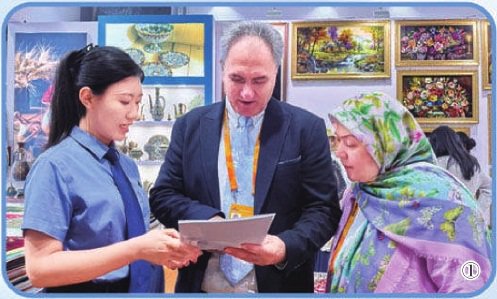
Core Viewpoint - The Beijing Procuratorate is enhancing its international legal cooperation and service capabilities, focusing on foreign-related prosecution work to support China's high-level opening-up strategy and improve the business environment for foreign enterprises [6][14]. Group 1: International Legal Services - The Beijing Procuratorate has established bilingual legal consultation services for participating enterprises at international trade events, showcasing its commitment to supporting foreign businesses [2]. - The "Financial Prosecution White Paper" and the "Smart Financial Prosecution" big data legal supervision model were presented at the Financial Street Forum, highlighting the integration of technology in legal services [6]. - The establishment of legal liaison stations in key business districts provides precise legal risk warnings and consultation services for foreign enterprises [8]. Group 2: Intellectual Property Protection - The Beijing Procuratorate's Fourth Prosecution Department received the "2025 China Copyright Gold Award," recognizing its efforts in protecting intellectual property and fostering a market-oriented legal environment [7]. - A technical investigation officer database was established to address challenges in handling foreign-related intellectual property cases, enhancing collaboration between technical experts and prosecutors [8]. - The introduction of standardized translations for commonly used foreign-related legal documents aims to improve judicial efficiency and fairness [9]. Group 3: Talent Development and Training - The Beijing Procuratorate has set up a foreign-related prosecution talent pool and specialized training programs to cultivate skilled professionals adept in handling international legal matters [12][20]. - A youth prosecution team has been formed to enhance the capabilities of young prosecutors, focusing on both language proficiency and practical case handling skills [20][22]. - The "90s Generation Telling the Story of Chinese Prosecution" course was developed to educate foreign audiences about China's prosecution system, reflecting the commitment to international legal education [22][23]. Group 4: International Judicial Exchange - The Beijing Procuratorate actively participates in international judicial exchanges, hosting delegations from various countries and sharing experiences in digital prosecution and intellectual property protection [13]. - The release of a documentary showcasing the work of Chinese prosecutors has been recognized as a significant contribution to international legal communication [13]. - The establishment of standardized procedures for international exchanges aims to enhance the quality and efficiency of judicial cooperation [13].
为企业出海架起“安全桥”
Xin Lang Cai Jing· 2026-01-01 13:35
Core Insights - The central provinces of Shanxi, Anhui, Jiangxi, Henan, Hubei, and Hunan are collaborating to establish a "Belt and Road" intellectual property protection mechanism, which aims to facilitate overseas expansion for enterprises and enhance their competitiveness in international markets [1][2] - The report released alongside this initiative provides a practical guide for companies, detailing the intellectual property systems, application processes, and infringement remedies in seven countries, including Russia, Saudi Arabia, and Vietnam [2] Group 1 - The collaboration among the six central provinces represents a pragmatic exploration of deepening integration into the "Belt and Road" initiative, injecting strong momentum into the inland region's opening-up efforts [1] - The report highlights the increasing pace of overseas expansion by enterprises in the central region, covering various sectors from equipment manufacturing to digital services, while also addressing the challenges posed by intellectual property disputes [1][2] Group 2 - The establishment of a cross-regional intellectual property protection mechanism is seen as a key solution to the pain points faced by enterprises venturing abroad, enhancing their risk management and dispute resolution capabilities [2] - The initiative aims to create a three-tiered protection network involving national, regional, and enterprise levels, thereby improving the effectiveness of intellectual property protection and avoiding redundant efforts [2][3]
涵盖金融、医疗、文创、自媒体,江苏法院发布服务保障民营经济高质量发展典型案例
Yang Zi Wan Bao Wang· 2026-01-01 02:23
Group 1 - Jiangsu Province High People's Court released typical cases to support the high-quality development of the private economy, aiming to guide market regulation and stimulate business vitality [1] - The cases cover various sectors including finance, healthcare, cultural creativity, engineering, social media, small and medium-sized enterprise accounts, and corporate restructuring, reflecting the court's commitment to equal protection of the private economy and market order [1] Group 2 - A property company successfully challenged a bank's service fee of 15 million yuan, which was deemed a disguised interest charge, thereby reducing the financial burden on enterprises [2] - The court's ruling aligns with the policy to optimize the business environment and the legislative spirit of promoting the private economy [2] Group 3 - A court ruled against the implicit discrimination of private hospitals in insurance claims, allowing a family to receive compensation despite treatment at a private facility, emphasizing the quality of private healthcare institutions [3] - The ruling invalidated restrictive clauses that limited hospital choices to public institutions, thus protecting patient rights [3] Group 4 - A technology company was awarded 30 million yuan in damages for copyright infringement against a short video platform that exploited its popular drama "The Wind Blows Penelia" [4] - The court's decision reinforced intellectual property protection for private cultural enterprises and boosted their confidence in defending their rights [4] Group 5 - A self-media operator was ordered to pay 500,000 yuan in damages for publishing false claims about a construction company, which harmed its reputation and led to significant economic losses [5] - The court's ruling established reasonable boundaries for self-media oversight, preventing unfounded defamation of businesses [5]
筑牢安全底线 激发市场活力——益阳市“十四五”时期市场监管工作综述
Sou Hu Cai Jing· 2026-01-01 00:01
Core Viewpoint - The article outlines the efforts and achievements of the market regulation system in promoting high-quality development during the "14th Five-Year Plan" period, focusing on various regulatory frameworks and reforms to enhance market vitality and ensure fair competition. Group 1: Market Entry and Business Environment - The city has implemented comprehensive reforms to facilitate market entry and business deregistration, including dynamic updates to the "multi-certificates in one" directory and the promotion of "one-stop" services for business registration [4][5] - The time required to establish a business has been reduced to within half a working day, making the process more efficient and convenient for market participants [5] - By the end of 2025, the total number of market entities is expected to reach 475,000, with an average annual growth rate of 8.9% [7] Group 2: Market Competition Order - A fair competition review mechanism has been established, leading to the evaluation and cleaning of 5,105 documents that hinder a unified market and fair competition [9] - The regulation of pricing and fees in sectors such as commercial banking and electricity supply has been strengthened, contributing to a more orderly market environment [11] Group 3: Quality Improvement Initiatives - The "Quality Strong City" strategy has been implemented, resulting in significant improvements in product quality, with the manufacturing quality pass rate reaching 94.16% in 2024, up from 91.20% in 2020 [12][14] - The city has established two national-level quality inspection centers and four provincial-level centers, significantly enhancing quality infrastructure [16] Group 4: Intellectual Property Development - The city has made strides in intellectual property, with 2,748 valid invention patents and a target of 1,192 high-value invention patents by 2024 [19] - The number of geographical indication trademarks has reached 28, with 16 protected products, positioning the city as a leader in this area within the province [21] Group 5: Market Safety and Consumer Protection - Safety regulations have been prioritized, with food safety monitoring achieving a compliance rate of over 98% for major agricultural products [27] - The consumer complaint resolution system has been enhanced, with a 99.98% on-time resolution rate for complaints in 2024 [34] Group 6: Regulatory Mechanisms and Innovations - The market regulation system has been improved through the integration of smart and credit-based supervision, with 17,500 individual businesses marked for operational anomalies [33] - The implementation of "Internet + AI supervision" in food and special equipment sectors has been accelerated, enhancing regulatory efficiency [35]
假冒化妆品被包装成“进口正品”销售,案值八千万!多人落网
Nan Fang Du Shi Bao· 2025-12-31 12:21
Group 1 - In 2025, Guangzhou police cracked over 1,800 criminal cases related to food safety and intellectual property, detaining more than 3,000 individuals to ensure public safety and environmental protection [1] - A significant case involved a cross-border e-commerce live-streaming operation selling counterfeit cosmetics, resulting in the arrest of 15 suspects and the seizure of over 130,000 counterfeit products, with total sales exceeding 800 million yuan [1] Group 2 - Guangzhou police conducted seven rounds of "food safety" special operations targeting illegal additives in meat products, substandard food near schools, and counterfeit goods in rural areas, successfully handling various cases involving fake health foods, tea, bottled water, and mooncakes [2] - The police also executed three rounds of operations against counterfeit medical beauty products, dismantling 15 criminal gangs and destroying 40 production sites, seizing approximately 353,000 boxes/bottles of counterfeit medical products with a total value of about 650 million yuan [2] - Efforts to combat environmental crimes included strict actions against illegal waste disposal, illegal mining, and pollution, while also focusing on protecting high-value intellectual property rights and combating the sale of counterfeit well-known brand products [2]